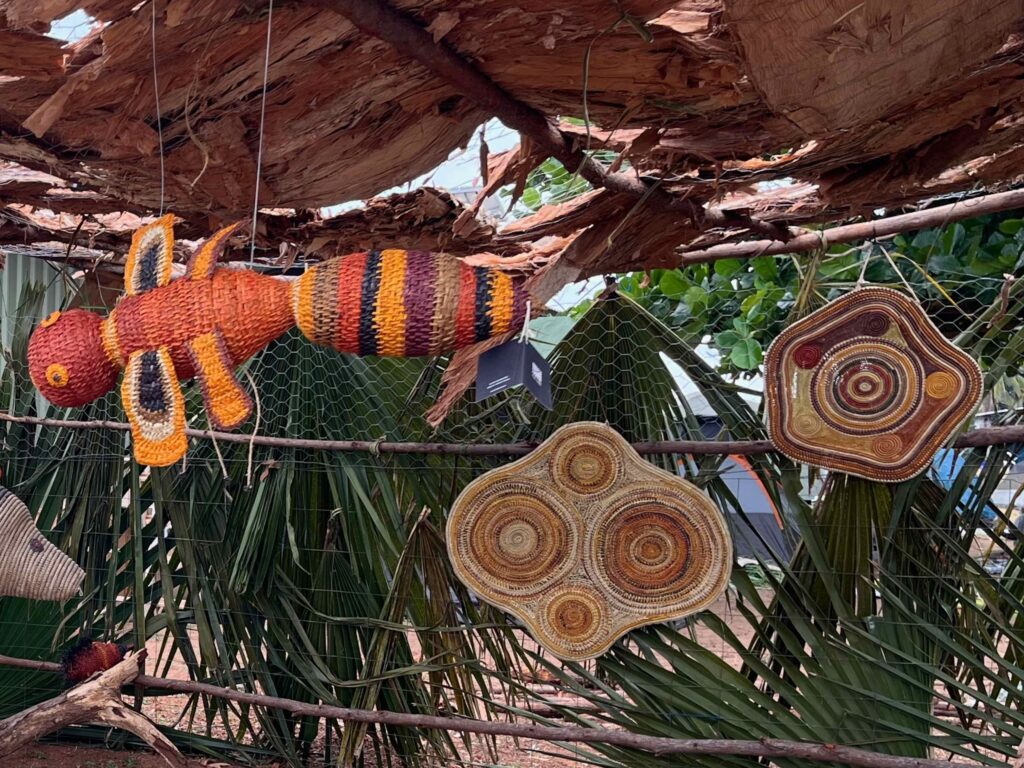

Bush Gallery
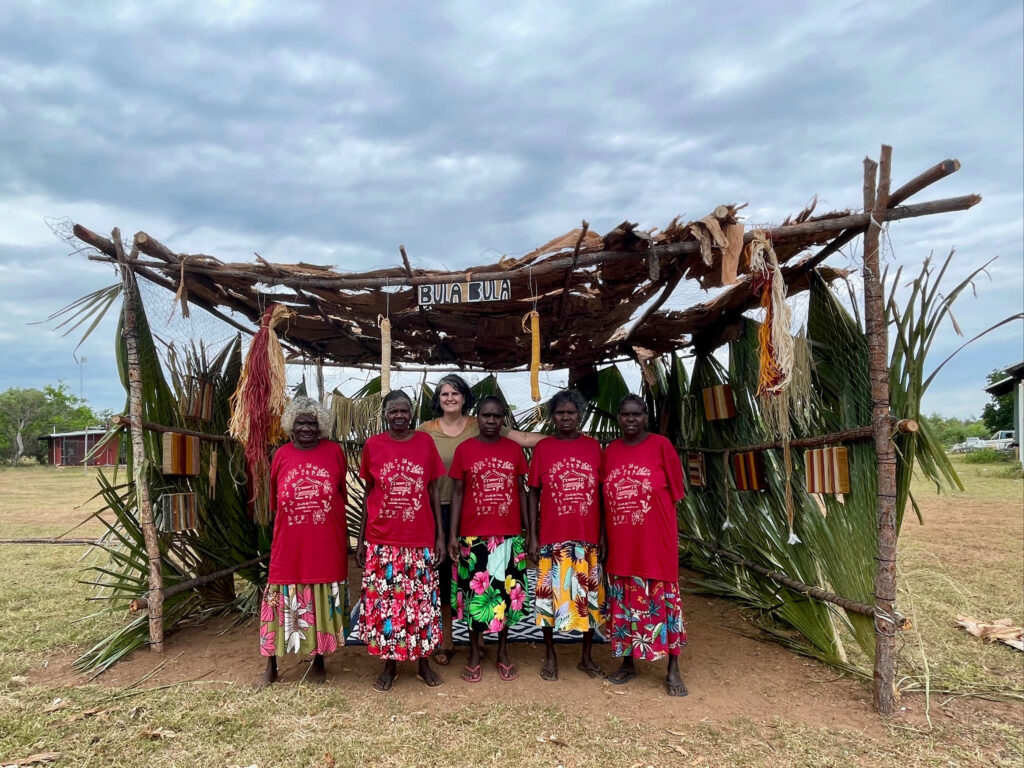
Bush Gallery brings together artists from across Arnhem Land in far northern Australia. We are connected through kinship, clan, and Country, though we are often separated by vast geographic distances. Each artist is represented by an Aboriginal-owned and governed art and culture centre located within their community or close to their homeland.
- All
- Milingimbi Art and Culture
- Maningrida Arts and Culture
- Gapuwiyak Culture and Arts
- Bula’bula Arts
- Elcho Island Arts
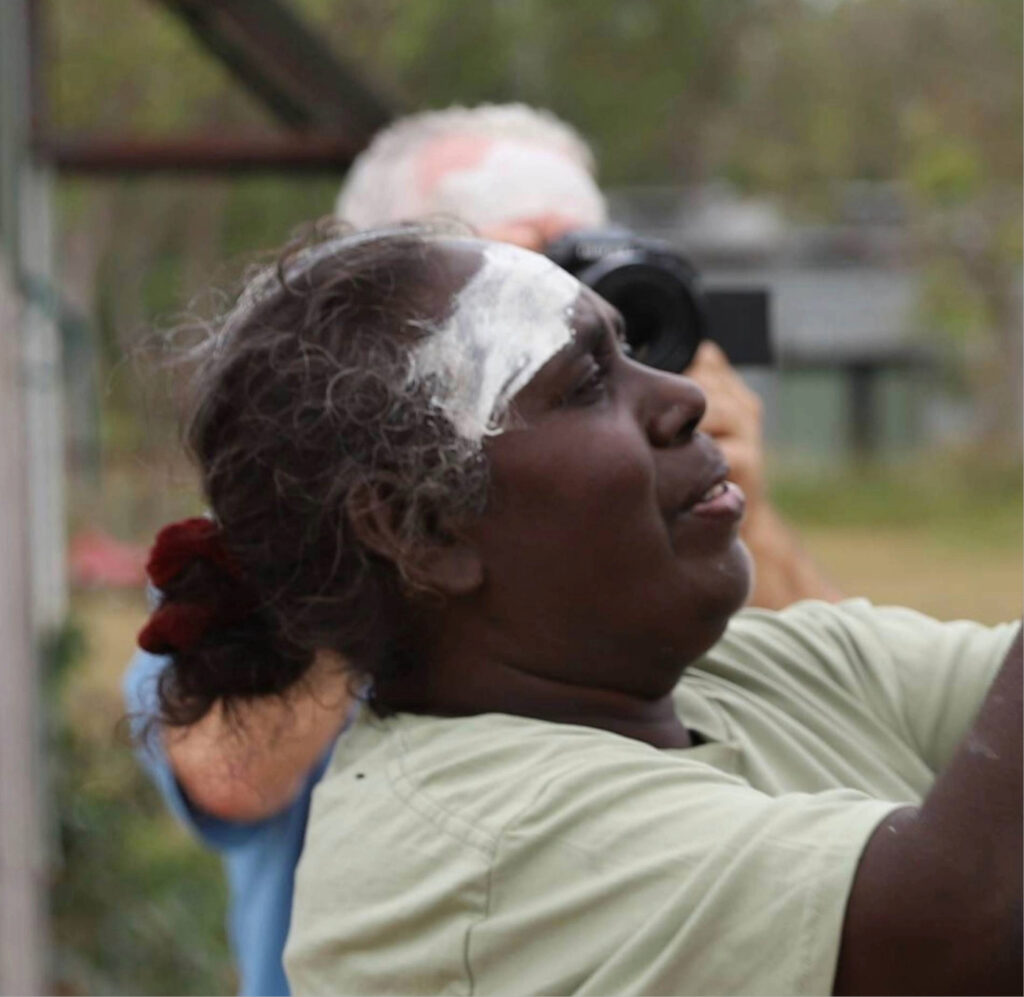
Abigail Mundjala
Milingimbi Art and Culture
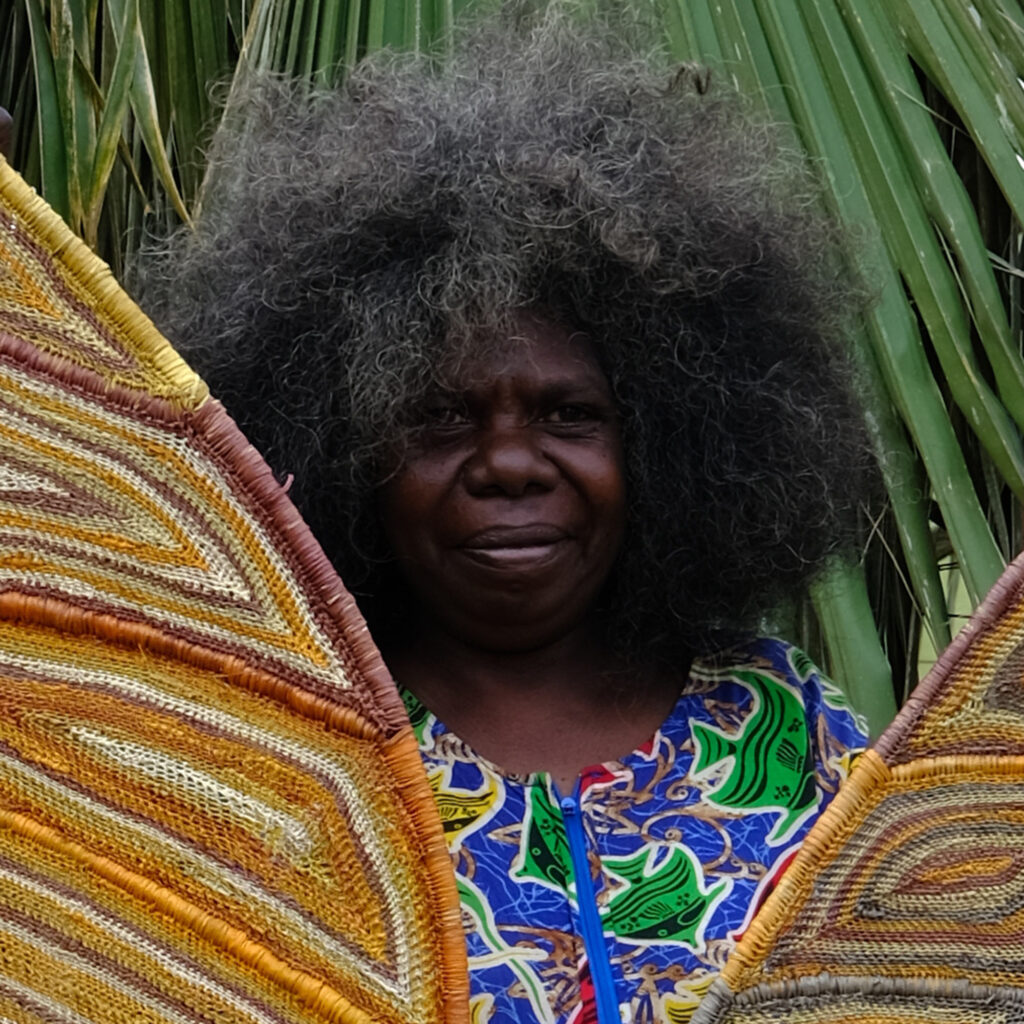
Anniebell Marngamarrnga
Maningrida Arts and Culture
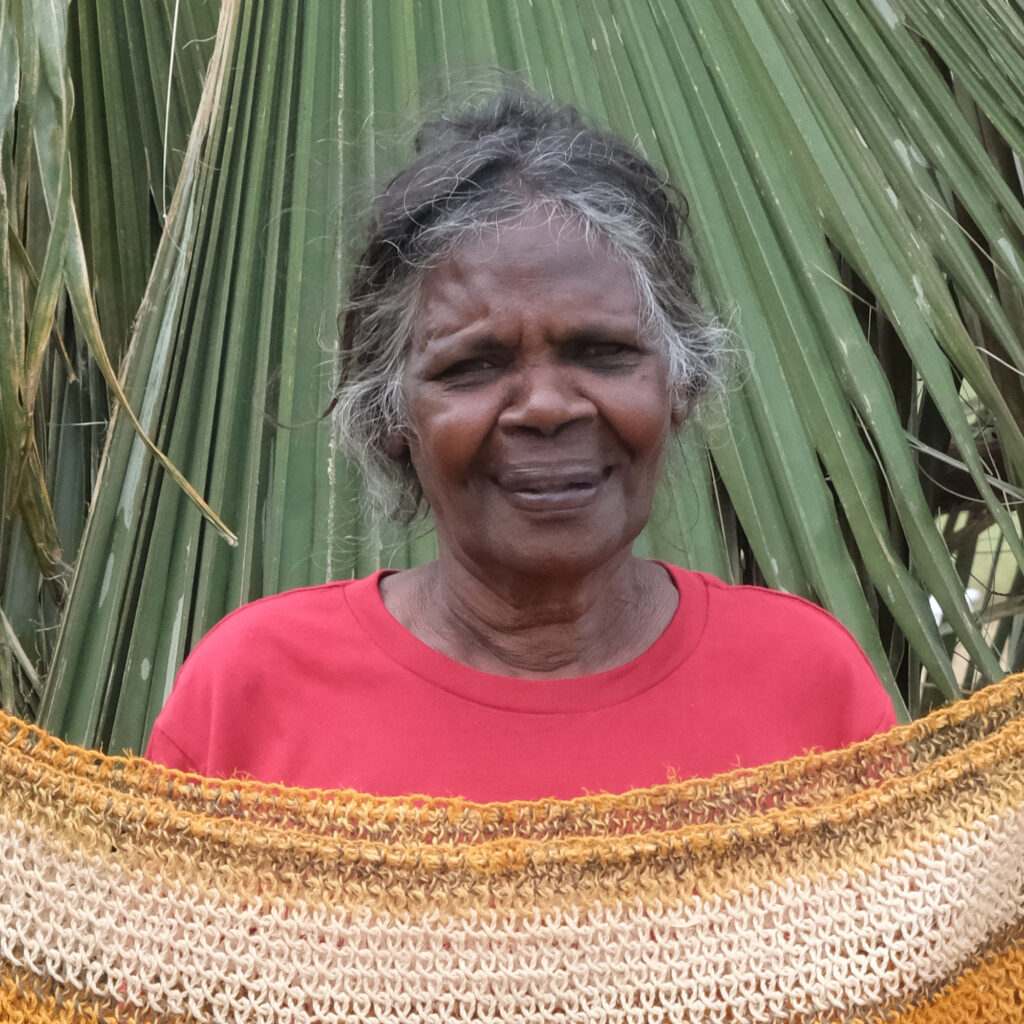
Daphne Banyawarra
Bula’bula Arts
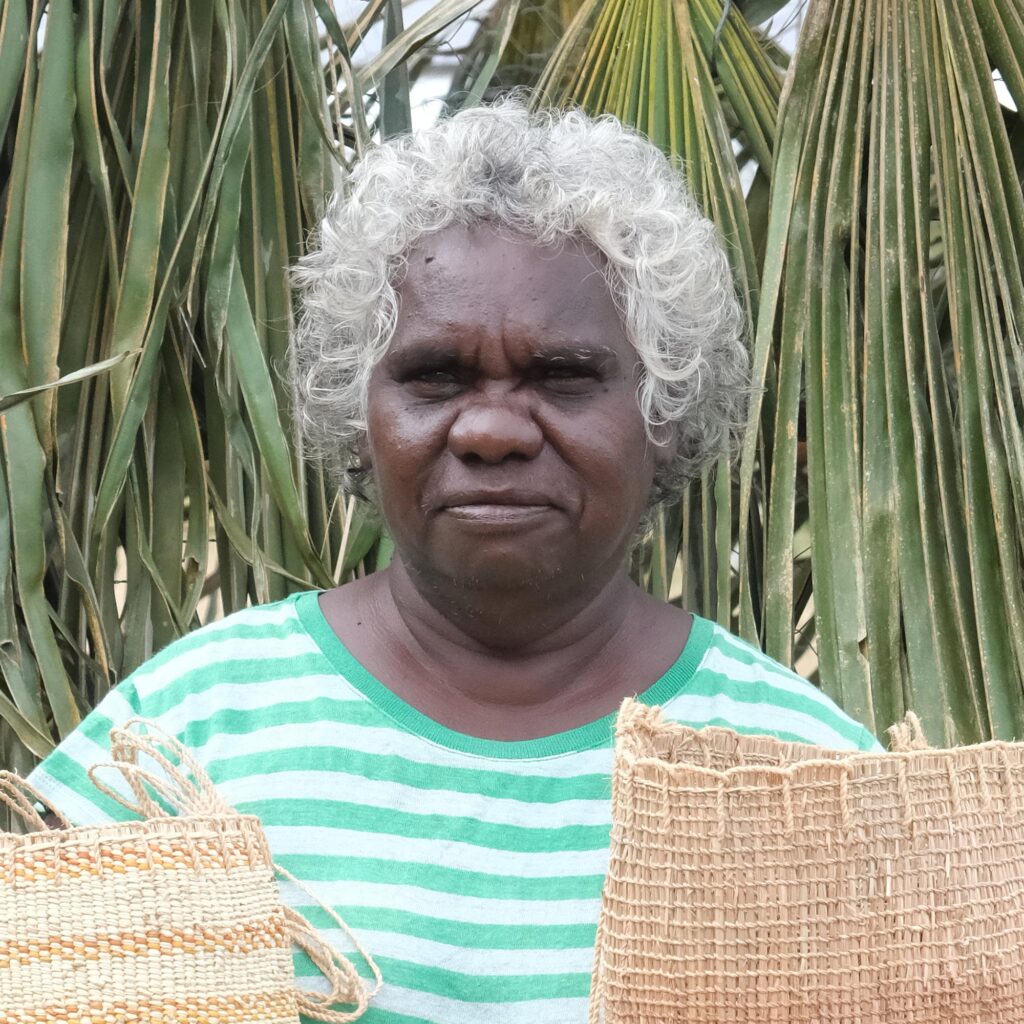
Doreen Jinggarrabarra
Maningrida Arts and Culture
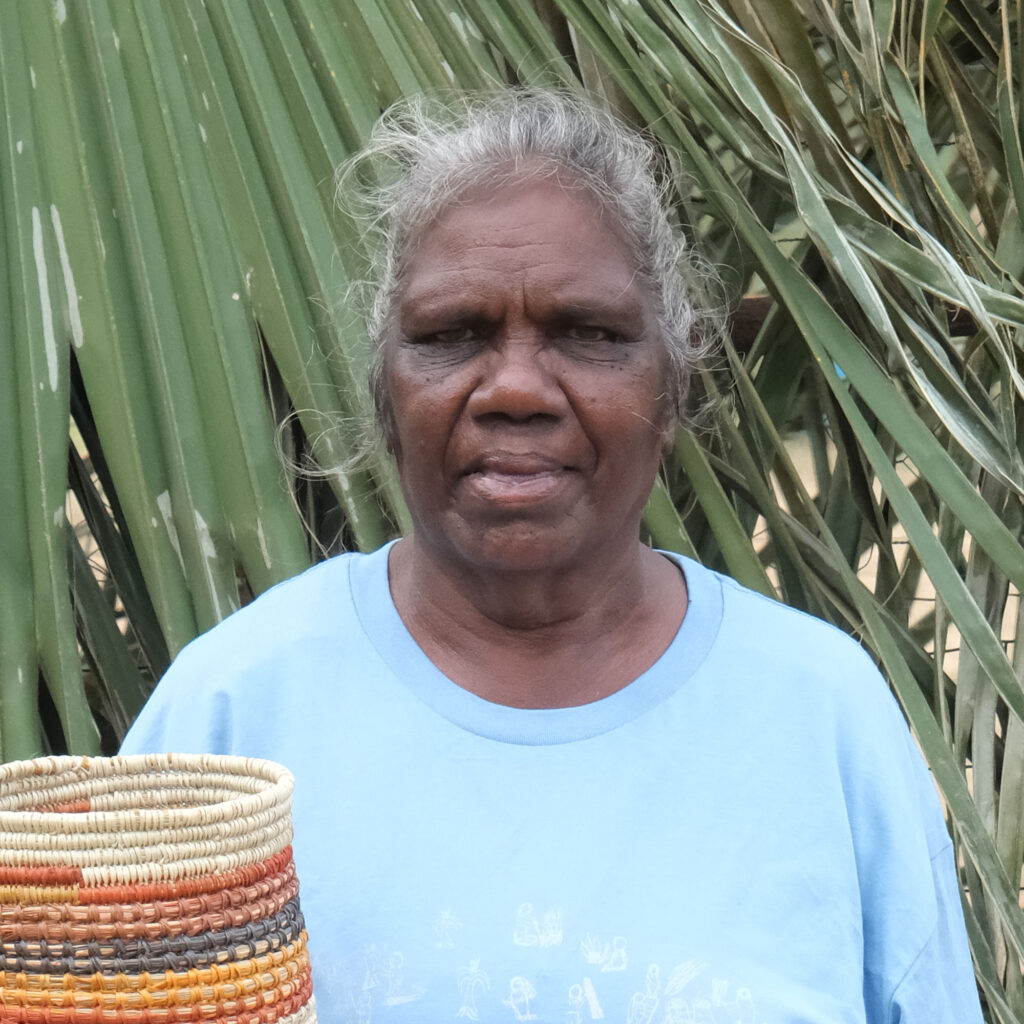
Dorothy Warrgarrkng Ganambarr
Gapuwiyak Culture and Arts
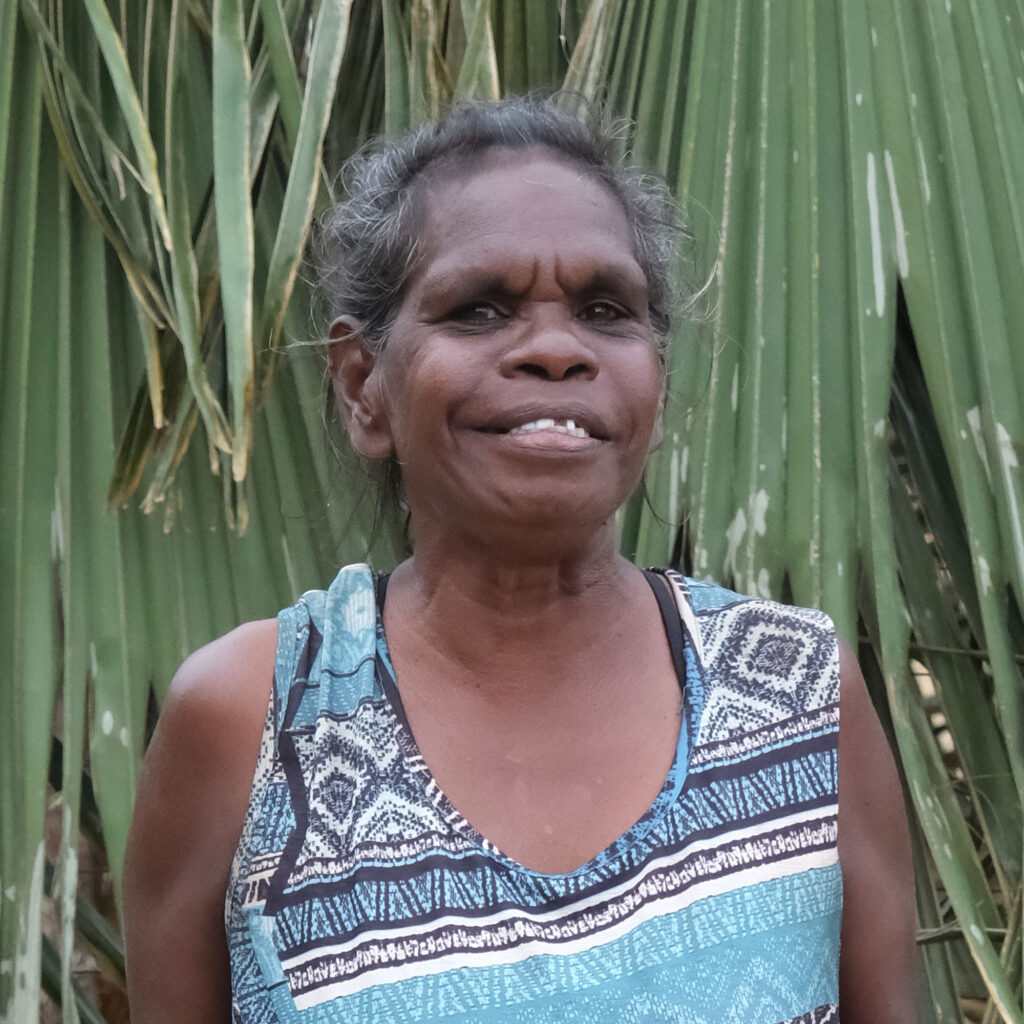
Elizabeth Rukarriwuy Garrawarra
Milingimbi Art and Culture
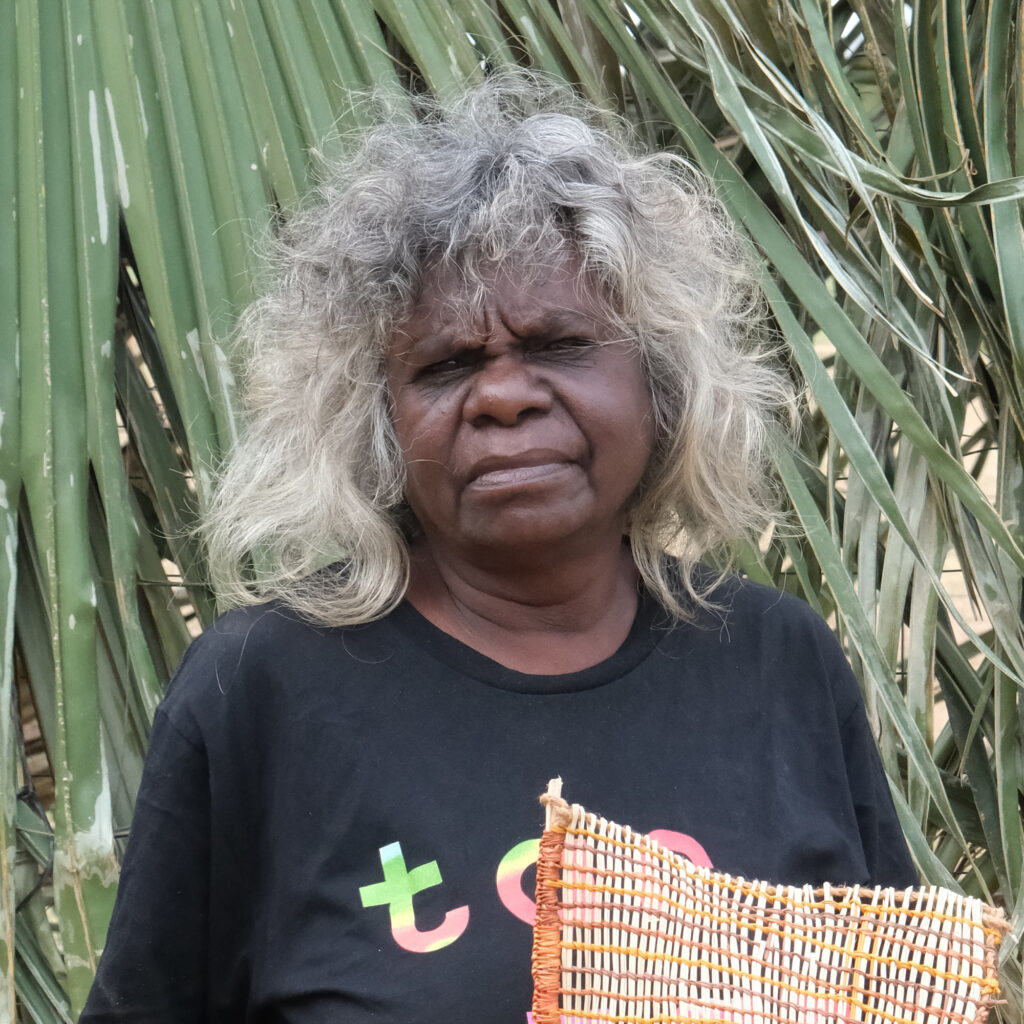
Esther Yarllarlla
Maningrida Arts and Culture
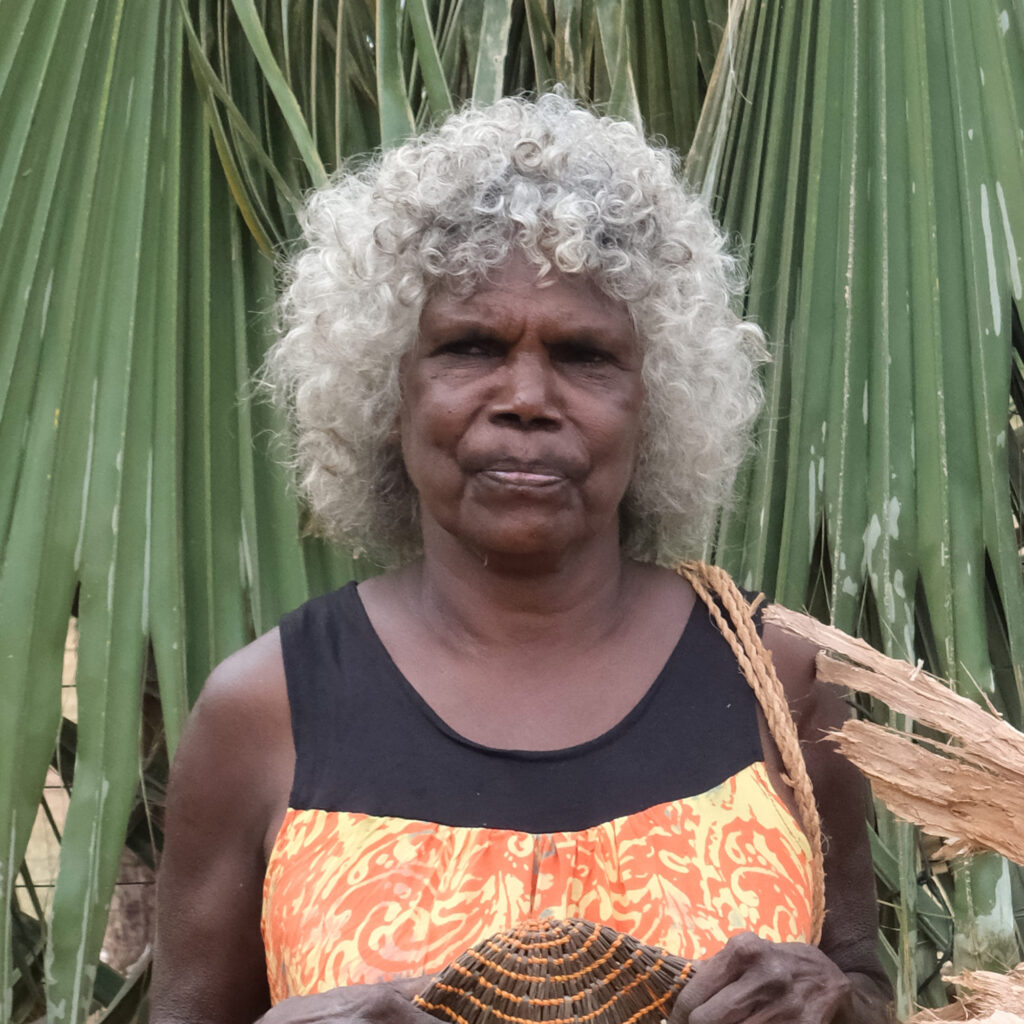
Freda Ali Wayartja
Maningrida Arts and Culture
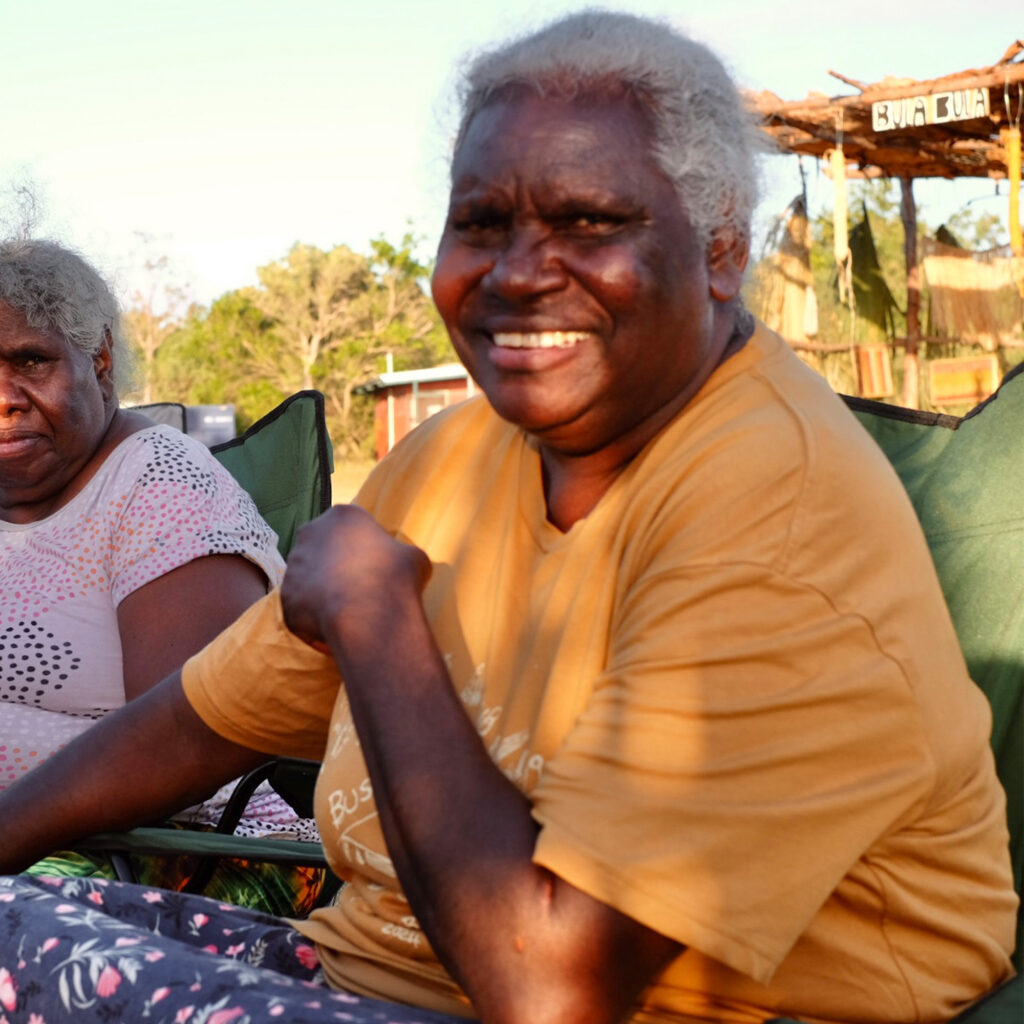
Gwen Warmbirrirr
Milingimbi Art and Culture
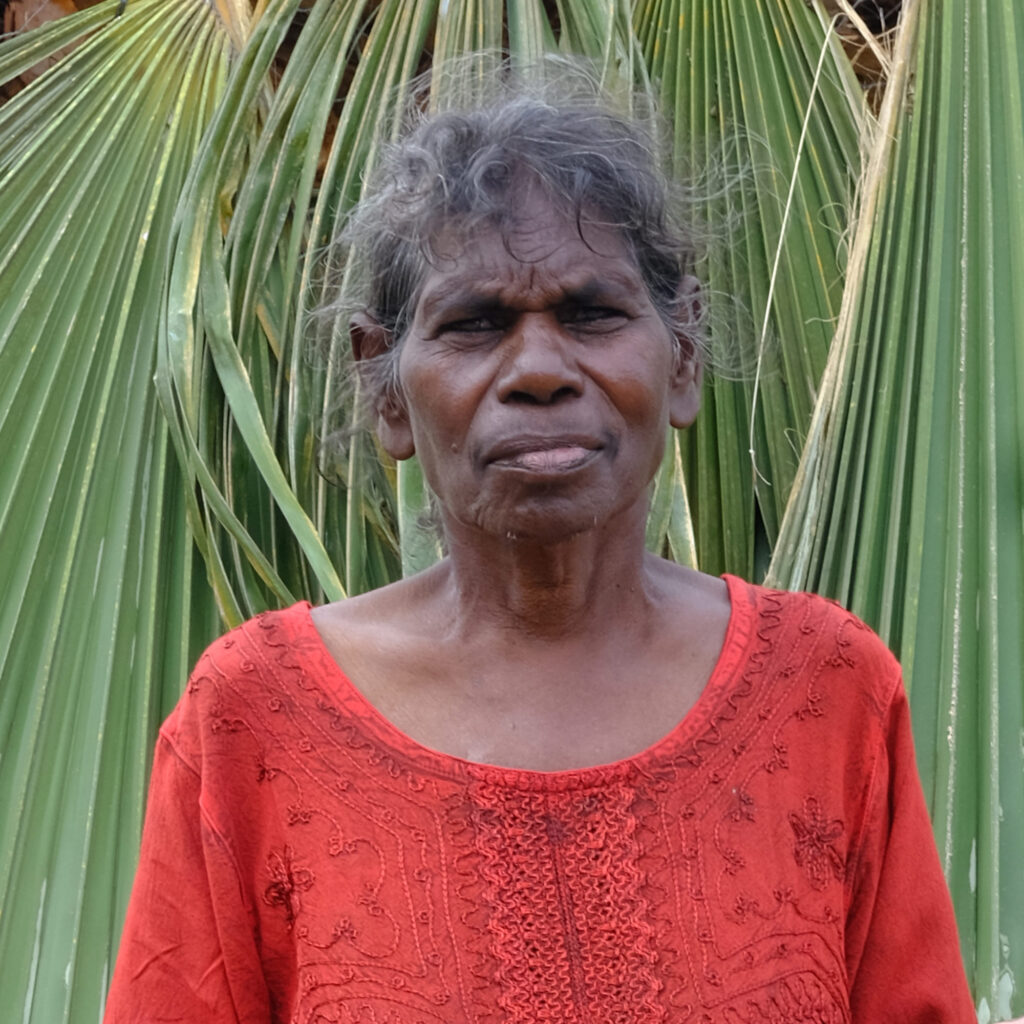
Helen Ganalmirriwuy Garrawurra
Milingimbi Art and Culture
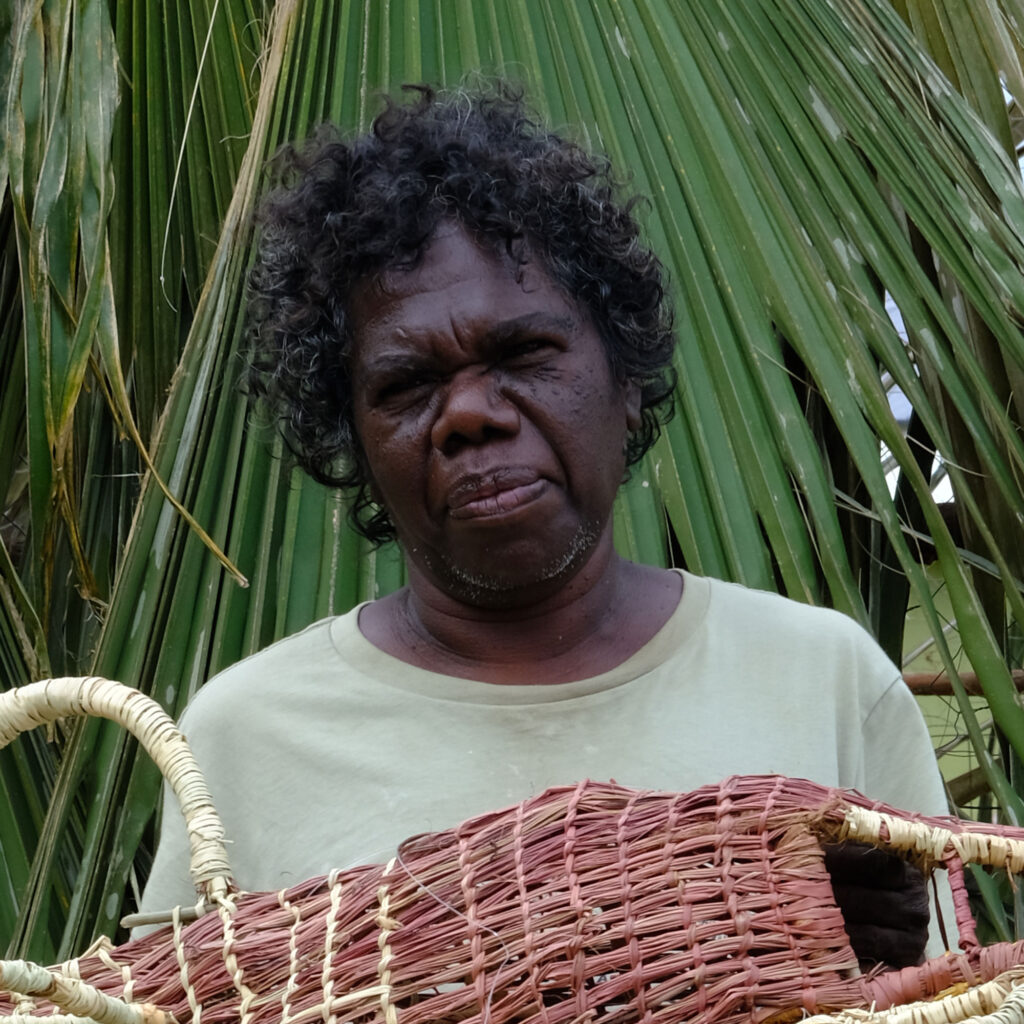
Jennifer Roy Dikarr Mäḻarra
Milingimbi Art and Culture
Jocelyn Gumirrmirr
Milingimbi Art and Culture
Judy Manany
Elcho Island Arts
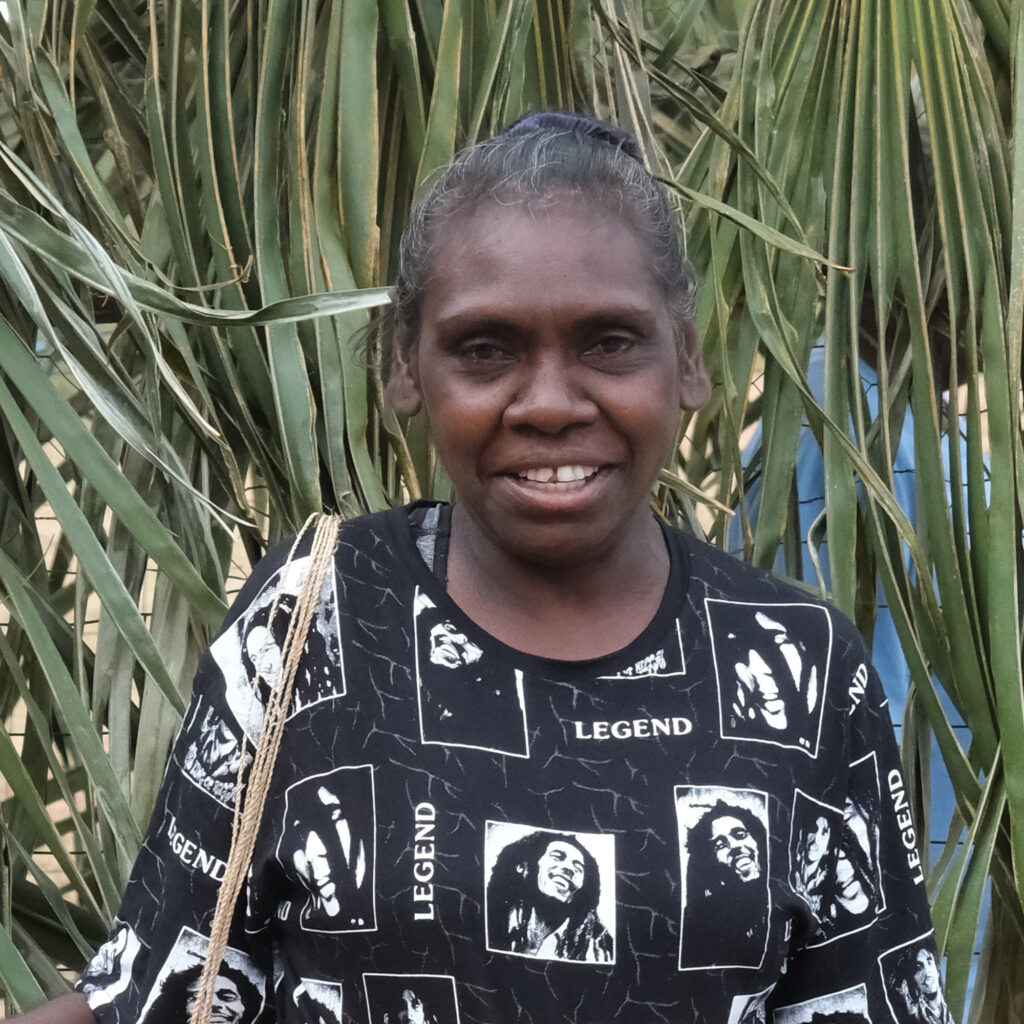
Juileanne Gitjpulu Malibirr
Gapuwiyak Culture and Arts
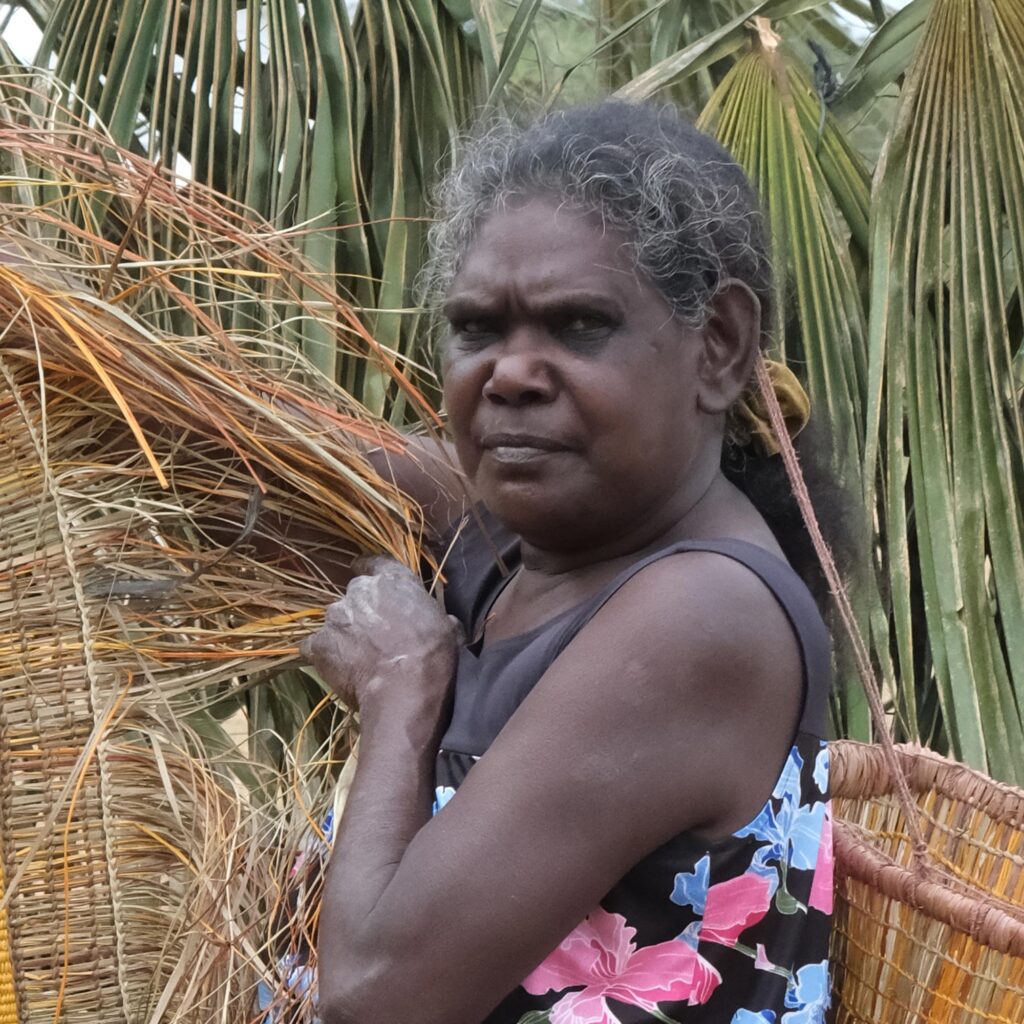
Julie Bukandjarri
Gapuwiyak Culture and Arts
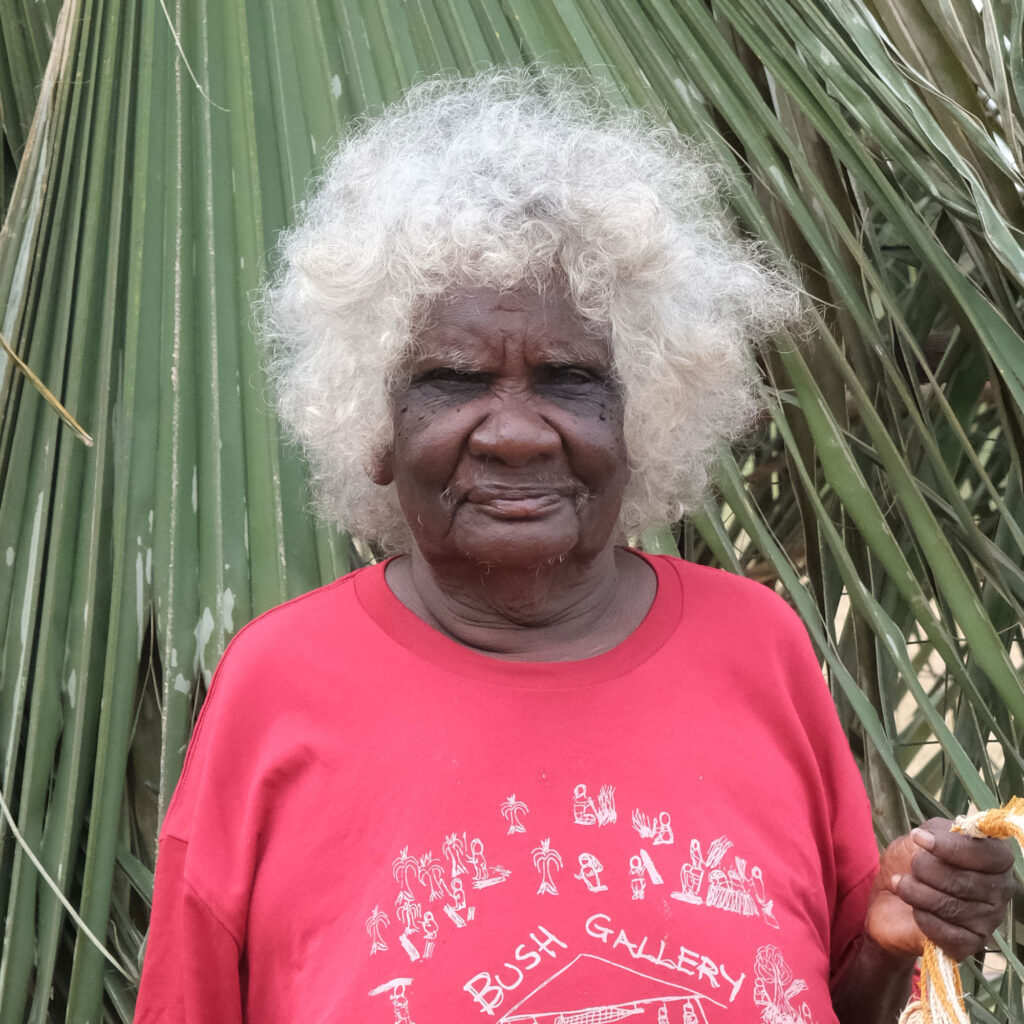
Julie Djulibing Malibirr
Bula’bula Arts
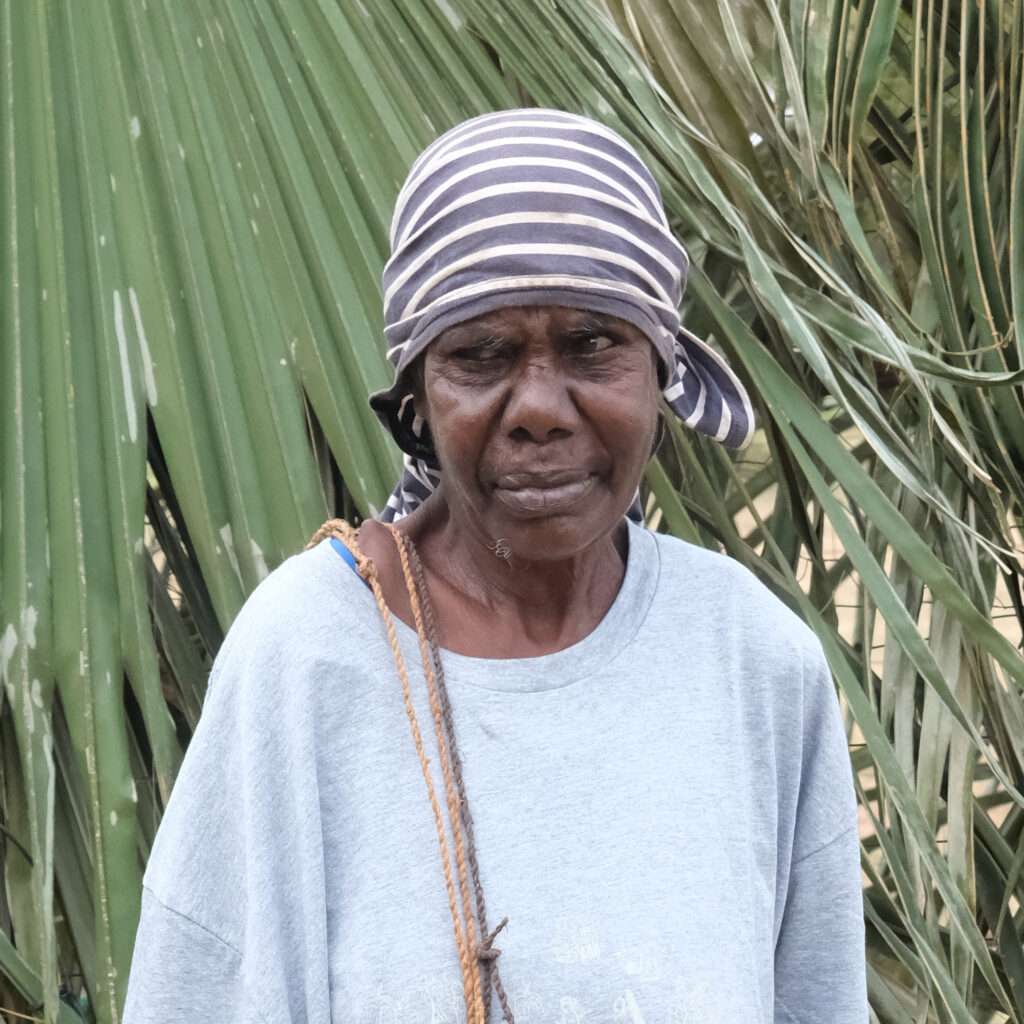
June Wilson
Maningrida Arts and Culture
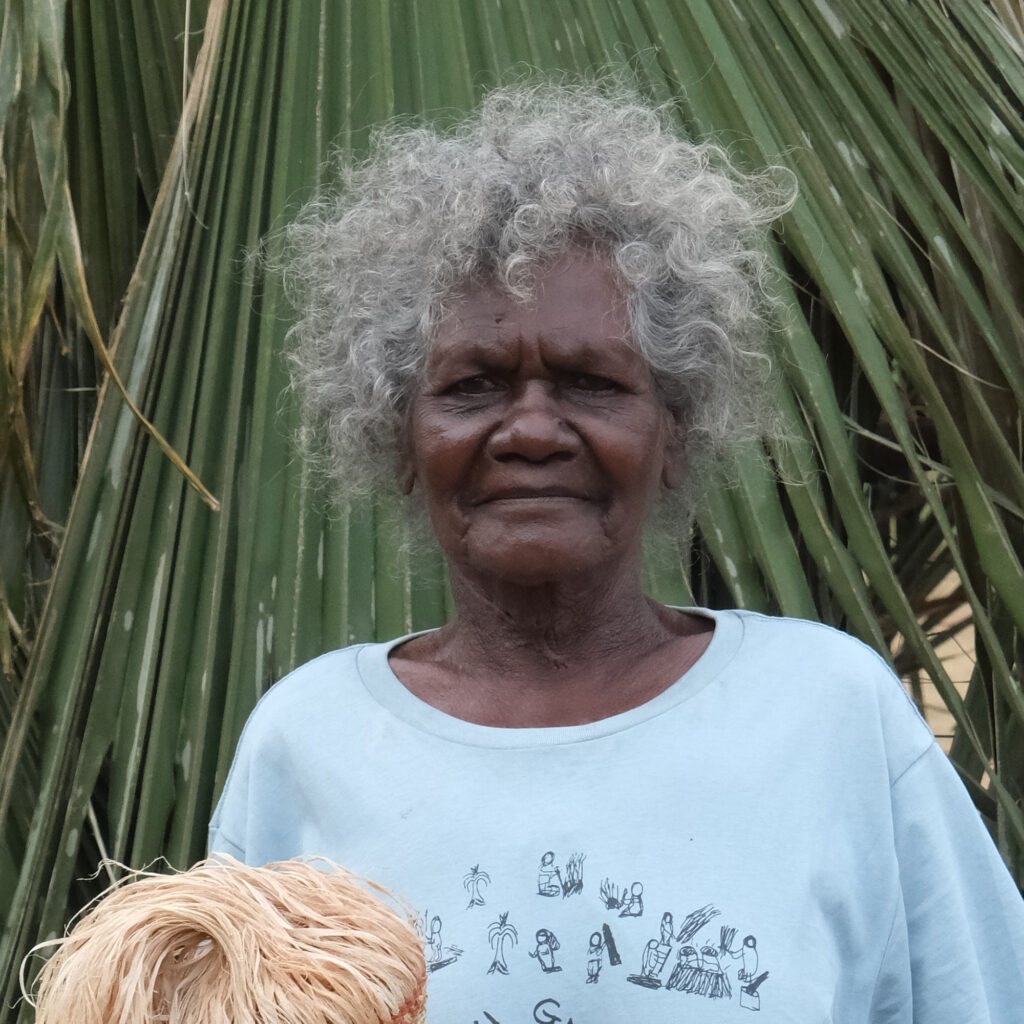
Kathy Ninyapuya Guyula
Gapuwiyak Culture and Arts
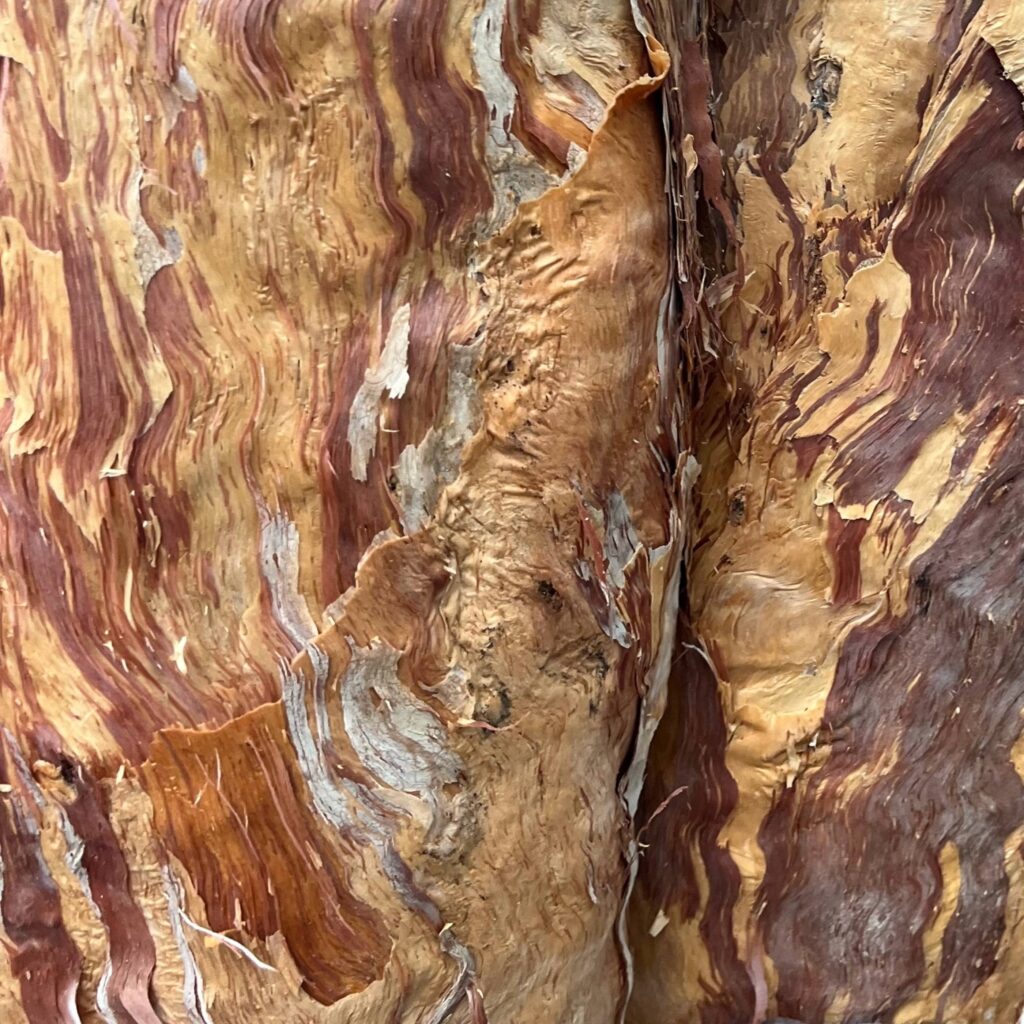
Kerry Malaray
Milingimbi Art and Culture
Lily Roy
Milingimbi Art and Culture
Lucy Wanapuyngu
Gapuwiyak Culture and Arts
Mandy Batjula Gaykamangu
Milingimbi Art and Culture
Margaret Dhorrpuy Munyarryun
Elcho Island Arts
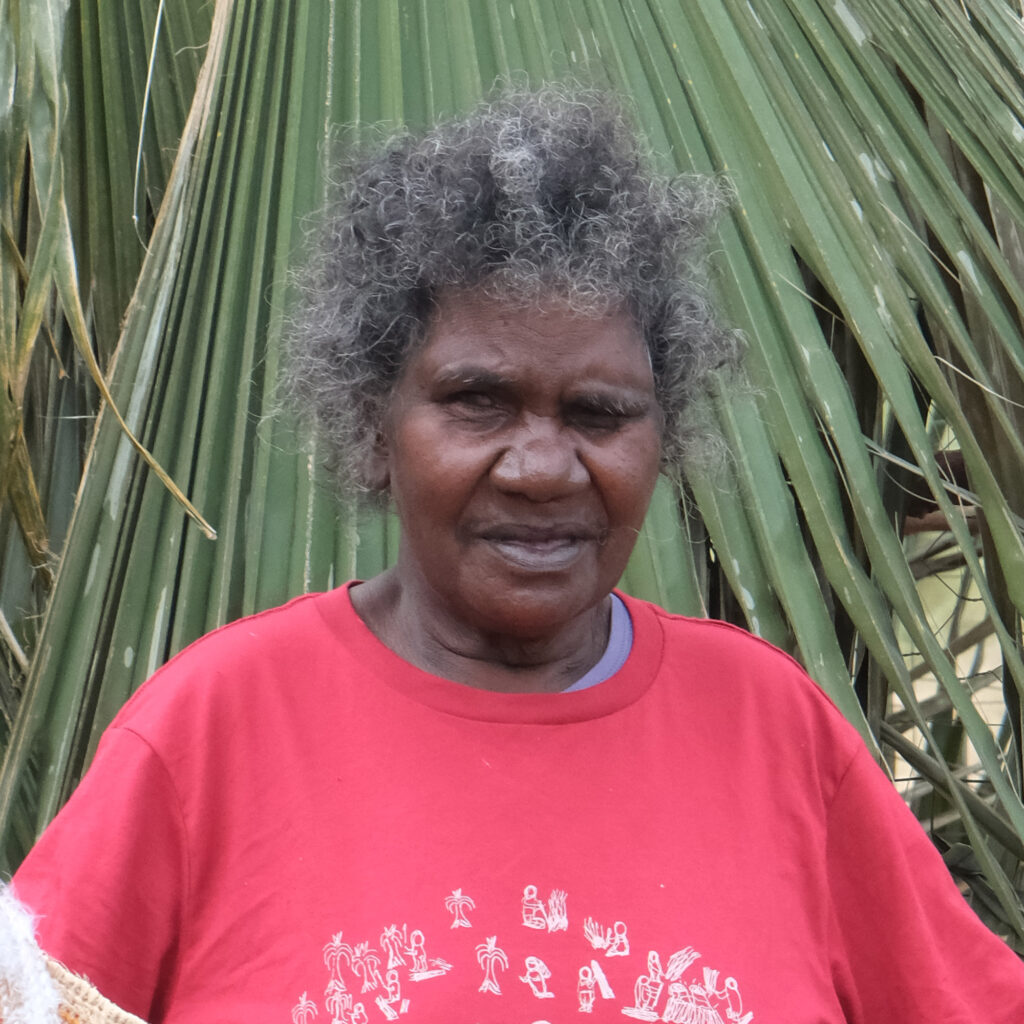
Margaret Djarrbalabal Malibirr
Bula’bula Arts
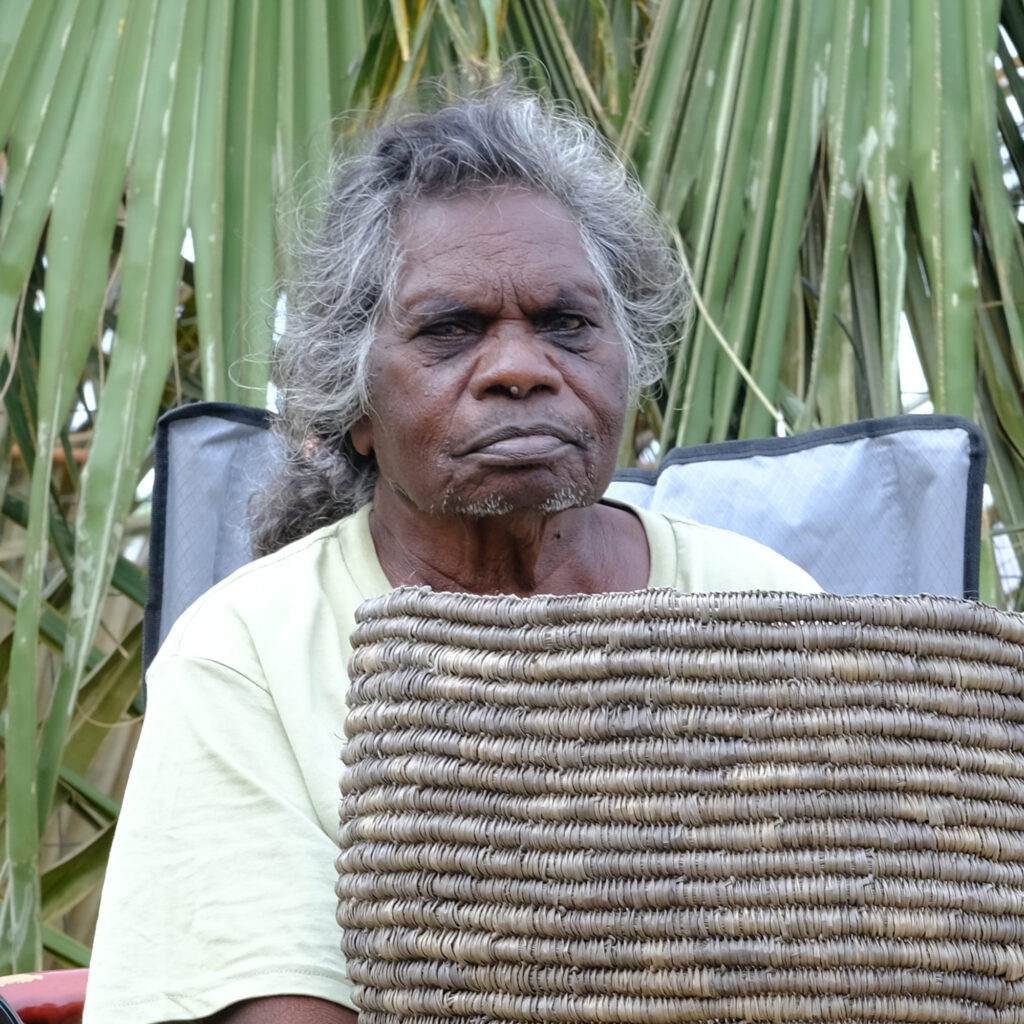
Margaret Rarru Garrawurra
Milingimbi Art and Culture

Margaret Wulngurrwulngurr
Bula’bula Arts
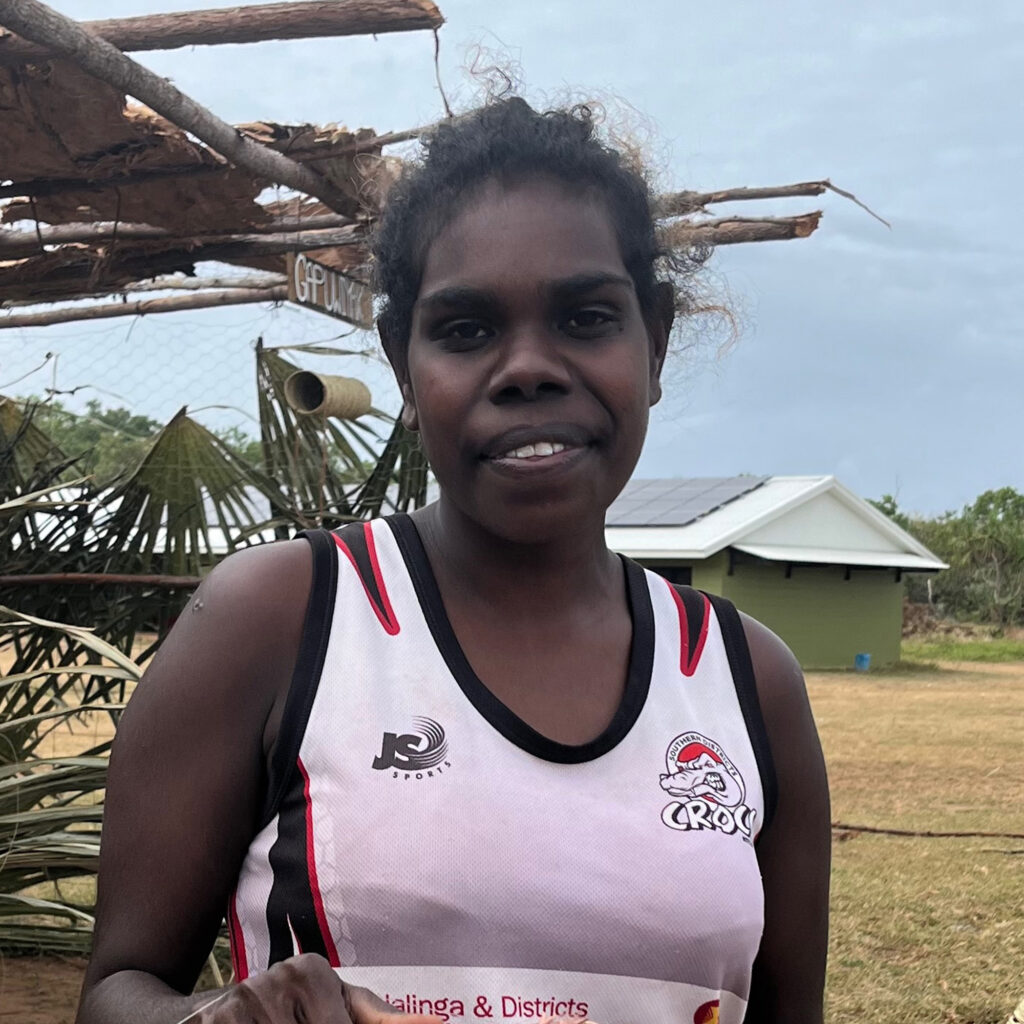
Nellie Roy
Milingimbi Art and Culture
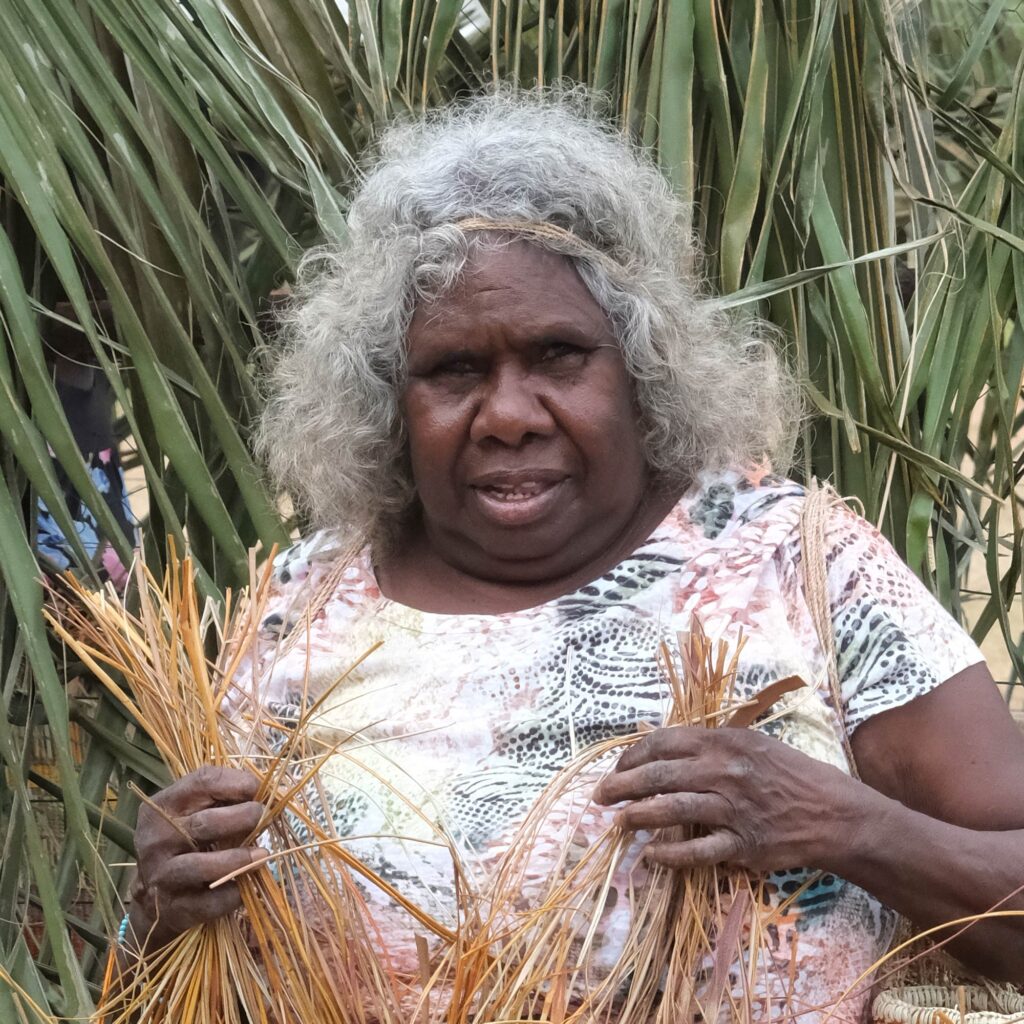
Roslyn Malŋumba Guyula
Gapuwiyak Culture and Arts
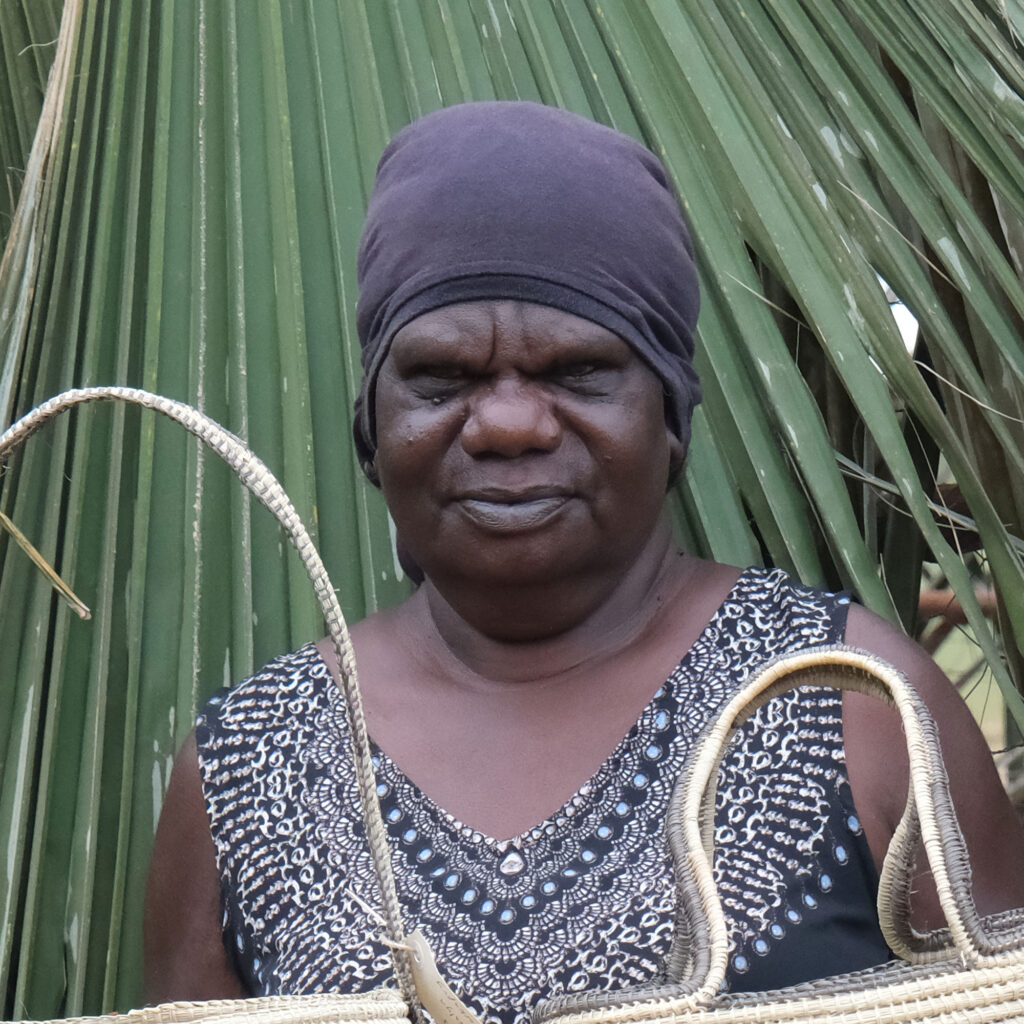
Roslyn Markapuy
Milingimbi Art and Culture
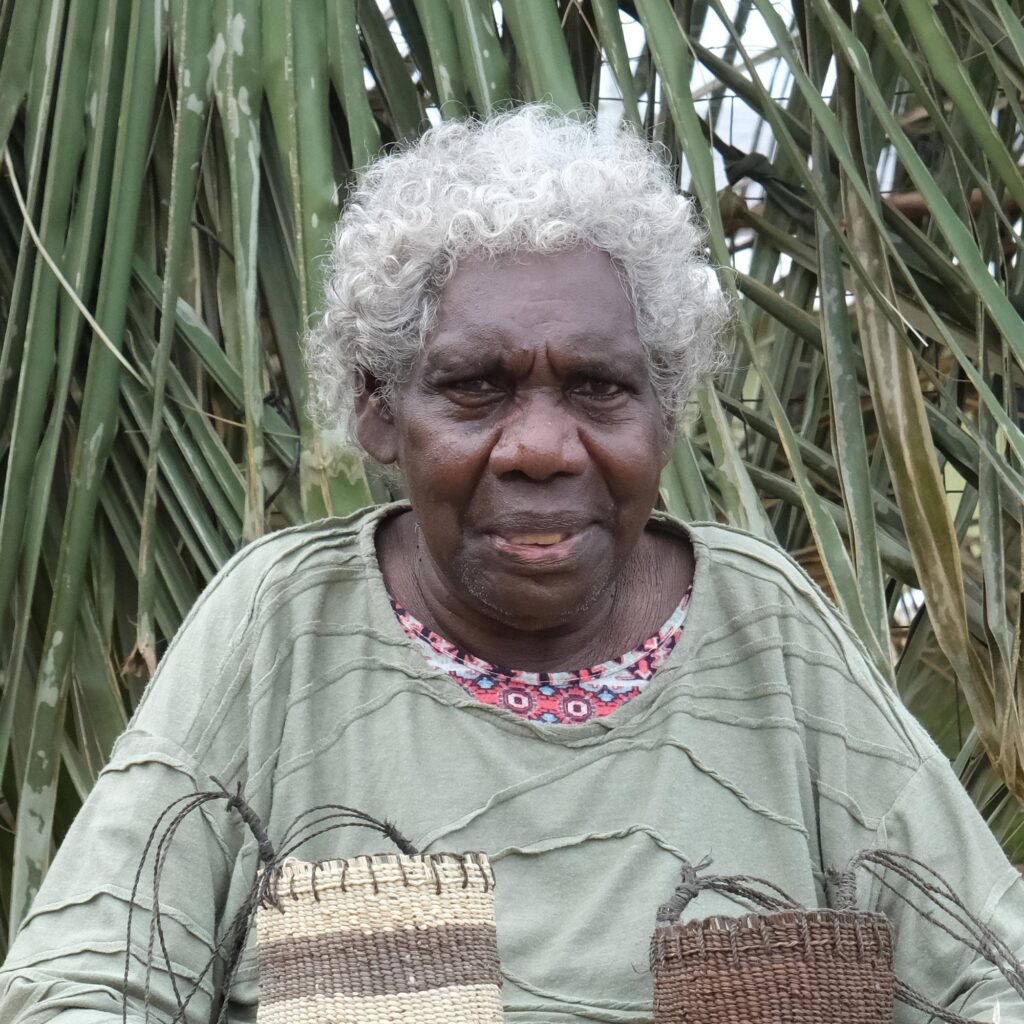
Ruth Ŋalmakarra
Milingimbi Art and Culture
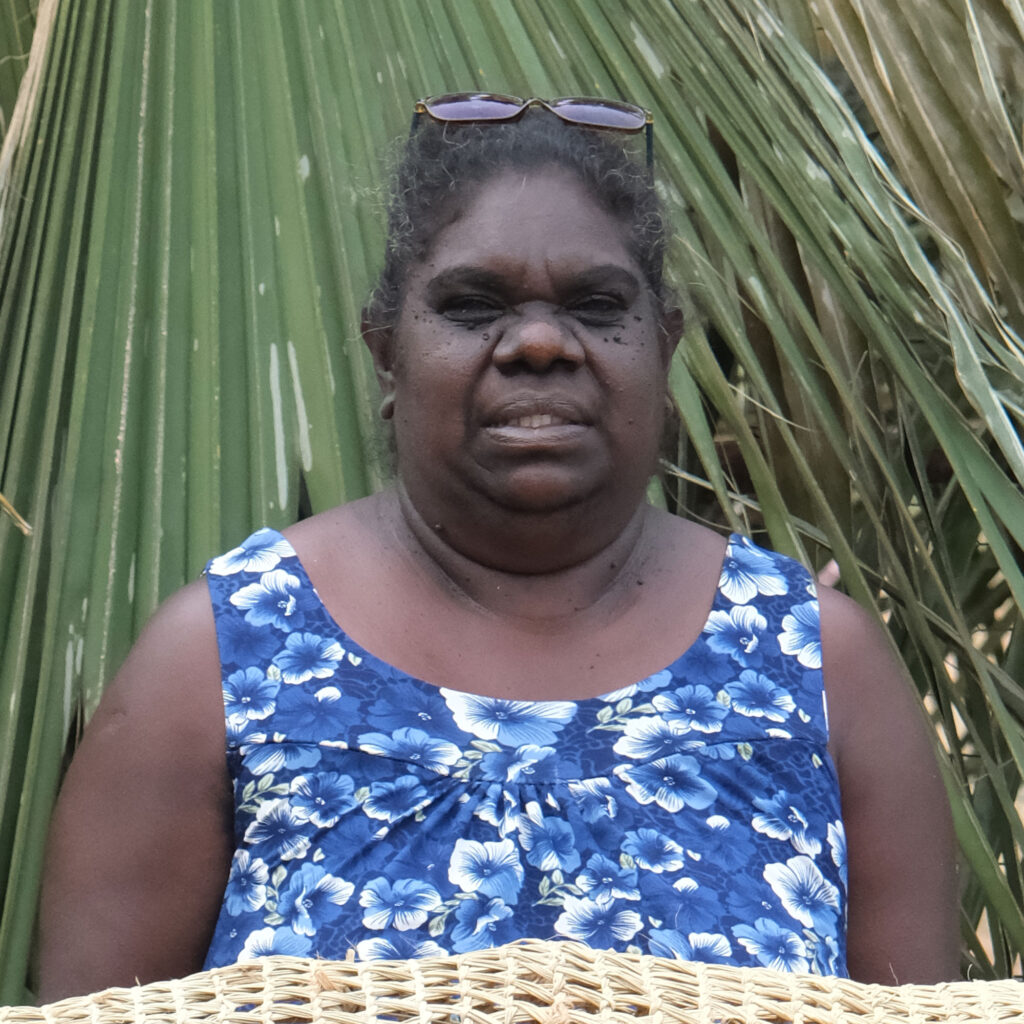
Sabrina Rräthi Roy
Milingimbi Art and Culture
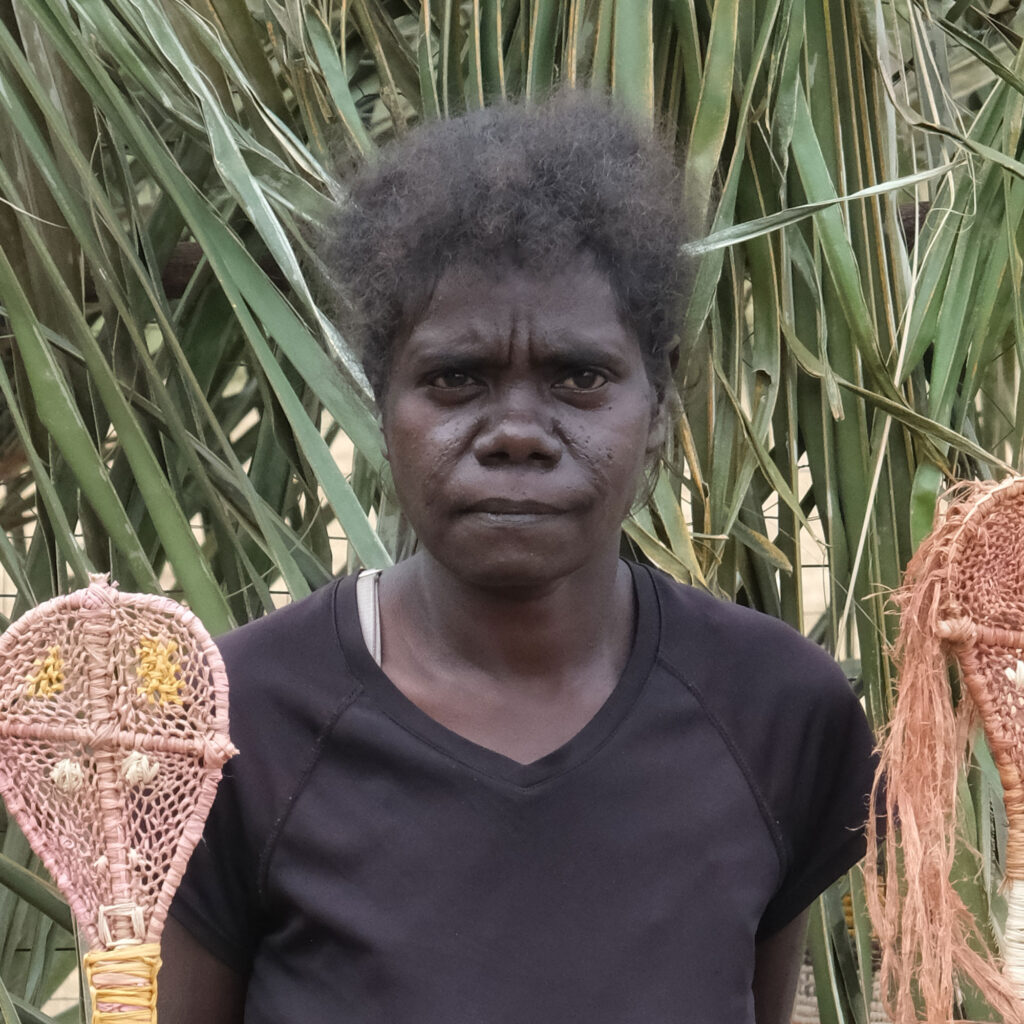
Samantha Malkadja
Maningrida Arts and Culture
Selina Rawurruway
Bula’bula Arts
Susan Balbunga
Milingimbi Art and Culture
Susan Yirrawurr Gaykamaŋu
Milingimbi Art and Culture
Tracey Garrawurra
Milingimbi Art and Culture
Verity Burarrwanga
Elcho Island Arts
Roslyn Markapuy
Milingimbi Art and Culture
Language: Dhuwala/ Gupapuyŋu
Clan: Gupapuyŋu Birrkili
Homeland: Garriyak
Laŋarra Bush Gallery 2024
Milingimbi artists chose to tell their stories of Yolŋu weaving across time—from pre-European contact, through the mission era, and into the present.
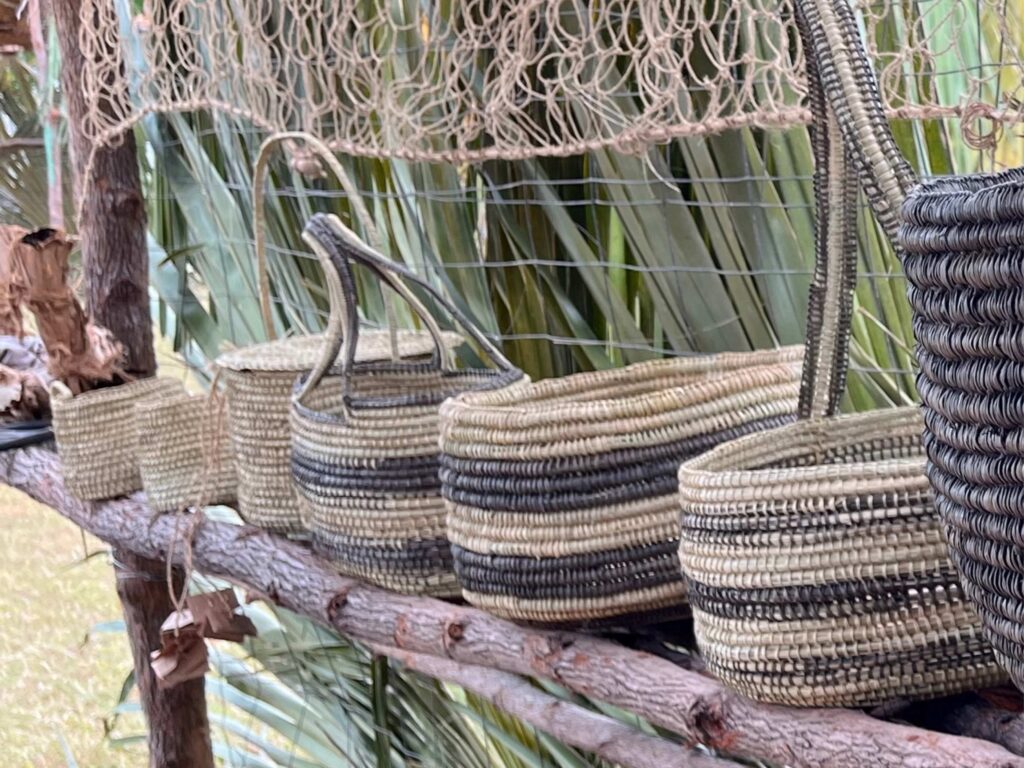
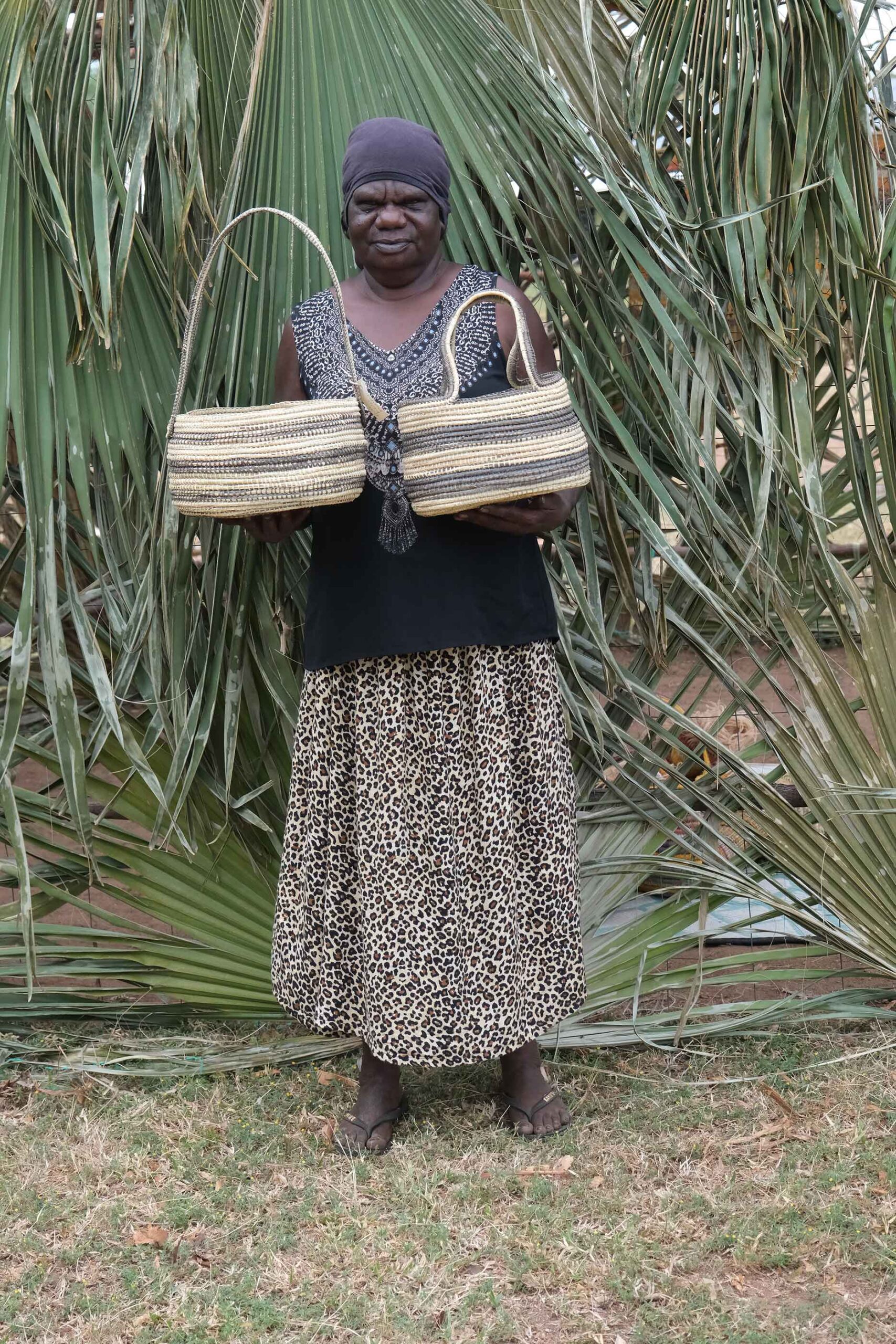
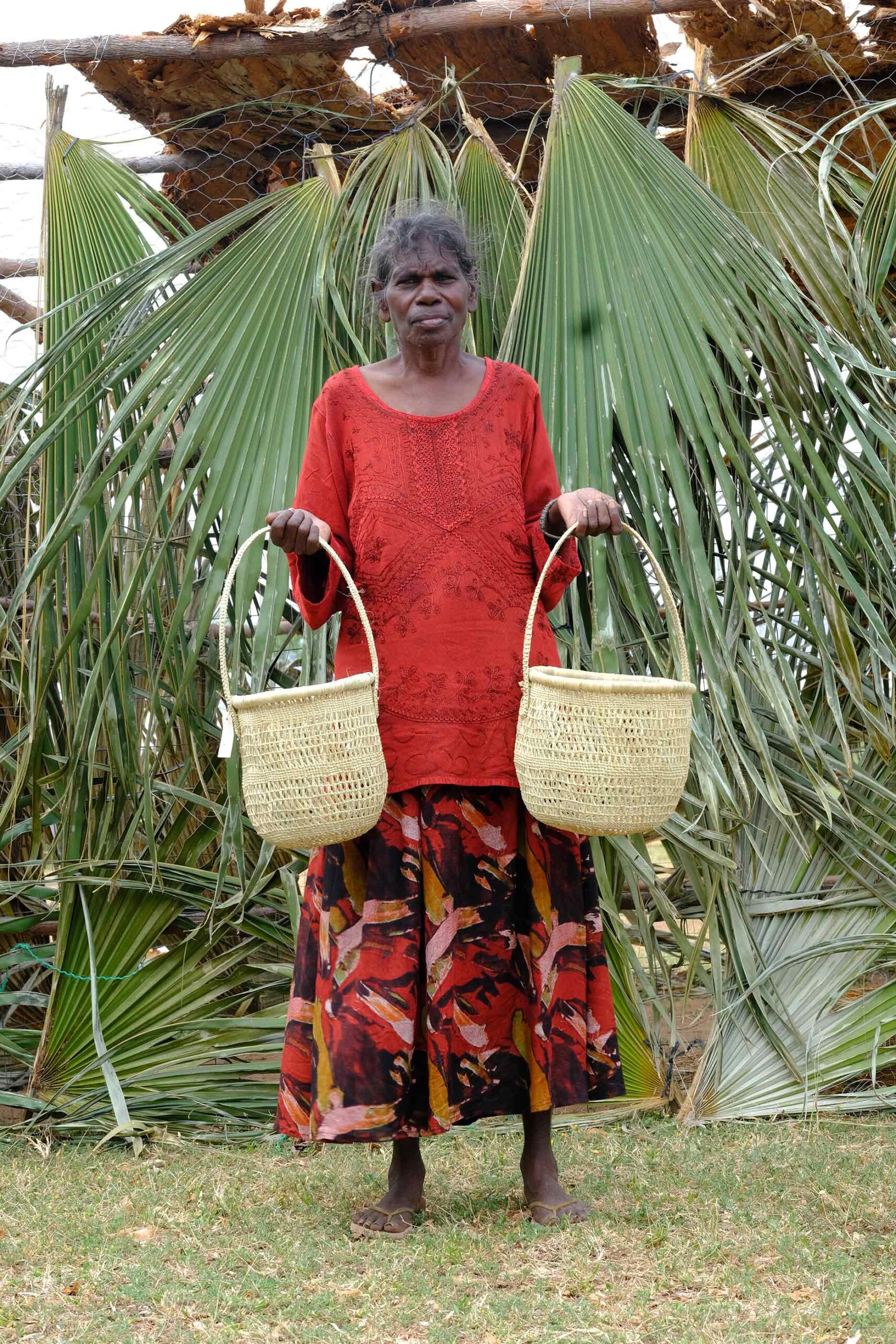
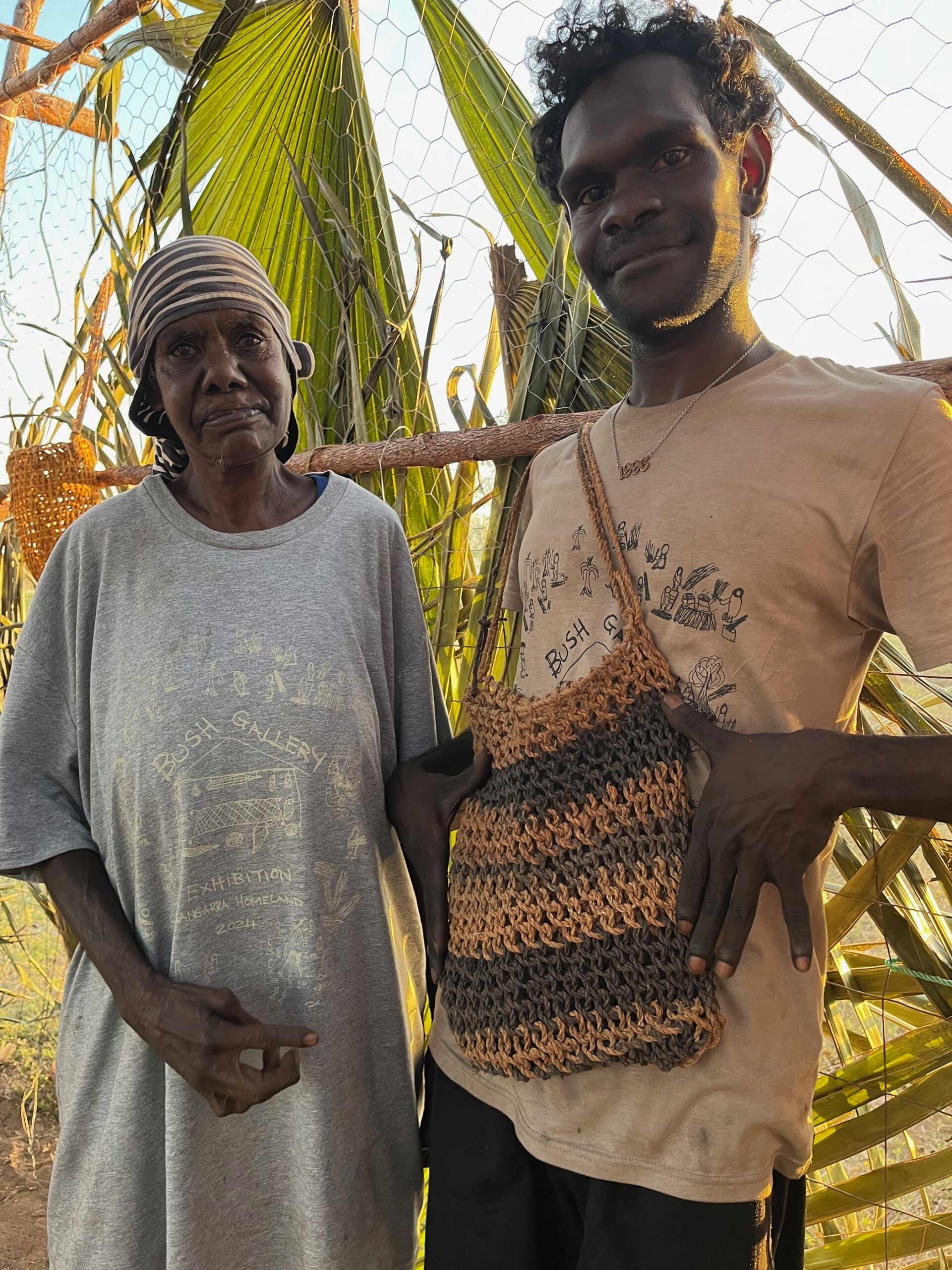
Some artists reflected on the mission era, beginning in the 1920s and extending through World War II—a time of profound cultural and material change, including Milingimbi’s role as a military airfield. Roslyn Markapuy recreated early “Mission Baskets” with handles. Combining natural undyed fibre and mol – black dyed pandanus Markapuy
Markapuy worked with natural fibre and mol—black dyed pandanus, honoring her mother, Margaret Rarru Garrawurra’s legacy as the pioneer of developing rich, deep mol to create astounding contemporary woven artworks.
More artworks
Artist bio
Tracey Garrawurra
Milingimbi Art and Culture
Language: Dhuwal/ Djambarrpuyŋu
Clan: Ḻiya-gawumirr Garrawurra
Homeland: Gärriyak
Laŋarra Bush Gallery 2024
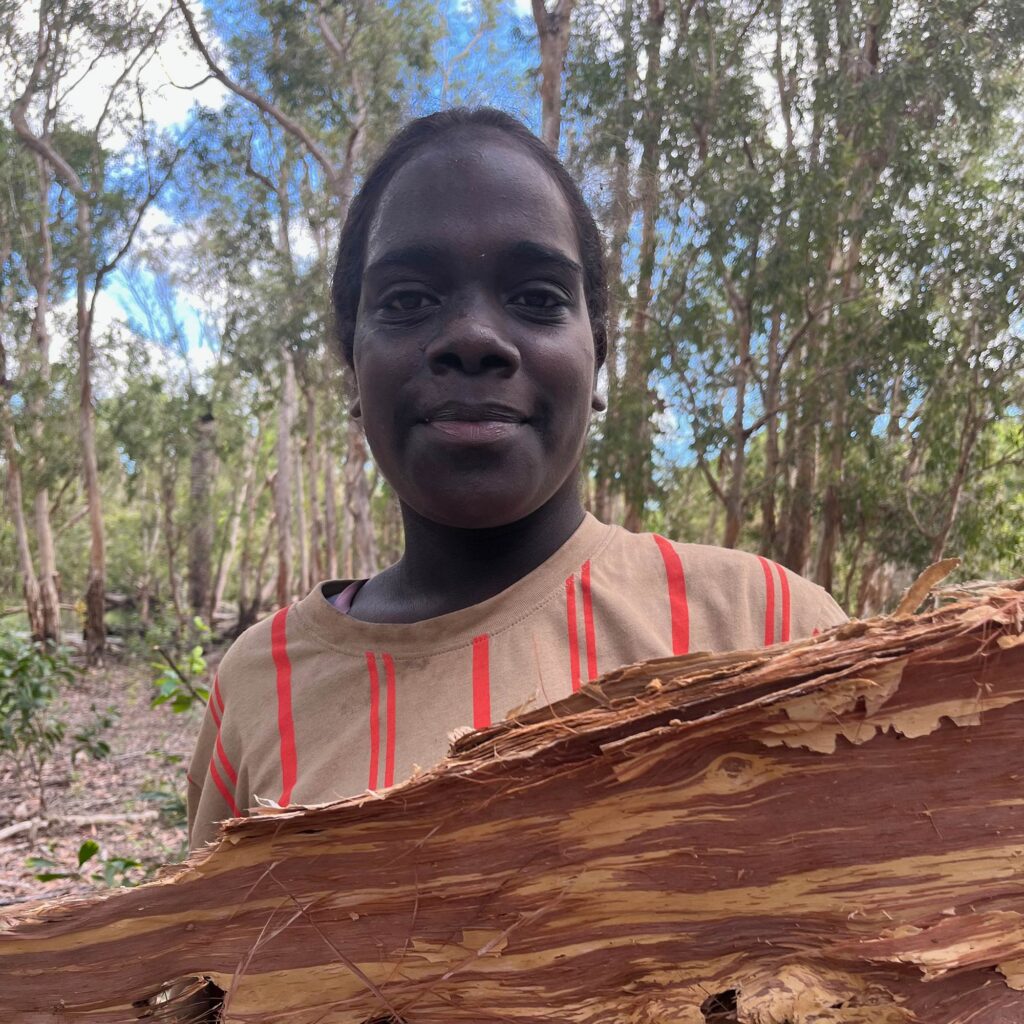
Tracey Garrawarra is a passionate emerging artist. During Laŋarra Bush Gallery 2024 Tracey worked together with her ŋamala, bäpa, wäwa ga märi’s (mother, father, brother and grandmothers) to construct the bush galleries for the five art centres.
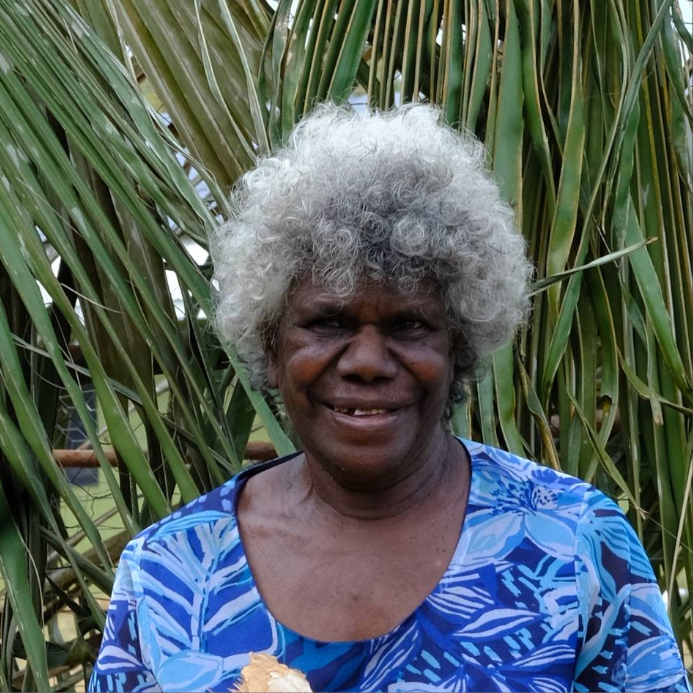
Lily Roy
Milingimbi Art and Culture
Language: Burarra
Clan: Gamal Walamaŋu
Homeland: Yilan
Laŋarra Bush Gallery 2024
During the inaugural Bush Gallery, Lily Roy’s cultural leadership and extensive knowledge of languages, history, and Yolŋu culture saw her take on an important role supporting less confident artists. She acted as a cultural interpreter, particularly for artists from Maningrida and Milingimbi, helping to strengthen connections and ensure shared understanding.
More artworks
Artist bio
Abigail Mundjala
Milingimbi Art and Culture
Language: Dhuwala/ Gupapuyŋu
Clan: Gupapuyŋu Garawirrtja
Homeland: Lungutja
Laŋarra Bush Gallery 2024
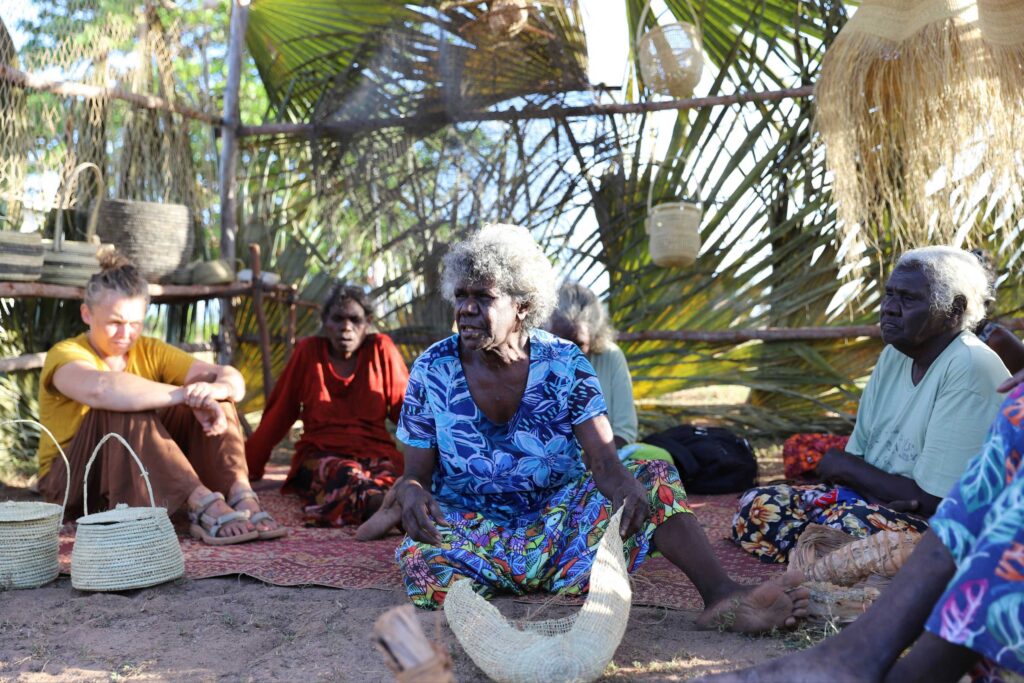
Abigail grew up surrounded by her aunties and observed their weaving and contributed to the daily routines of harvesting and preparing bush fibres. Abigail is passionate about ceremonial life and is known for her graceful ceremonial dancing and bush knowledge. During Laŋarra Bush Gallery Abigail worked alongside Traditional Owners to welcome artists and vistor’s to Laŋarra.
More artworks
Artist bio
Kerry Malaray
Milingimbi Art and Culture
Language: Dhuwala/ Gupapuyŋu
Clan: Gupapuyŋu Birrkili
Homeland: Garriyak
Laŋarra Bush Gallery 2024
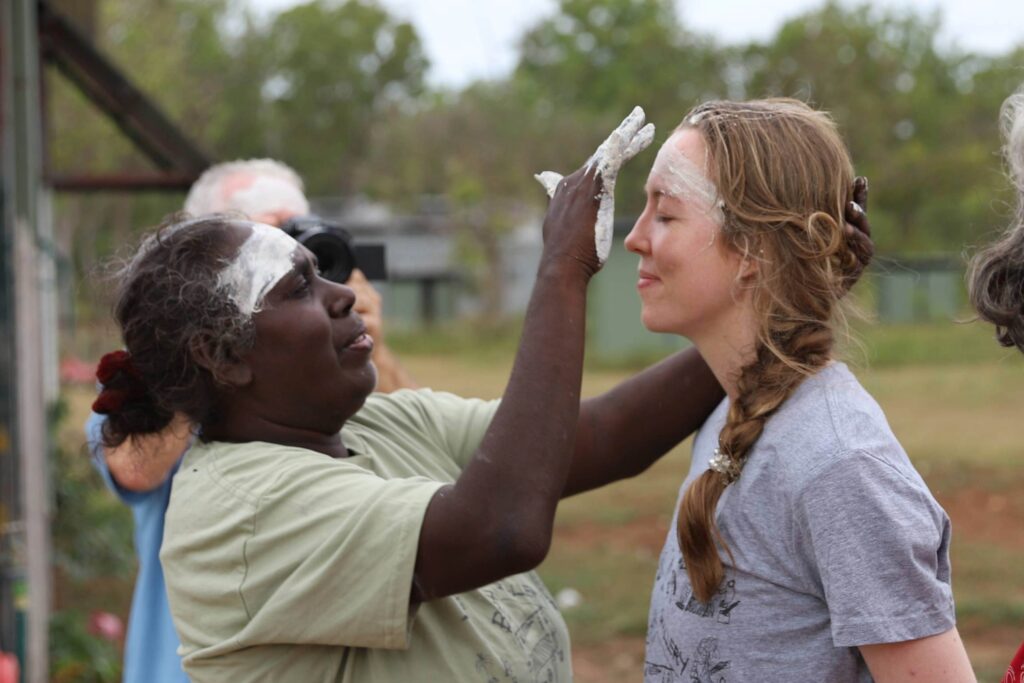
Malaray is one of the daughters of the celebrated master fibre artist Margaret Rarru Garrawurra. She resides at Laŋarra (Howard Island), off the coast of Arnhem Land. In the unhurried environment of Laŋarra homeland, Malaray works with her mother to gather materials and process them into artworks imbued with their ancestral origins.
More artworks
Artist bio
Susan Yirrawurr Gaykamaŋu
Milingimbi Art and Culture
Language: Dhuwala/ Gupapuyŋu
Clan: Gupapuyŋu Gaykamaŋu
Homeland: Djiliwirri
Laŋarra Bush Gallery 2024
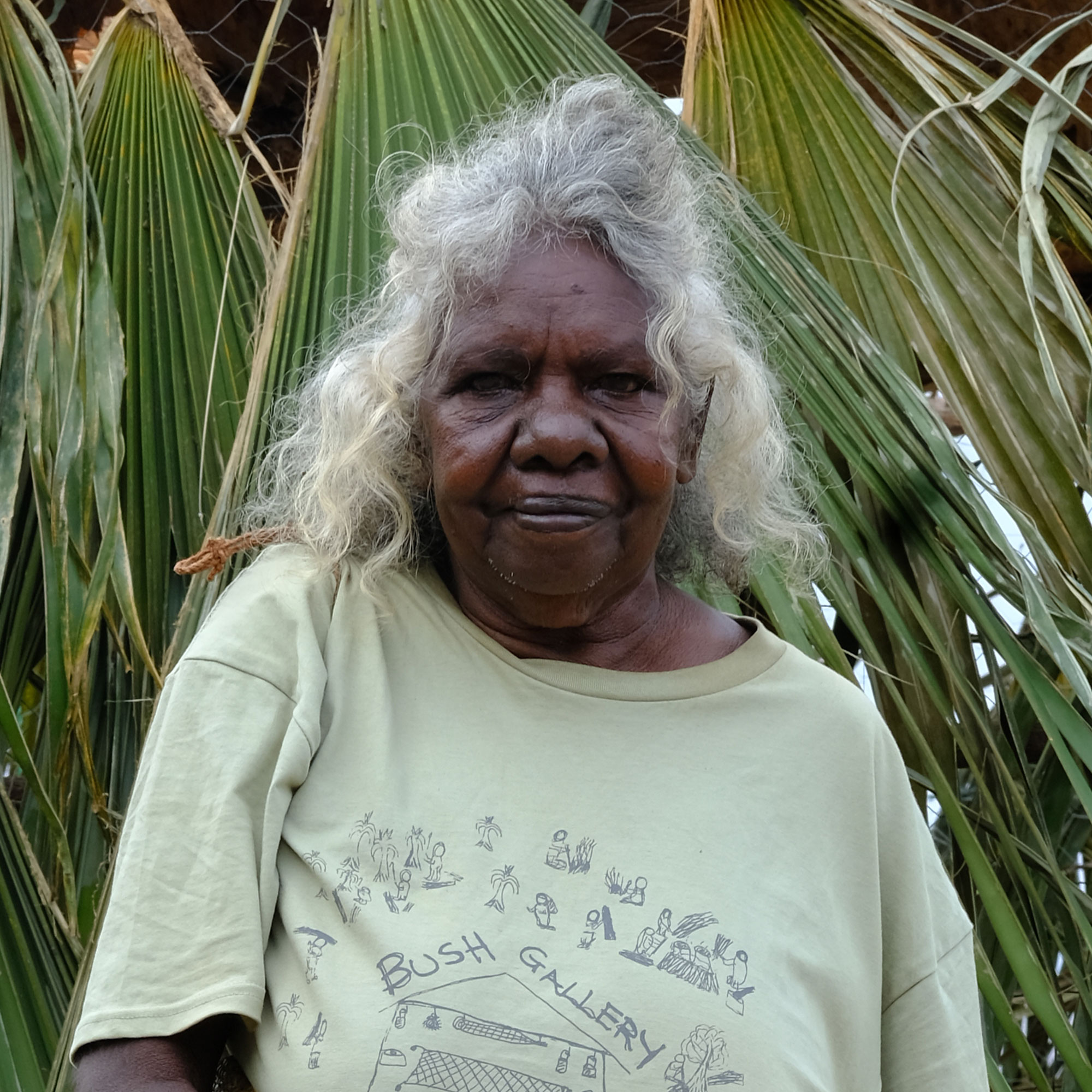
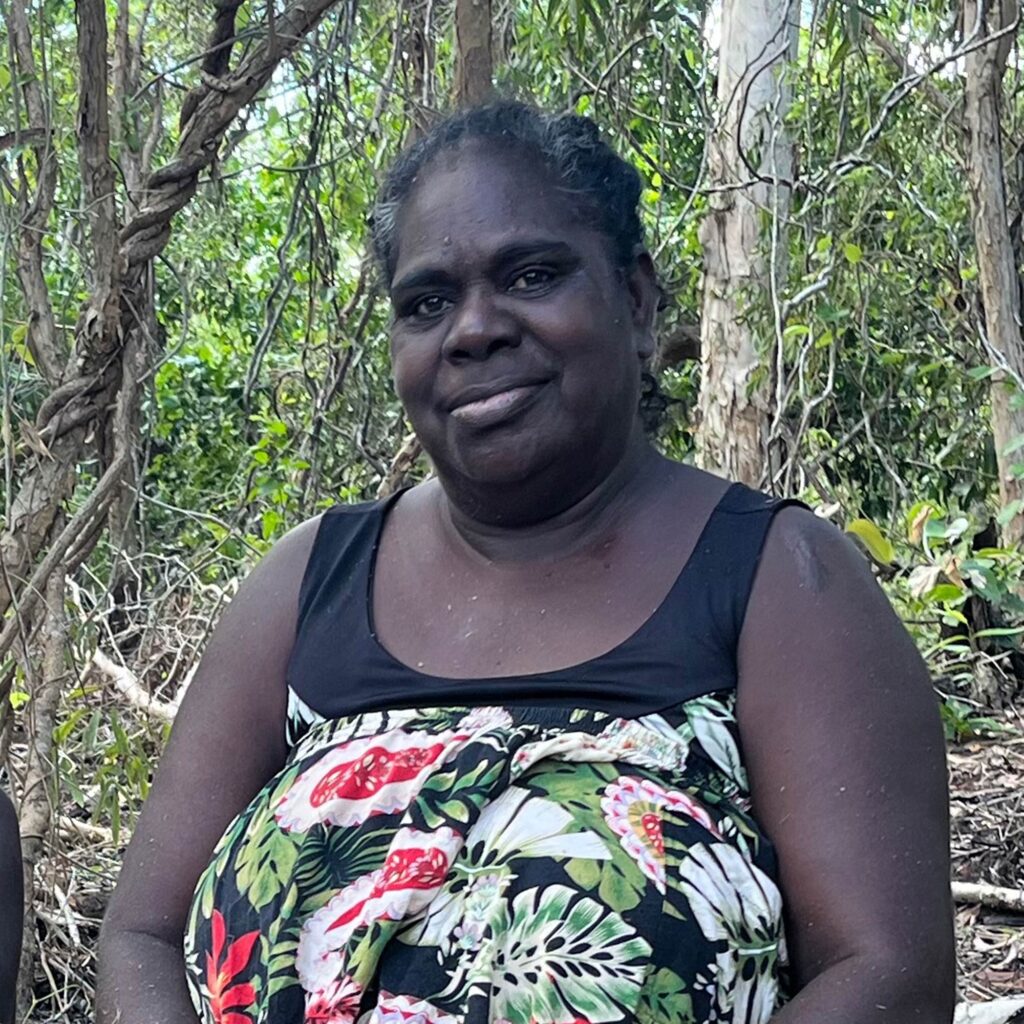
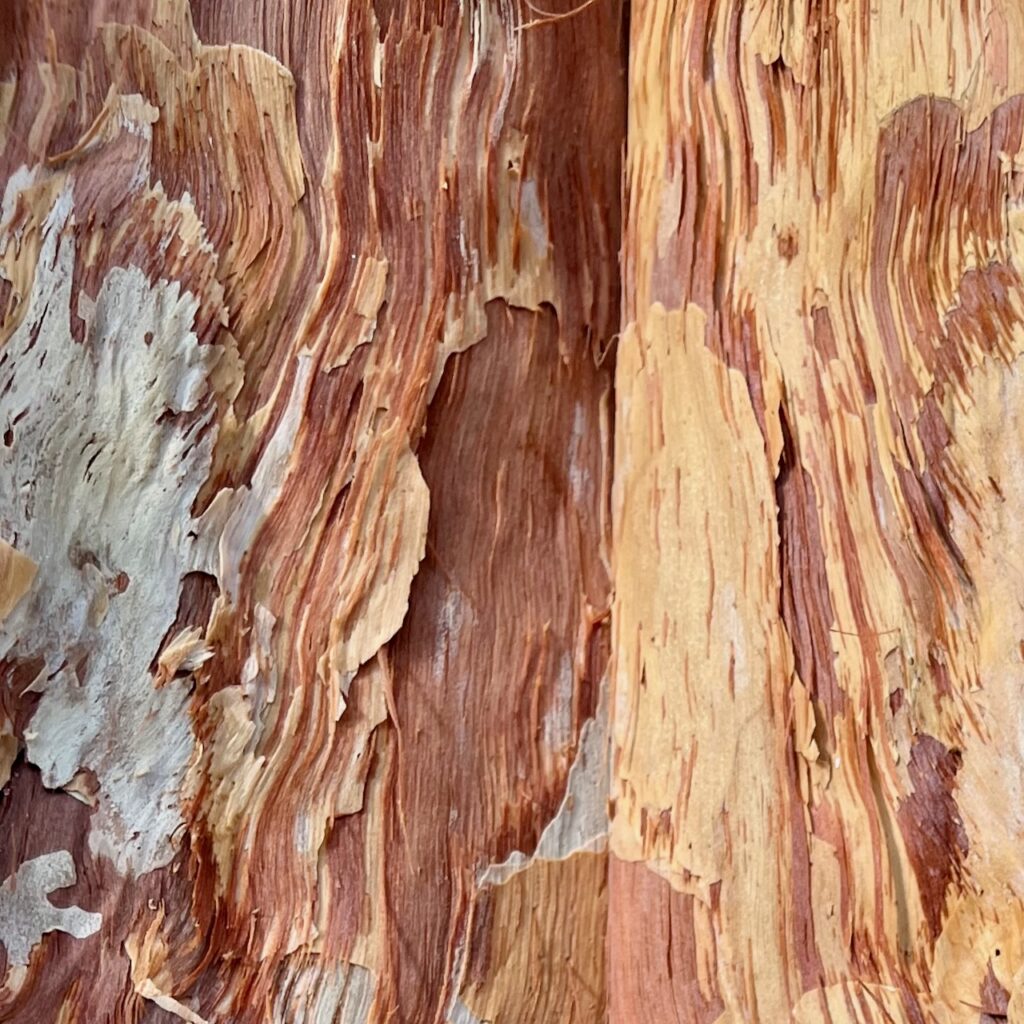
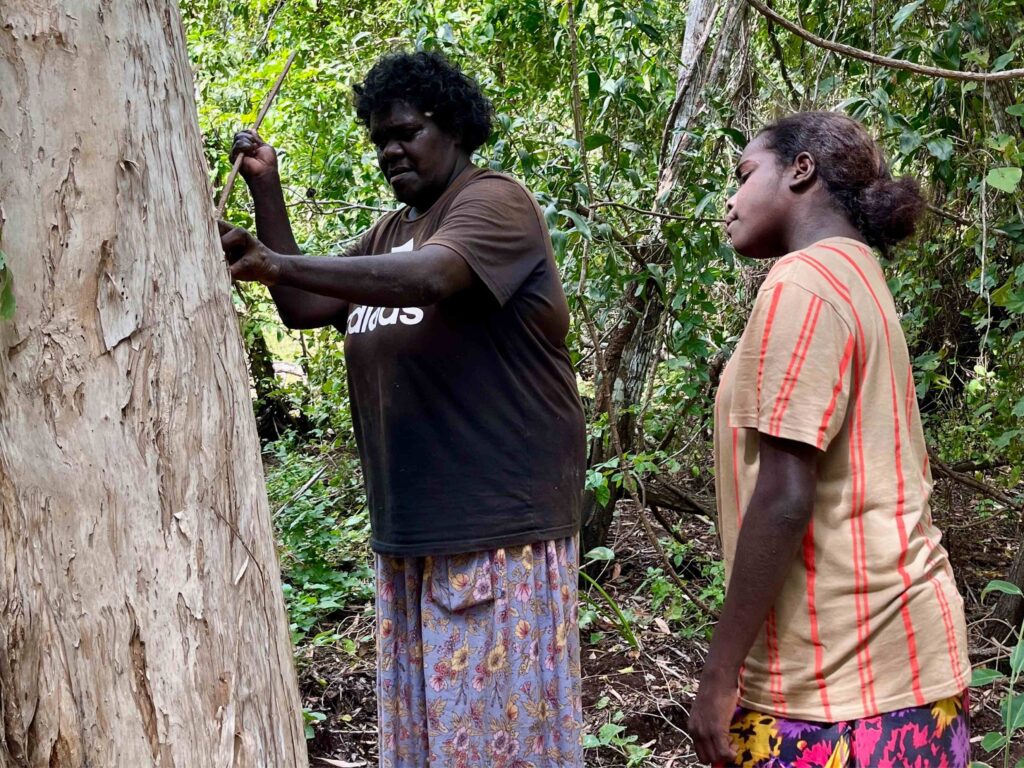
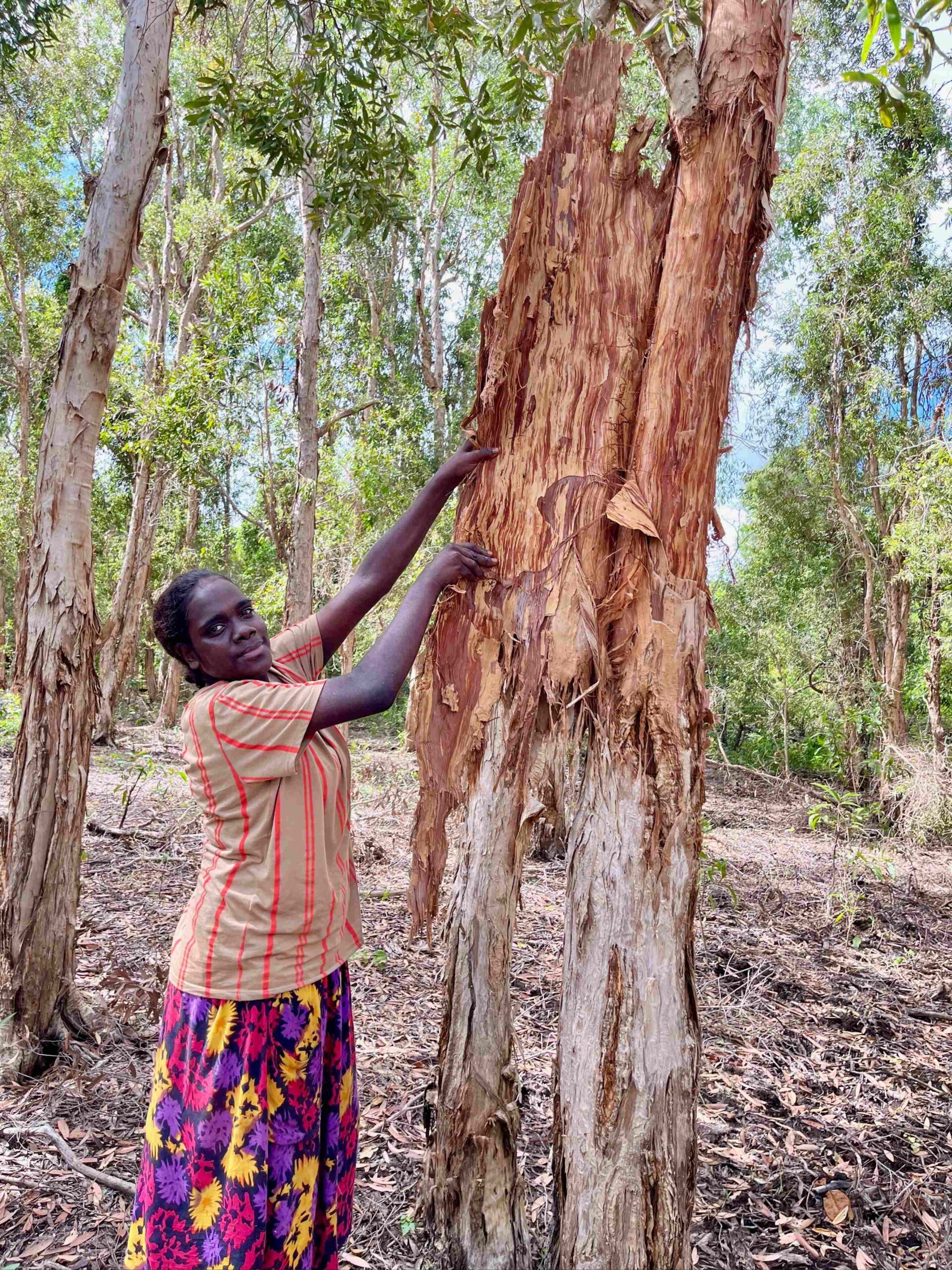
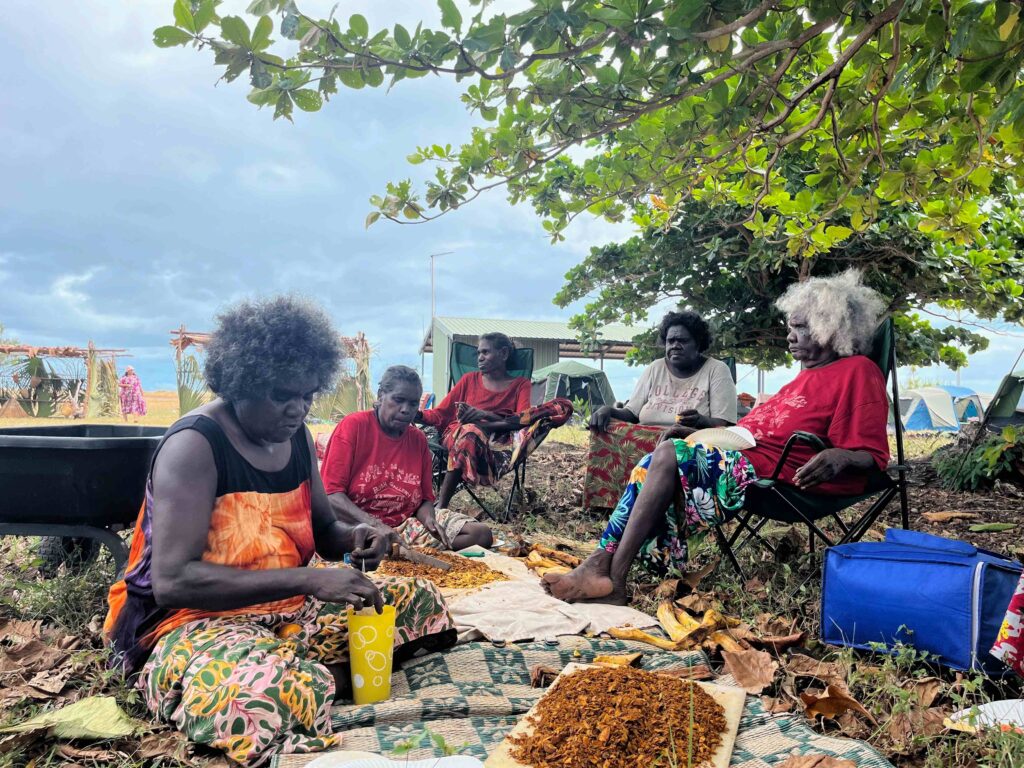
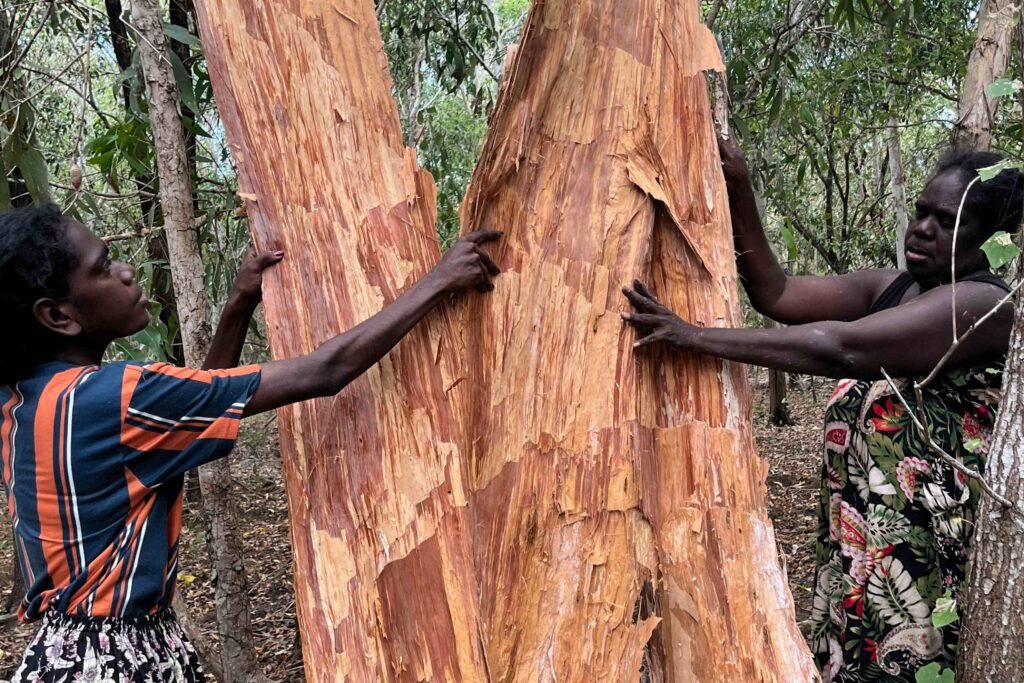
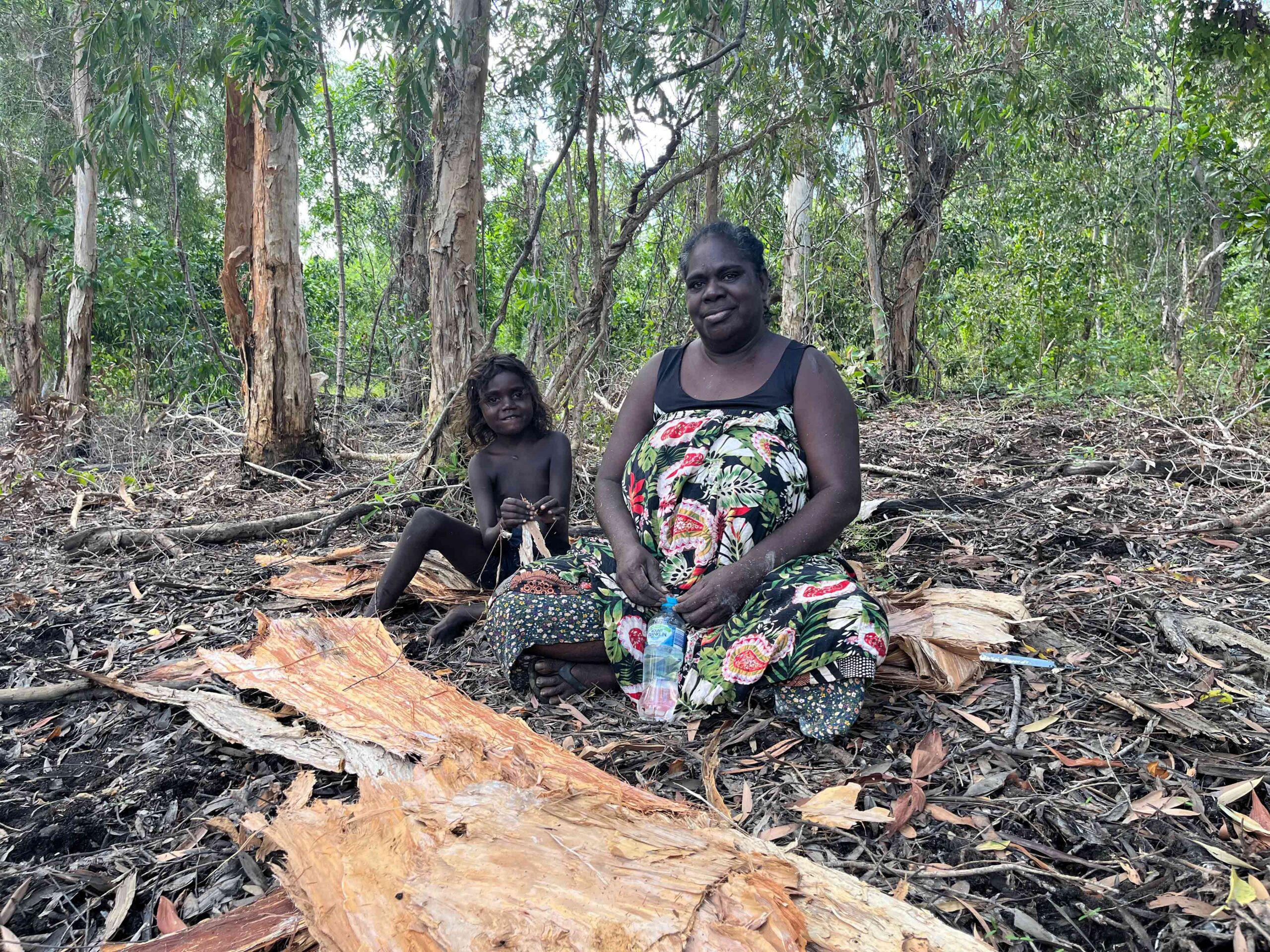
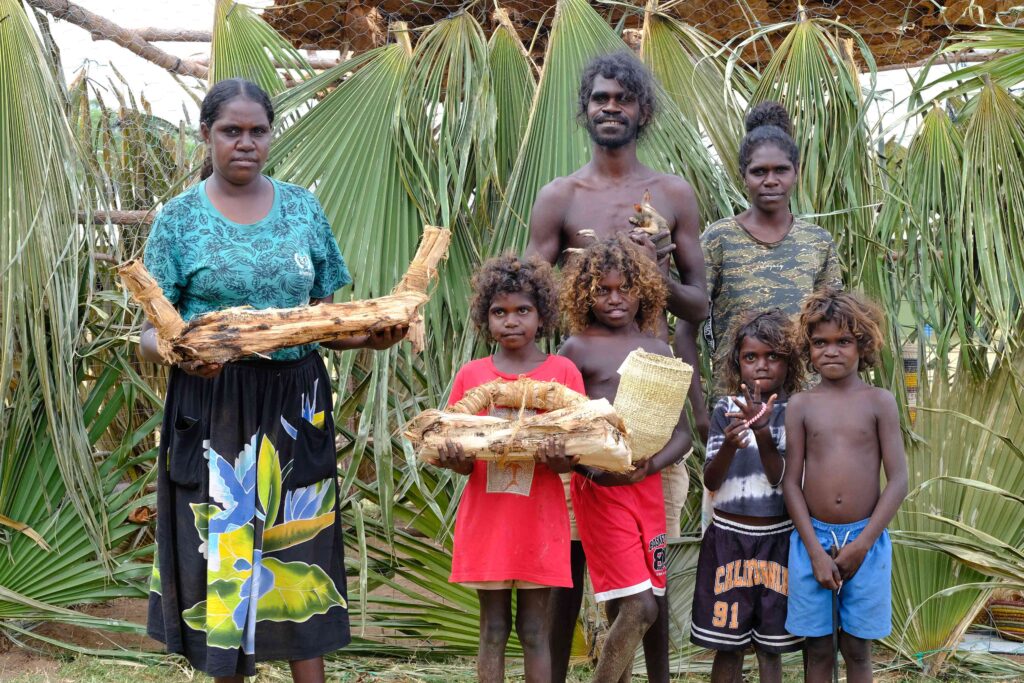
Susan Yirrawurr, daughter of senior artist Helen Ganalmirriwuy, lives and works at Laŋarra homeland. Yirrawurr prepared the site for Laŋarra Bush Gallery 2024, together with her children and grandchild she harvested dharpa ga raŋan (wood and paperbark) for the five bush galleries.
More artworks
Artist bio
Susan Balbunga
Milingimbi Art and Culture
Language: Burarra
Clan: Warrawarra
Country: Gamurra Gu-yurra
Laŋarra Bush Gallery 2024
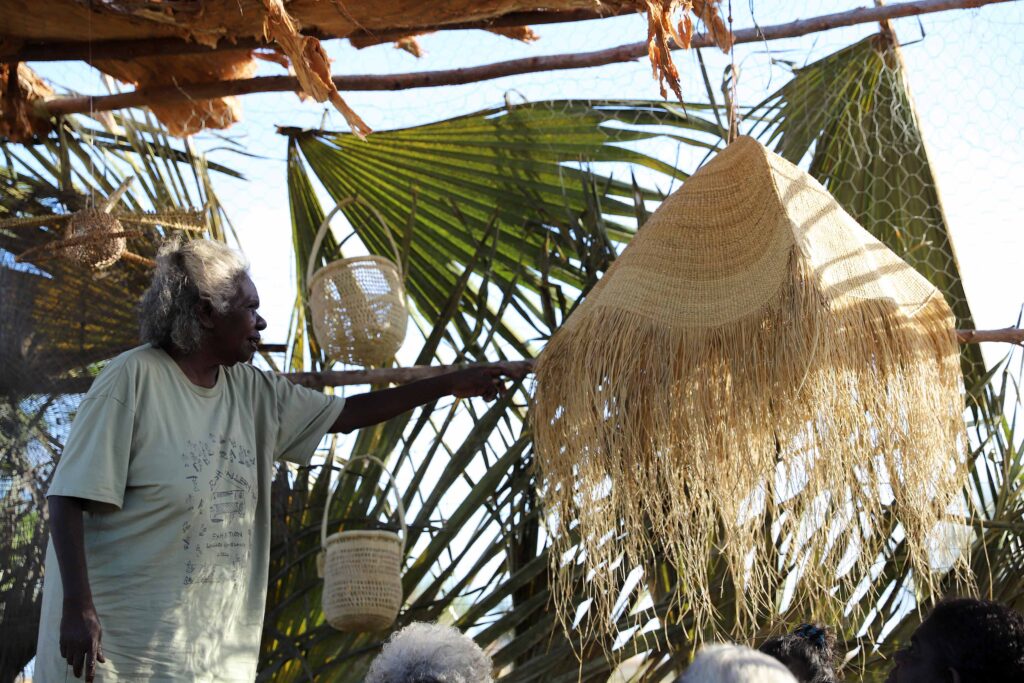
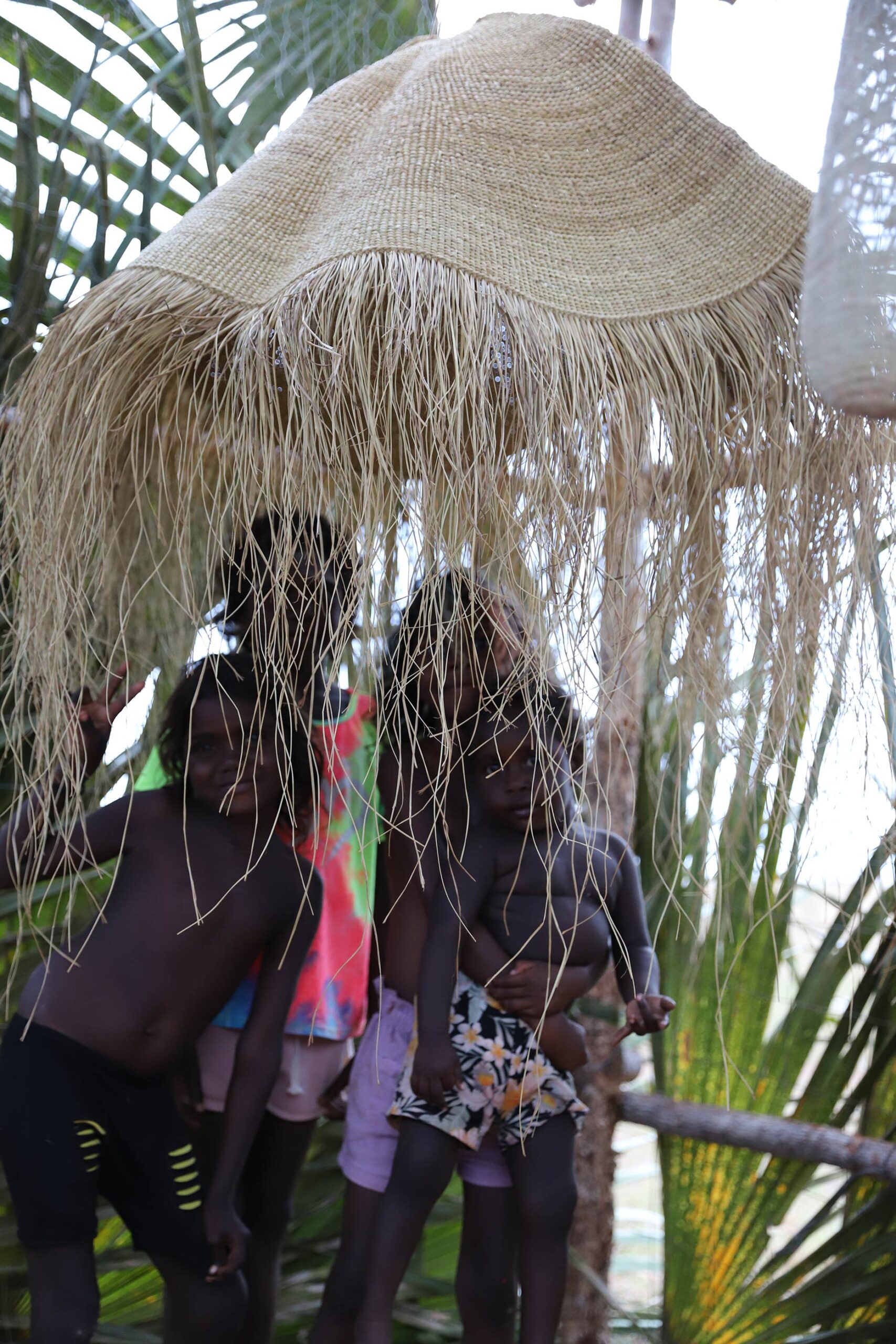
Balbunga’s art practice is informed by her lived experiences growing up in the bush and the knowledge and skills she acquired from her elders, such as learning how to harvest, prepare and paint hollow logs and barks from her father. She continues to make traditional fibre objects, including the revered bamugora (conical mat).
Milingimbi artists chose to tell their stories of Yolŋu weaving across time—from pre-European contact, through the mission era, and into the present.
In the Old Days Miṉḏirr (dilly bags) were made for foraging and ceremony, an-gujechiya (fish traps) for hunting, and bamugora (conical mats) for carrying and protection. These practices, made from jungle vine, gunga (pandanus), baḻgurr (kurrajong), and other local fibres, have been passed down through countless generations and remain tied to ancestral law and cultural practice.
More artworks
Artist bio
Sabrina Rräthi Roy
Milingimbi Art and Culture
Language: Nhaŋu Yan-nhaŋu
Clan: Mäḻarra
Country: Murruŋga
Laŋarra Bush Gallery 2024
Milingimbi artists chose to tell their stories of Yolŋu weaving across time—from pre-European contact, through the mission era, and into the present.
In the Old Days Miṉḏirr (dilly bags) were made for foraging and ceremony, an-gujechiya (fish traps) for hunting, and bamugora (conical mats) for carrying and protection. These practices, made from jungle vine, gunga (pandanus), baḻgurr (kurrajong), and other local fibres, have been passed down through countless generations and remain tied to ancestral law and cultural practice.
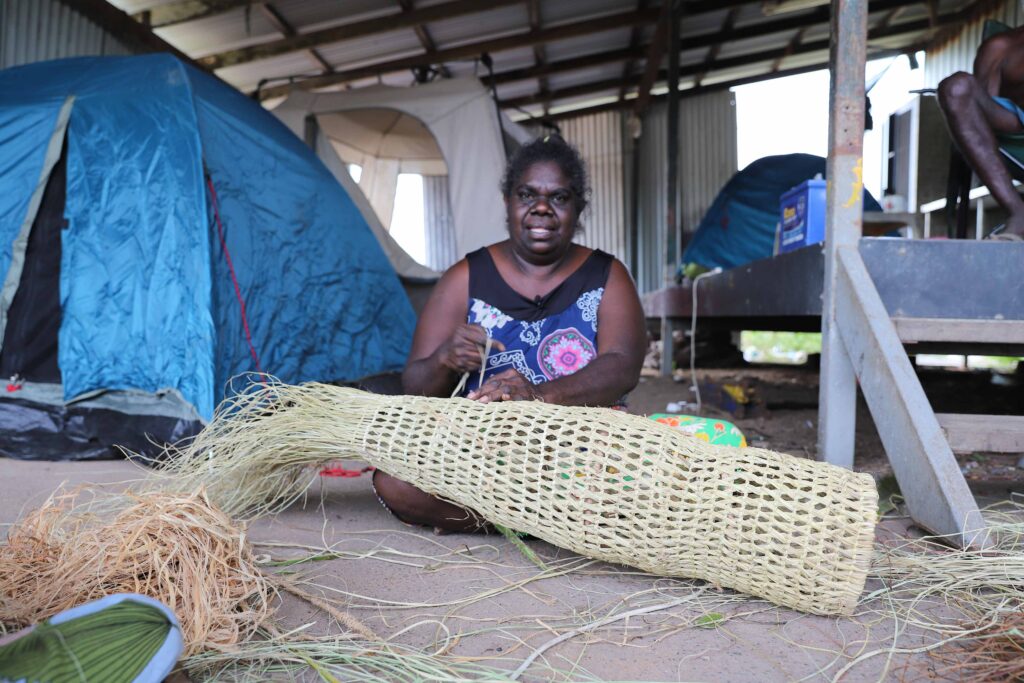
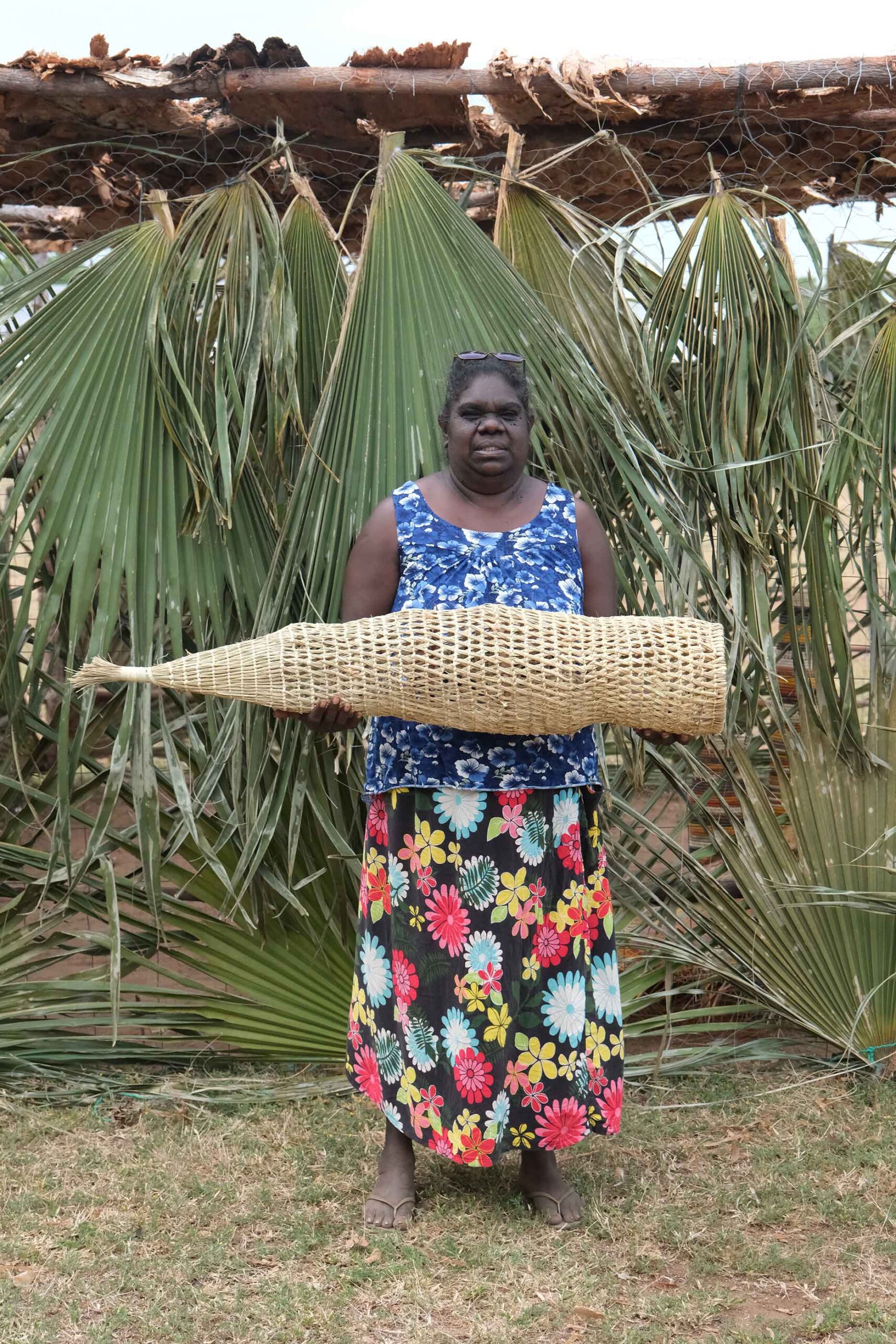
Sabrina Rräthi Roy, although a senior weaver, continues to learn the art of making an-gujechiya (fish traps) from her ŋäṉḏi (mother and mother’s sisters), Lily Roy, Freda Wayartja and Bonnie Burangarra. For Bush Gallery Sabrina made her fist an-gujechiya using a lattice twining technique.
More artworks
Artist bio
Ruth Ŋalmakarra
Milingimbi Art and Culture
Language: Dhuwal/ Djambarrpuyŋu
Clan: Ḻiya-gawumirr Garrawurra
Homeland: Gärriyak
Laŋarra Bush Gallery 2024
Milingimbi artists chose to tell their stories of Yolŋu weaving across time—from pre-European contact, through the mission era, and into the present.
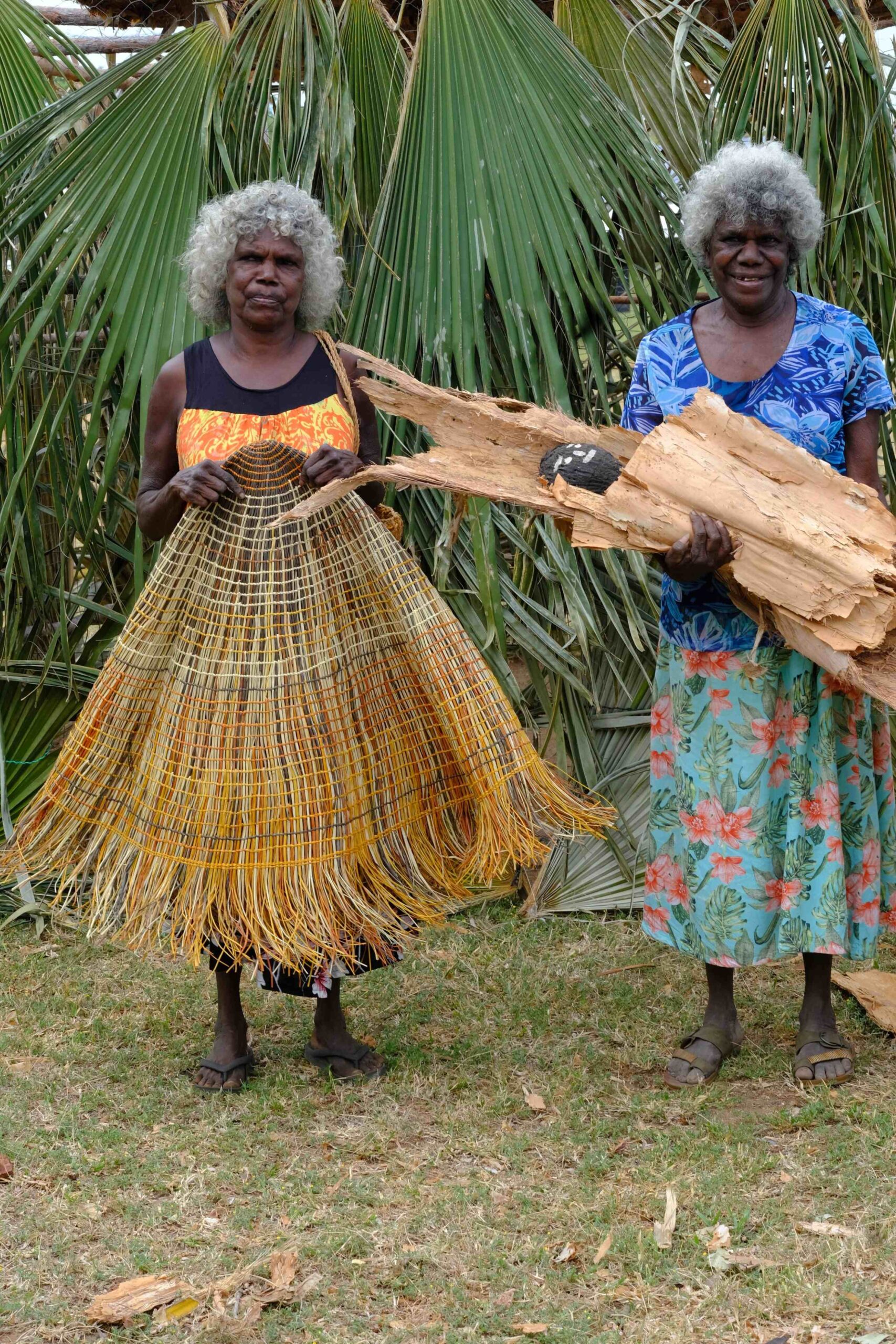
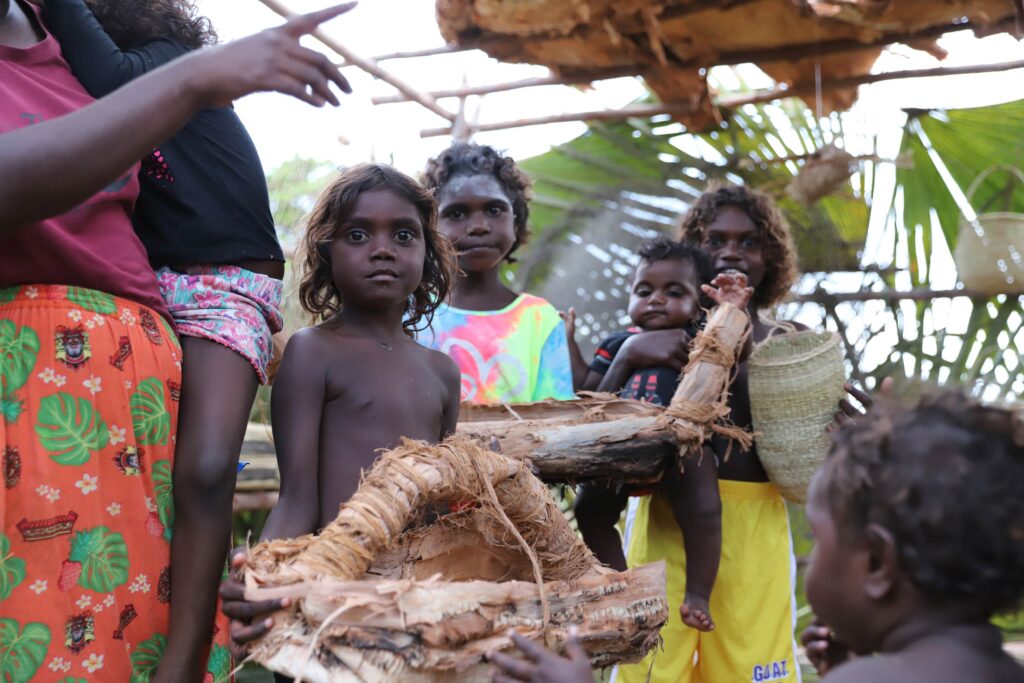
In the Old Days Miṉḏirr (dilly bags) were made for foraging and ceremony, an-gujechiya (fish traps) for hunting, and bamugora (conical mats) for carrying and protection. These practices, made from jungle vine, gunga (pandanus), baḻgurr (kurrajong), and other local fibres, have been passed down through countless generations and remain tied to ancestral law and cultural practice. Milingimibi Art and Culture Chairperson Ruth Ŋalmakarra chose to create dhaniya (paperbark water carriers), reviving a rarely seen practice of vessel-making that once held everyday importance.
More artworks
Artist bio
Elizabeth Rukarriwuy Garrawarra
Milingimbi Art and Culture
Language: Dhuwal/ Djambarrpuyŋu
Clan: Ḻiya-gawumirr Garrawurra
Homeland: Garriyak
Laŋarra Bush Gallery 2024
Milingimbi artists chose to tell their stories of Yolŋu weaving across time—from pre-European contact, through the mission era, and into the present.
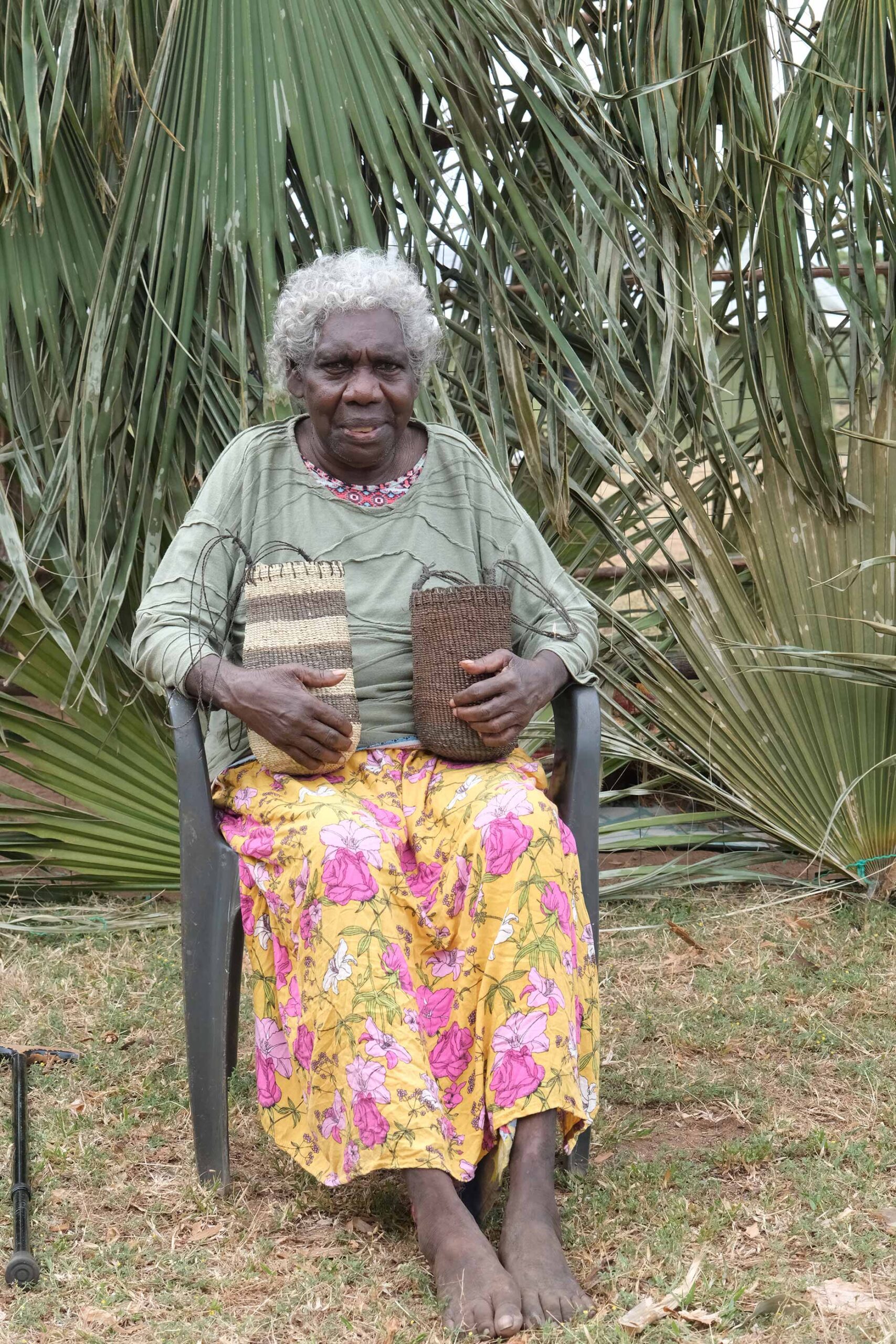
Some artists reflected on the mission era, beginning in the 1920s and extending through World War II—a time of profound cultural and material change, including Milingimbi’s role as a military airfield. Elizabeth Rukarriwuy wove teacups and billy cans that evoke everyday objects from this time.
All artists worked in natural fibre tones or mol—black dyed pandanus, honoring a technique pioneered by senior weaver Margaret Rarru Garrawurra. This unified palette bridged past and present—capturing Bush Gallery’s vision for Yolŋu weaving into the future.
More artworks
Artist bio
Nellie Roy
Milingimbi Art and Culture
Language: Yan-nhaŋu
Clan: Mäḻarra
Homeleand: Murruŋga
Laŋarra Bush Gallery 2024
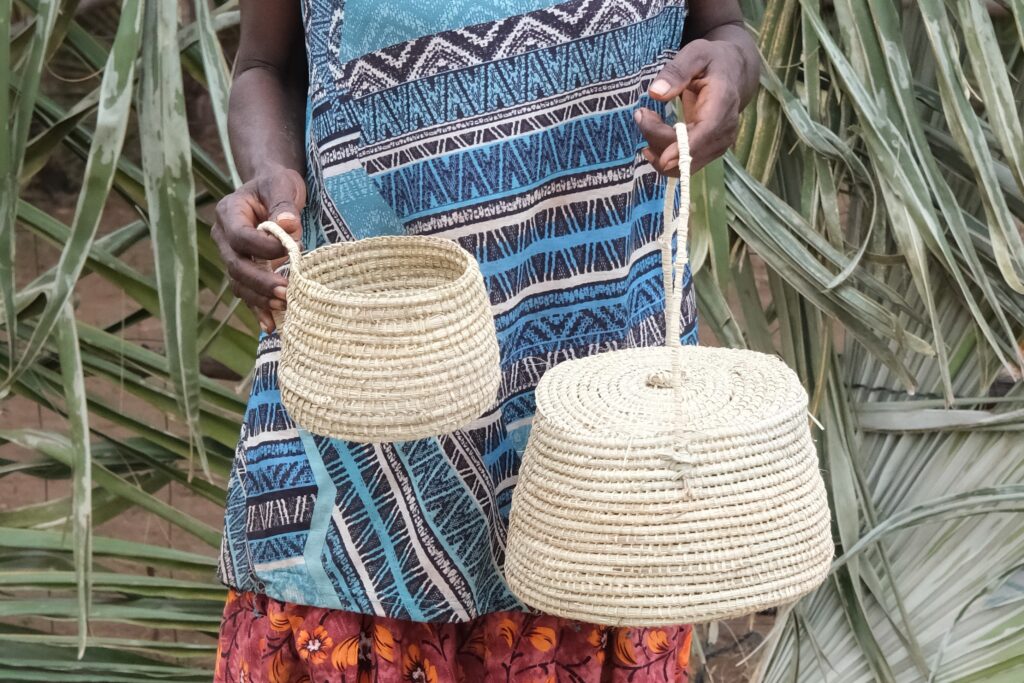
Nellie Roy followed her momu (grandmother) Lily Roy, and aunties Jennifer Dikarr and Sabrina Roy at Bush Gallery.
Part of the Mäḻarra songline travels through Laŋarra and continues to Yilan, Nellie’s grandmothers homeland. Bush Gallery 2024 was Nellie’s first experience of visting Laŋarra.
Margaret Rarru Garrawurra
Milingimbi Art and Culture
Language: Dhuwal/ Djambarrpuyŋu
Clan: Ḻiyagawumirr Garrawurra
Homeland: Gärriyak
Laŋarra Bush Gallery 2024
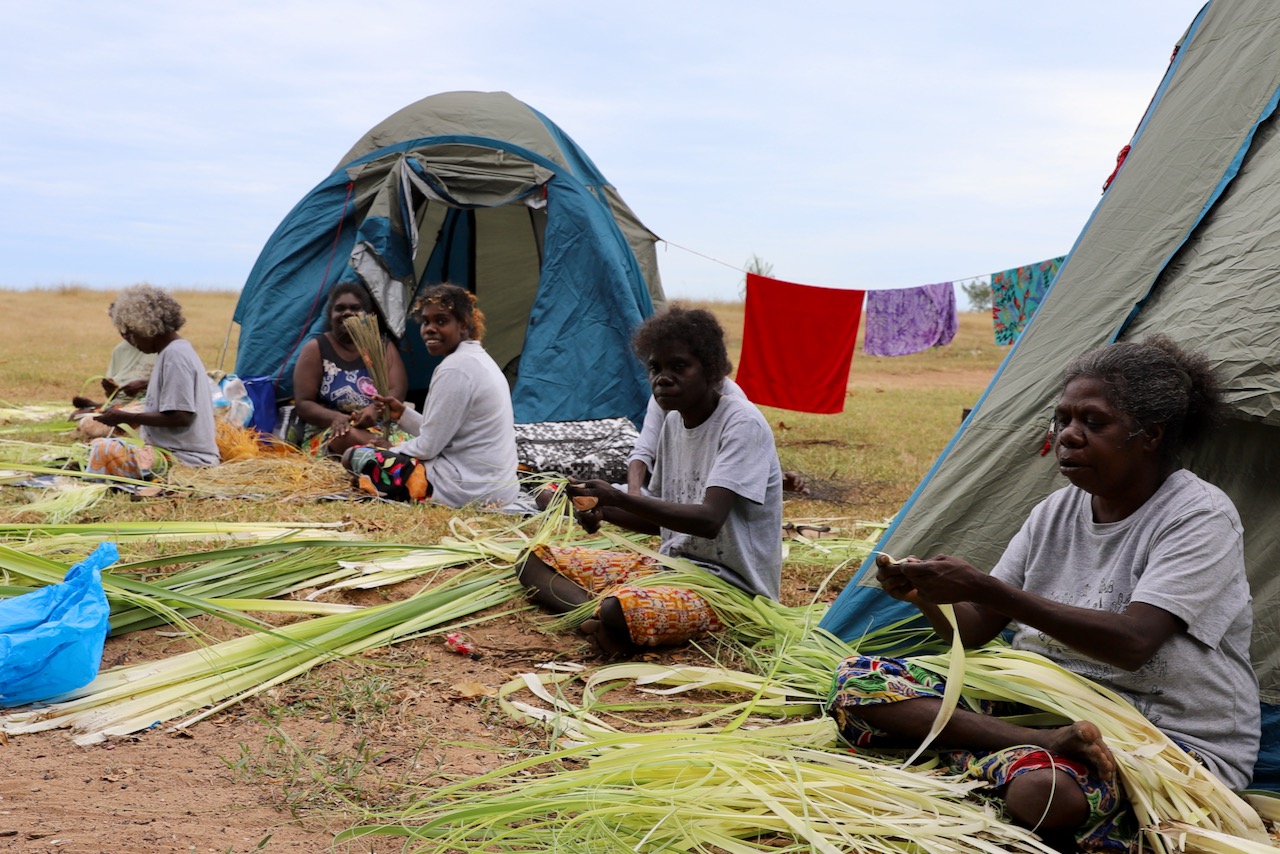
Milingimbi artists chose to tell their stories of Yolŋu weaving across time—from pre-European contact, through the mission era, and into the present.
Some artists reflected on the mission era, beginning in the 1920s and extending through World War II—a time of profound cultural and material change, including Milingimbi’s role as a military airfield.
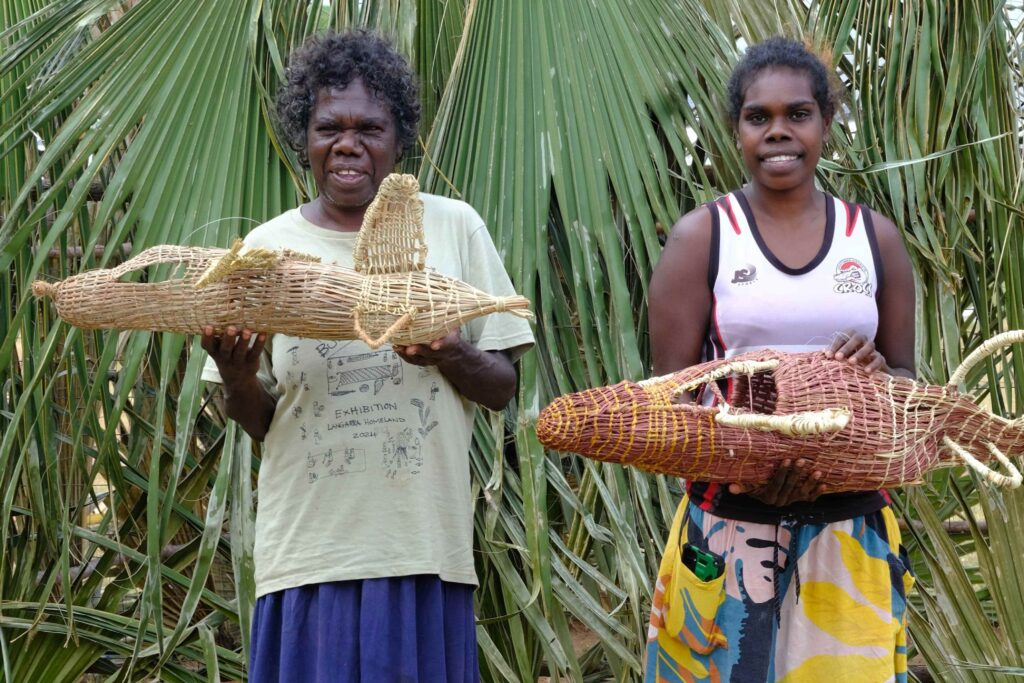
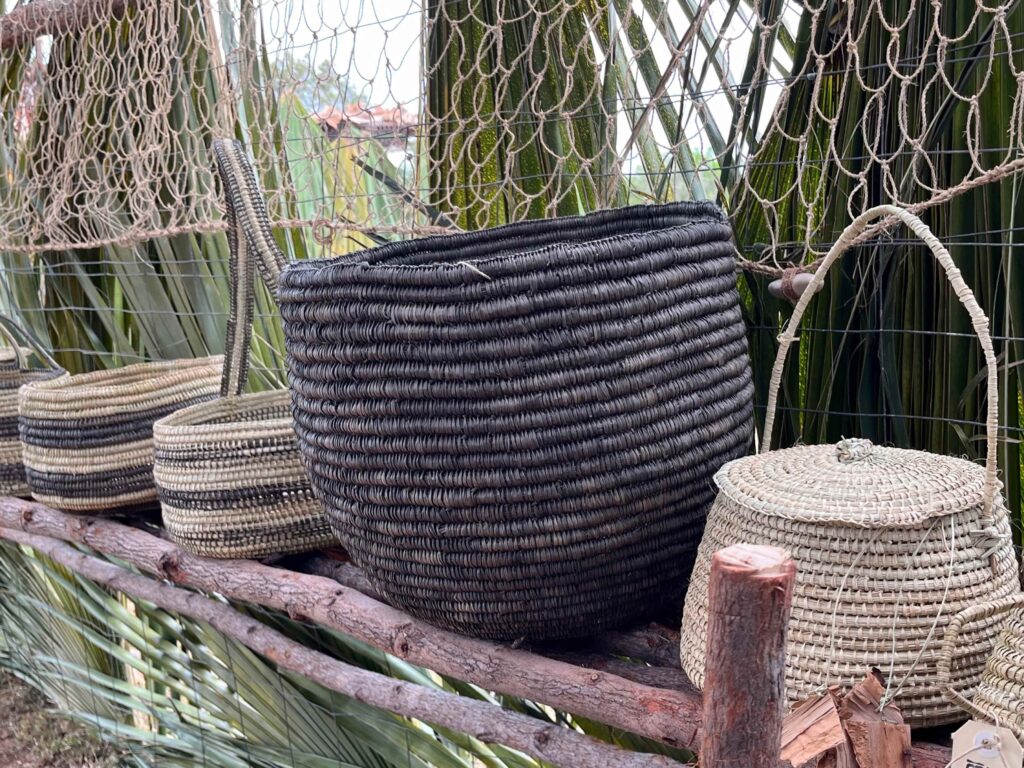
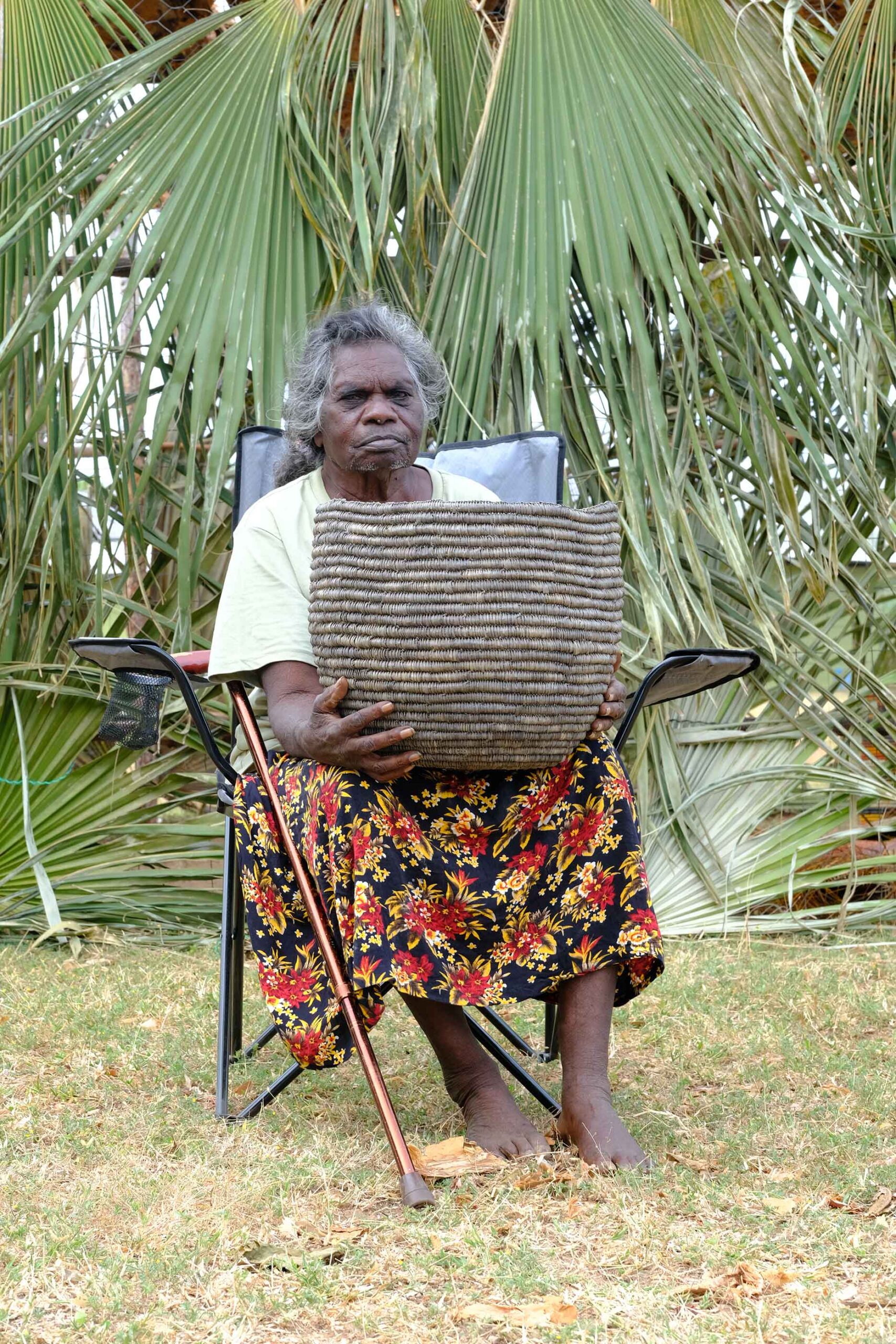
Margaret Rarru made a large basket in her signature mol (black) using the coil technique. This technique is widely practiced by Ngarrindjeri weavers of South Australia and was introduced to Arnhem Land artists by missionaries that traveled between the two places.
All artists worked in natural fibre tones or mol—black dyed pandanus, honoring a technique pioneered by Rarru. This unified palette bridged past and present—capturing Bush Gallery’s vision for Yolŋu weaving into the future.
More artworks
Artist bio
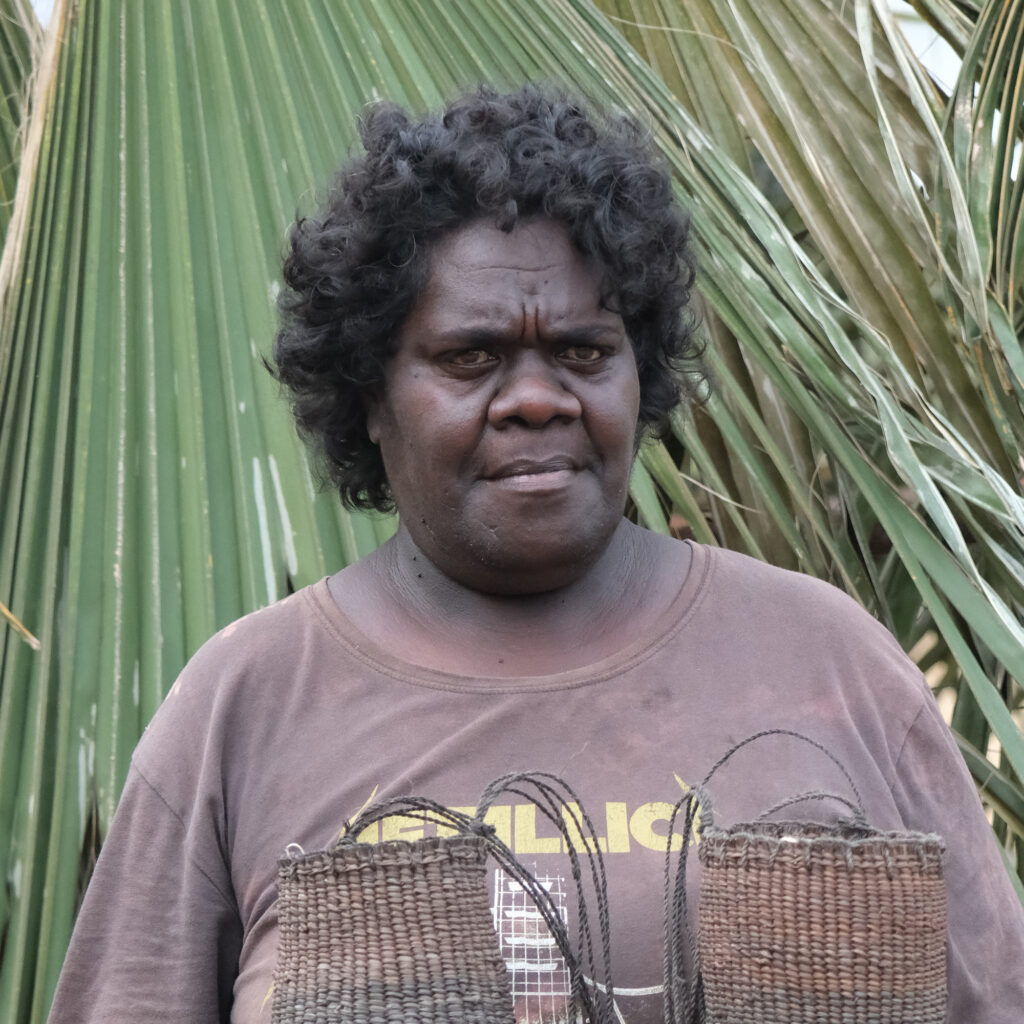
Mandy Batjula Gaykamangu
Milingimbi Art and Culture
Language: Dhuwala/ Gupapuyŋu
Clan: Gupapuyŋu Gaykamaŋu
Homeland: Djiliwirri
Laŋarra Bush Gallery 2024
Milingimbi artists chose to tell their stories of Yolŋu weaving across time—from pre-European contact, through the mission era, and into the present.
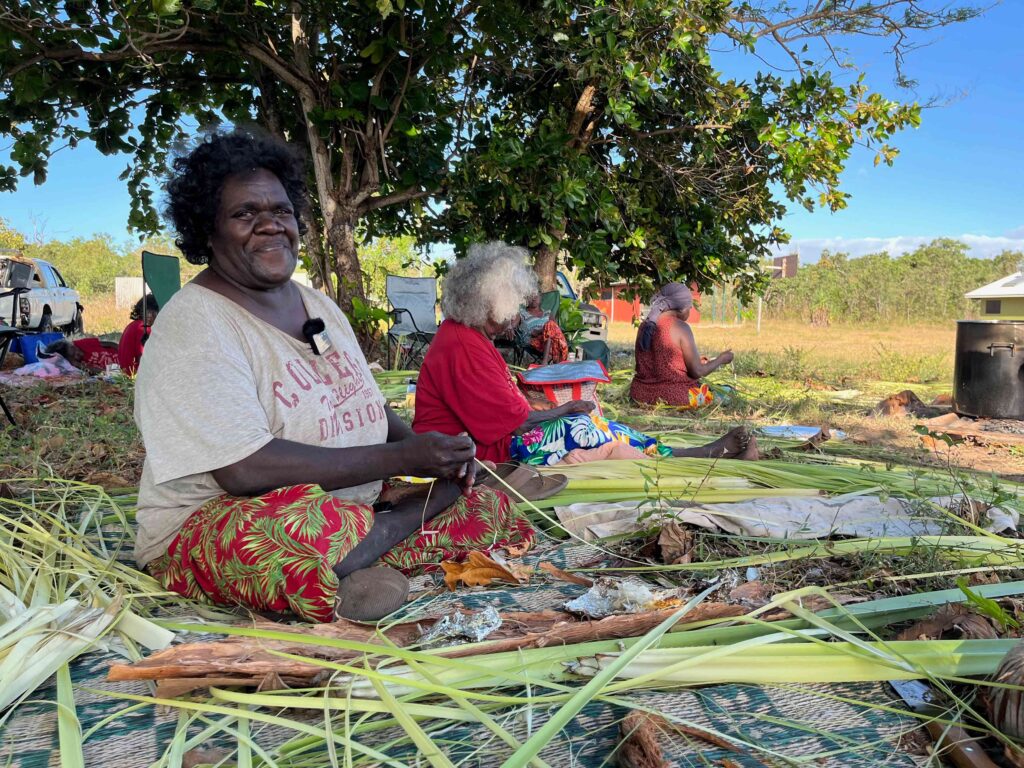
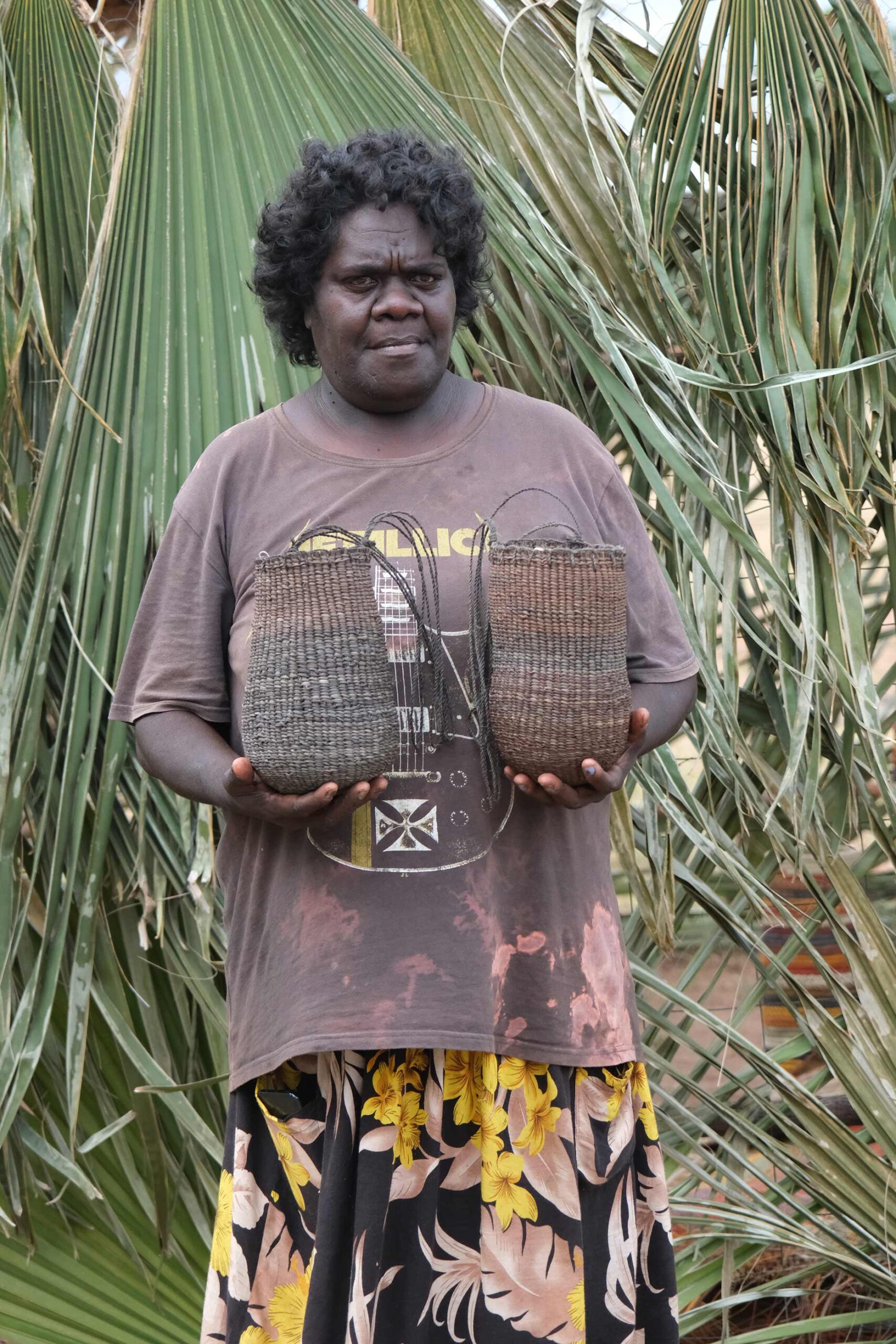
In the Old Days Miṉḏirr (dilly bags) were made for foraging and ceremony. Mandy Batjula made mindirr from mol—black dyed pandanus, honoring a technique pioneered by her ŋäṉḏi-mothers sister- senior weaver Margaret Rarru Garrawurra.
More artworks
Artist bio
Jocelyn Gumirrmirr
Milingimbi Art and Culture
Language: Dhuwala Ḻiya-gawumirr
Clan: Ḻiya-gawumirr Garrawurra
Country: Garriyak
Laŋarra Bush Gallery 2024
Jocelyn was a celebrated artist who worked with Milingimbi Art and Culture, Elcho Island Arts and Buku Art Centre. She lived with her husband, children and grandchildren at Laŋarra and often travelled to Milingimbi, Galiwinku and Yirrkala to spend time with family.
Jocelyn was enthusiastically engaged with the preparation for Laŋarra Bush Gallery, working closely together with her family to prepare the area at Laŋarra for the arrival of the artists. Sadly, Jocelyn passed away shortly before the event.
Jennifer Roy Dikarr Mäḻarra
Milingimbi Art and Culture
Language: Nhaŋu
Clan: Mäḻarra
Homeland: Murruŋga
Laŋarra Bush Gallery 2024
Milingimbi artists chose to tell their stories of Yolŋu weaving across time—from pre-European contact, through the mission era, and into the present.
Some artists reflected on the mission era, beginning in the 1920s and extending through World War II—a time of profound cultural and material change, including Milingimbi’s role as a military airfield. Jennifer Dikarr wove fighter planes—marking the moment global conflict reached the island.
Jennifer Dikarr is a senior artist that enjoys combining her traditional knowledge of materials and skills to produce new forms.
More artworks
Artist bio
Helen Ganalmirriwuy Garrawurra
Milingimbi Art and Culture
Language: Djambarrpuyŋu
Clan: Ḻiya-gawumirr Garrawurra
Homeland: Gärriyak
Laŋarra Bush Gallery 2024
The Milingimbi artists exhibition concept was inspired by Old time practices.
Some artists reflected on the mission era, beginning in the 1920s and extending through World War II—a time of profound cultural and material change, including Milingimbi’s role as a military airfield.
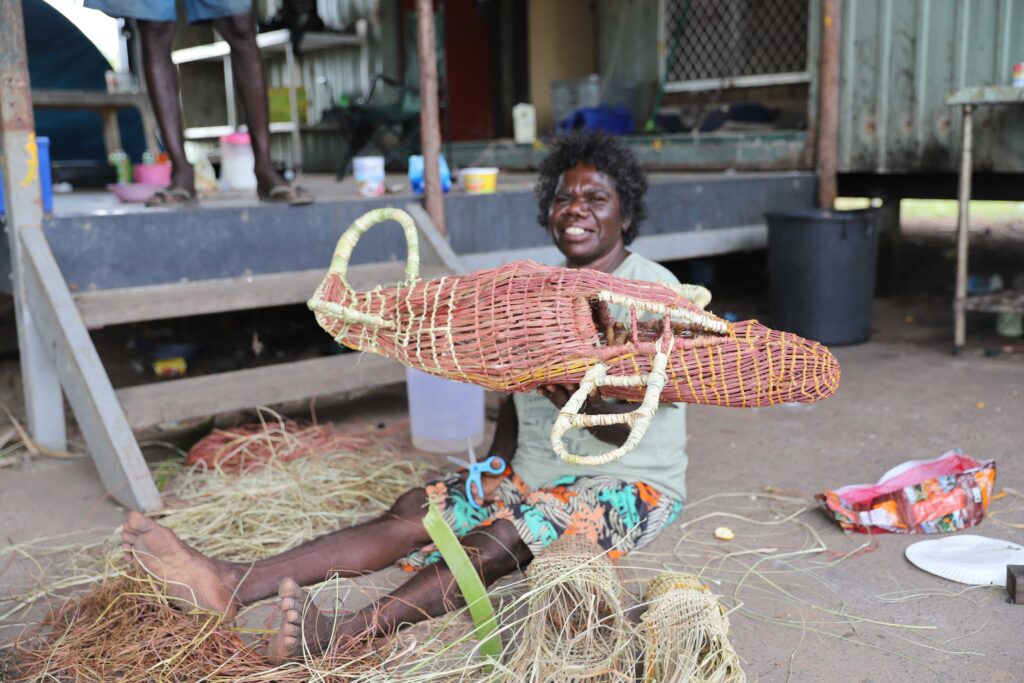
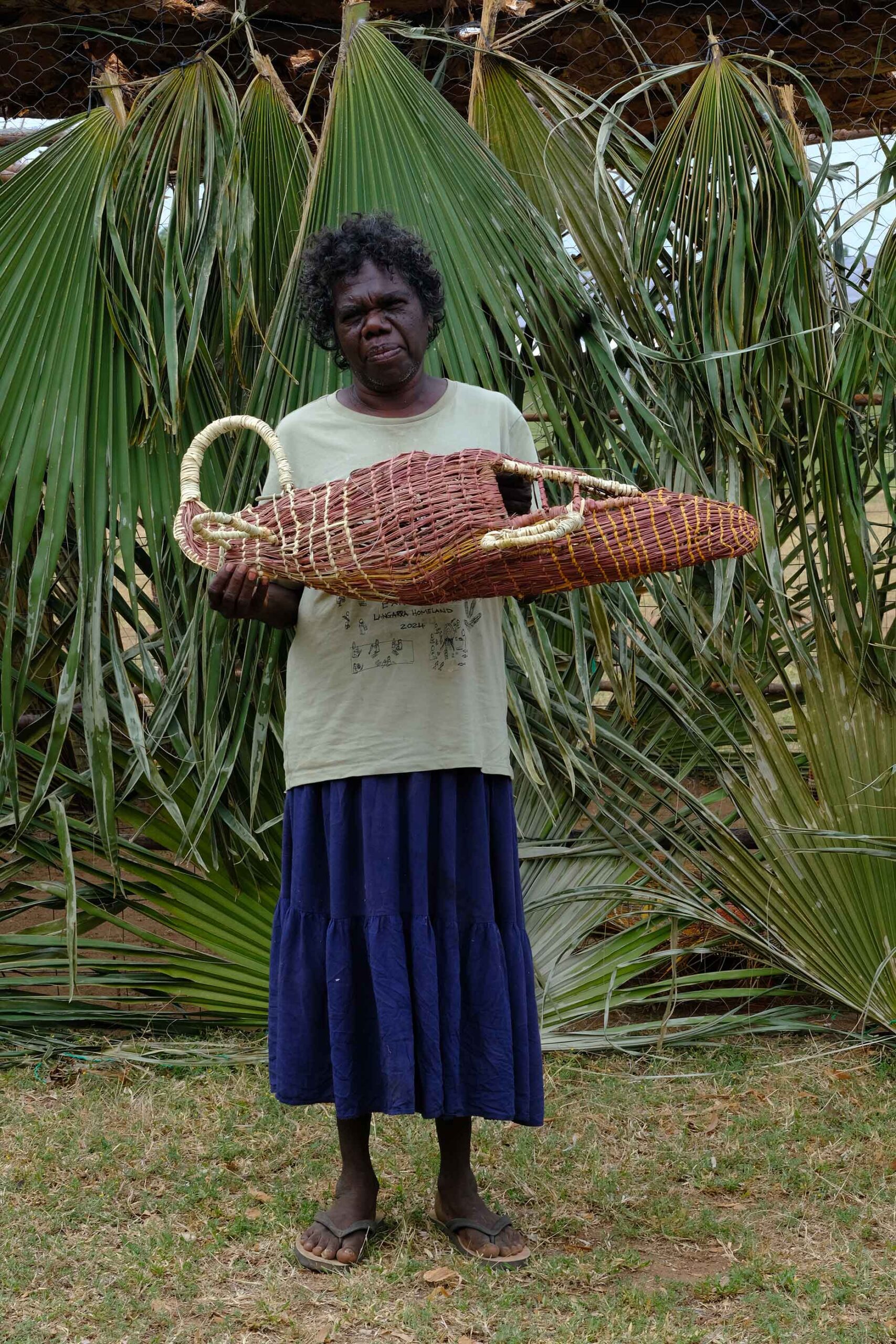
Helen Ganalmirriwuy created a series of woven objects using natural, undyed gunga (pandanus). These included mindirr (dilly bags) and baskets made using a twined lattice weave, as well as djinbakara (conical bags with a slit) and ganybu (fishing nets). She recalls watching her parents make fishing nets, baskets, and dilly bags in this style while growing up.
More artworks
Artist bio
Gwen Warmbirrirr
Milingimbi Art and Culture
Language: Dhaŋu
Clan: Ŋaymil
Homeland: Gundalmirri and Rurruŋur
Laŋarra Bush Gallery 2024
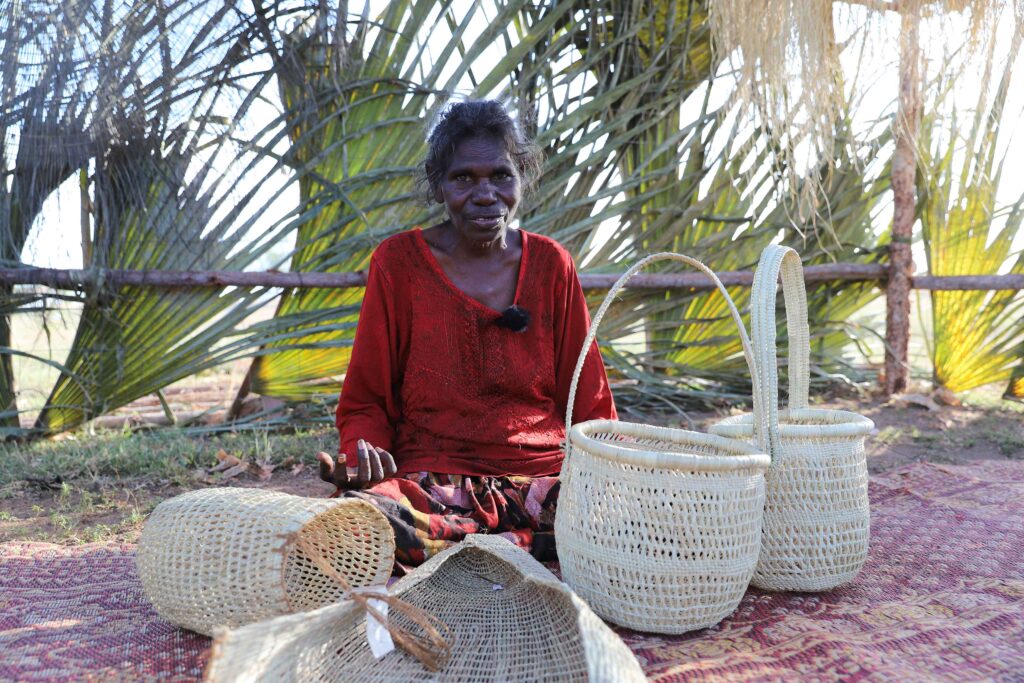
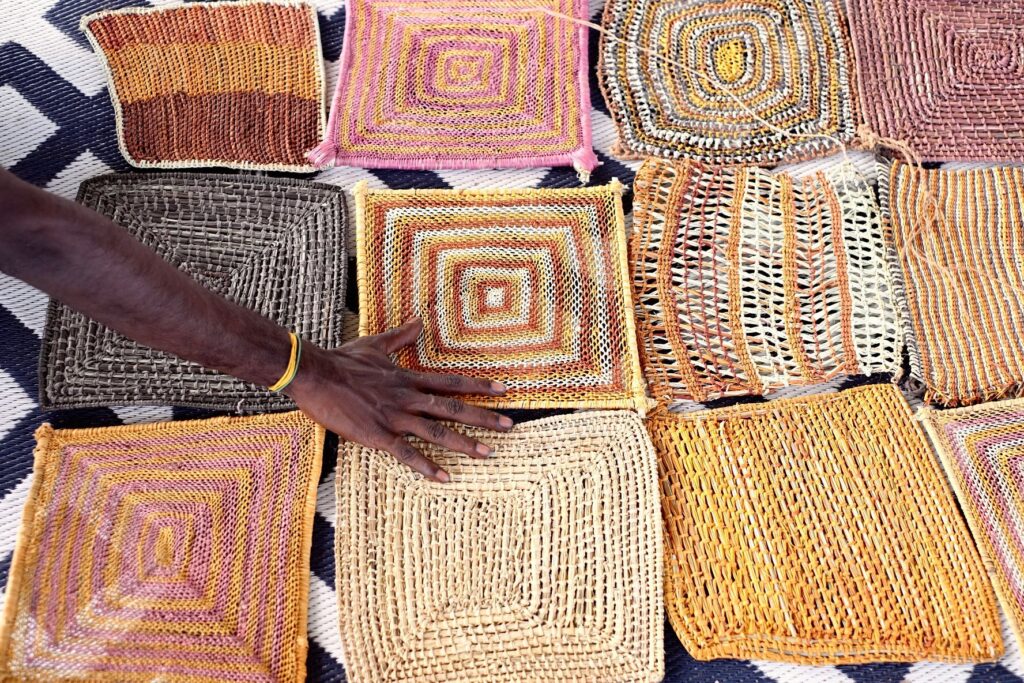
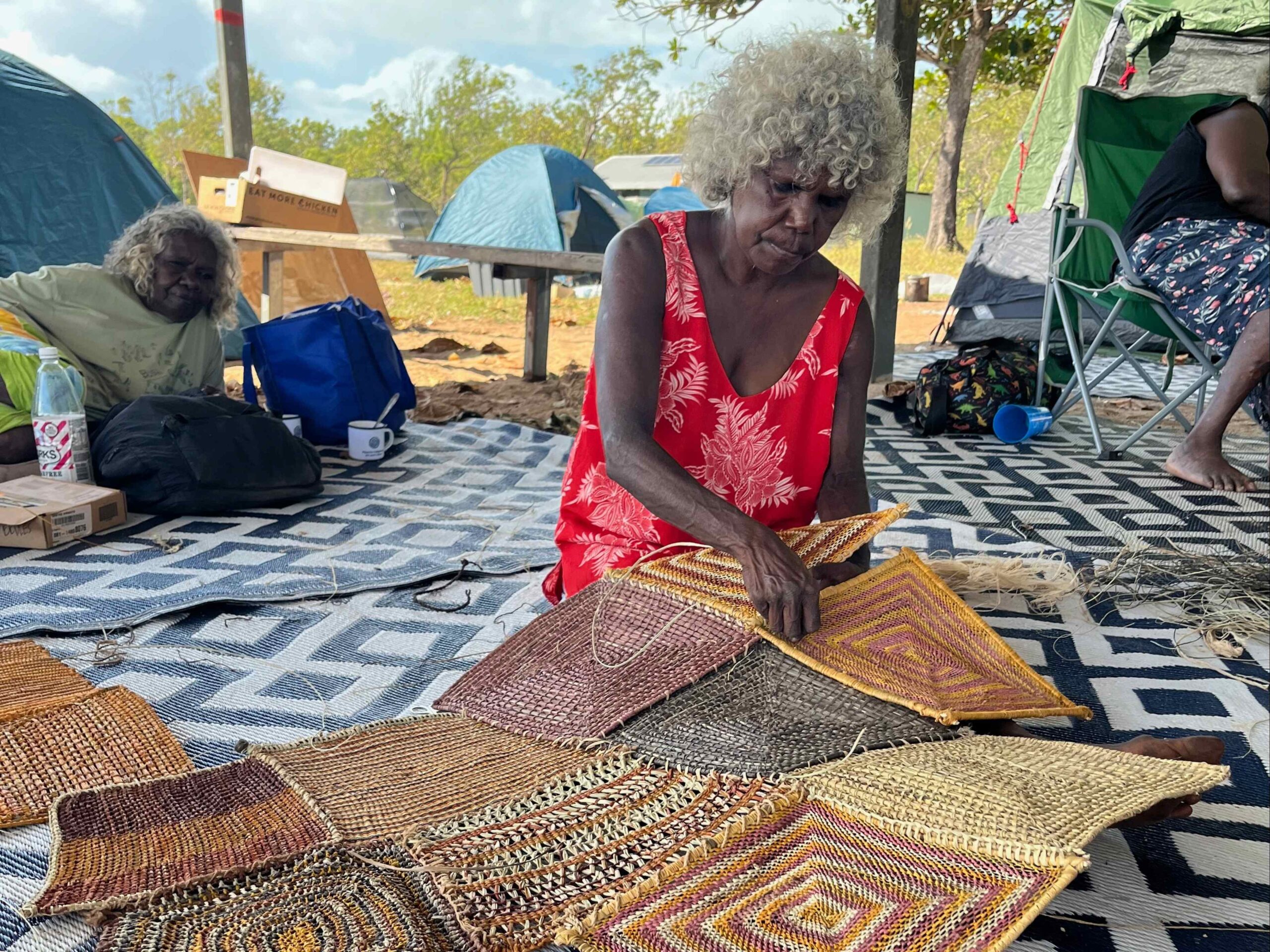
Together with fellow Milingimbi Art and Culture artists Gwen Warmbirrirr helped to conceptualise the collaborative artwork created as part of the Laŋarra Bush Gallery.
It was about working together – one head, one heart, one hands. Just about making something that’s working together – one idea, you know. So that women here in Milingimbi or in Ramingining or Gapuiyak or Maningrida could work together sharing ideas.
When I used to be a young teenager I was taught how to do crochet using wool. We made little squares and stitched them together. I was taught at school by a Fijian teacher, and we also put together coconut leaves to make a fan.
To me it was really interesting [to see the work being made]. I enjoyed working with the other ladies [at Laŋarra]. They were making baskets and mats using different colours, and how they stitched it together using pandanus and balgurr [was different]. There are different styles from different women. Maningrida mob, they were using pandanus but making it like they make string bags. Maybe some of them were using straight grass.
Looking at the mat I was thinking of using an idea like this one, three mats stitched together using small bamboo shoots to make it straight. This one is not so straight, but it’s just an idea. [The bamboo,] it grows along the billabong, in the area towards the west. We could cut them and heat them on the fire to make them straight and start using pandanus in between so it can easily fold.
— Gwen Warmbirrirr. Milingimbi Art and Culture artist and Djalkiri Keeping Place historian
More artworks
Bio
Anniebell Marngamarrnga
Maningrida Arts and Culture
Language: Kuninjku
Homeland: Ji-balbal
Laŋarra Bush Gallery 2024
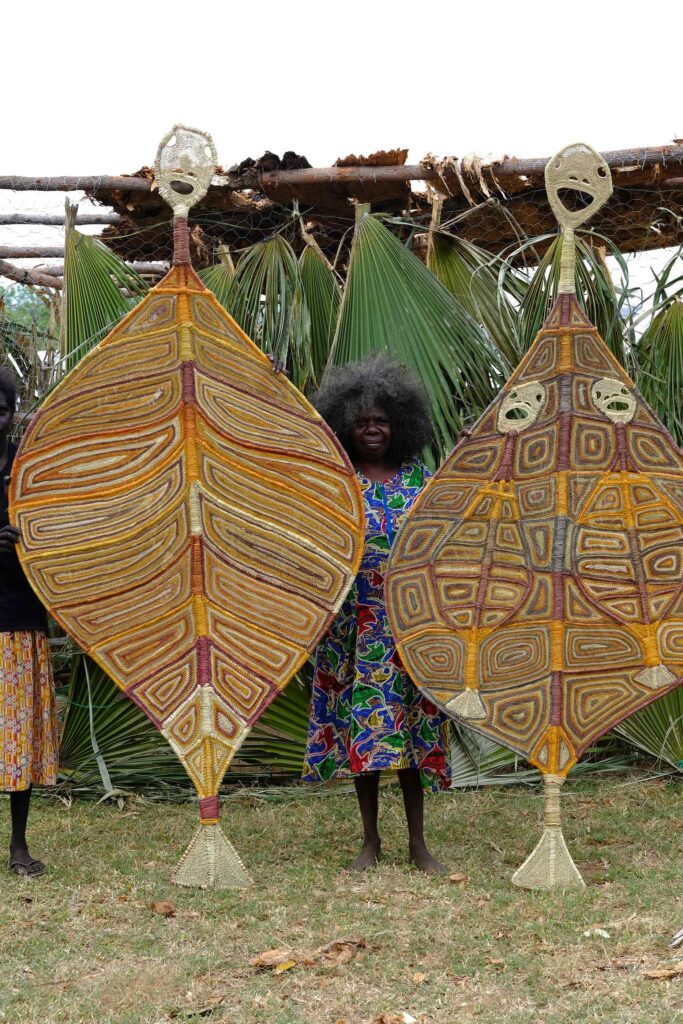
Representing over 100 clans and 12 disinct language groups the Maningrida Bush Gallery showcased the cultural diversity amongst Maningrida Artists.
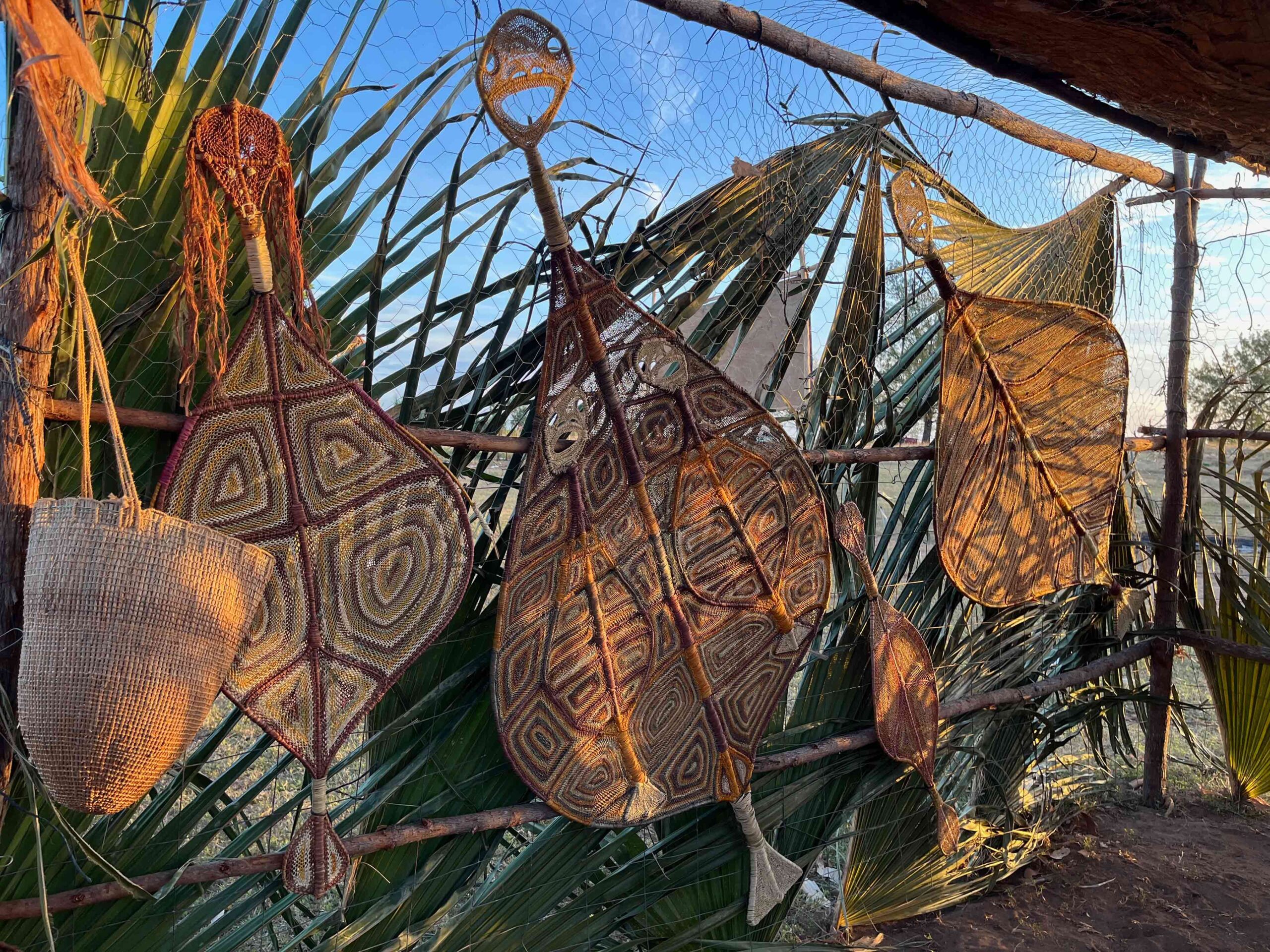
I came with the idea to make flat yawkyawk from pandanus [Pandanus spiralis]. First I build the bamboo frame and I then weave with colourful pandanus in the same technique I used when making twined bags. I use lots of different colours and I like it. Colours are important in my work.
– Anniebell Marrngamarrnga
More artworks
Artist bio
Doreen Jinggarrabarra
Maningrida Arts and Culture
Homeland: Gamurra Gu-yurra
Laŋarra Bush Gallery 2024
Representing over 100 clans and 12 disinct language groups the Maningrida Bush Gallery showcased the cultural diversity amongst Maningrida Artists.
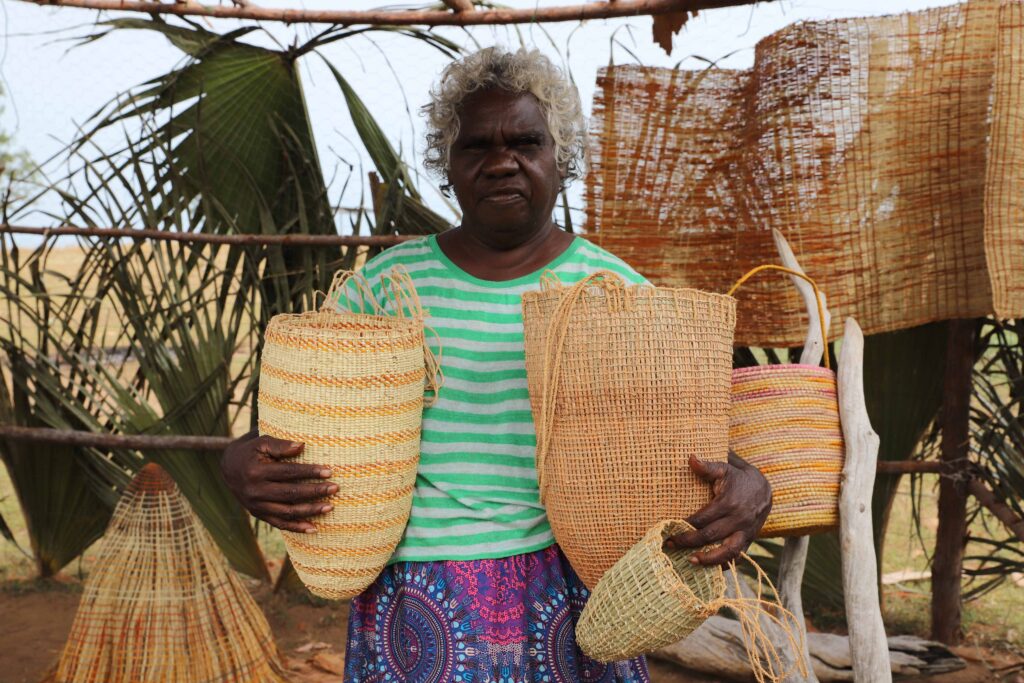
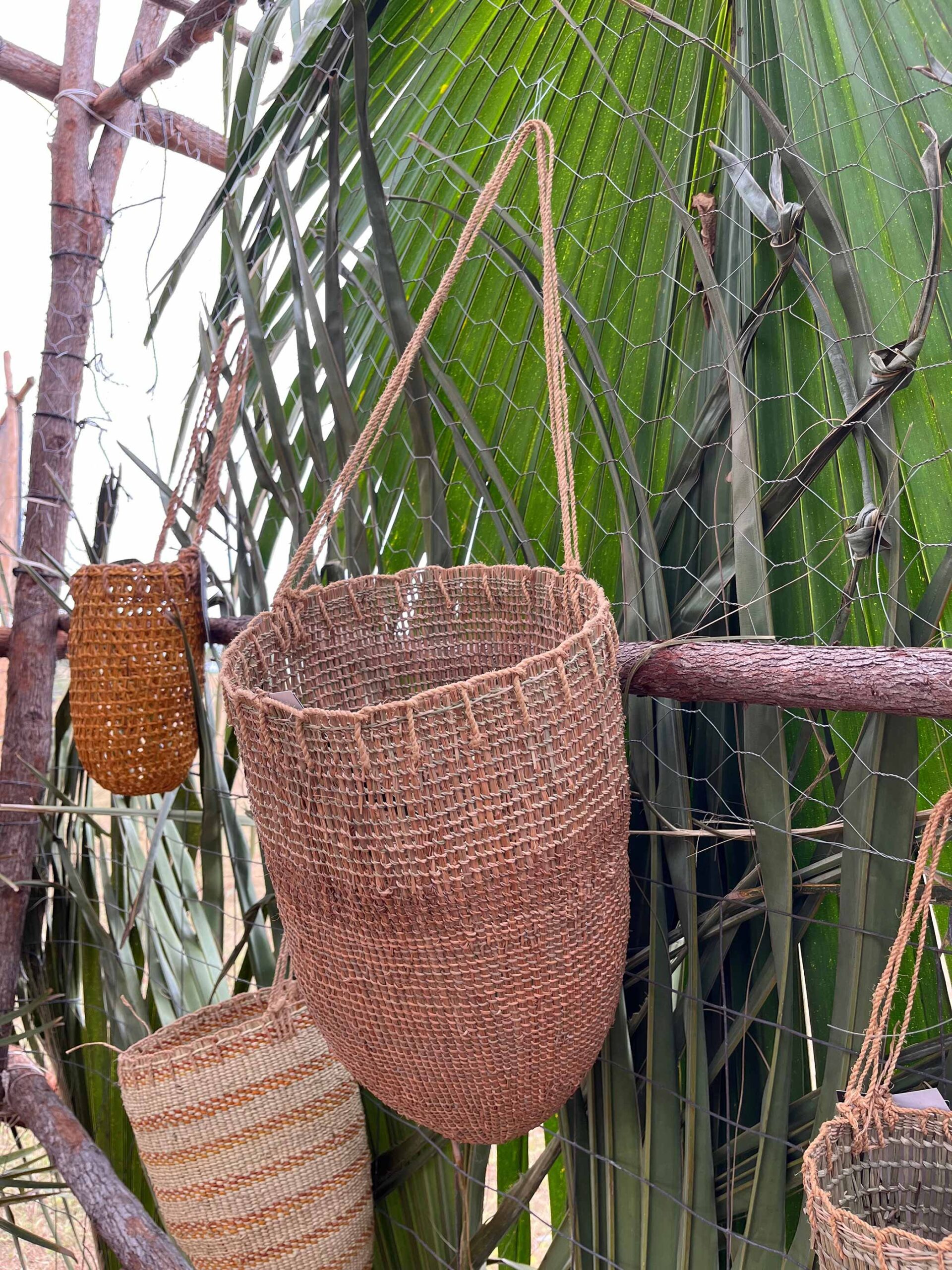
Doreen Jingarrarrabarra specialises in conical dilly bags (burlupurr), woven string bags and mats. She uses a range of natural fibres, including pandanus, mirlarl (jungle vine/malaisia scandens), sedge grass and kurrajong. Unlike most West Arnhem weavers, she does not dye the fibres with natural pigments, preferring the subtly of the natural variations in colour and tone. She is renowned for her fine weave and intricate designs, which she attributes to learning from her mother.
She is the Traditional Owner of the fish trap and confers approval to those artists who seek to produce these objects or depict the motif in their paintings.
More artworks
Artist bio
Esther Yarllarlla
Maningrida Arts and Culture
Language: Ndjebbana
Homeland: Malabonowa
Laŋarra Bush Gallery 2024
Representing over 100 clans and 12 disinct language groups the Maningrida Bush Gallery showcased the cultural diversity amongst Maningrida Artists.
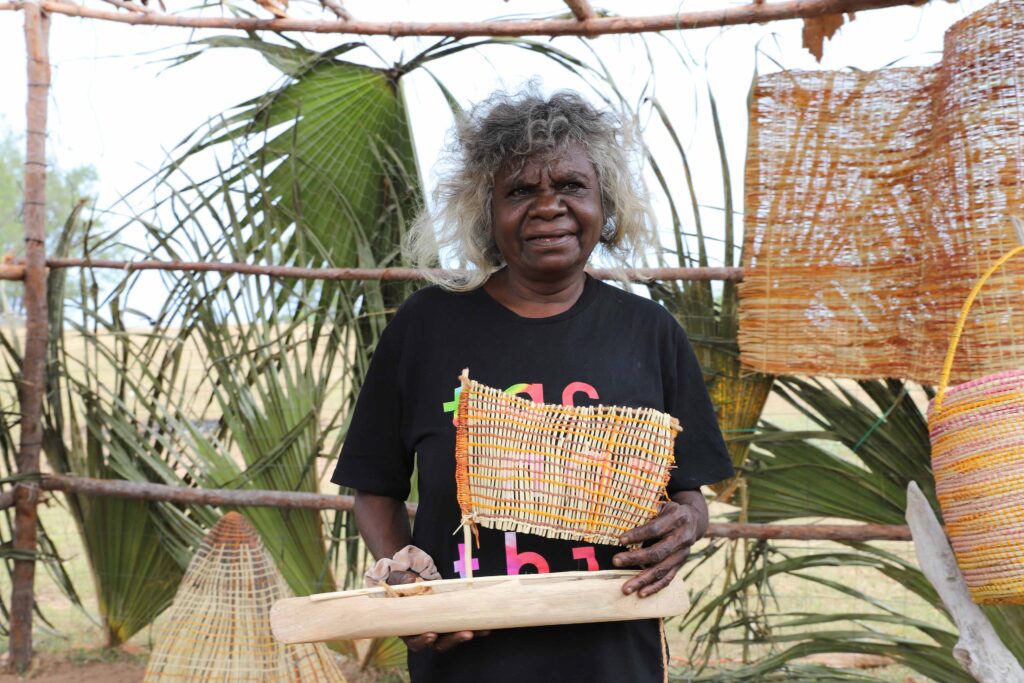
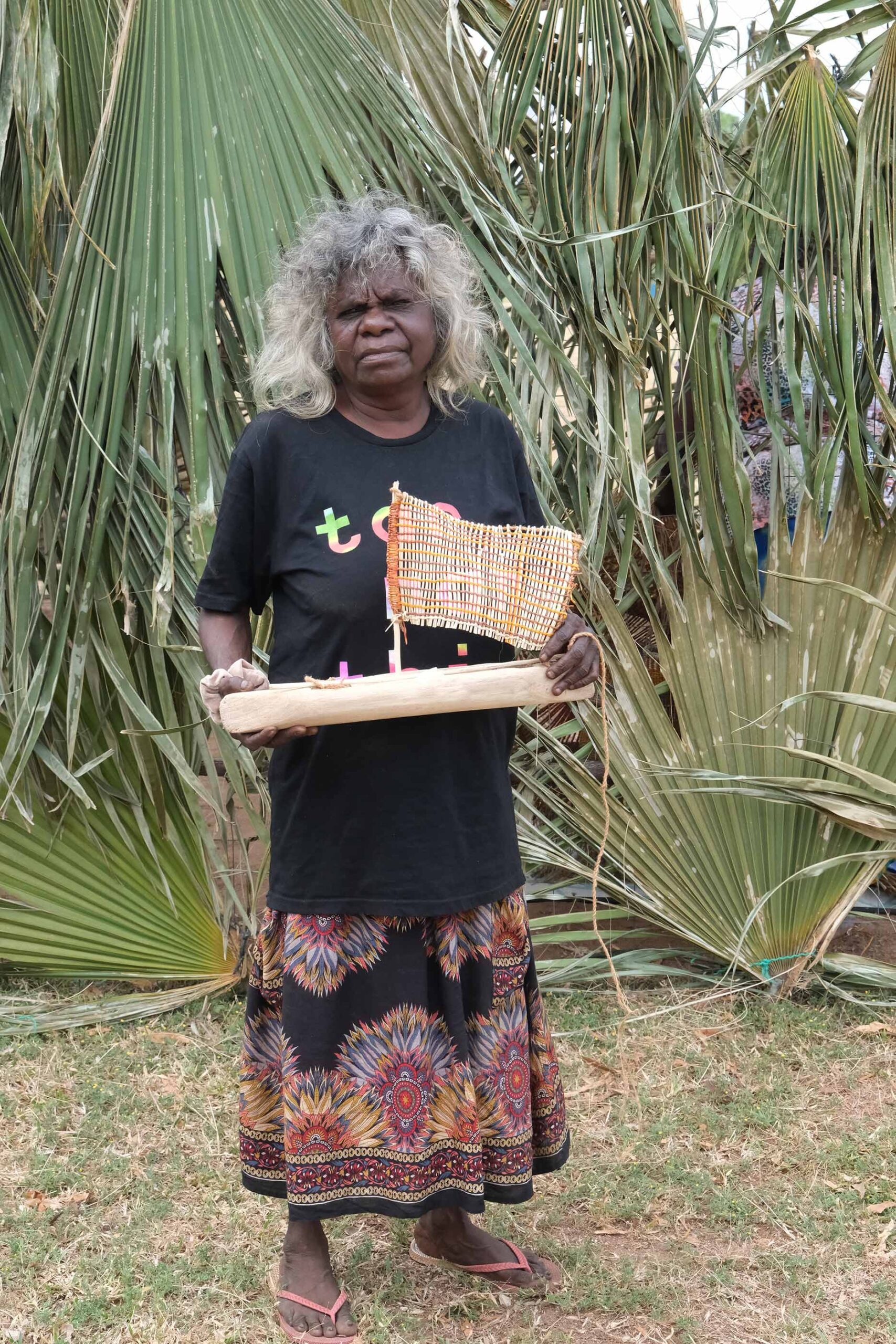
Esther Yarllarlla is a highly skilled weaver and knowledgable leader, for Laŋarra Bush Gallery 2024 she carved a minature canoe including paddles and woven sail.
More artworks
Artist bio
Freda Ali Wayartja
Maningrida Arts and Culture
Language: Burarra
Clan: Gamarl Walamungu
Homeland: Yilan
Laŋarra Bush Gallery 2024
Representing over 100 clans and 12 disinct language groups the Maningrida Bush Gallery showcased the cultural diversity amongst Maningrida Artists.
Freda Wayartja is a master weaver and cultural leader and educator. Wayartja is one of a handful of Arnhem Land artists that continue to make bamagora (conical mat). For Laŋarra Bush Gallery Wayartja was excited to extend on the bamagora concept and sculpted a baby wrapped in paperbark to lie underneath the bamugora.
More artworks
Artist bio
June Wilson
Maningrida Arts and Culture
Laŋarra Bush Gallery 2024
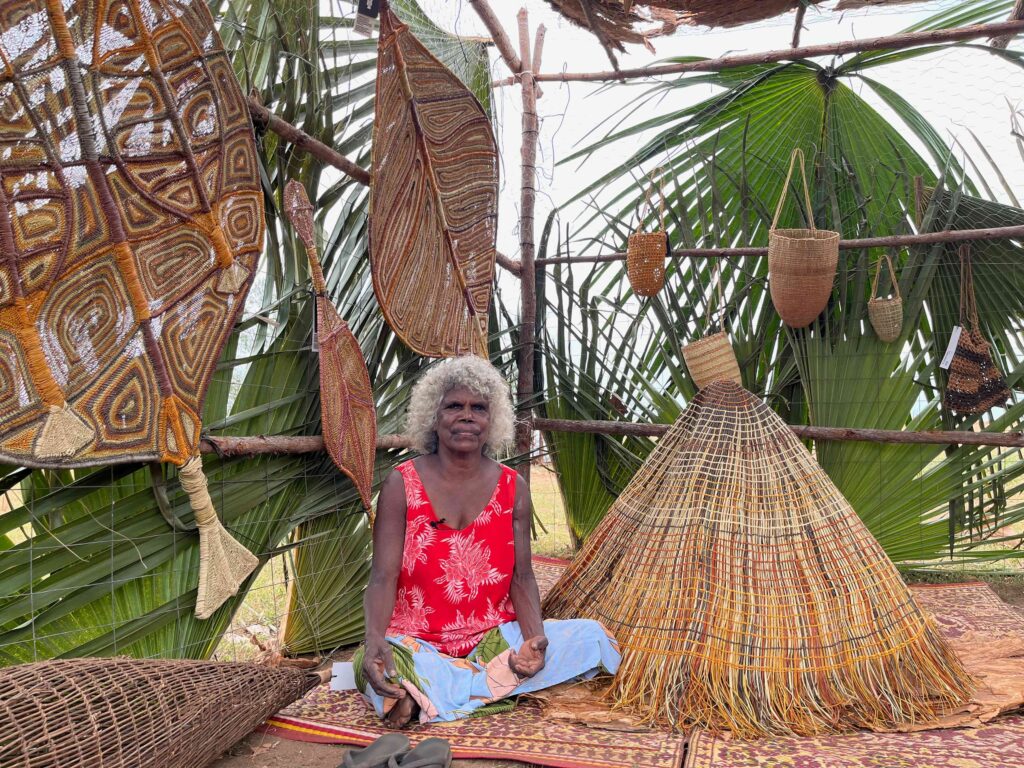
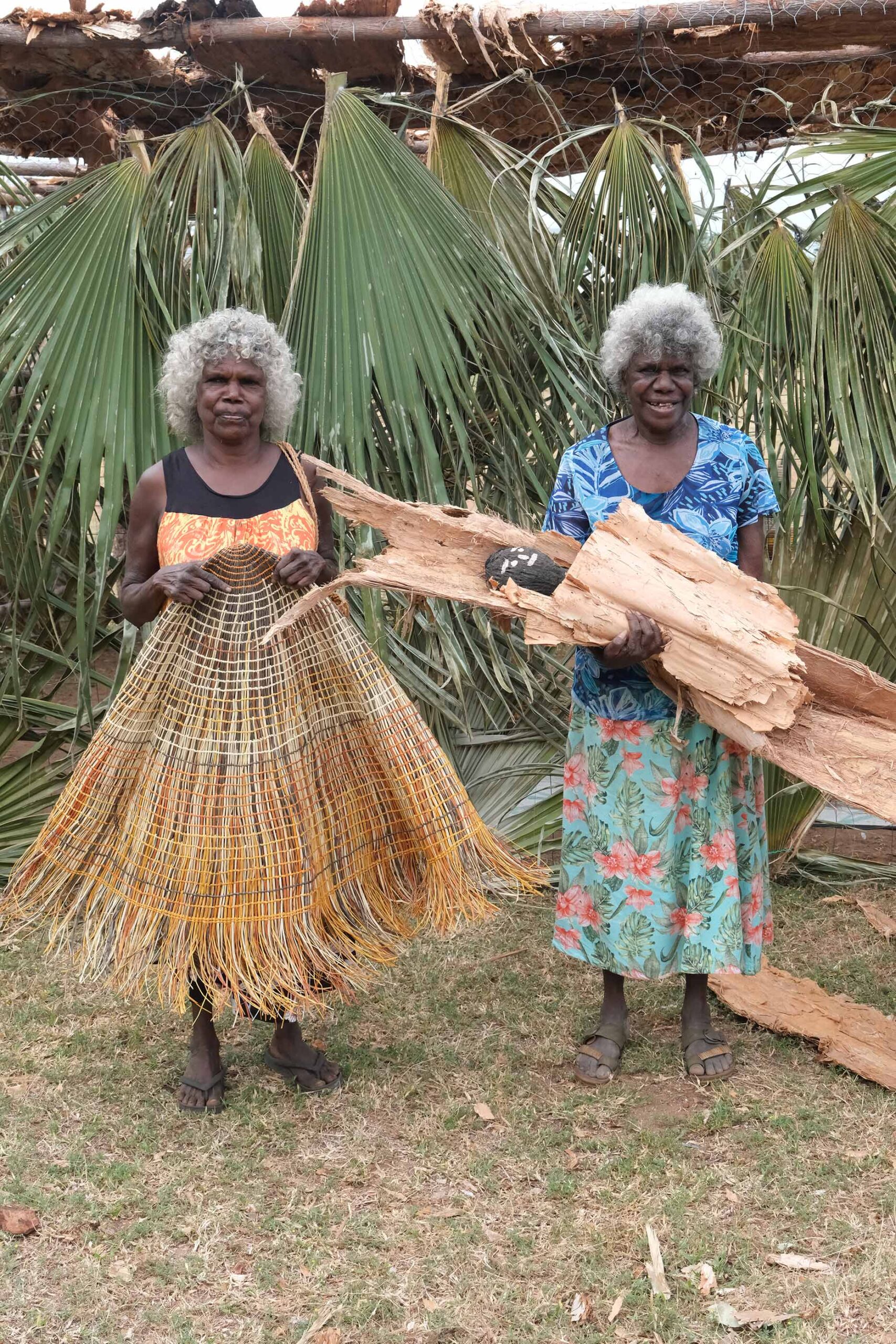
Representing over 100 clans and 12 disinct language groups the Maningrida Bush Gallery showcased the cultural diversity amongst Maningrida Artists.

Samantha Malkadja
Maningrida Arts and Culture
Homeland: Yikarrakkal Kubumi
Laŋarra Bush Gallery 2024
Representing over 100 clans and 12 disinct language groups the Maningrida Bush Gallery showcased the cultural diversity amongst Maningrida Artists.
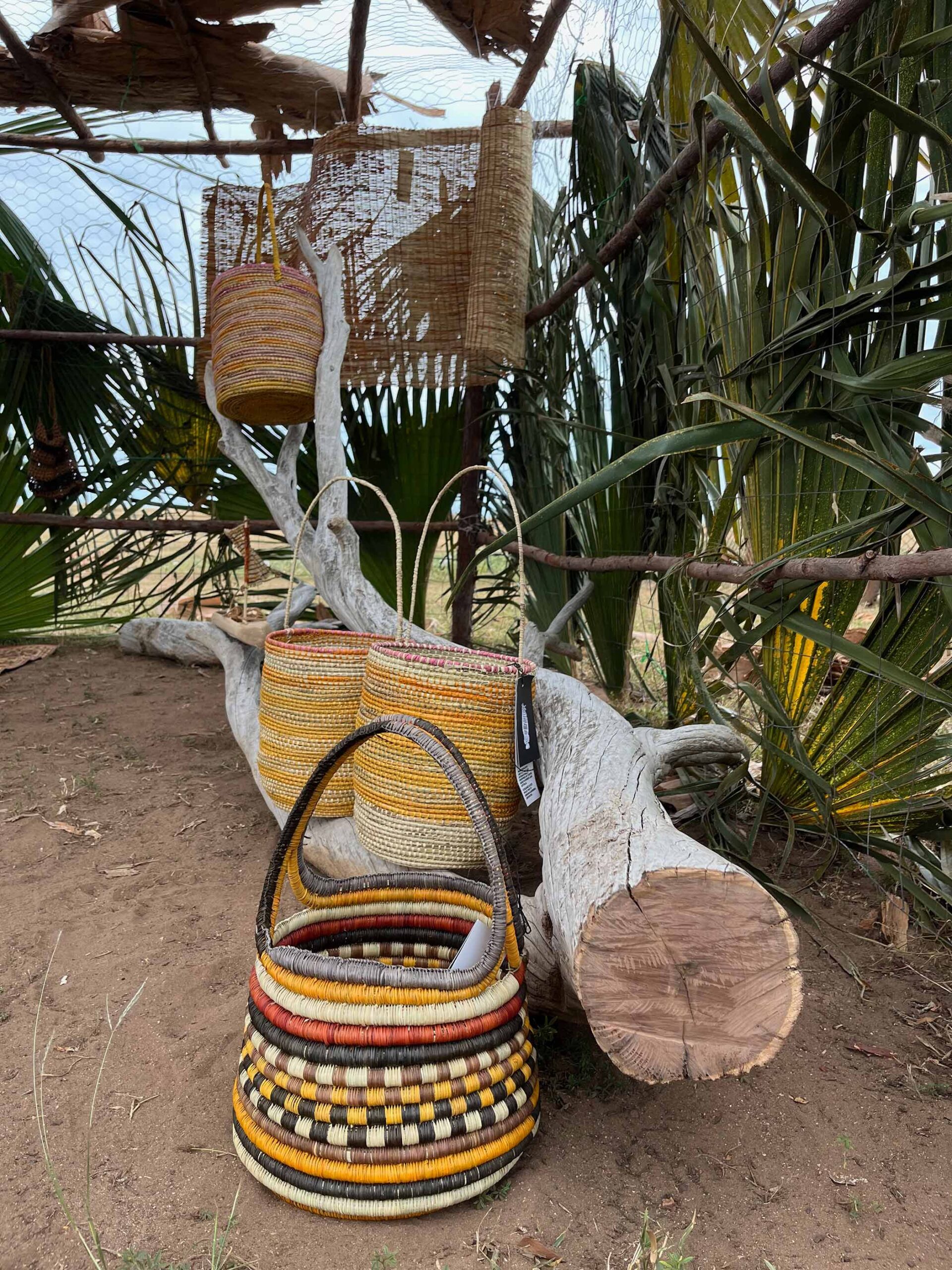
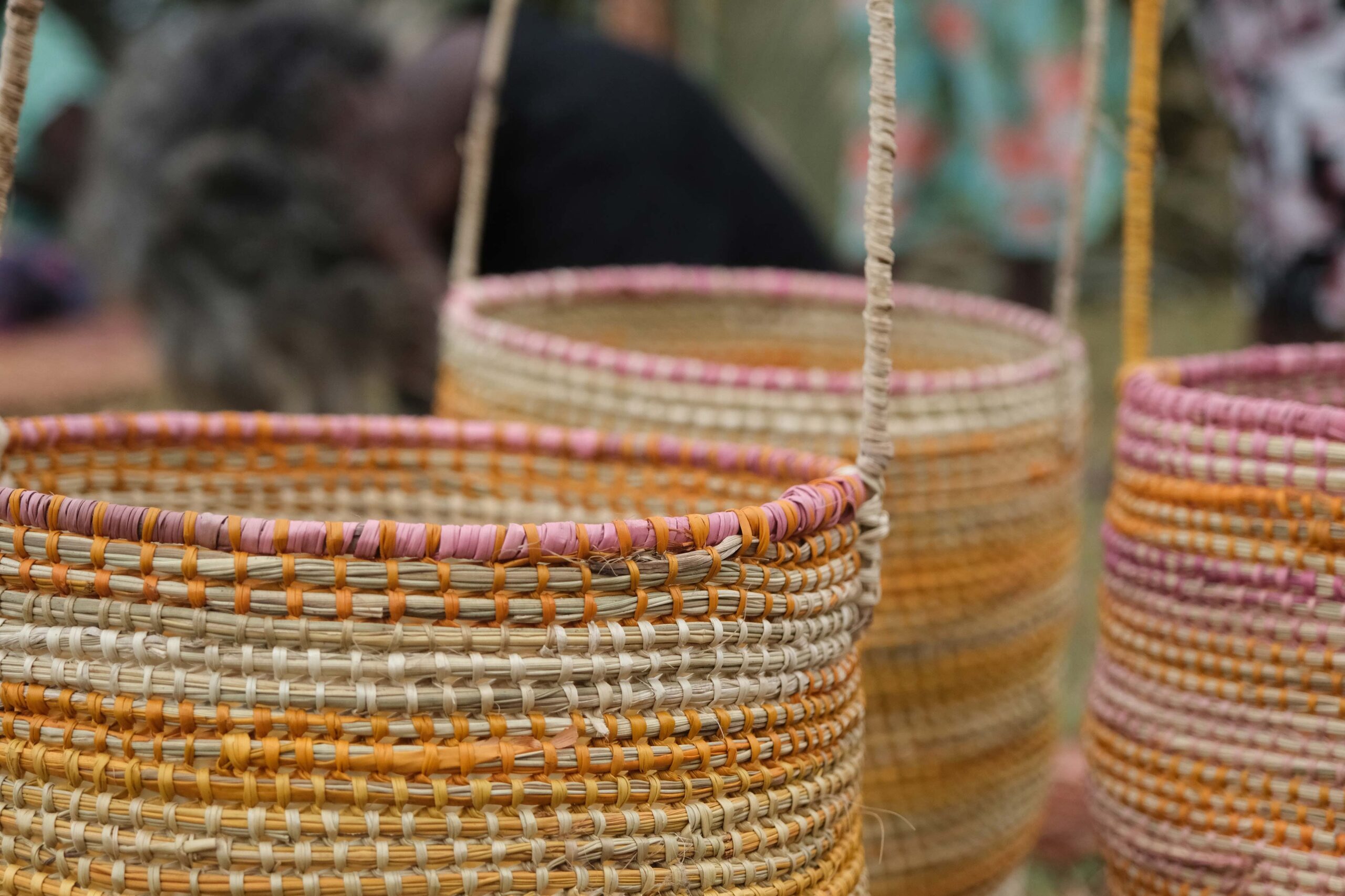
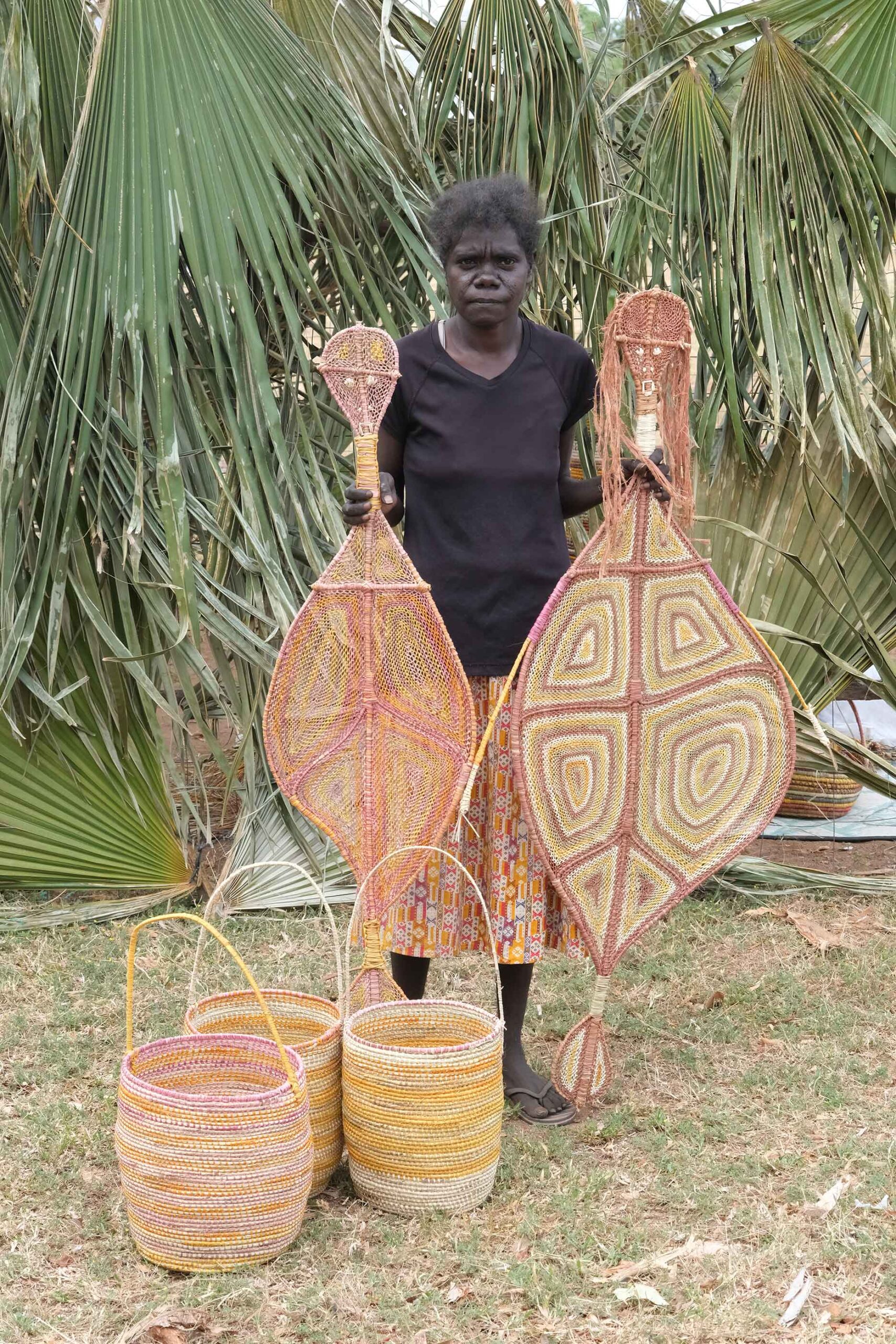
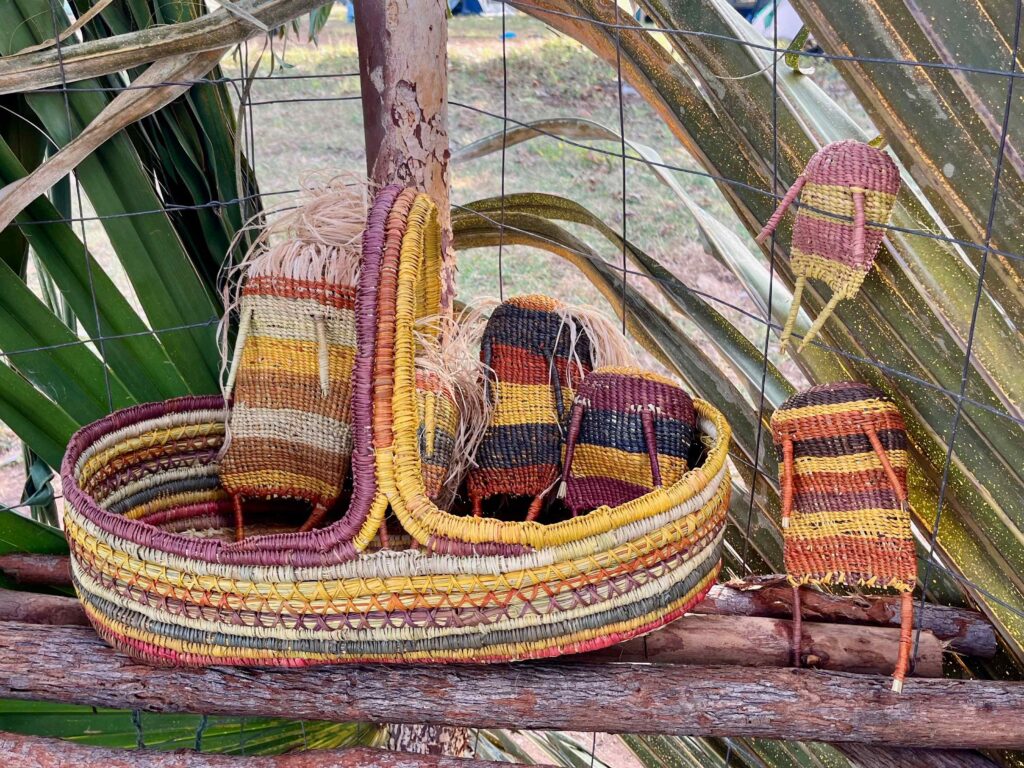
For Laŋarra Bush Gallery 2024 Samantha made 2-dimentional Yawkyawk, female water spirit sculptures and cylindrical baskets using gun-menama (pandanus spiralis) and bush dyes. The yellow and pink tones featured in the baskets and derived from specific plants that grow in the rocky country around Samantha’s homeland.
More artworks
Artist bio

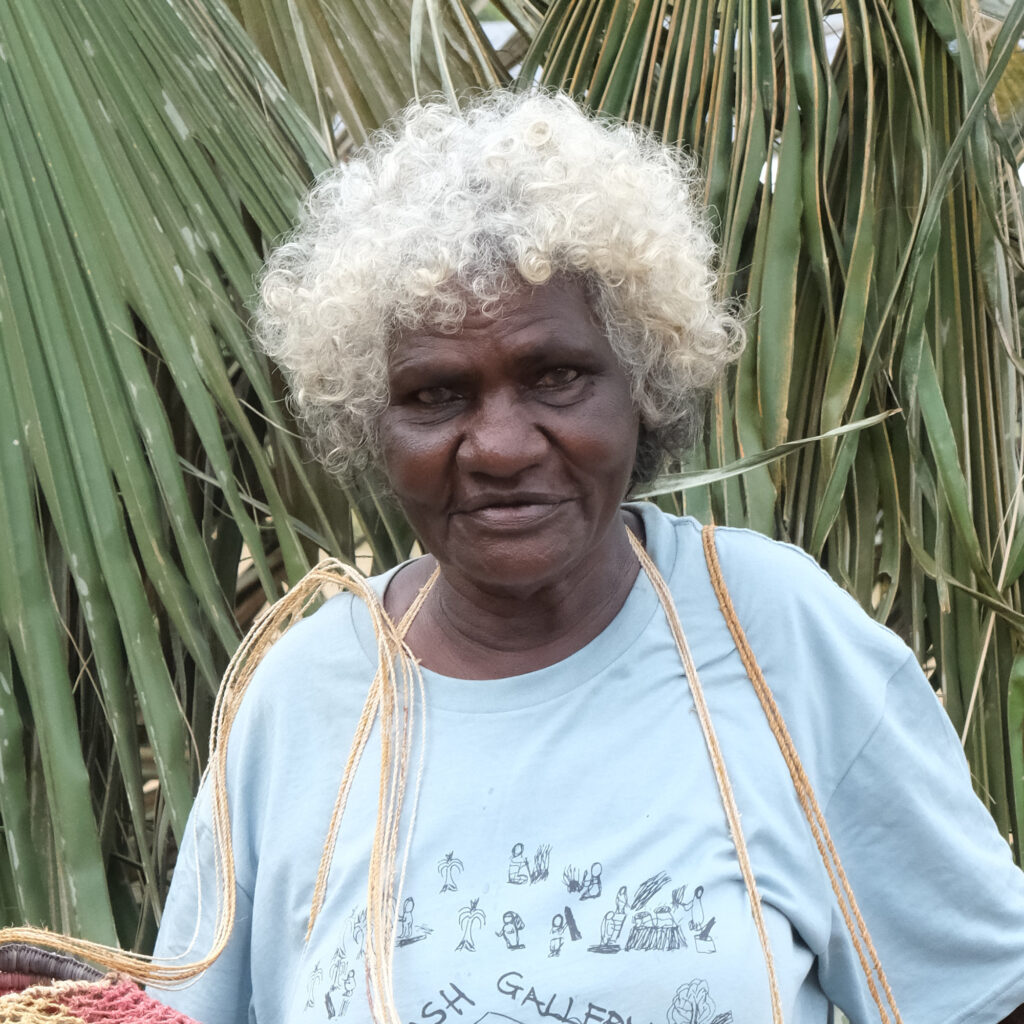
Lucy Wanapuyngu
Gapuwiyak Culture and Arts
Clan: Wanapuyngu
Laŋarra Bush Gallery 2024
Gapuwiyak artists presented works that showcased their extraordinary colour palette—from the subtle variations of natural materials to bold, contrasting bands achieved through dye baths. They worked with fibres including pandanus, kurrajong, and jungle vine, combining traditional weaving techniques with innovative patterns. The artists created pieces that reflected both cultural continuity and individual expression.
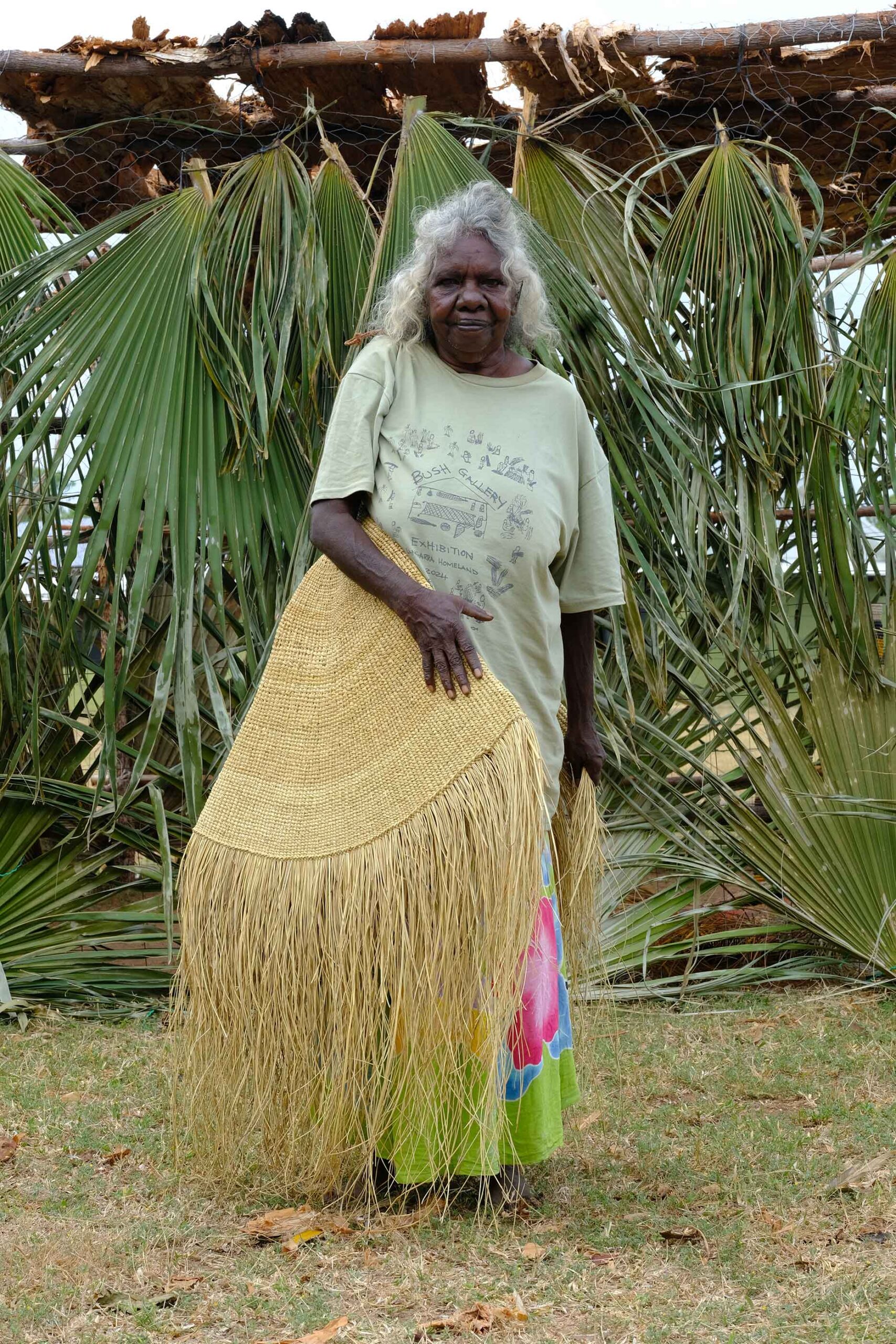
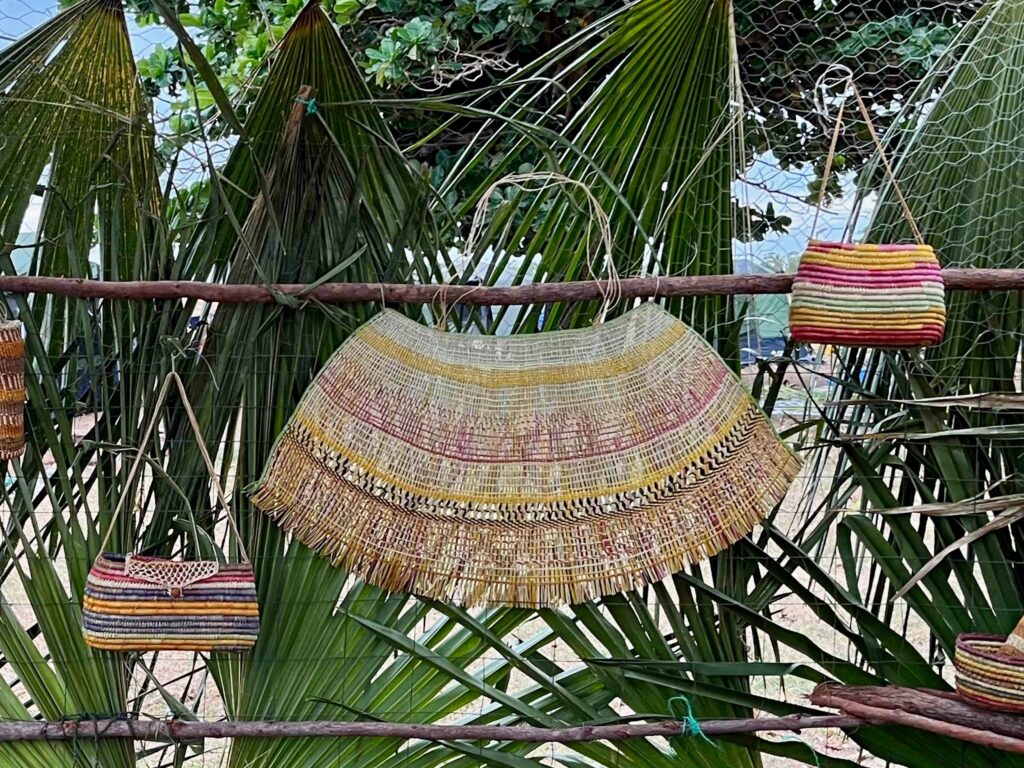
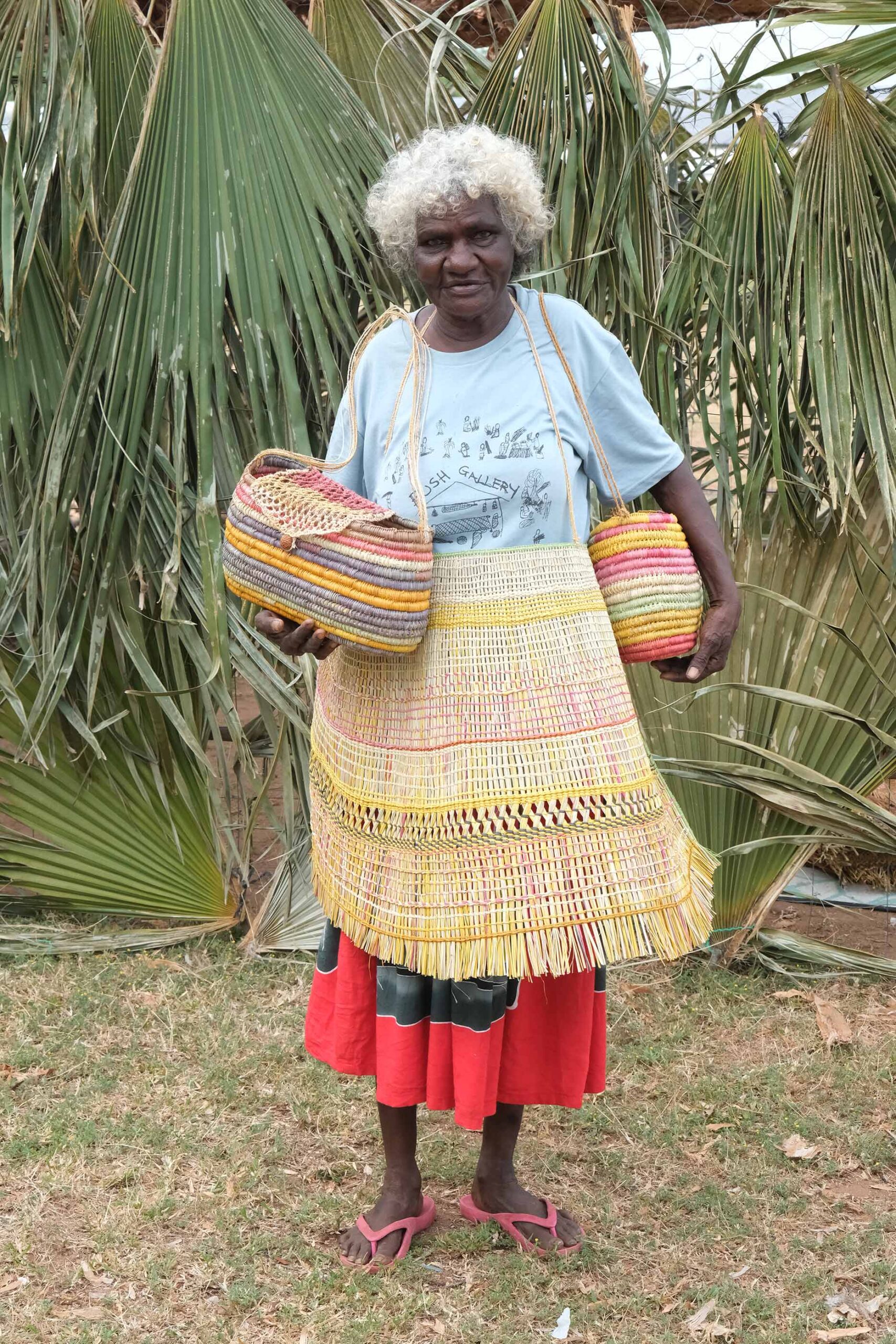
Lucy Wanapuyngu included a skirt form inspired from her work in wearable art as well as some of her signature ‘jelly bean’ style baskets with innovative use of new colours.
More artworks
Artist bio
Dorothy Warrgarrkng Ganambarr
Gapuwiyak Culture and Arts
Language: Dhuwal Ḏäṯiwuy
Clan: Ḏäṯiwuy
Homeland: Rorruwuy
Laŋarra Bush Gallery 2024
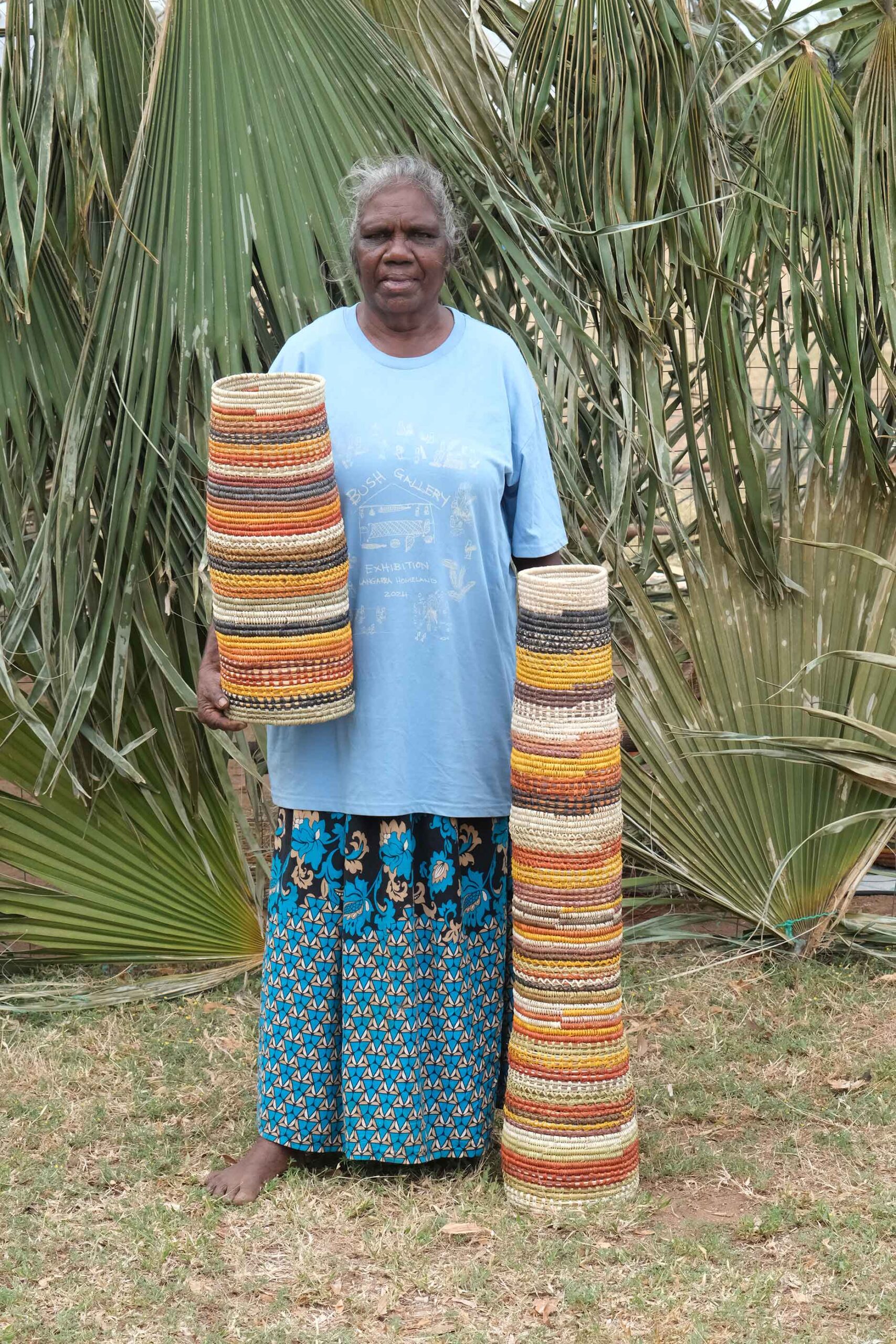
Gapuwiyak artists presented works that showcased their extraordinary colour palette—from the subtle variations of natural materials to bold, contrasting bands achieved through dye baths. They worked with fibres including pandanus, kurrajong, and bush cane, combining traditional weaving techniques with innovative patterns. The artists created pieces that reflected both cultural continuity and individual expression.
‘I have made many things from pandanus. With this art work, I started making a basket but I kept going. I was thinking about the hollow logs ‘Larrakitj’ we used for funeral ceremonies. I just kept going with pandanus and the colours until I was happy with it.’
– Dorothy Warrgarrkng Ganambarr
More artworks
Artist bio
Juileanne Gitjpulu Malibirr
Gapuwiyak Culture and Arts
Language: Ganalbingu
Clan: Malibirr
Laŋarra Bush Gallery 2024
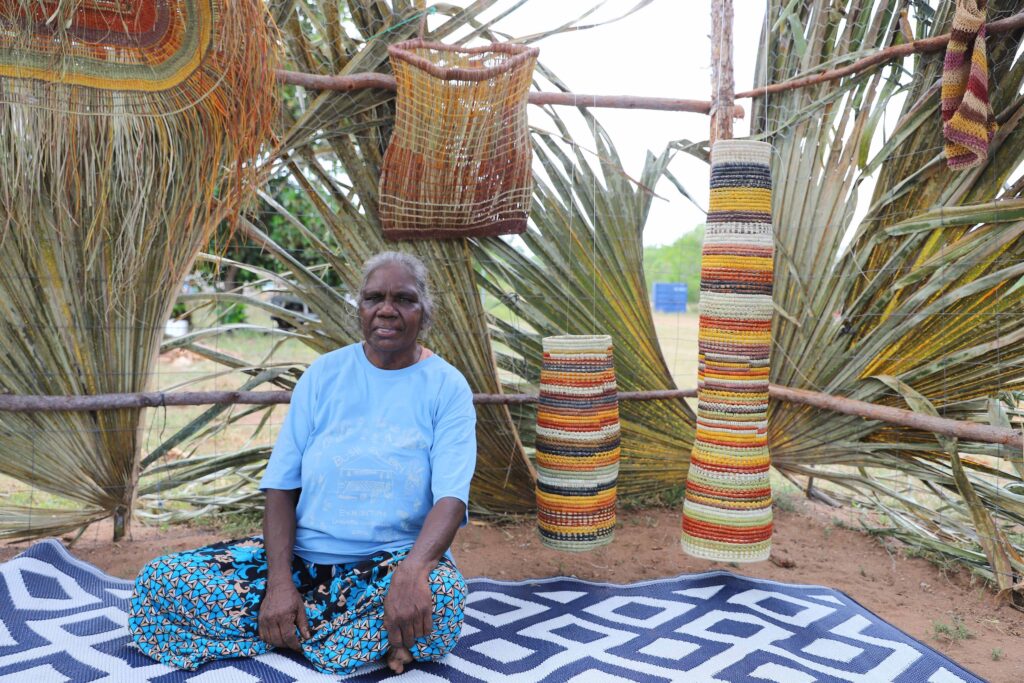
Gapuwiyak artists presented works that showcased their extraordinary colour palette—from the subtle variations of natural materials to bold, contrasting bands achieved through dye baths. They worked with fibres including pandanus, kurrajong, and bush cane, combining traditional weaving techniques with innovative patterns. The artists created pieces that reflected both cultural continuity and individual expression.
Julieanne Gitjpulu Malibirr has been working on large rectangular pieces inspired by her work on Country to Couture runways, and included some baskets made of split dharwir (bush cane).
More artworks
Artist bio
Julie Bukandjarri
Gapuwiyak Culture and Arts
Langugae: Liya-dhälinymirr Djambarrpuyŋu
Clan: Guyula
Homeland: Marrapay
Laŋarra Bush Gallery 2024
Gapuwiyak artists presented works that showcased their extraordinary colour palette—from the subtle variations of natural materials to bold, contrasting bands achieved through dye baths. They worked with fibres including pandanus, kurrajong, and bush cane, combining traditional weaving techniques with innovative patterns. The artists created pieces that reflected both cultural continuity and individual expression.
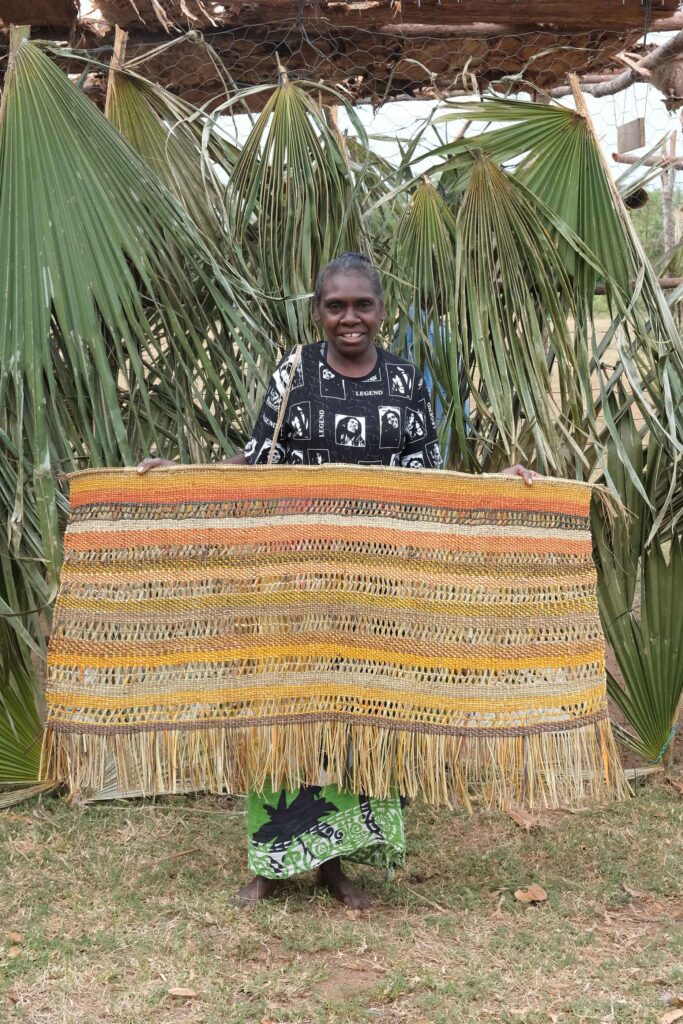
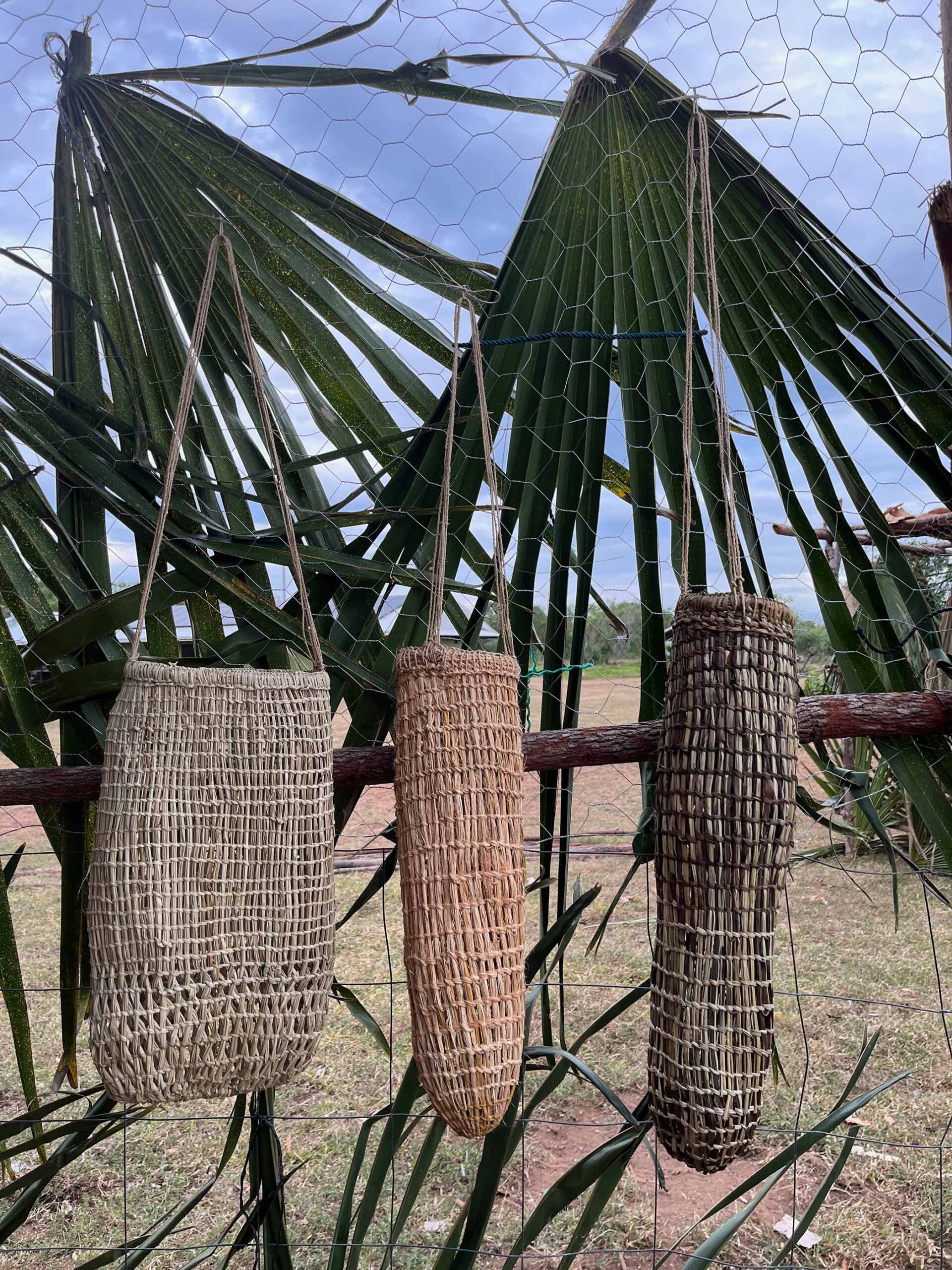
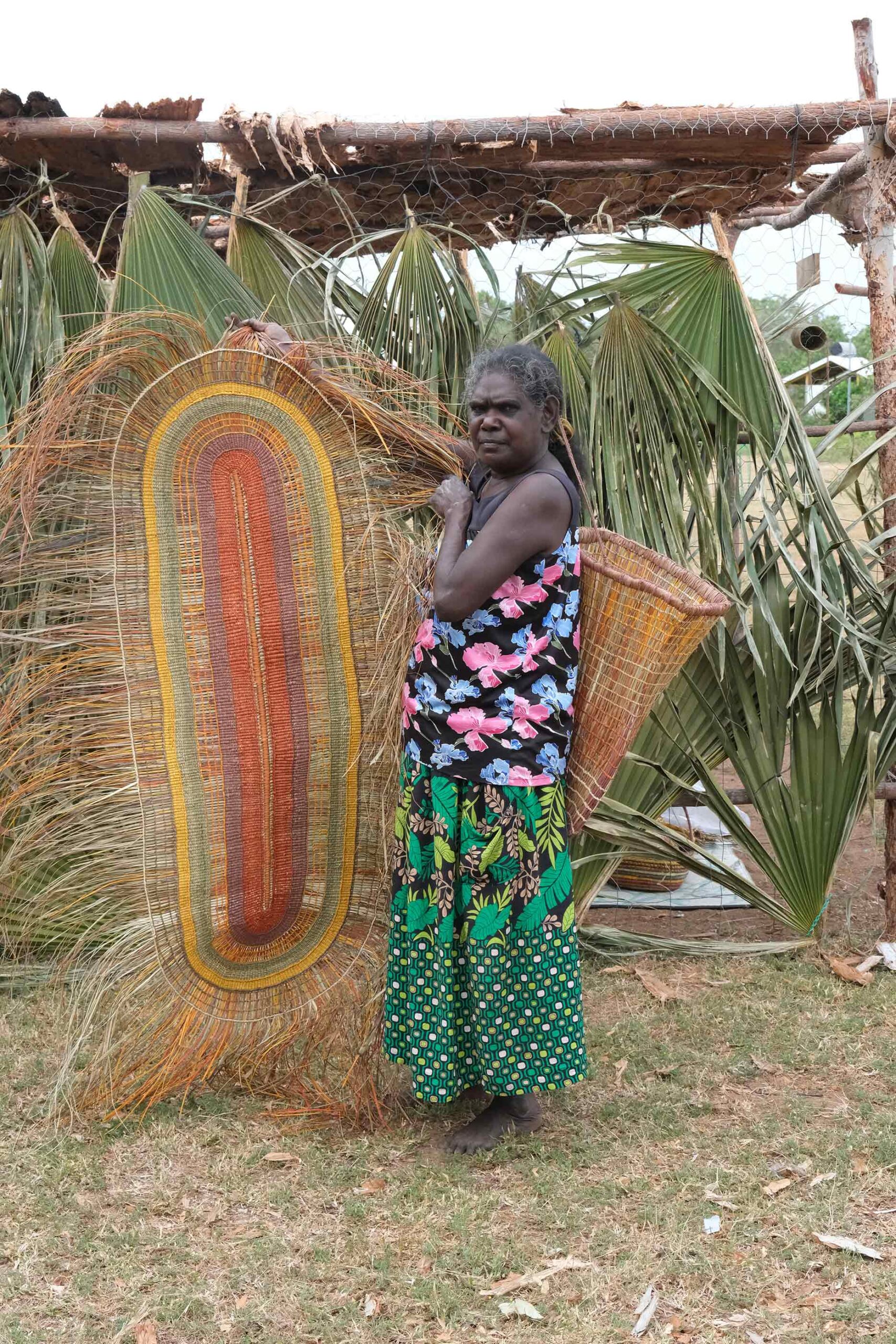
Julie Bukandjarri wanted to make a big mat.
More artworks
Artist bio

Kathy Ninyapuya Guyula
Gapuwiyak Culture and Arts
Langugae: Djambarrpuyngu
Clan: Guyula
Laŋarra Bush Gallery 2024
Gapuwiyak artists presented works that showcased their extraordinary colour palette—from the subtle variations of natural materials to bold, contrasting bands achieved through dye baths. They worked with fibres including pandanus, kurrajong, and bush cane, combining traditional weaving techniques with innovative patterns. The artists created pieces that reflected both cultural continuity and individual expression.
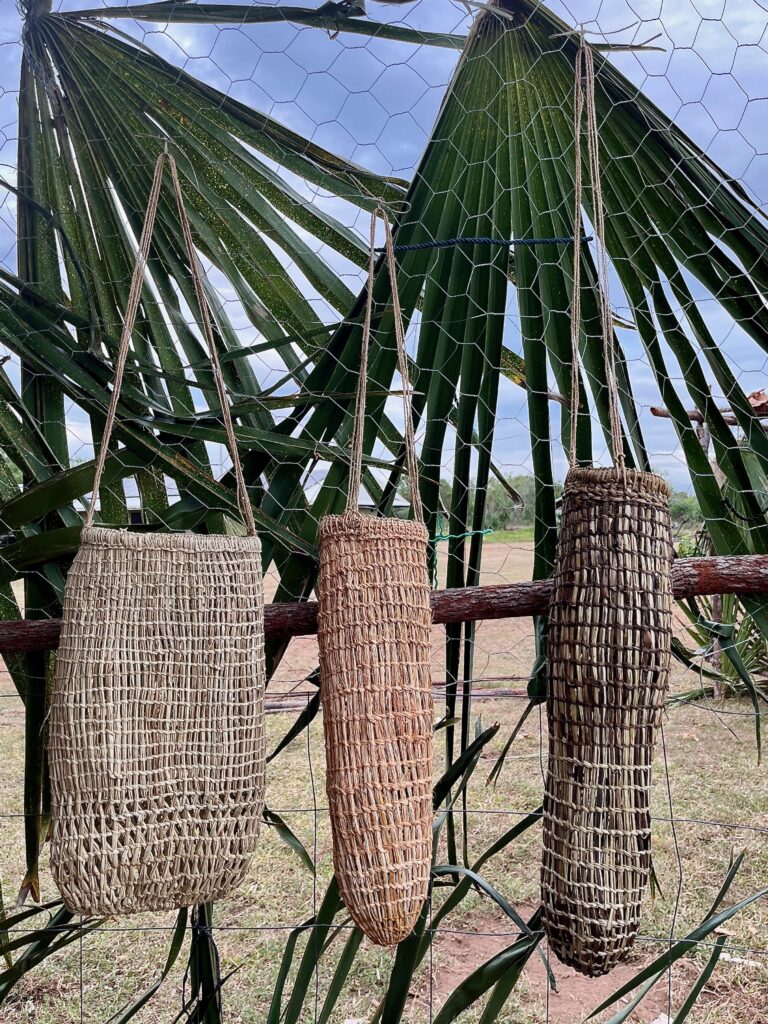
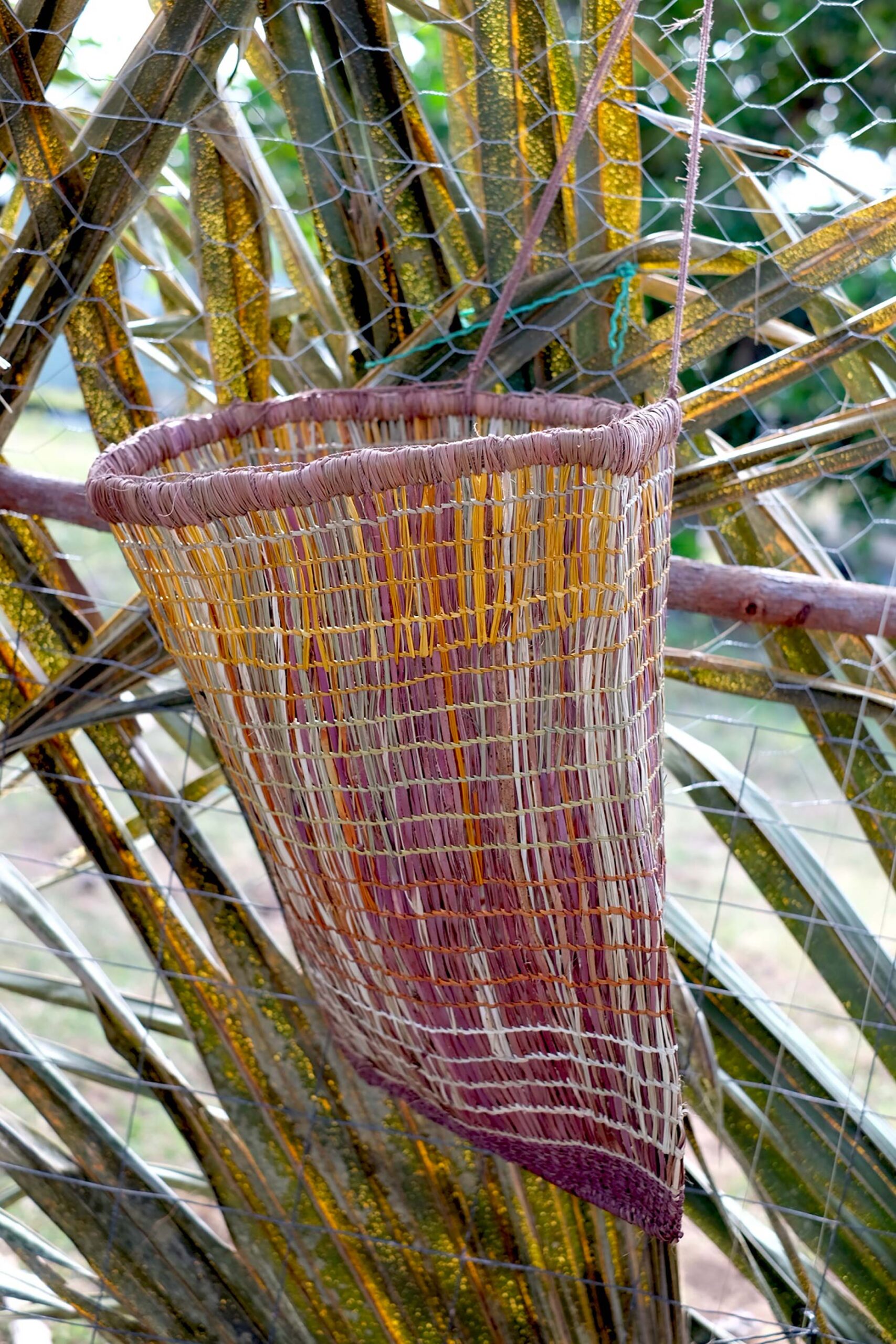
Kathy Ninyapuya made her Dolly Dolly’s, this is what she always makes.
More artworks
Artist bio
Roslyn Malŋumba Guyula
Gapuwiyak Culture and Arts
Language: Djambarrpuyŋu
Clan: Guyula
Country: Mäpuru
Laŋarra Bush Gallery 2024
Gapuwiyak artists presented works that showcased their extraordinary colour palette—from the subtle variations of natural materials to bold, contrasting bands achieved through dye baths. They worked with fibres including pandanus, kurrajong, and bush cane, combining traditional weaving techniques with innovative patterns. The artists created pieces that reflected both cultural continuity and individual expression.
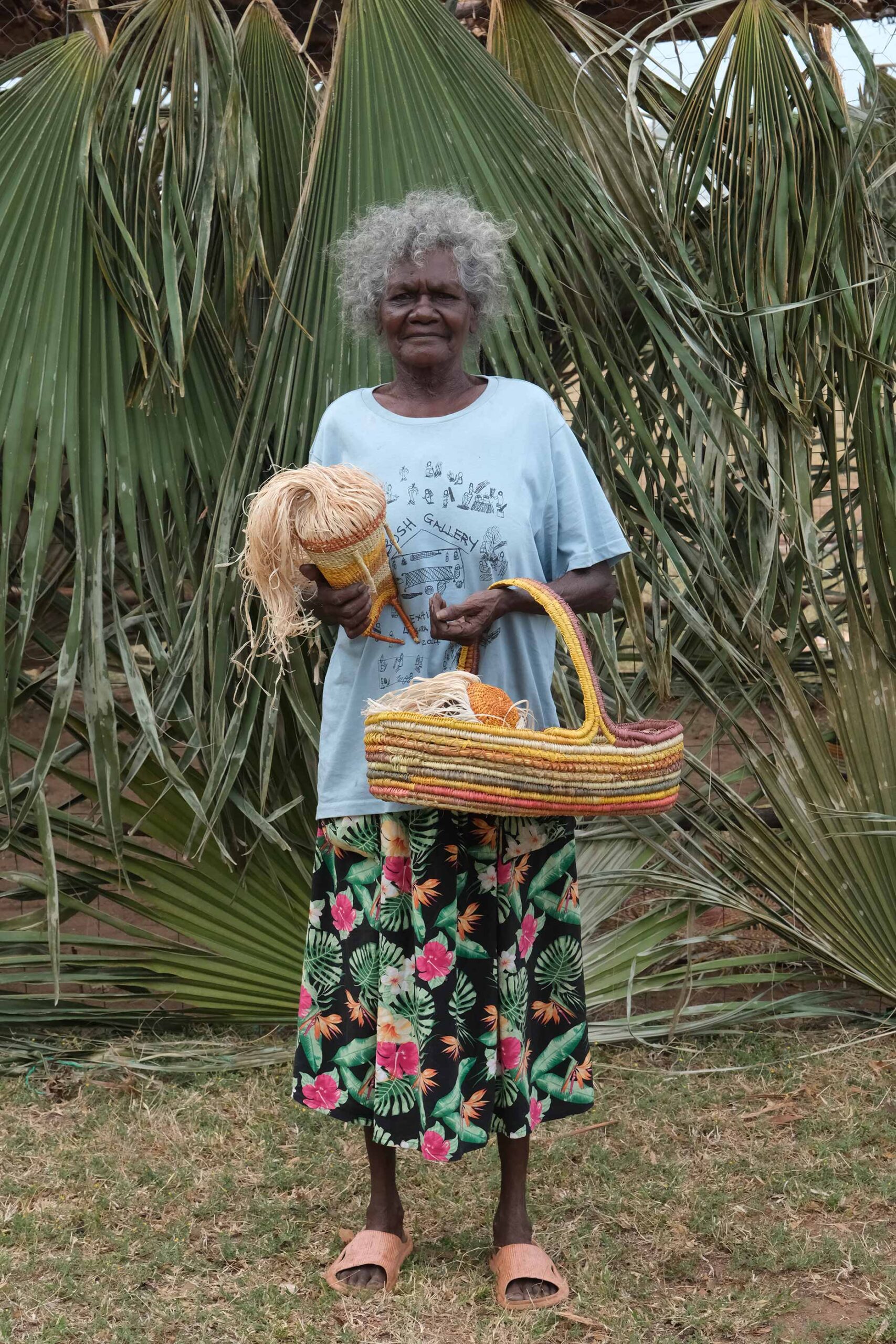
Roslyn Malngumba made ribbed dilly bags and a mat using a new technique that involved wrapping pandanus.
More artworks
Artist bio
Daphne Banyawarra
Bula’bula Arts
Language: Ganalbingu
Clan: Gurrumba Gurrumba
Laŋarra Bush Gallery 2024
Bula’bula Arts saw the Langarra Bush Gallery as a space where weavers were encouraged to push their boundaries, experiment with new techniques and showcase unique skills in a supportive, on-Country environment. For the exhibition, Bula’bula Arts artists deeply focussed on making work they felt proud of, while also fostering discussion, connection, growth and confidence in their practice.
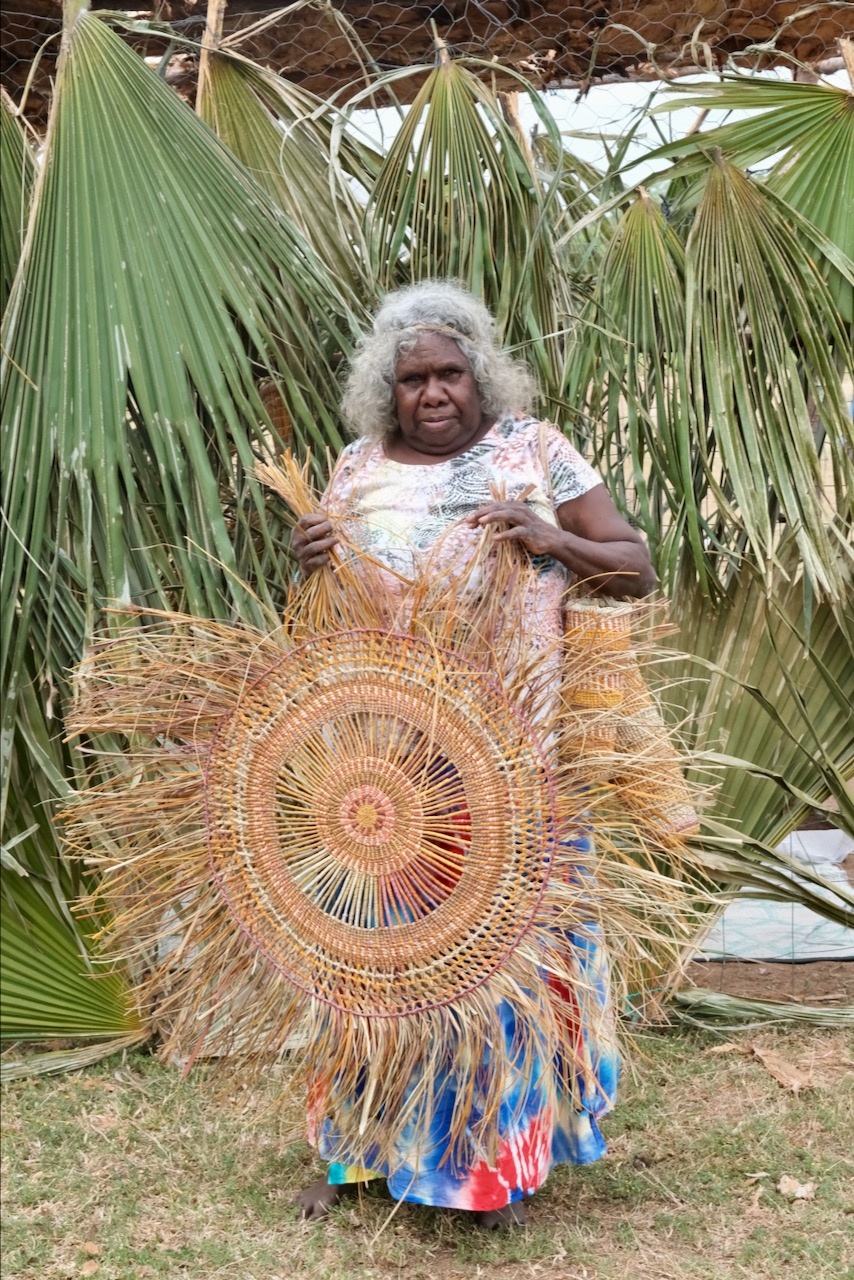
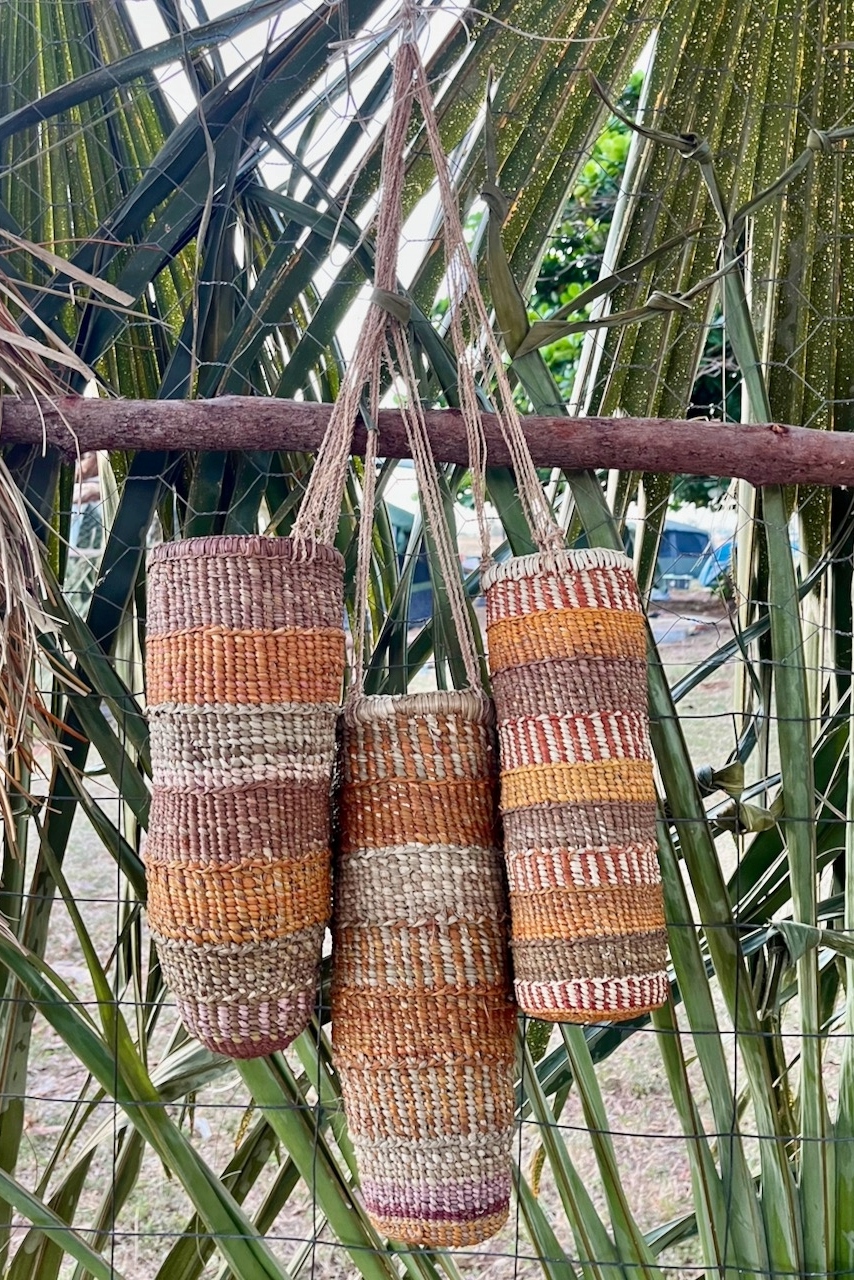
Through this process, Bula’bula Arts weavers worked with balgurr (kurrajong bark), hand-processing the bark into bush string and transforming it into both traditional and innovative Yolŋu items, including bags, hunting and fishing objects, and wearable ceremonial pieces. Weavers also explored new approaches to raki (string) by creating canvas-shaped formats, inviting viewers to slow down and engage with the fine detail, colour and craftsmanship, and to appreciate the inherent beauty and complexity of the raki (string) itself.
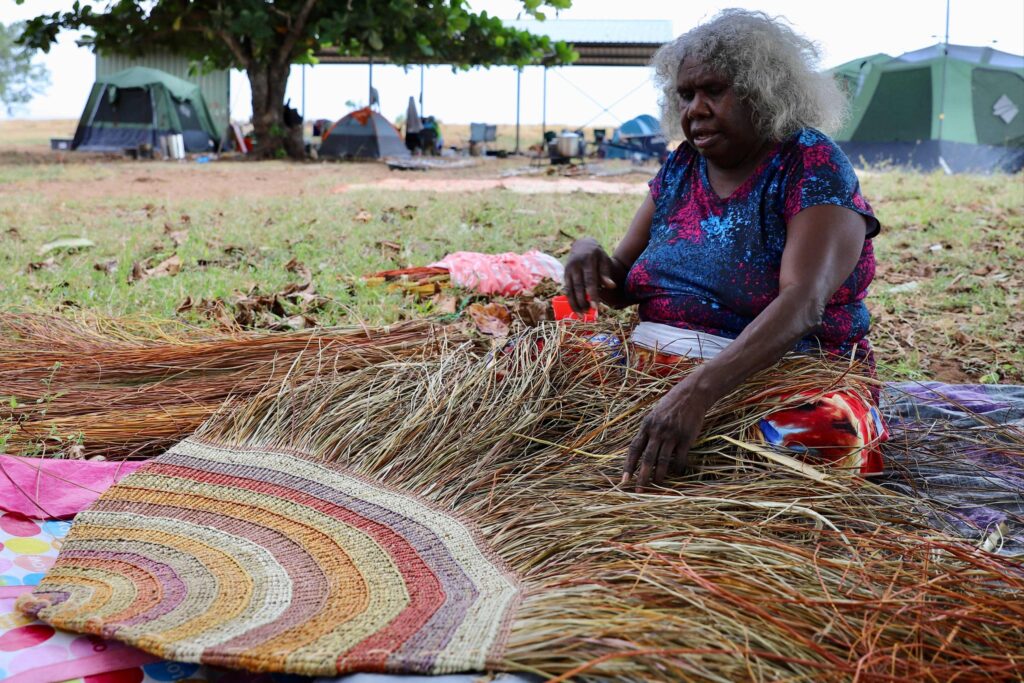
Daphne created large-scale string bag for the Langarra exhibition. It is a very important part of the Moon Creation story.
“This story has been told by old people when they heard this story. I heard from my grandma too. It’s a dream time story. Long time ago there live Moon he live near river bank with his family, two sons and wives. One day his two wives went out hunting looking for foods like yams, bush potatoes fruits and plums collecting cycad nuts to make damper for them. The two boys also decided to go out they ask their father to look for fish, ducks and goose for them to eat. They went to swamp area where there was lot of ducks and goose they started spearing, when it was enough, they went back to their camp and told their father they got plenty of ducks. When they were cooking and same time they were eating wings of the duck and said to their father, “Dad can you wait for body part of the duck meat so that you will have that instead of wings.” “Okay he said I’ll wait.” When all the ducks were cooked they did not give their father; the two sons said to him, “Dad can we go out to spear more ducks for us.” “Sure father reply I will wait for next lot.”
The two sons react three times, which they did not share because they were hungry or being greedy. But then their father was making fishing net sort of bag for catching fish. He ask them,” boys come here I’ll try you two to go into this fishing net to see how big will I catch fish for us.” The boys went into the net and their father said, “I will pull you two to the river bank, he told them,” he tied rope tightly and said ,”I will throw you two to the river to be drown, because you did not shared ducks for me to eat so now I will kill you two”. “Boys said no dad, don’t kill us.” Their father could not listen to them he was kept on pulling. Boys cried and cried to release them from net.
Father Moon just threw them into the river then they were sinking down into deep water and they were dead. After he threw them, on the way back to their camp he broke the branch of the tree and started pulling along the track that he was pulling them, just to get rid of track so that their mothers won’t see what had happen to them. Mothers of two sons came back from hunting they brought plenty of bush foods, when they were sitting they ask the father Moon.”Where did boys go. ” Father told them “they are still out spearing goose or ducks”.
They ask him again, “but it’s getting dark soon, where are they really,” “maybe they are resting because they speared lots of goose and ducks.” The two mothers talked among themselves. Hey sister we don’t need to give this food we have to look for them first and find where they are”. So other sister said, “Okay let’s search for them.” Mothers started looking for them, they look everywhere but could not find them, they said. “Maybe he killed them and we want to kill and burn him too,” same time they were crying for their children. So one of the mother said, “sister lets organise something ready to kill him tonight when he goes to sleep.” “That’s good let’s do it.”
They were collecting firewoods, grass, paper bark, twigs branches and so on. They hid near where their camp was. When the father Moon went to sleep, they were start putting around making circle where he was sleeping in the middle. “Let us now burn him while he is sleeping,” so they did, the fire was now burning getting close to him then he felt hot and said, “What are you doing to me.” “And the mothers said to him, we are burning because you killed our sons and it’s your turn to die.” He was now burning and same time changing his colour it turn white, after that he climb up the tree and said, “when people die they won’t come back to live like me, you can see me again I am the moon.”
Julie Djulibing Malibirr
Bula’bula Arts
Language: Ganalbingu
Clan: Gurrumba Gurrumba
Laŋarra Bush Gallery 2024
Bula’bula Arts saw the Langarra Bush Gallery as a space where weavers were encouraged to push their boundaries, experiment with new techniques and showcase unique skills in a supportive, on-Country environment. For the exhibition, Bula’bula Arts artists deeply focussed on making work they felt proud of, while also fostering discussion, connection, growth and confidence in their practice.
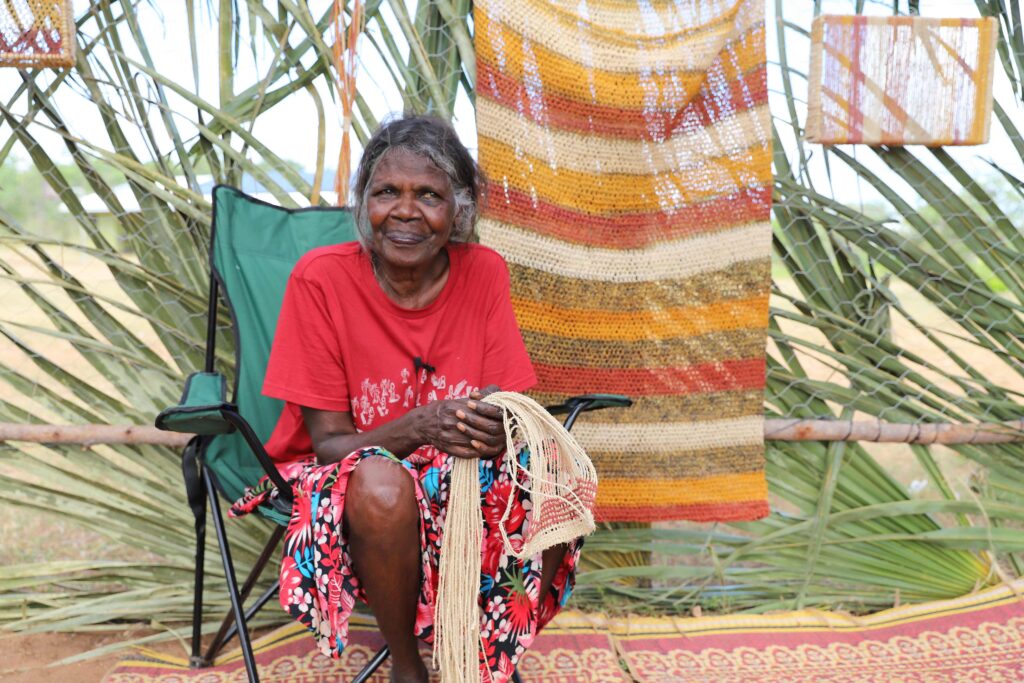
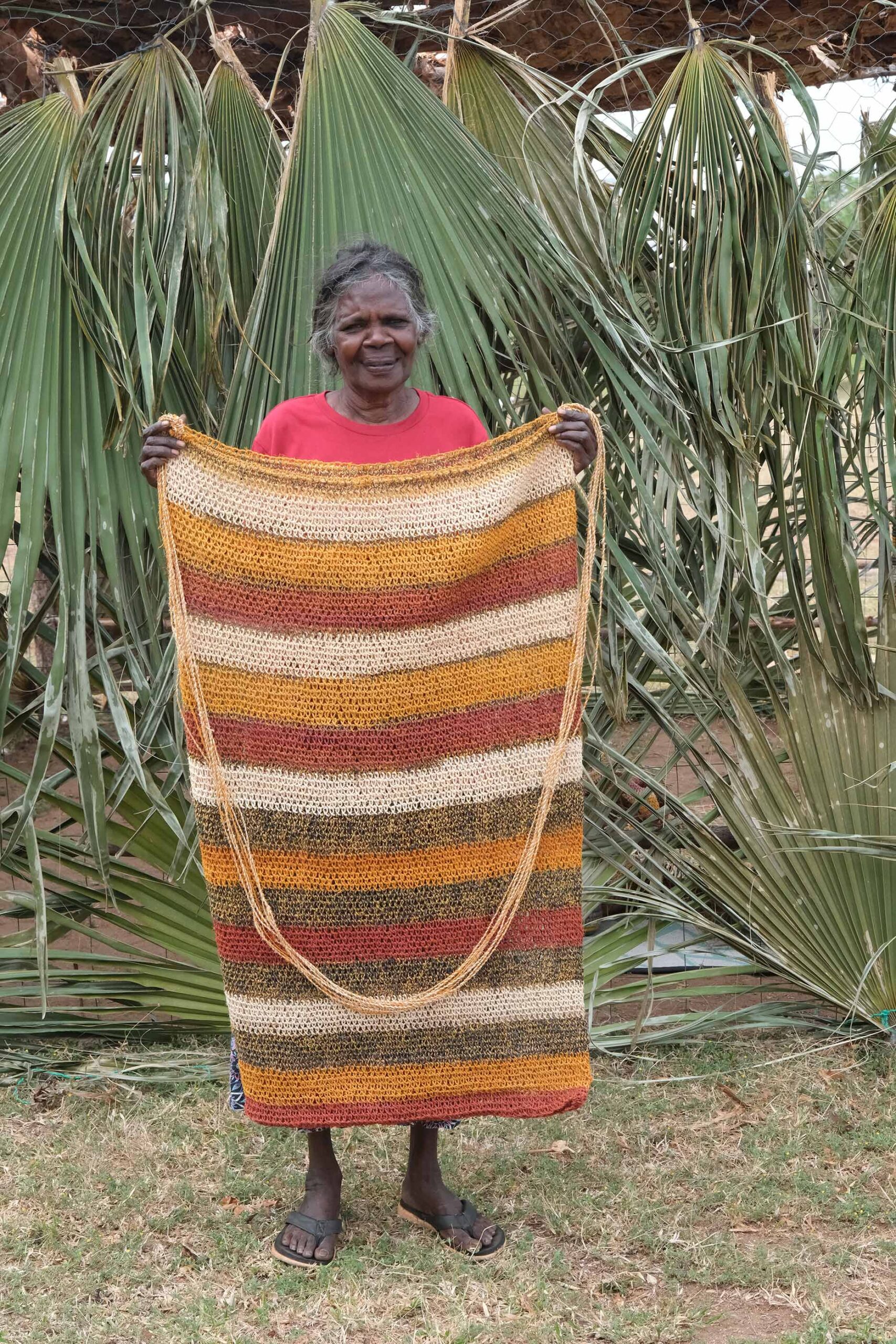
Through this process, Bula’bula Arts weavers worked with balgurr (kurrajong bark), hand-processing the bark into bush string and transforming it into both traditional and innovative Yolŋu items, including bags, hunting and fishing objects, and wearable ceremonial pieces. Weavers also explored new approaches to raki (string) by creating canvas-shaped formats, inviting viewers to slow down and engage with the fine detail, colour and craftsmanship, and to appreciate the inherent beauty and complexity of the raki (string) itself.
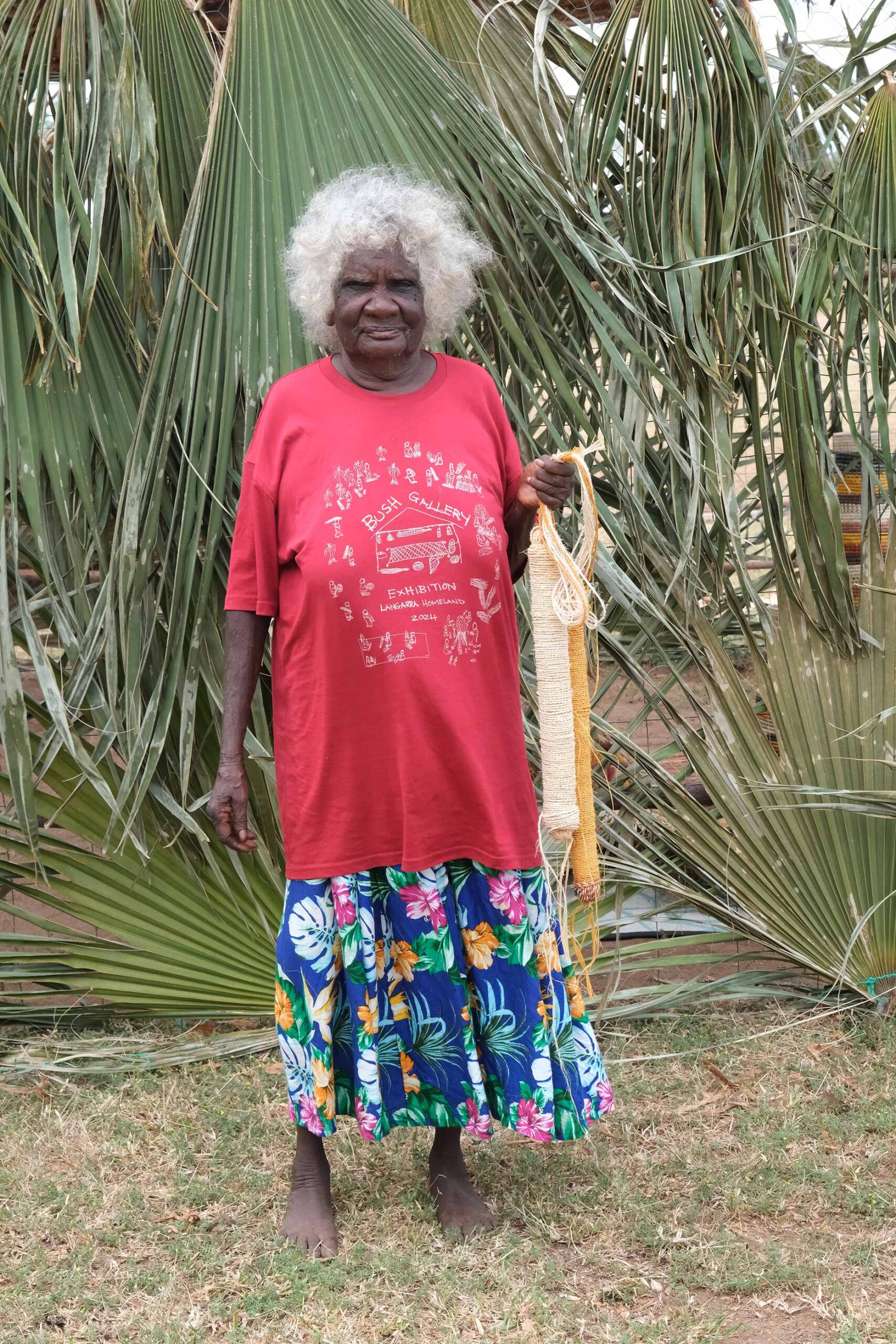
Senior weaver Julie shared that she made string pieces for the exhibition that had not been created for a long time. The Bush Gallery offered her the opportunity to revisit these older, deeply cultural pieces and re-make them specifically for this body of work, drawing on knowledge and techniques that sit deep within her practice. Creating these pieces was significant for Julie, allowing her to bring rarely seen items back into view and to honour older ways of making through work created on Country for the exhibition.
Margaret Djarrbalabal Malibirr
Bula’bula Arts
Language: Ganalbingu
Clan: Gurrumba Gurrumba
Laŋarra Bush Gallery 2024
Bula’bula Arts saw the Langarra Bush Gallery as a space where weavers were encouraged to push their boundaries, experiment with new techniques and showcase unique skills in a supportive, on-Country environment. For the exhibition, Bula’bula Arts artists deeply focussed on making work they felt proud of, while also fostering discussion, connection, growth and confidence in their practice.
Through this process, Bula’bula Arts weavers worked with balgurr (kurrajong bark), hand-processing the bark into bush string and transforming it into both traditional and innovative Yolŋu items, including bags, hunting and fishing objects, and wearable ceremonial pieces. Weavers also explored new approaches to raki (string) by creating canvas-shaped formats, inviting viewers to slow down and engage with the fine detail, colour and craftsmanship, and to appreciate the inherent beauty and complexity of the raki (string) itself.
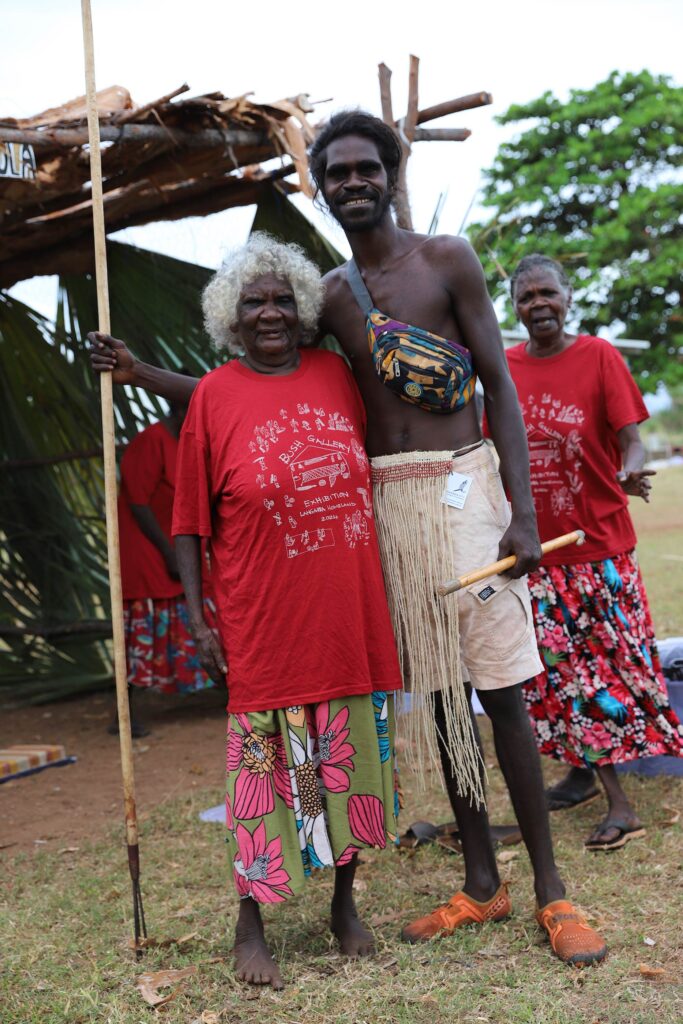
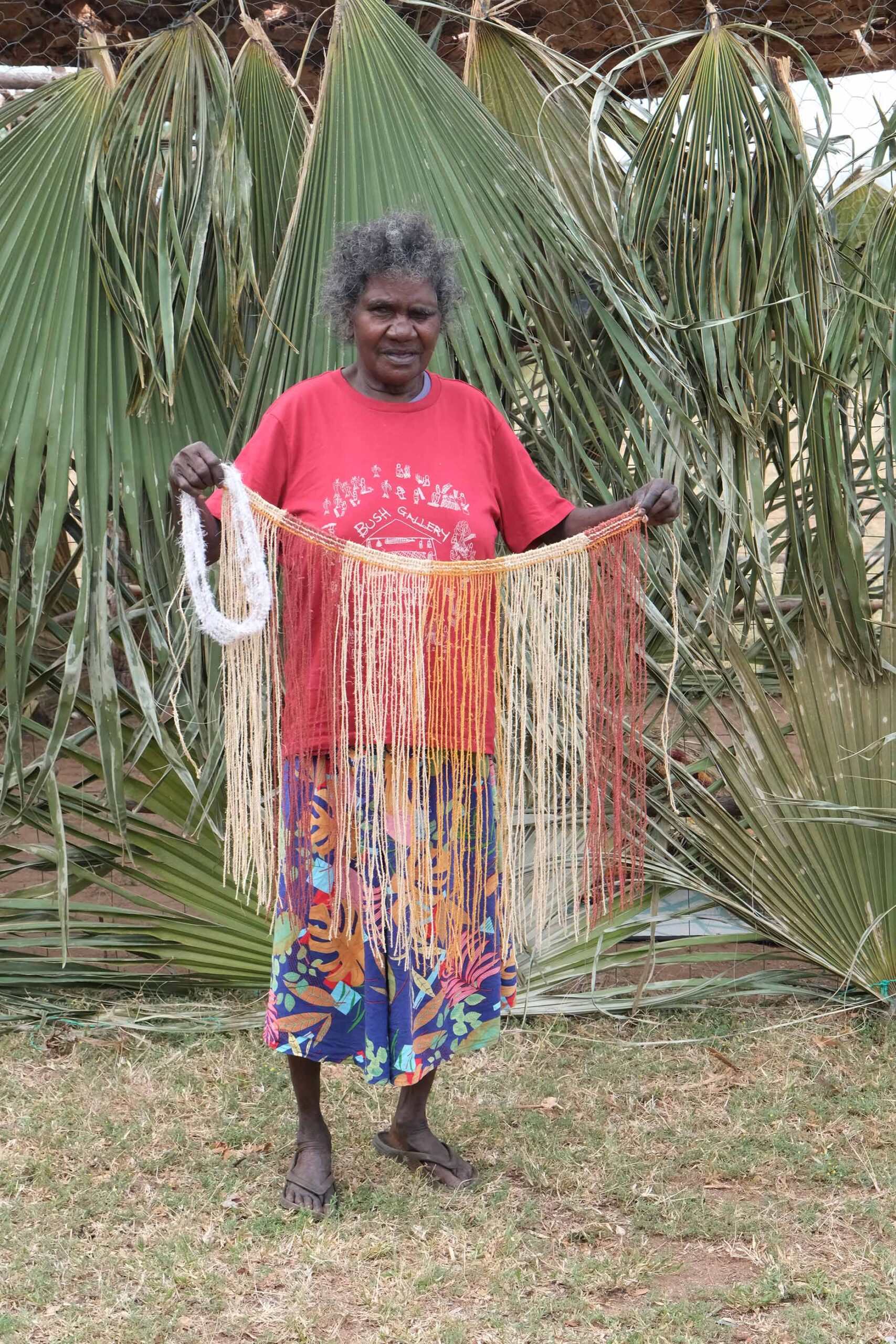
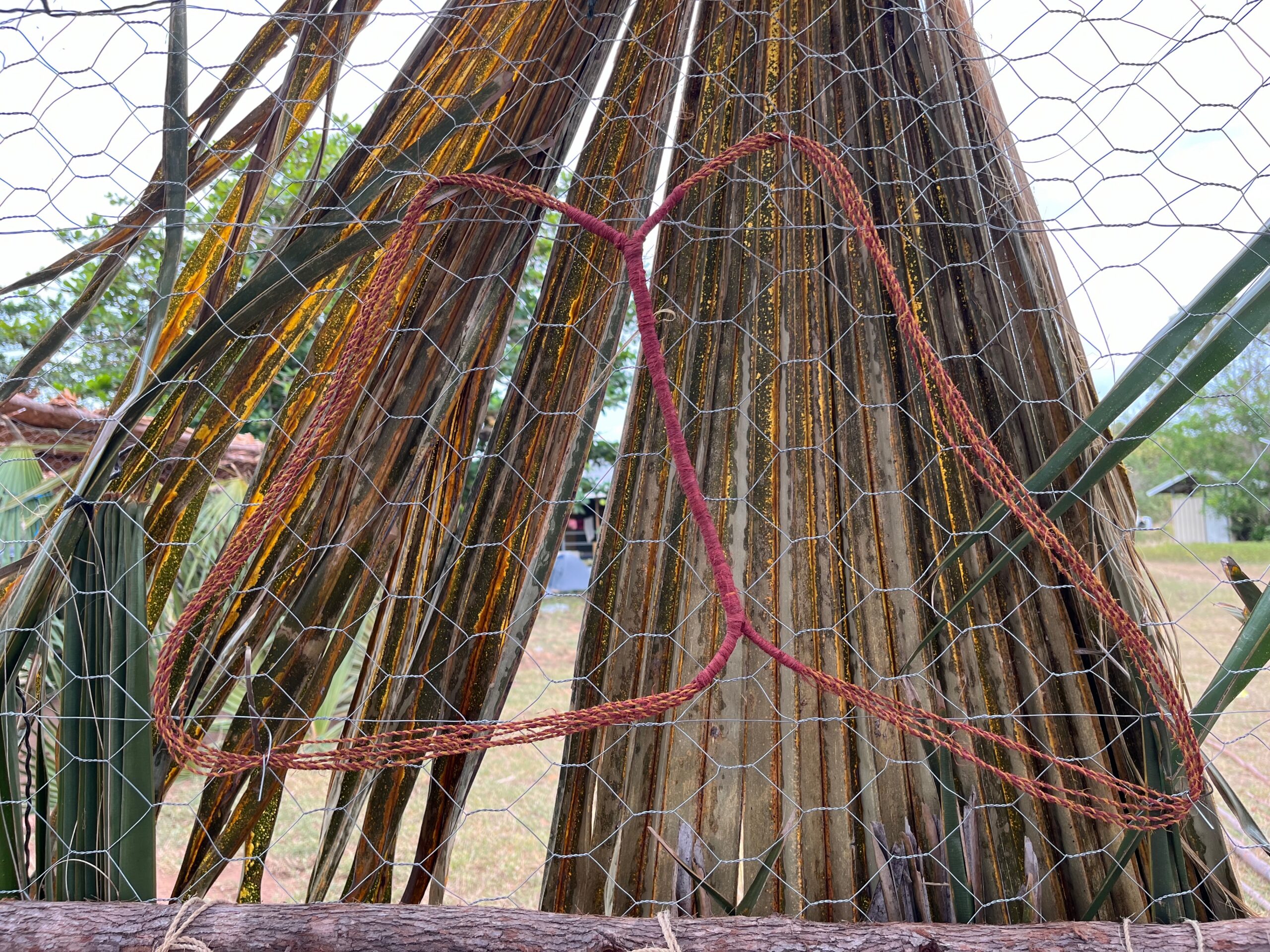
Margaret Djarbalarbal Malibirr’s presence at the weaving camp was grounding and powerful, carrying both authority and generosity. Known among weavers as a master of string-based ceremonial objects, Margaret brings an extraordinary depth of knowledge to every space she works in. At the camp she shared time, technique and quiet guidance, supporting others through her steady practice and deep connection to materials. Her way of working, often incorporating feathers into finely made string forms, reflects a lifetime of cultural knowledge and artistic discipline.
A senior Yolŋu fibre artist from the Ganalbingu clan, Margaret is one of the most respected and established weavers at Bula’bula Arts. She is best known for her ceremonial works made from balgurr (kurrajong bark), gunga (pandanus spiralis) and natural bush string, all carefully harvested, prepared and dyed using methods passed down through generations. Her mastery lies not only in technique, but in her ability to select the right materials and bring them together with balance, strength and beauty.

Margaret Wulngurrwulngurr
Bula’bula Arts
Language: Djinba
Clan: Dalparri
Laŋarra Bush Gallery 2024
Bula’bula Arts saw the Langarra Bush Gallery as a space where weavers were encouraged to push their boundaries, experiment with new techniques and showcase unique skills in a supportive, on-Country environment. For the exhibition, Bula’bula Arts artists deeply focussed on making work they felt proud of, while also fostering discussion, connection, growth and confidence in their practice.
Through this process, Bula’bula Arts weavers worked with balgurr (kurrajong bark), hand-processing the bark into bush string and transforming it into both traditional and innovative Yolŋu items, including bags, hunting and fishing objects, and wearable ceremonial pieces. Weavers also explored new approaches to raki (string) by creating canvas-shaped formats, inviting viewers to slow down and engage with the fine detail, colour and craftsmanship, and to appreciate the inherent beauty and complexity of the raki (string) itself.
Margaret Wulngurrwulngurr was invited to attend the weaving camp following discussions with senior weavers, who carefully selected her to take part. Her participation reflects the trust placed in her skills, commitment and willingness to work alongside others on Country. Being chosen in this way is an acknowledgement of her role within the weaving community and the importance of bringing together the right people to share knowledge, support one another and strengthen weaving practice across generations.
Selina Rawurruway
Bula’bula Arts
Language: Liya -gawumIrr/ buyu-yukululmirr
Clan: Garrawurra
Laŋarra Bush Gallery 2024
Bula’bula Arts saw the Langarra Bush Gallery as a space where weavers were encouraged to push their boundaries, experiment with new techniques and showcase unique skills in a supportive, on-Country environment. For the exhibition, Bula’bula Arts artists deeply focussed on making work they felt proud of, while also fostering discussion, connection, growth and confidence in their practice.
Through this process, Bula’bula Arts weavers worked with balgurr (kurrajong bark), hand-processing the bark into bush string and transforming it into both traditional and innovative Yolŋu items, including bags, hunting and fishing objects, and wearable ceremonial pieces. Weavers also explored new approaches to raki (string) by creating canvas-shaped formats, inviting viewers to slow down and engage with the fine detail, colour and craftsmanship, and to appreciate the inherent beauty and complexity of the raki (string) itself.
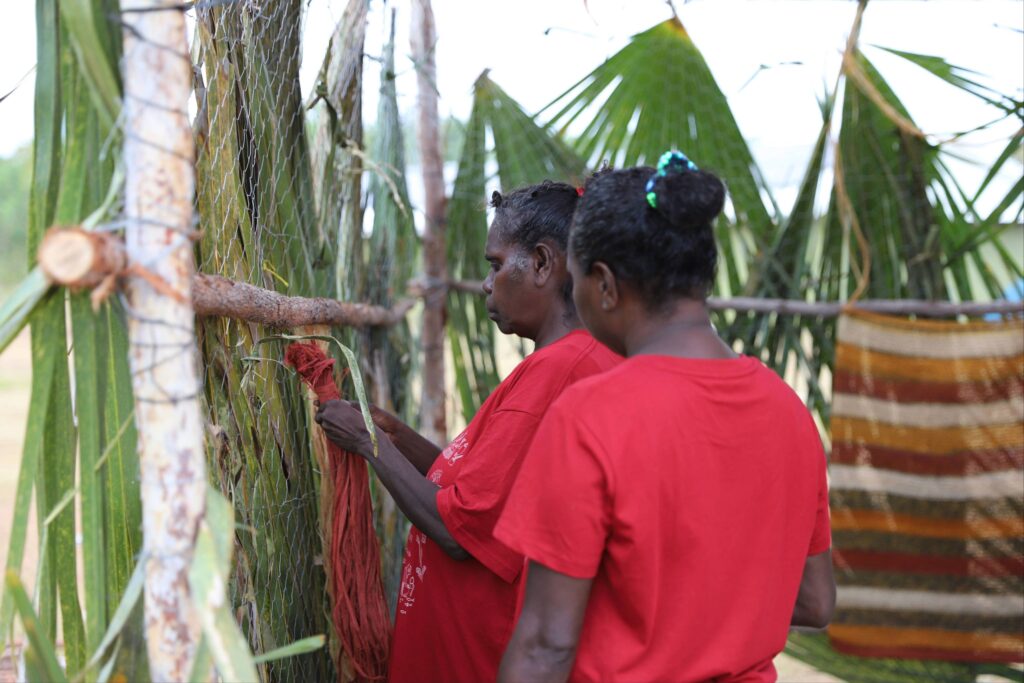
Selina came to the weaving camp to support her mother Julie and her aunt Daphne, offering another pair of hands while learning alongside them. Being present on Country and working closely with her family allowed Selina to begin building her own weaving skills through observation, practice and shared time. Her participation was important to senior weavers Margaret Malibirr, Daphne Banyawarra and Julie Djulibing, who value the passing on of knowledge through generations. For them, Selina’s involvement represents continuity, care and the future of weaving traditions, where learning happens by doing, listening and being present with family and elders.
Judy Manany
Elcho Island Arts
Language: Dhaŋu Gälpu
Clan: Gälpu
Laŋarra Bush Gallery 2024
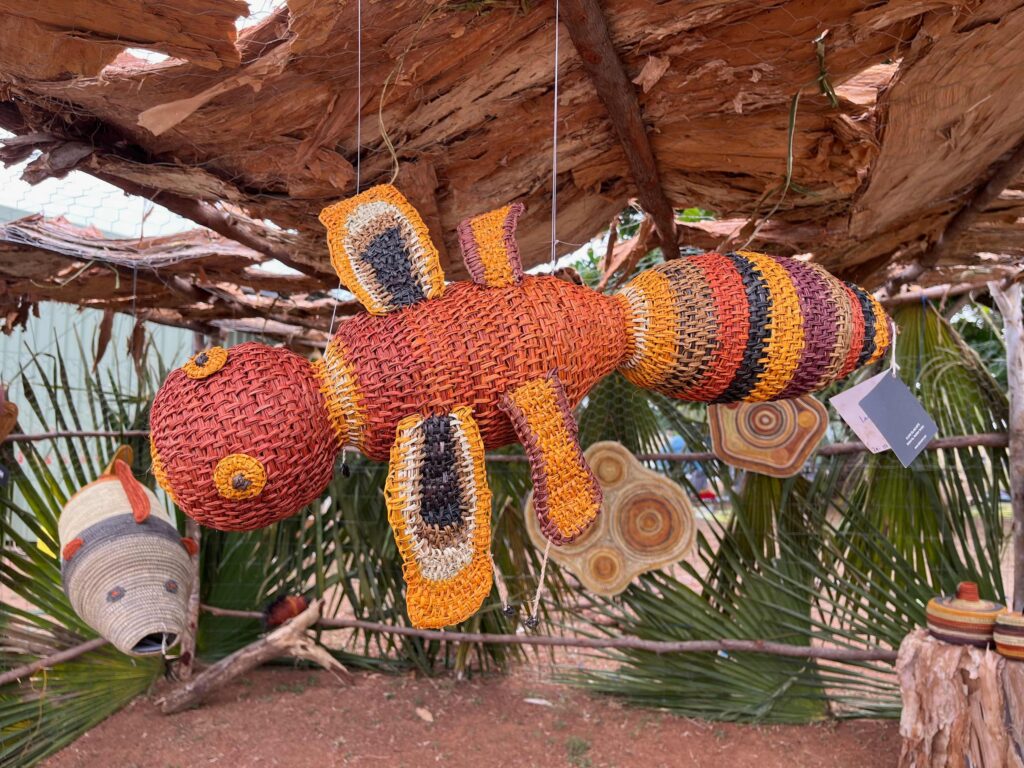
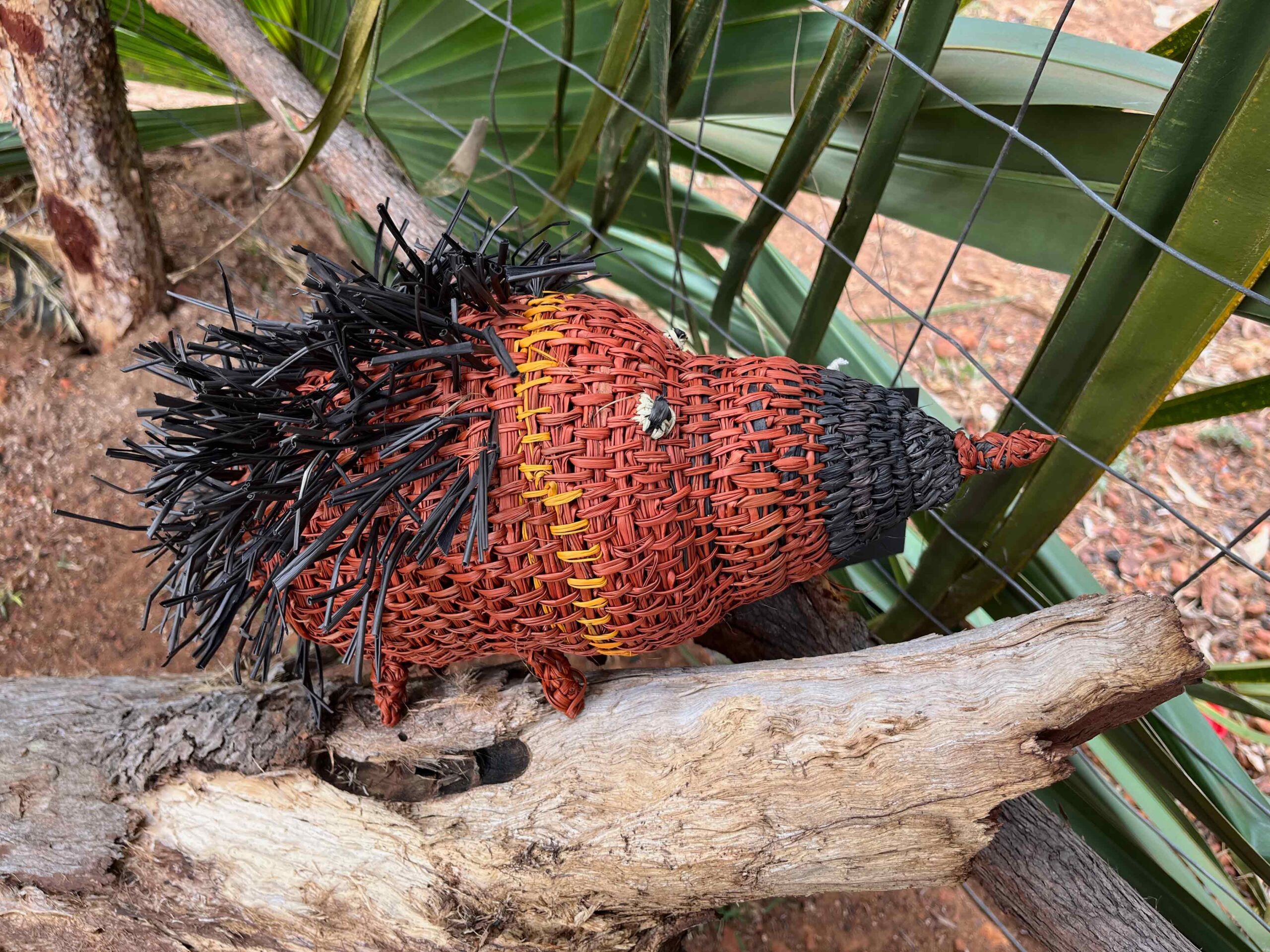
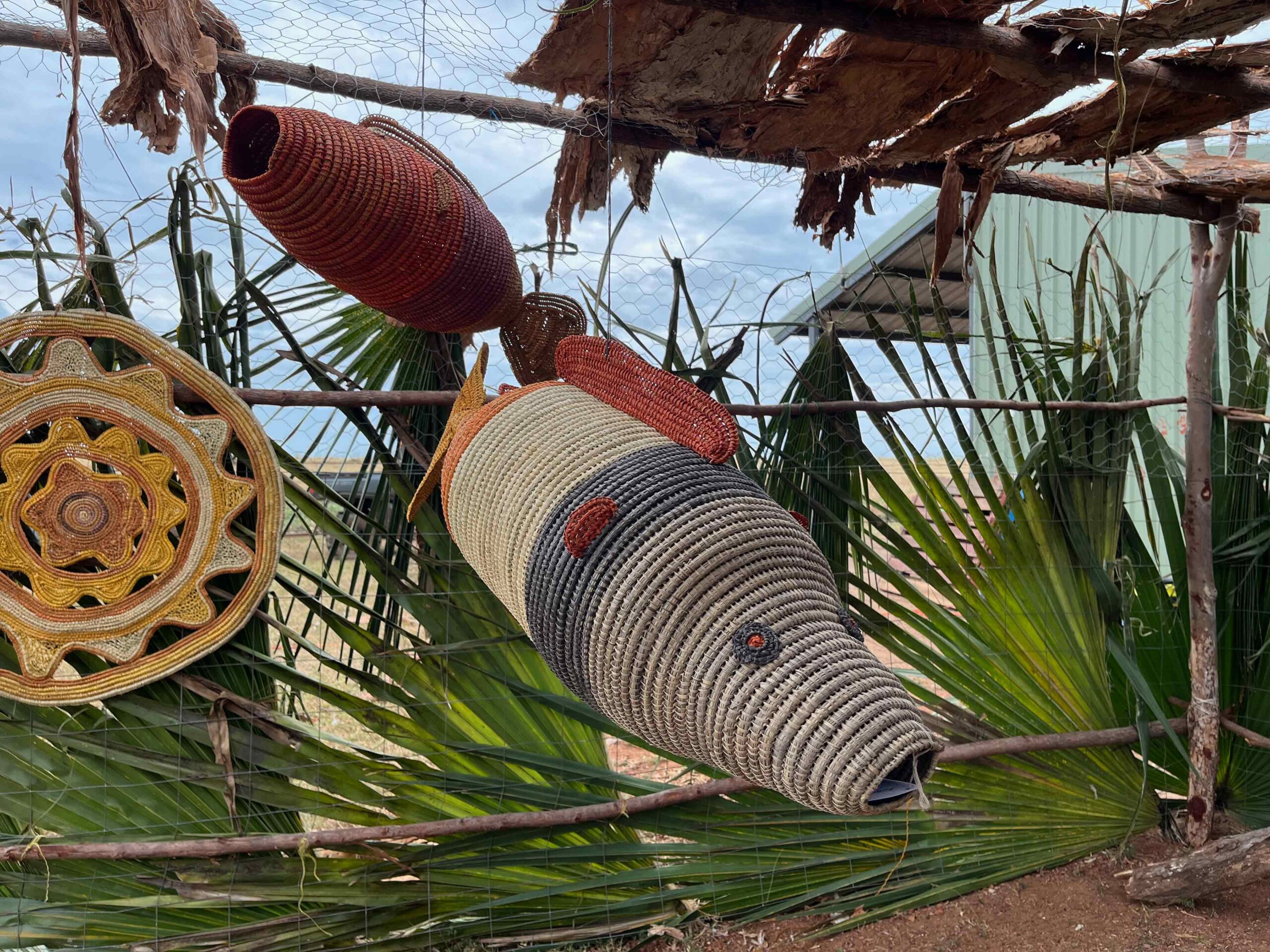
The Elcho Island Arts exhibition showcased a striking range of two-dimensional and three-dimensional sculptural works. While the artists from Galiwin’ku could not be present, their connections to Laŋarra and fellow artists was powerfully felt through their art.
For the Bush Gallery, Judy Manany presented a series of woven animal sculptures, including a dragonfly, echidna, and fish.
Margaret Dhorrpuy Munyarryun
Elcho Island Arts
Language: Dhaŋu
Clan: Wangurri
Homeland: Dhambala
Laŋarra Bush Gallery 2024
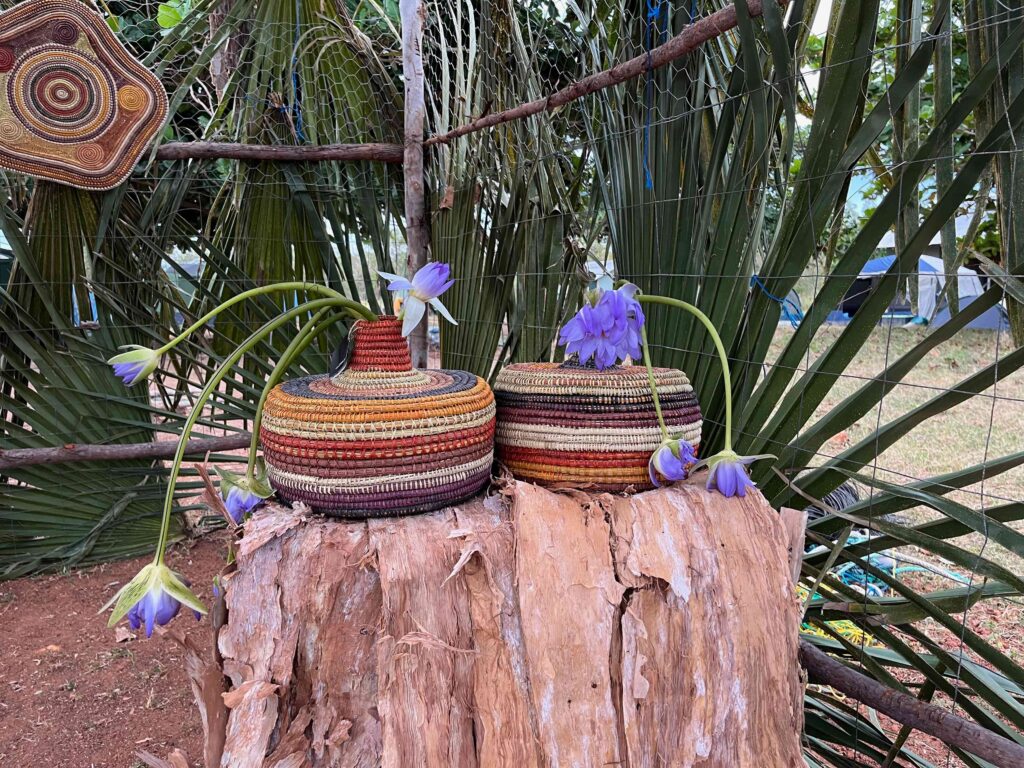
The Elcho Island Arts exhibition showcased a striking range of two-dimensional and three-dimensional sculptural works. While the artists from Galiwin’ku could not be present, their connections to Laŋarra and fellow artists was powerfully felt through their art.
Dhorrpuy’s woven vesssels elegantly held lilly’s that Elizabeth Rukurriwuy collected from a nearby fresh water source.
Verity Burarrwanga
Elcho Island Arts
Laŋarra Bush Gallery 2024
The Elcho Island Arts exhibition showcased a striking range of two-dimensional and three-dimensional sculptural works. While the artists from Galiwin’ku could not be present, their connections to Laŋarra and fellow artists was powerfully felt through their art.
Verity Burarrwanga’s two-dimensional work features four concentric circles created from pandanus using the traditional coil technique.