
Maningrida Arts and Culture


0/0
Maningrida Arts and Culture is a leading centre for contemporary cultural expression and art-making, renowned for its abundance of highly collectable works and emerging artistic talent. Based on Kunibídji Country in Arnhem Land, the art centre represents some 250 artists from the Djelk IPA, an area spanning 7,000 square kilometres of land and sea and more than 100 clan estates, where over 12 distinct languages are spoken.
With the support of their homelands resource organisation, Bawinanga Homelands Aboriginal Corporation, Maningrida artists have transformed a small-scale art trade that began in the late 1960s, into a thriving, internationally recognised arts and cultural enterprise.
Artworks from this region are grounded in systems of knowledge transmission, with origins in body design, rock art and cultural practice, shaped by decades of collaboration and political action.
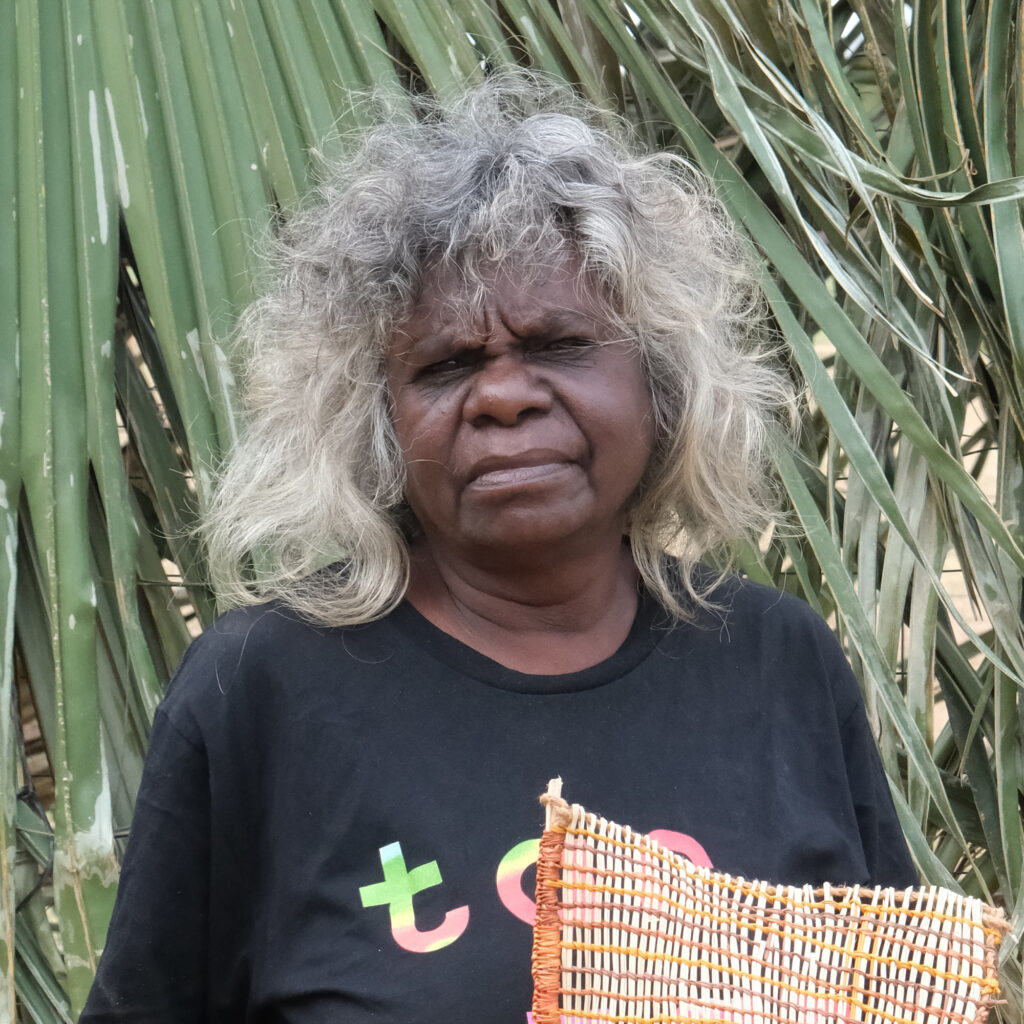
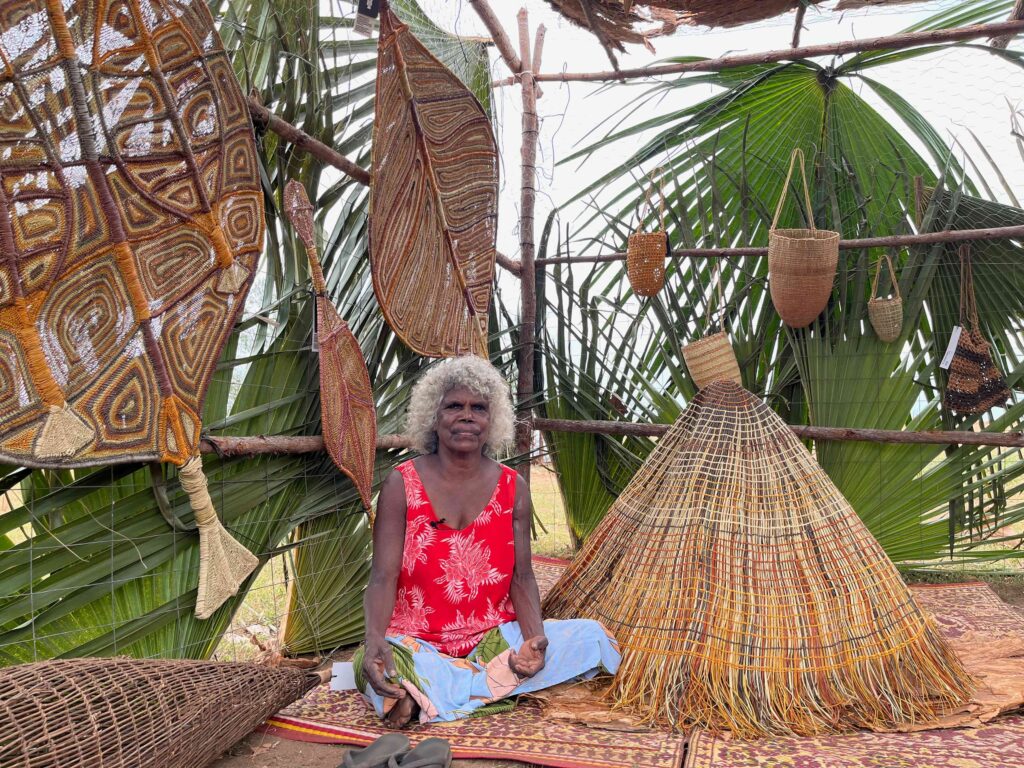
Anniebell Marrngamarrnga
Maningrida Arts and Culture
Language: Kuninjku, Gun-nartpa
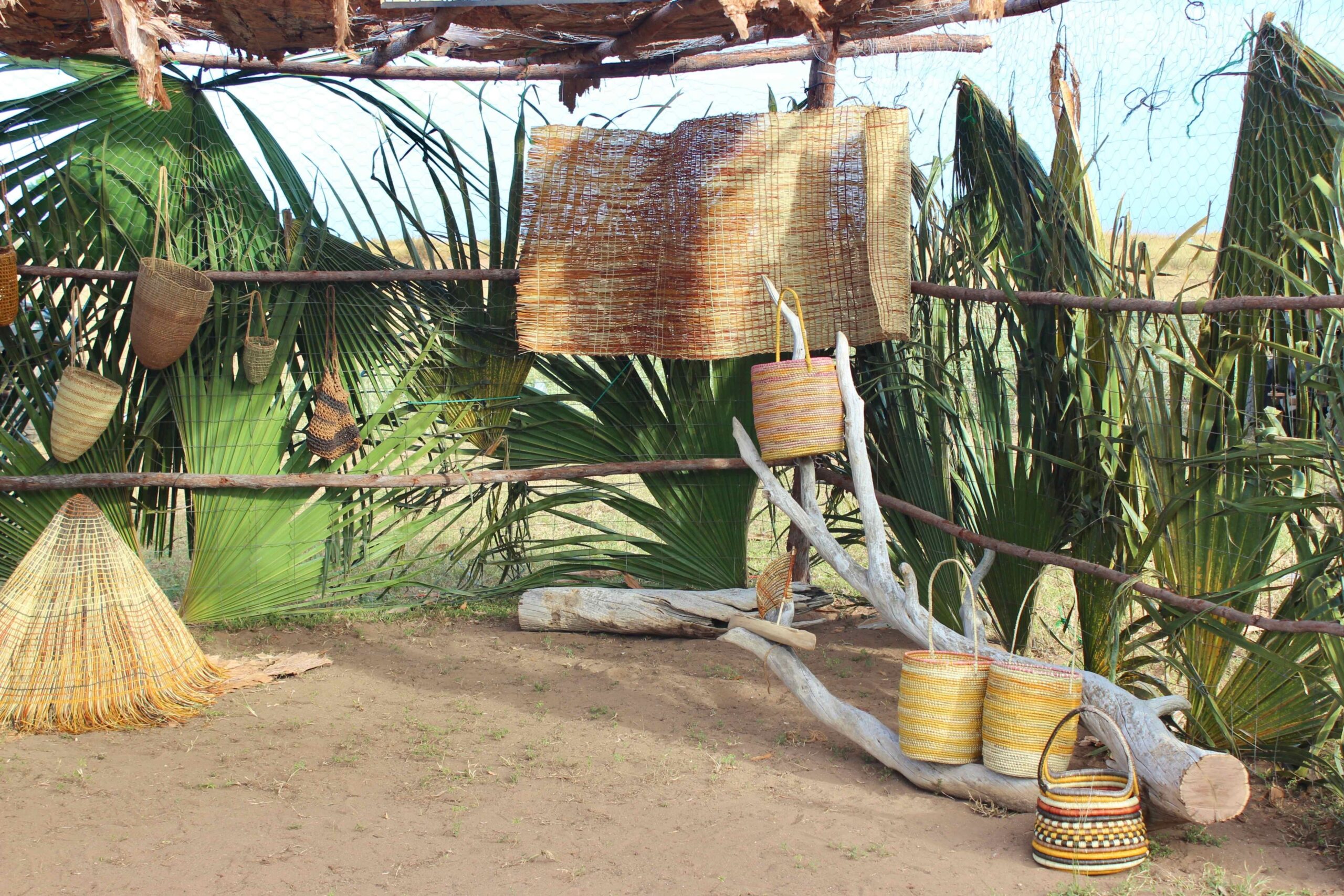
Laŋarra Bush Gallery 2024
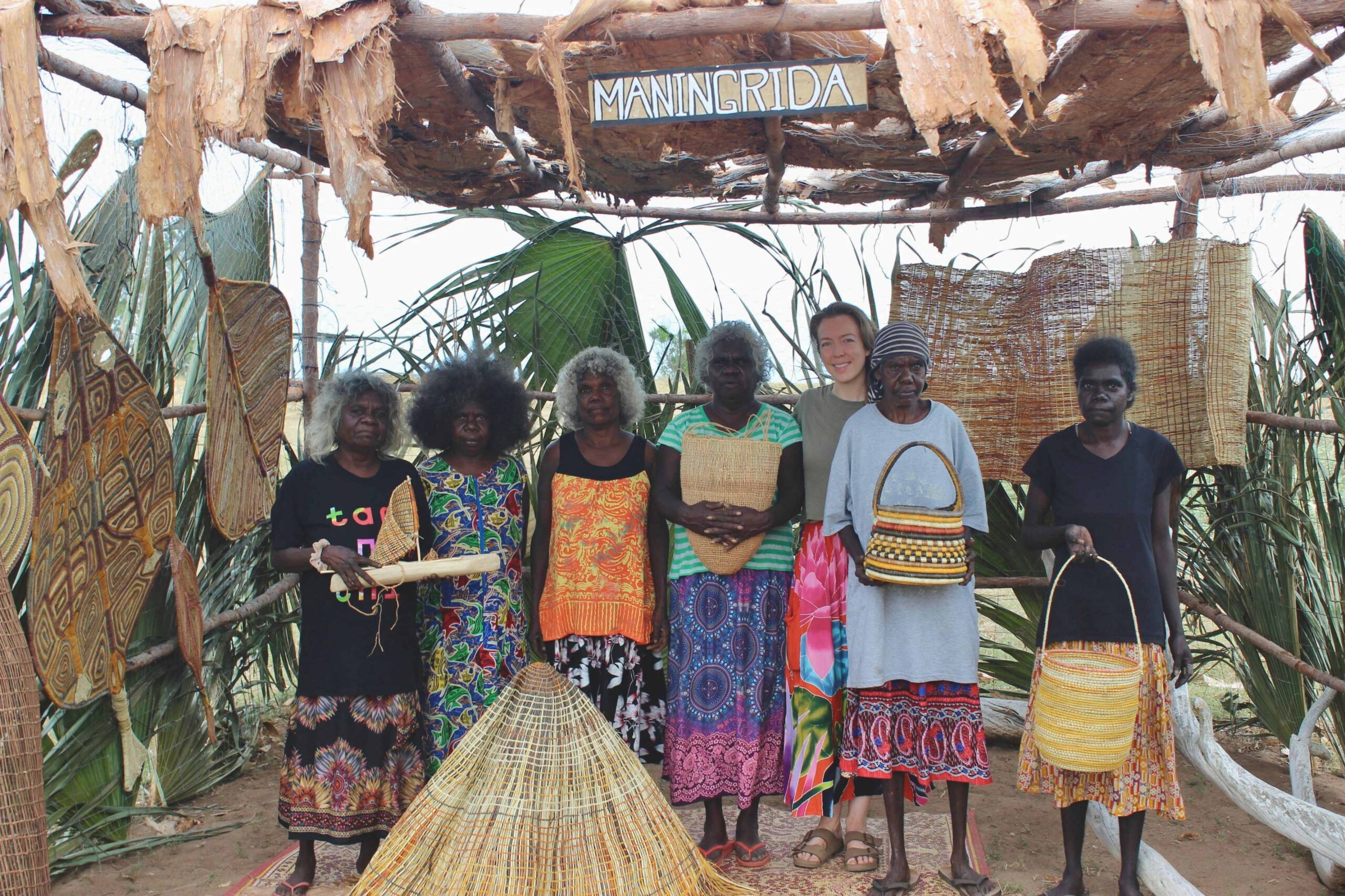
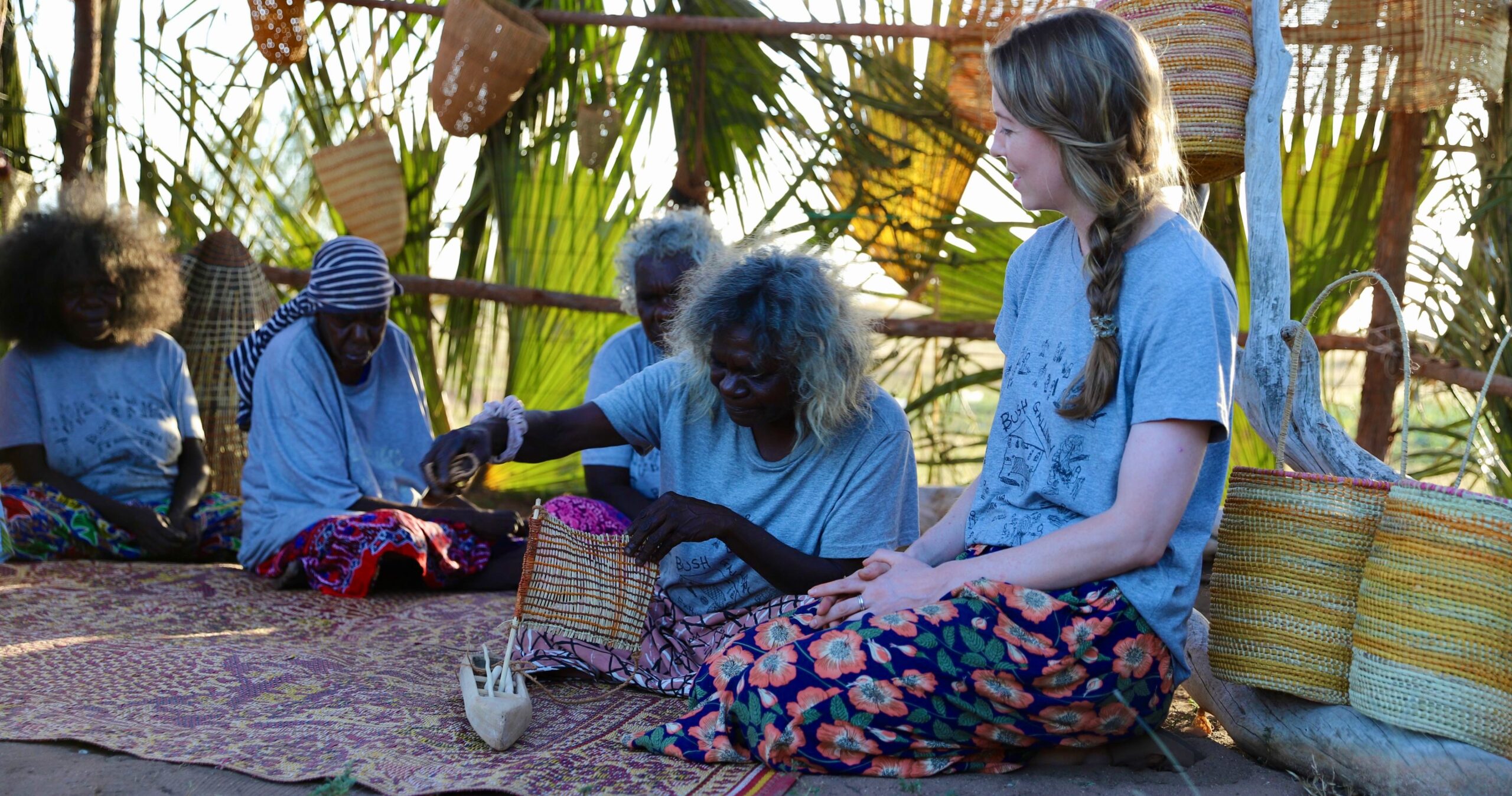
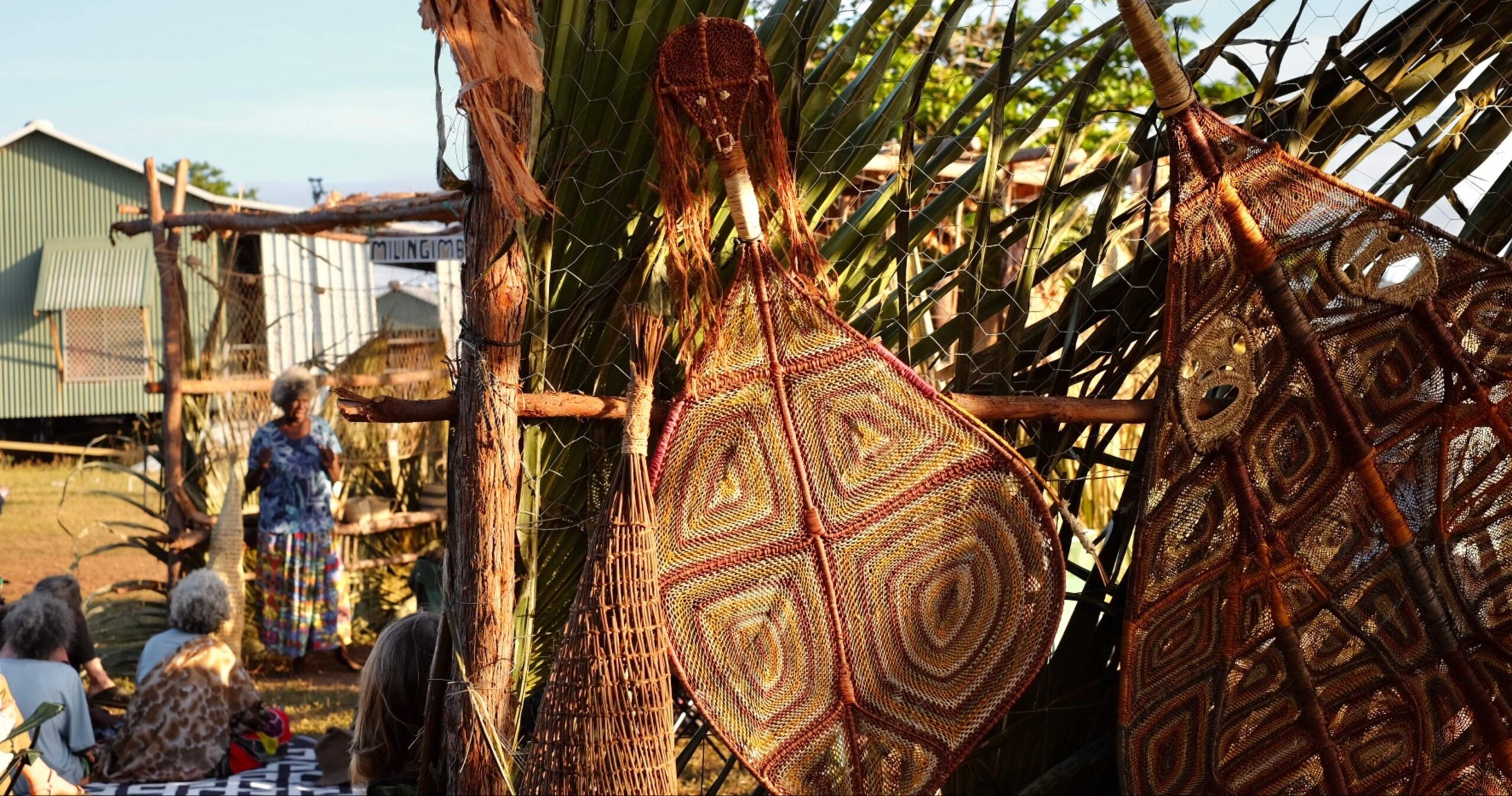
Representing over 100 clans and 12 disinct language groups the Maningrida Bush Gallery showcased the cultural diversity amongst Maningrida Artists.
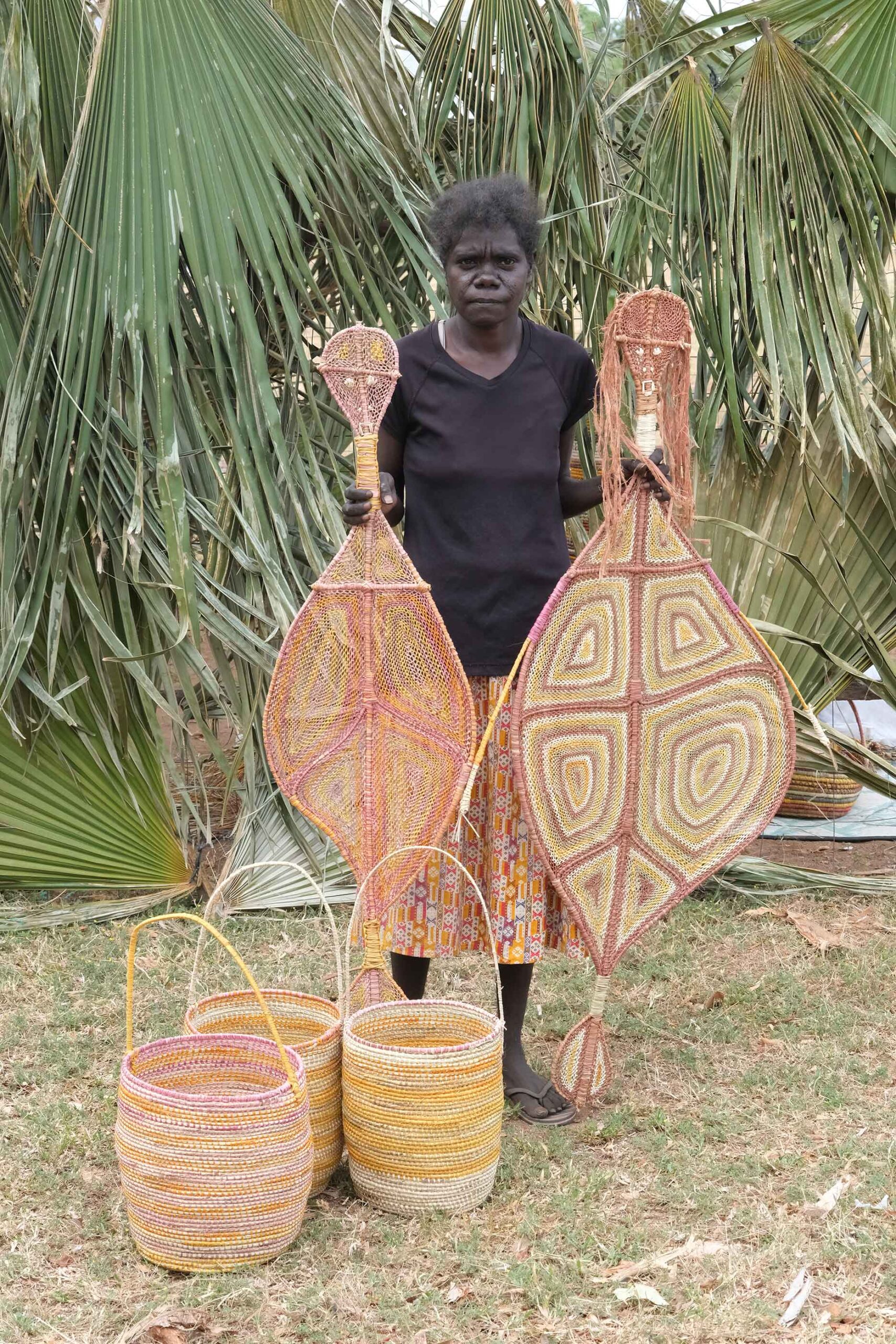
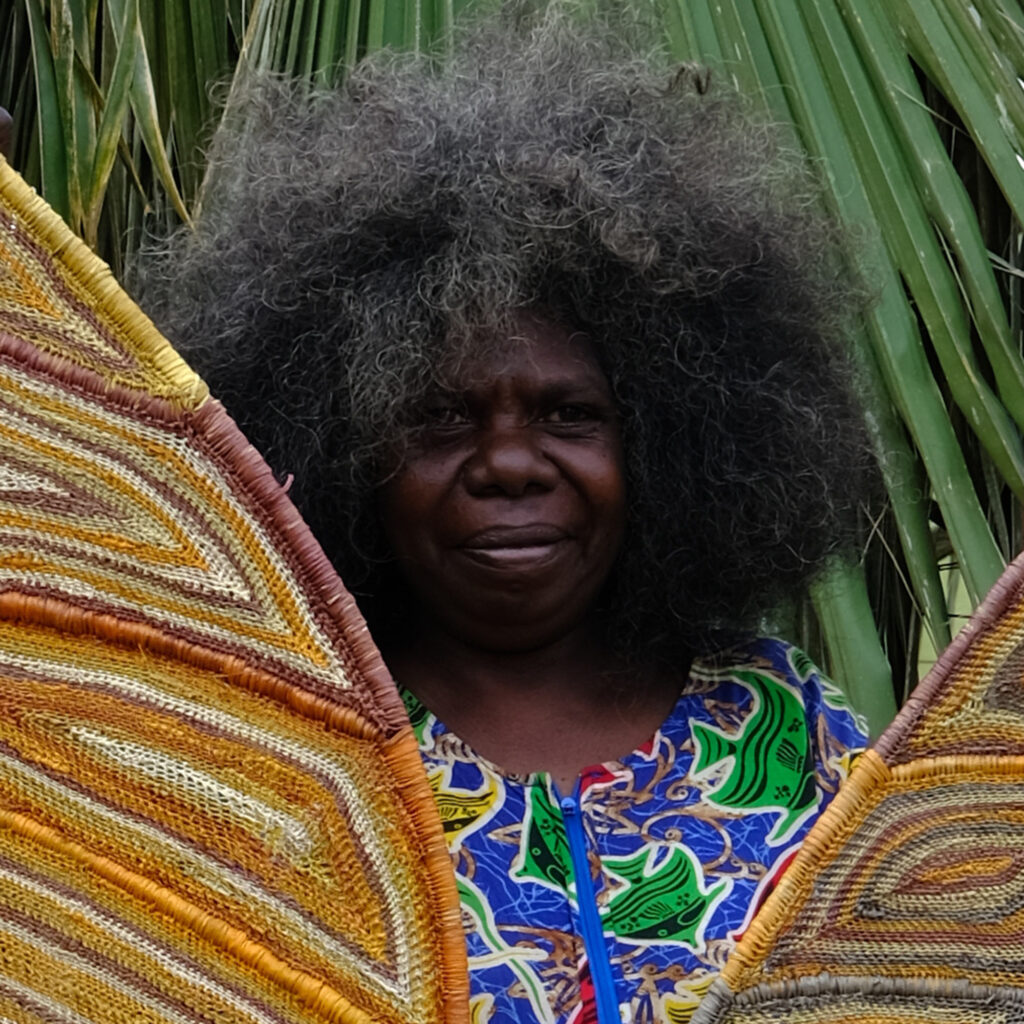
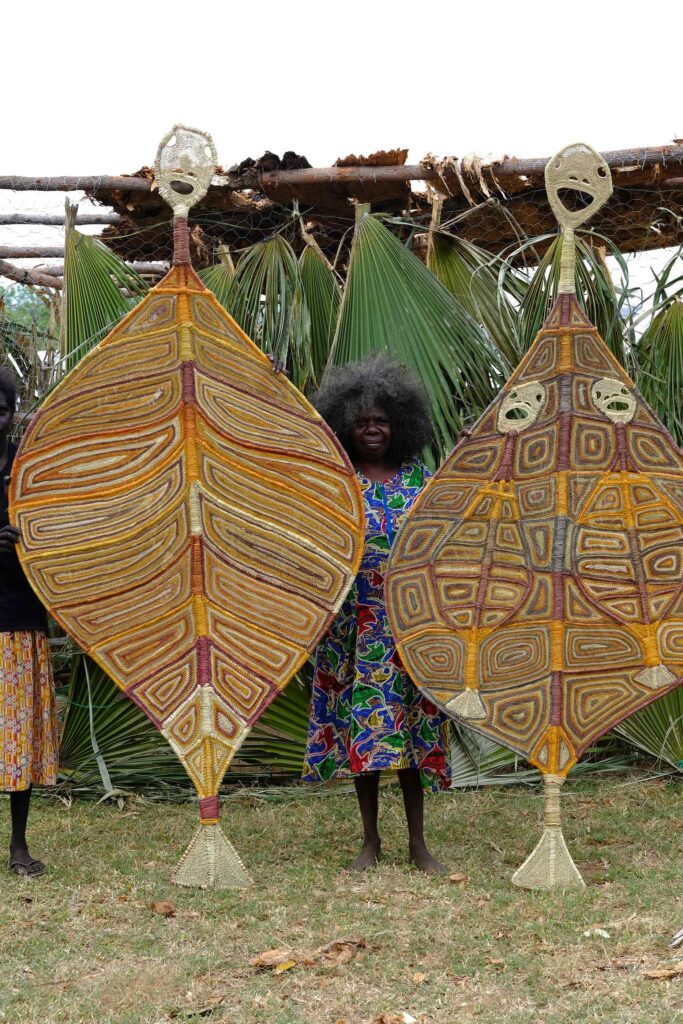
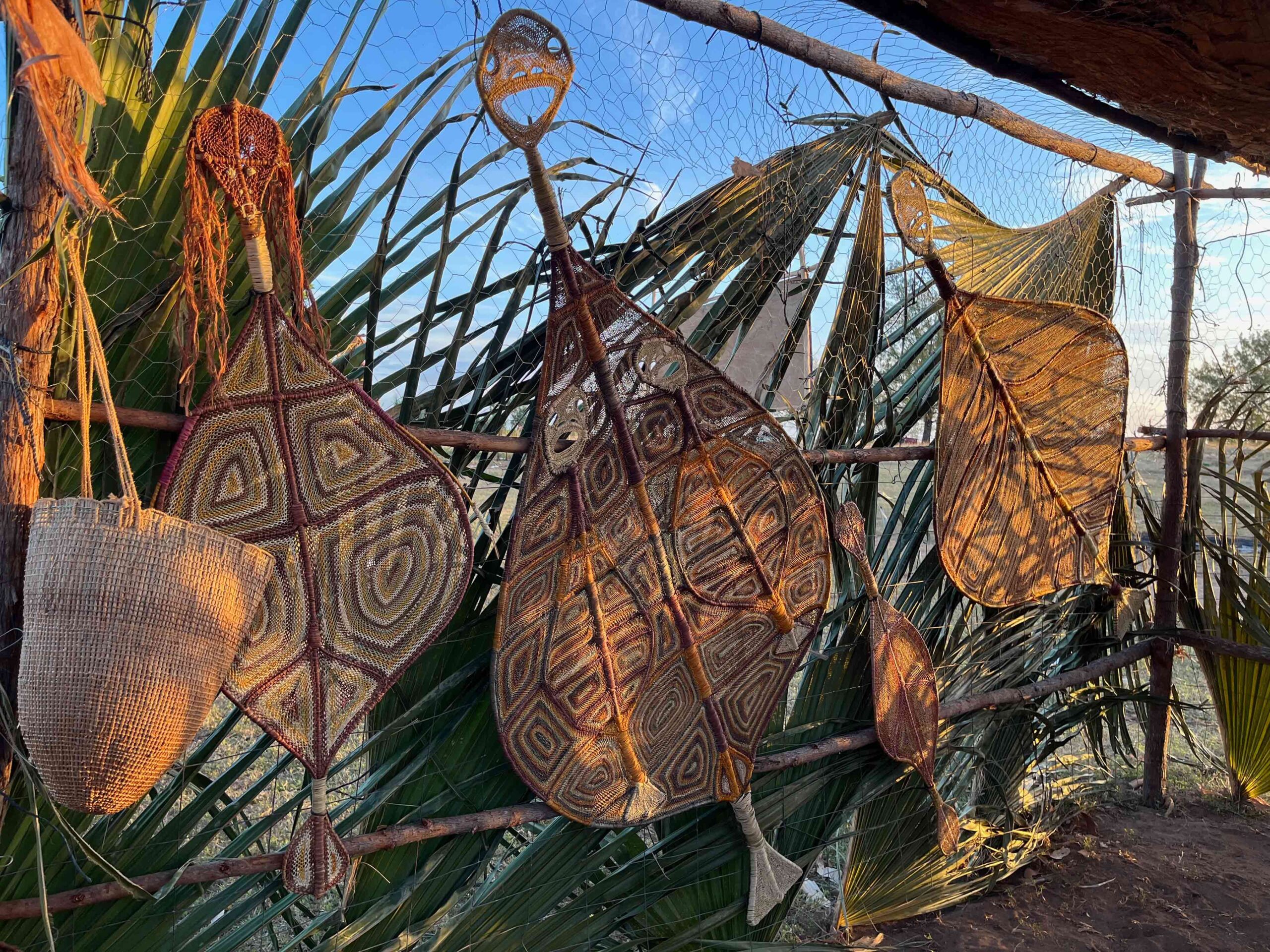
I came with the idea to make flat yawkyawk from pandanus [Pandanus spiralis]. First I build the bamboo frame and I then weave with colourful pandanus in the same technique I used when making twined bags. I use lots of different colours and I like it. Colours are important in my work.
– Anniebell Marrngamarrnga
More
Artist bio
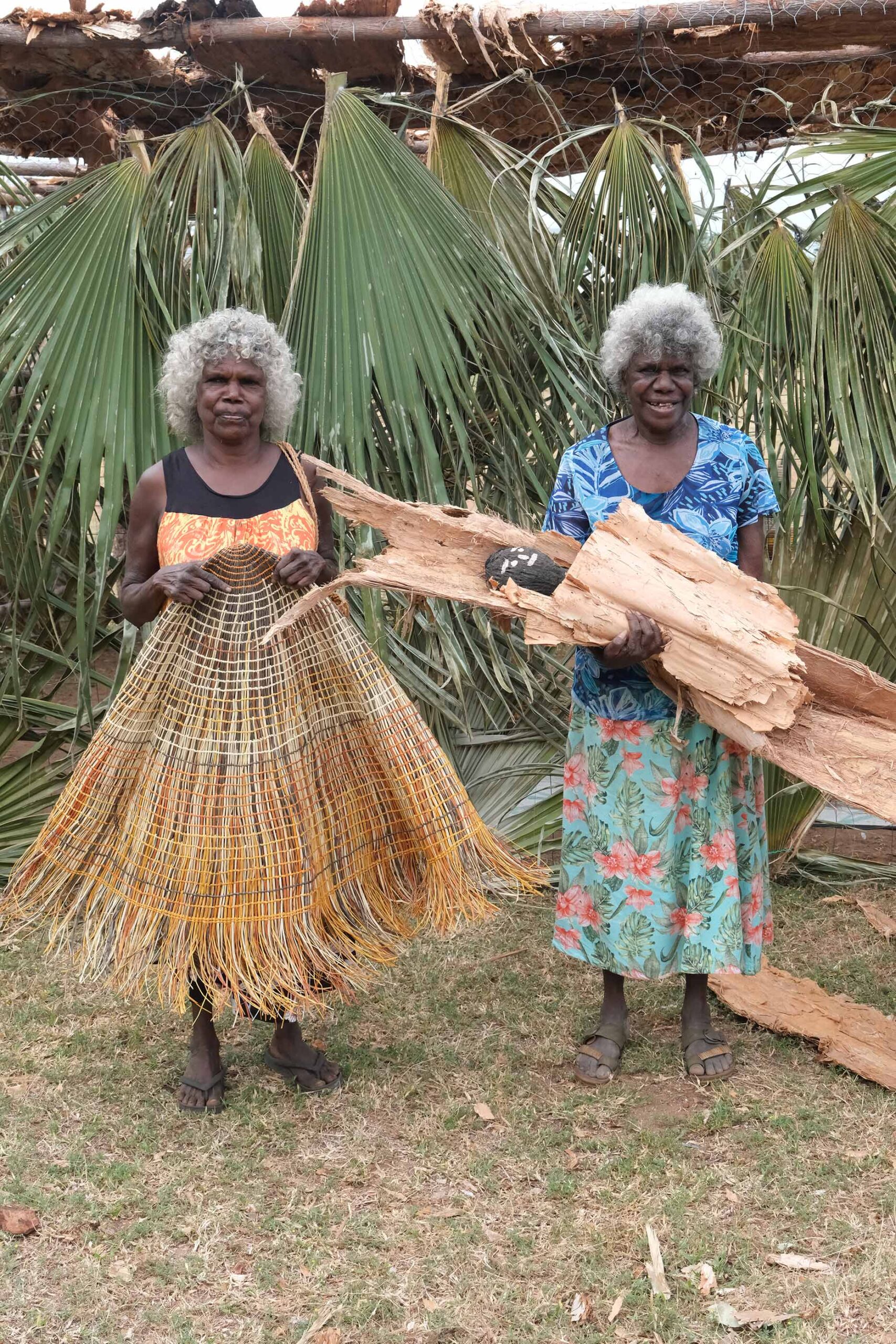
Doreen Jinggarrabarra
Maningrida Arts and Culture
Language: Burarra (Anbarra), Na-Kara
Clan: Gelama A-gorndiya
Homeland: Jinawunya
Laŋarra Bush Gallery 2024
Representing over 100 clans and 12 disinct language groups the Maningrida Bush Gallery showcased the cultural diversity amongst Maningrida Artists.
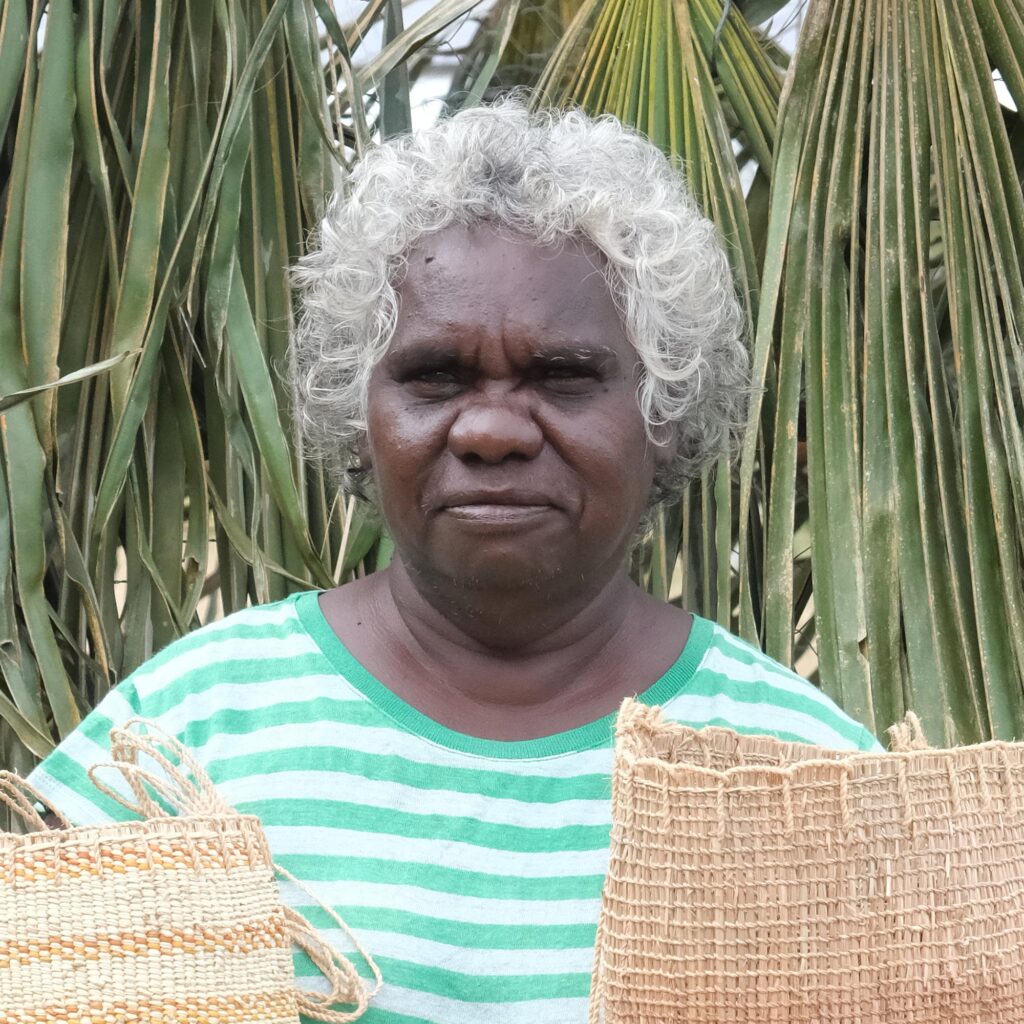
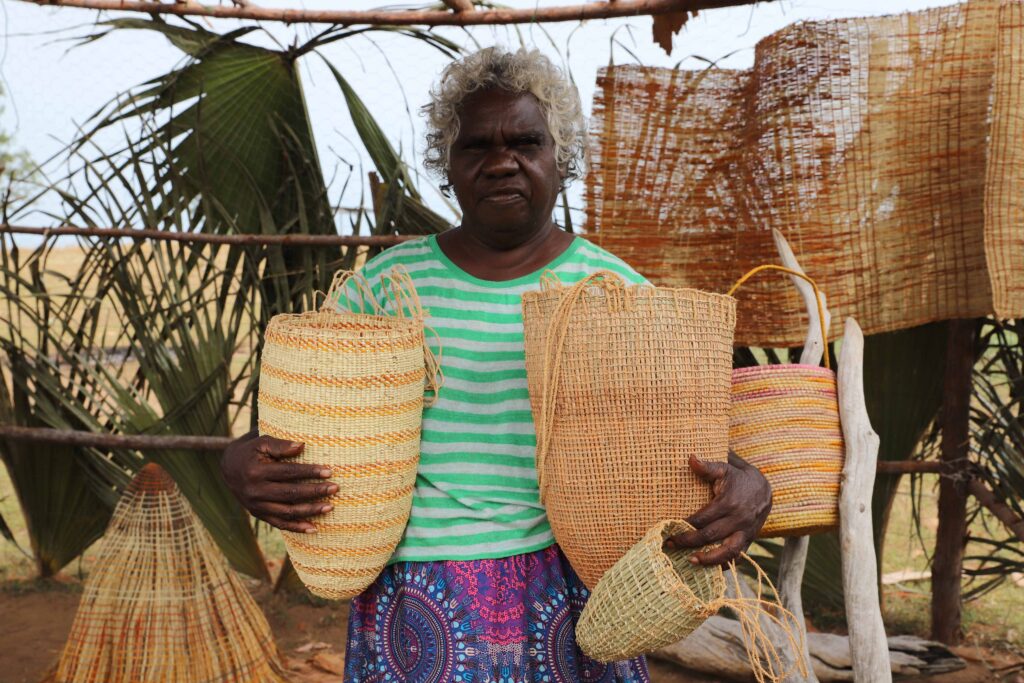
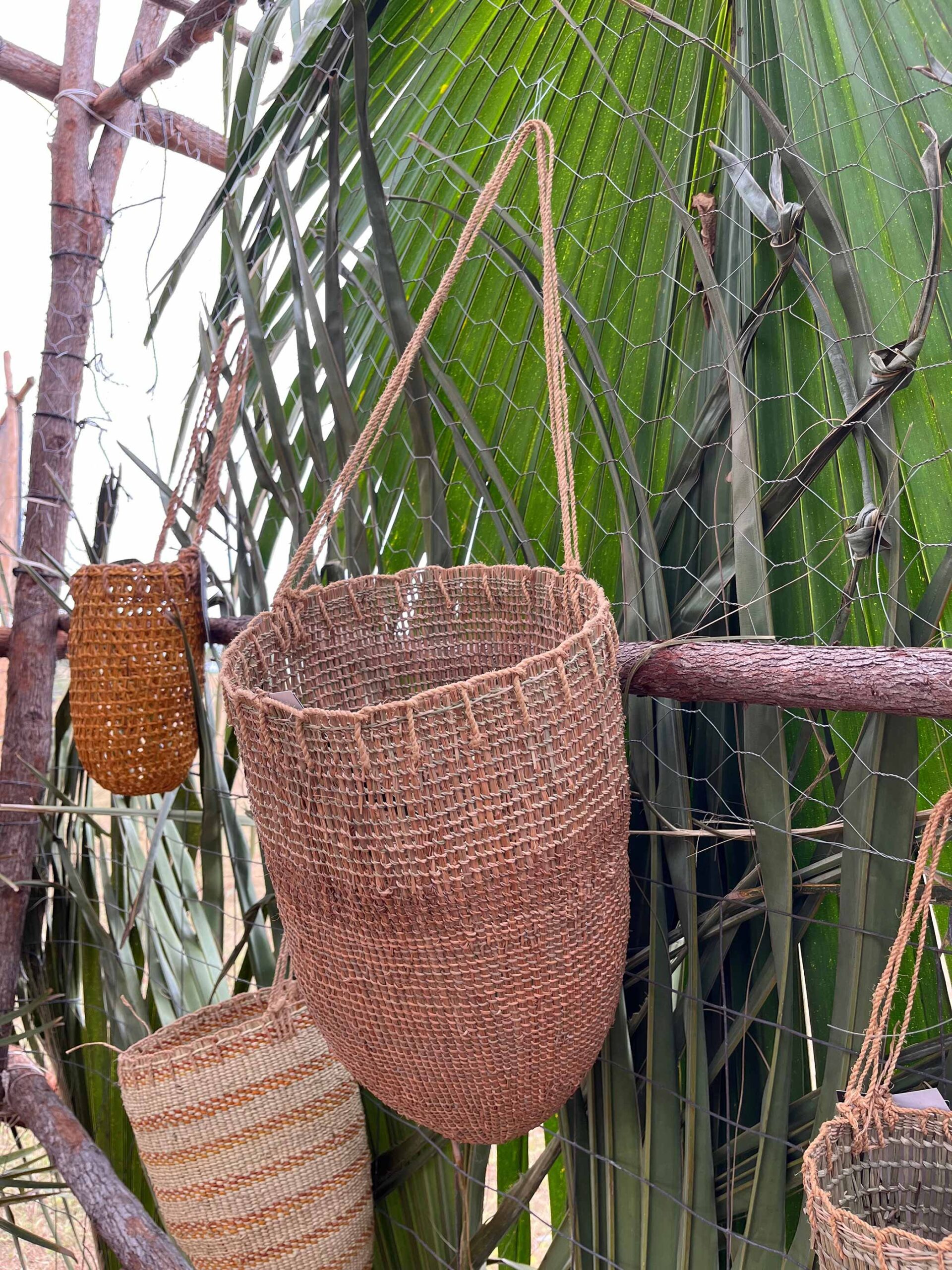
Doreen Jingarrarrabarra specialises in conical dilly bags (burlupurr), woven string bags and mats. She uses a range of natural fibres, including pandanus, mirlarl (jungle vine/malaisia scandens), sedge grass and kurrajong. Unlike most West Arnhem weavers, she does not dye the fibres with natural pigments, preferring the subtly of the natural variations in colour and tone. She is renowned for her fine weave and intricate designs, which she attributes to learning from her mother.
She is the Traditional Owner of the fish trap and confers approval to those artists who seek to produce these objects or depict the motif in their paintings.
More
Artist bio
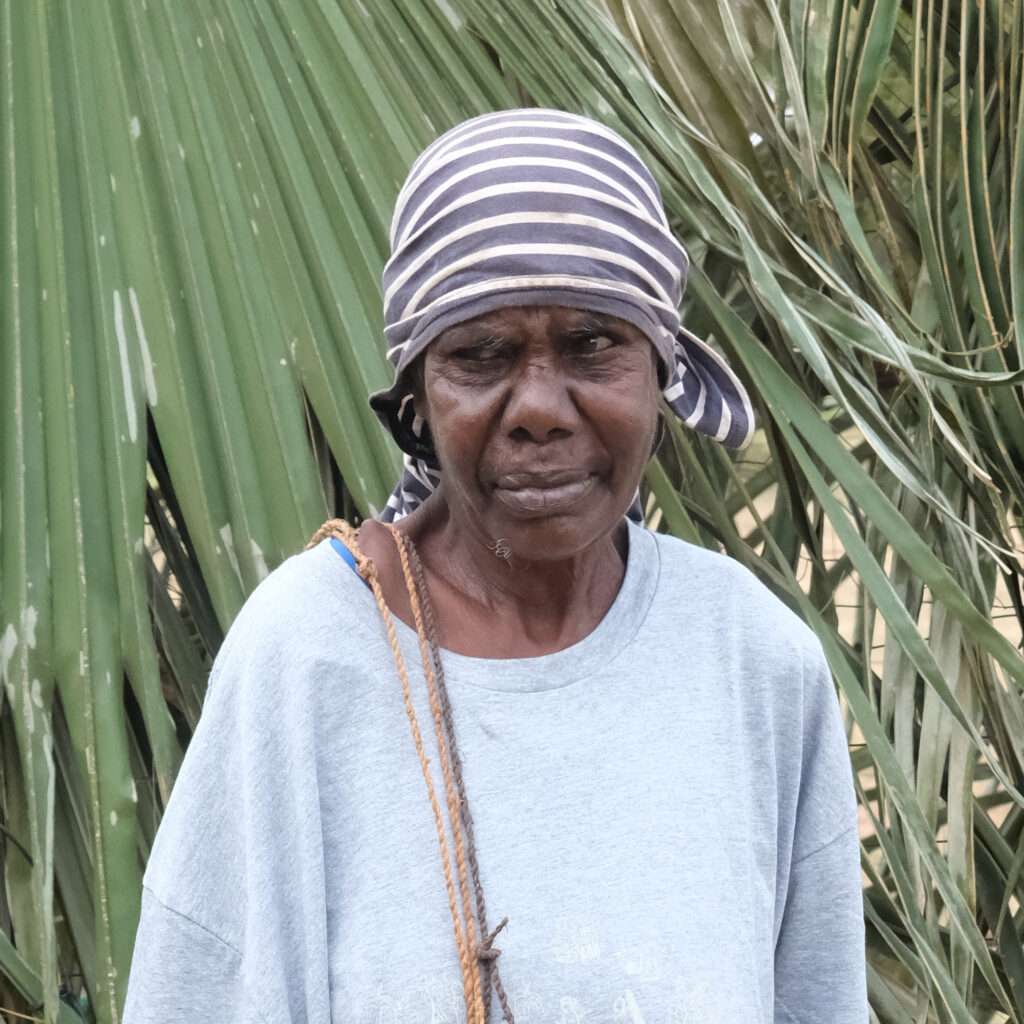
Esther Yarllarlla
Maningrida Arts and Culture
Language: Ndjébbana
Clan: Naddjóddjarra
Laŋarra Bush Gallery 2024
Representing over 100 clans and 12 disinct language groups the Maningrida Bush Gallery showcased the cultural diversity amongst Maningrida Artists.
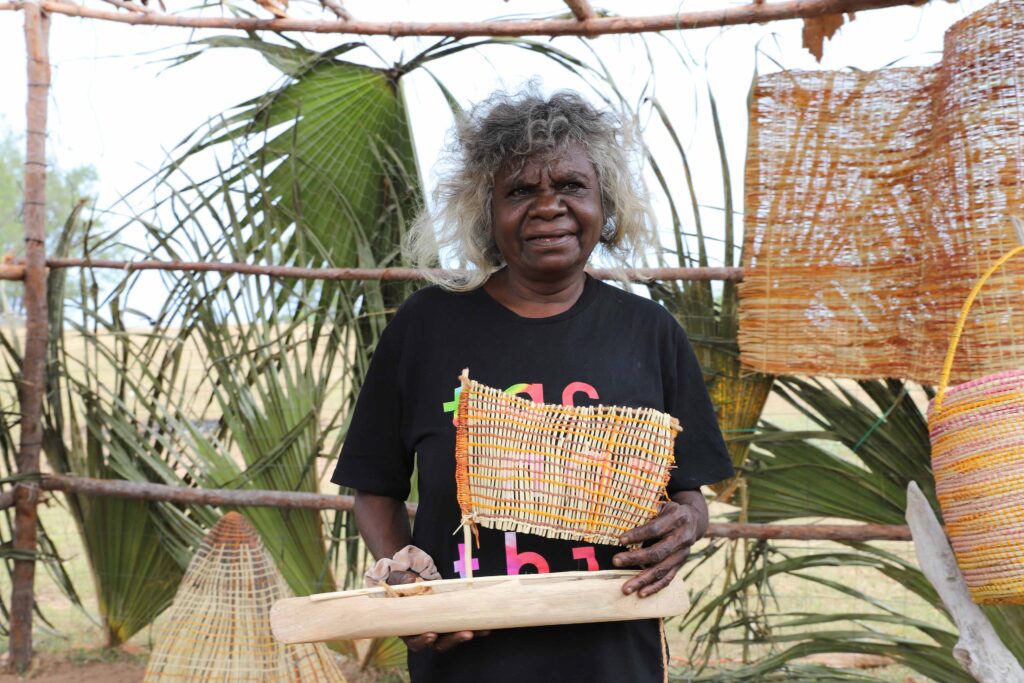
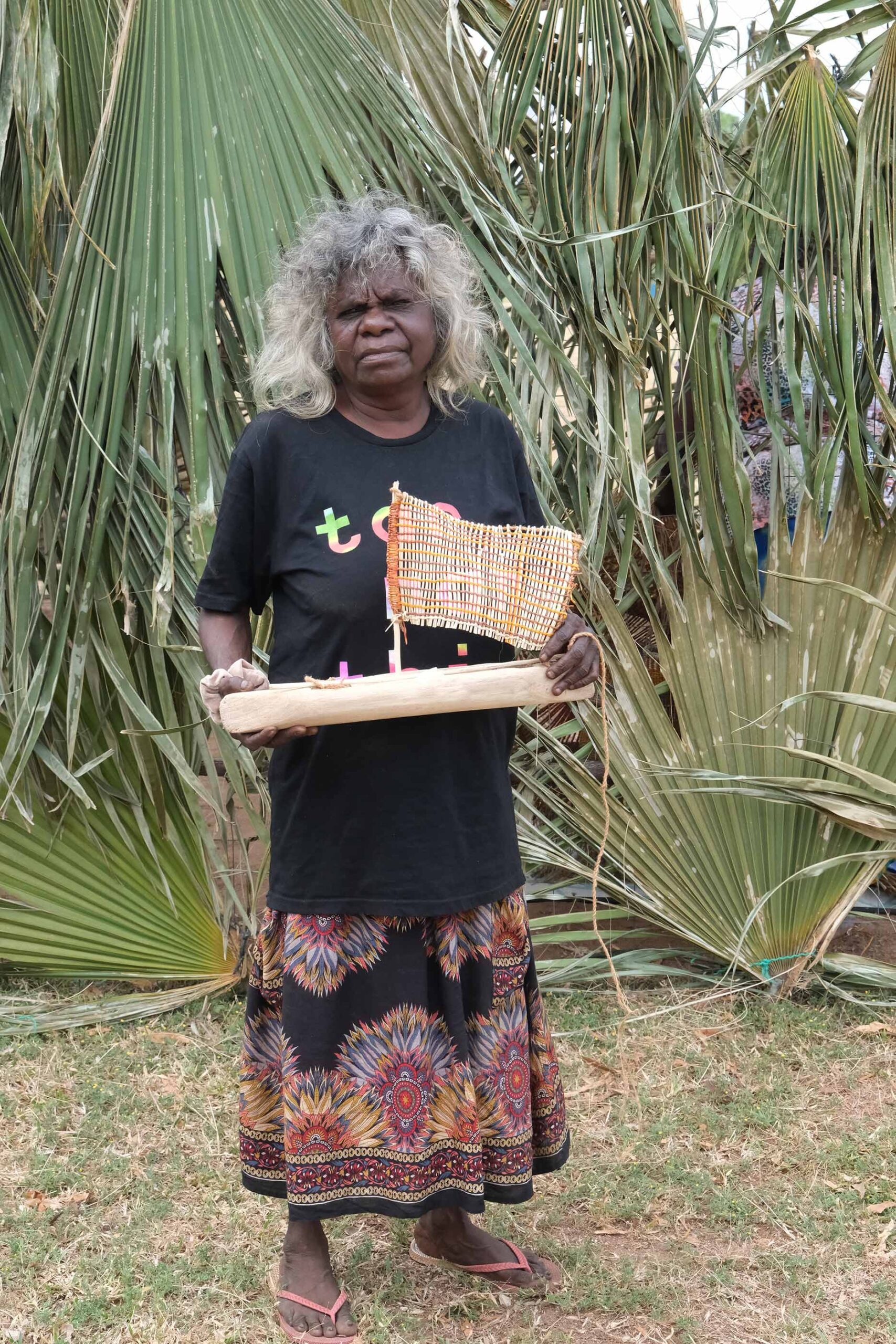
Esther Yarllarlla is a highly skilled weaver and knowledgable leader, for Laŋarra Bush Gallery 2024 she carved a minature canoe including paddles and woven sail.
More
Artist bio
Freda Ali Wayartja
Maningrida Arts and Culture
Language: Burarra (Martay)
Clan: Gamarl
Homeland: Yilan
Laŋarra Bush Gallery 2024
Representing over 100 clans and 12 disinct language groups the Maningrida Bush Gallery showcased the cultural diversity amongst Maningrida Artists.
Freda Wayartja is a master weaver and cultural leader and educator. Wayartja is one of a handful of Arnhem Land artists that continue to make bamagora (conical mat). For Laŋarra Bush Gallery Wayartja was excited to extend on the bamagora concept and sculpted a baby wrapped in paperbark to lie underneath the bamugora.
More
Artist bio
June Wilson
Maningrida Arts and Culture
Language: Yan-nhaŋu
Clan: Bindararr
Homeland: Milingimbi
Laŋarra Bush Gallery 2024
Representing over 100 clans and 12 distinct language groups the Maningrida Bush Gallery showcased the cultural diversity amongst Maningrida Artists.
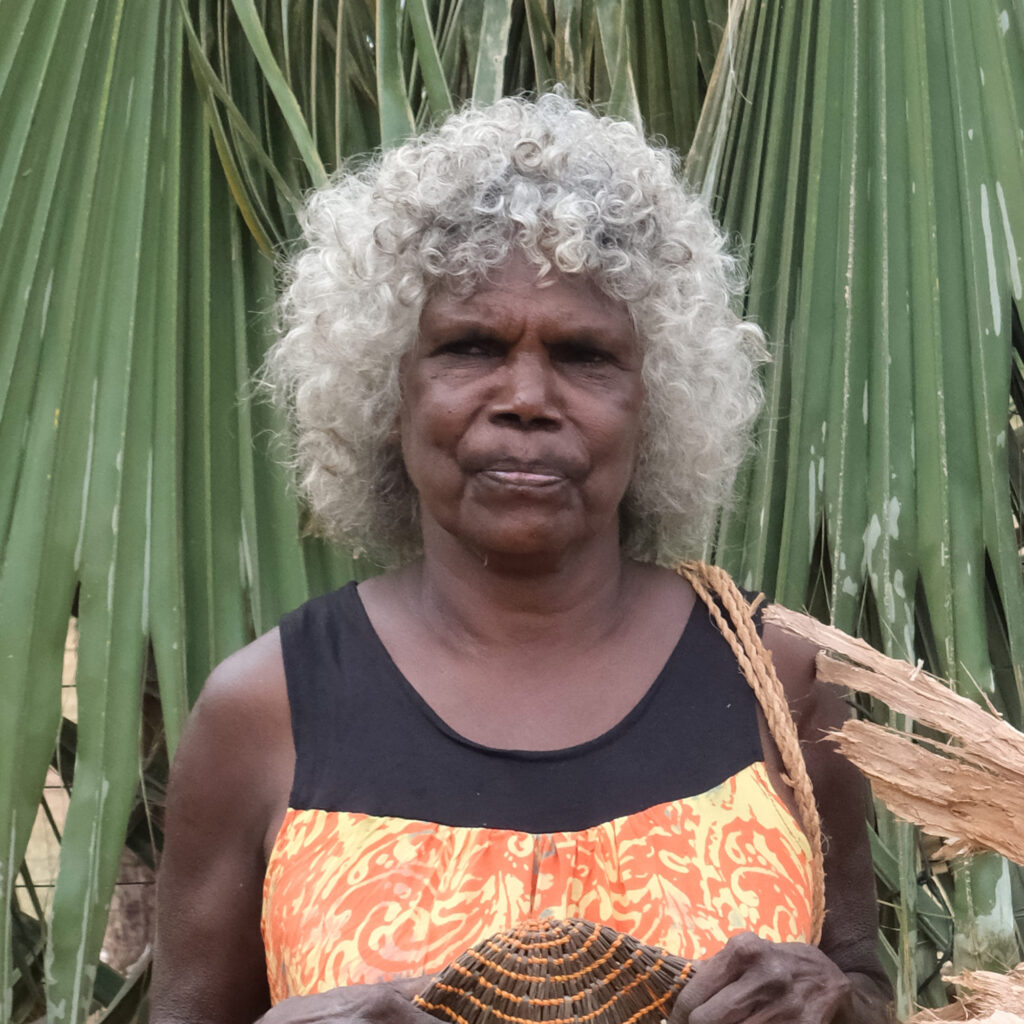
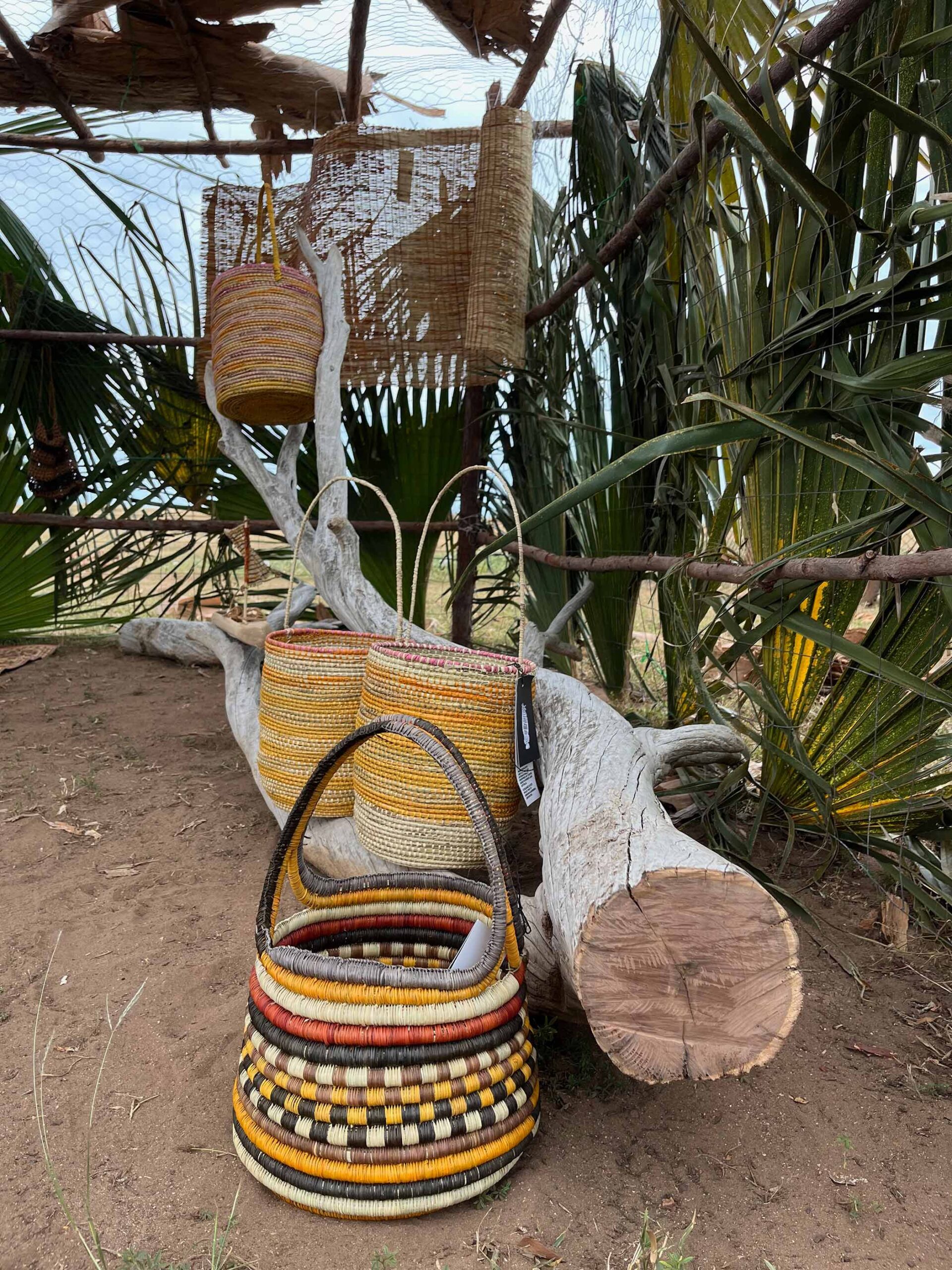
June Wilson created two exquisite pieces that demonstrate her mastery of coiling and fibre-plying techniques. Her coiled basket with handle is crafted from a single continuous coil—a method that is both aesthetically striking and essential to the work’s functional strength.

Samantha Malkudja
Maningrida Arts and Culture
Language: Kuninjku
Homeland: Kakodbebuldi
Laŋarra Bush Gallery 2024
Representing over 100 clans and 12 disinct language groups the Maningrida Bush Gallery showcased the cultural diversity amongst Maningrida Artists.
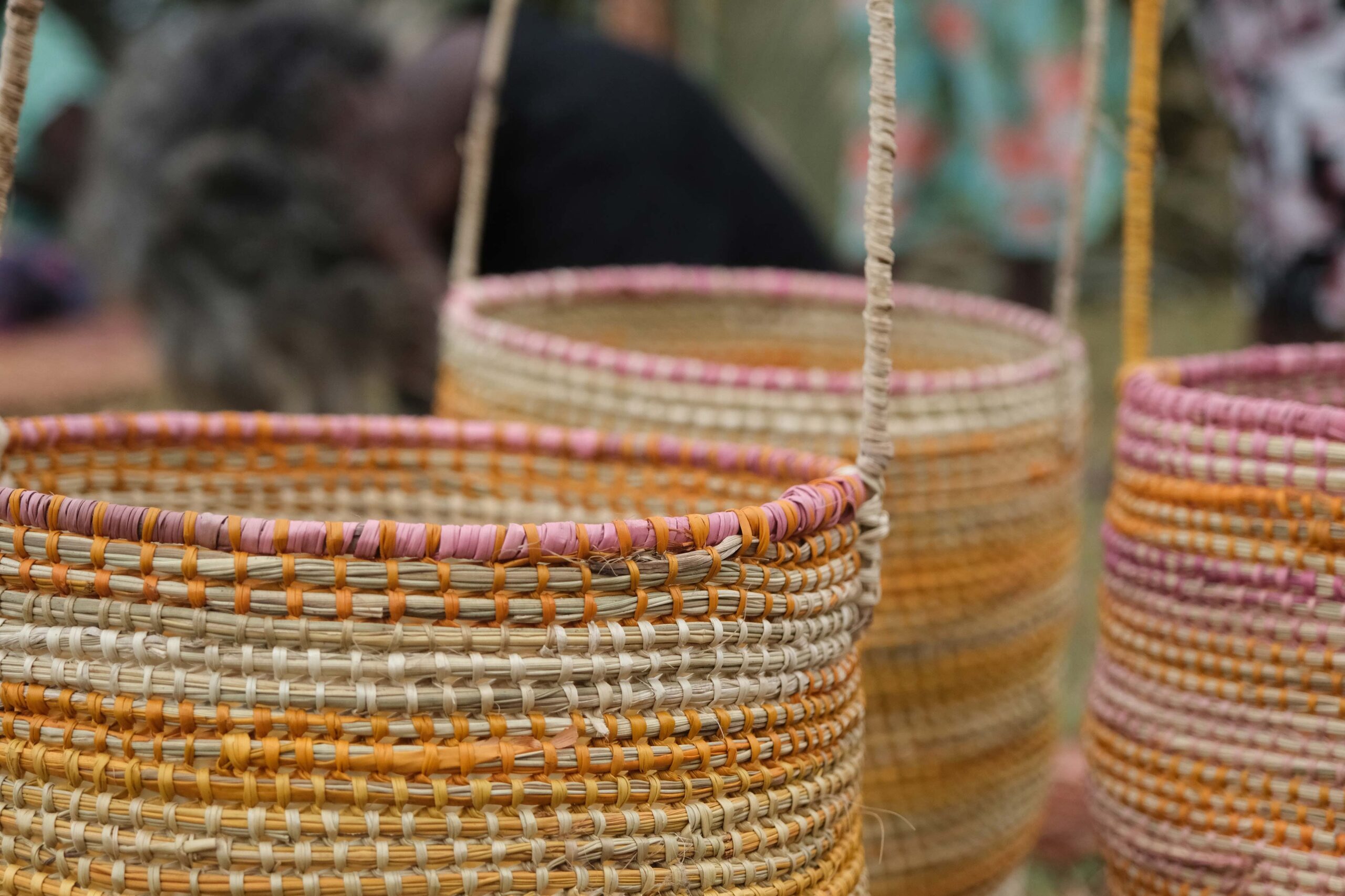
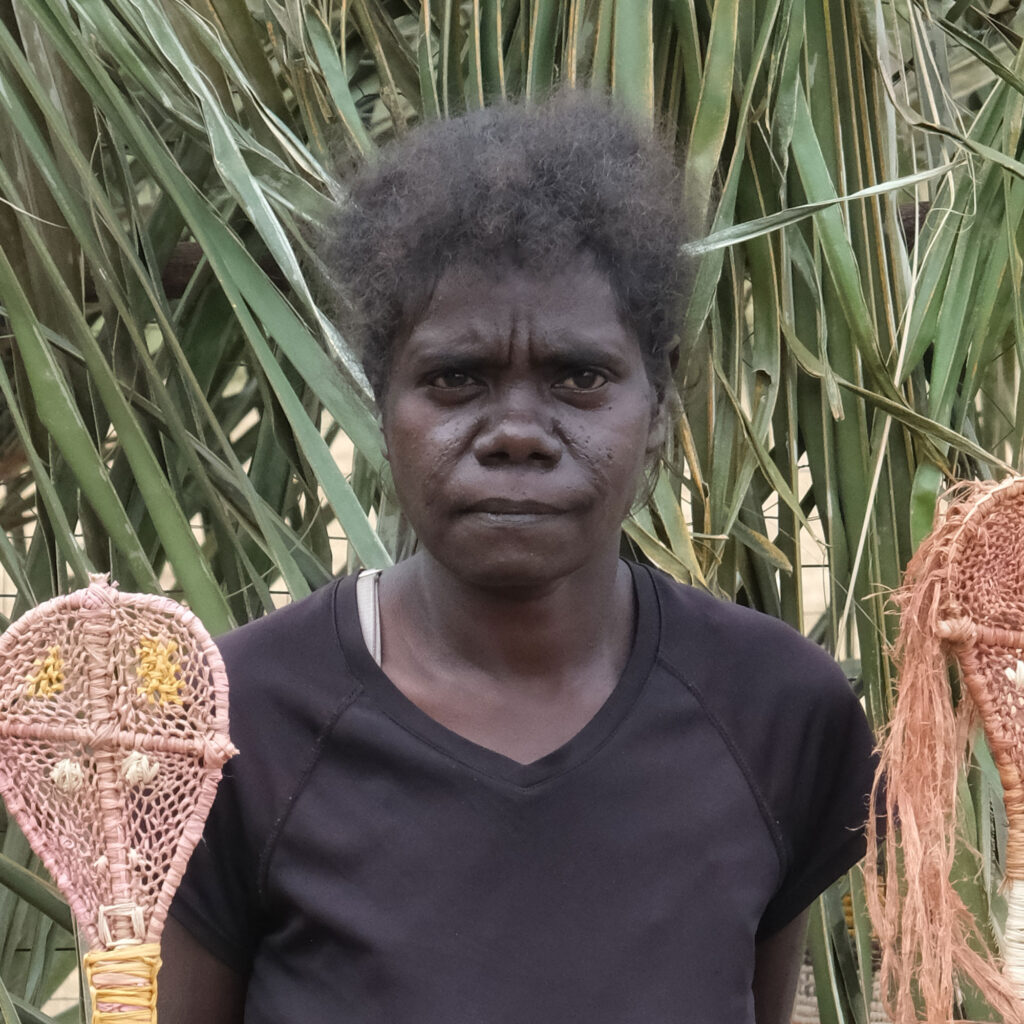
For Laŋarra Bush Gallery 2024 Samantha made 2-dimentional Yawkyawk, female water spirit sculptures and cylindrical baskets using gun-menama (pandanus spiralis) and bush dyes. The yellow and pink tones featured in the baskets and derived from specific plants that grow in the rocky country around Samantha’s homeland.
More
Artist bio