
Milingimbi Art and Culture



0/0
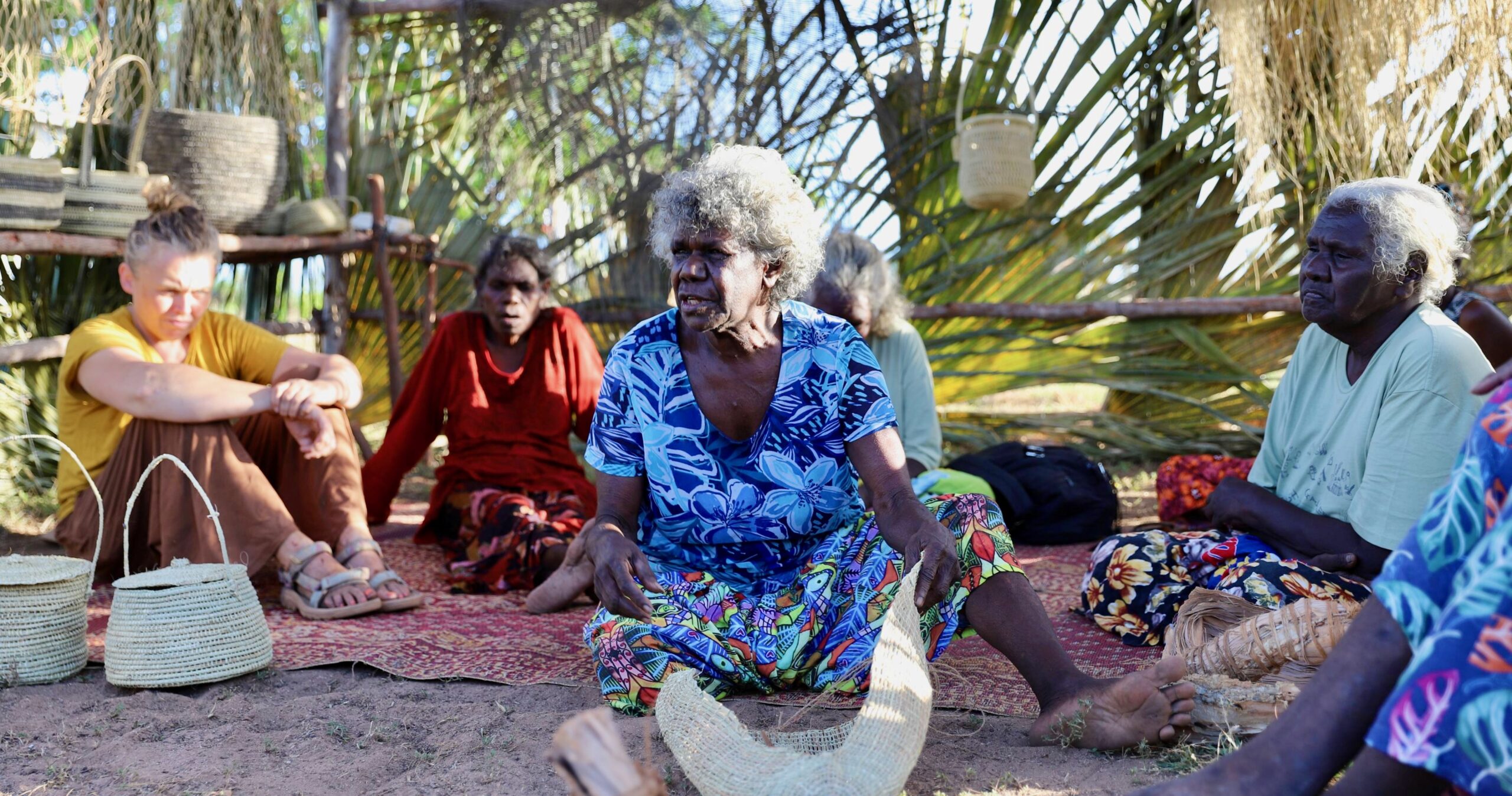
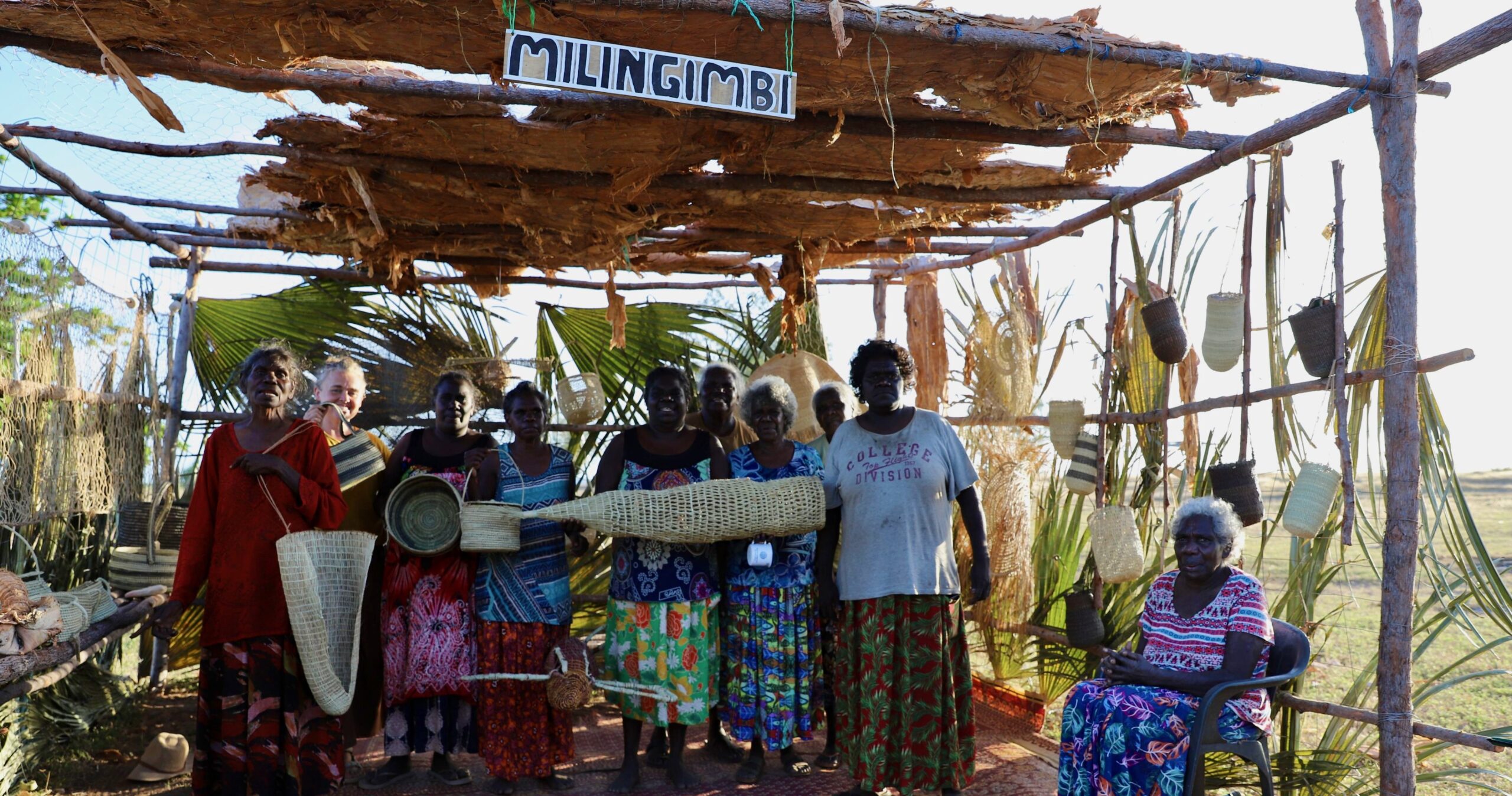
Milingimbi Art and Culture (MACAC) is an Indigenous-owned, non-profit Aboriginal corporation located on the island of Yurrwi, Milingimbi. As a vital cultural, social, and economic hub, MACAC plays a central role in supporting Yolŋu culture and livelihoods for families from over 12 language groups.
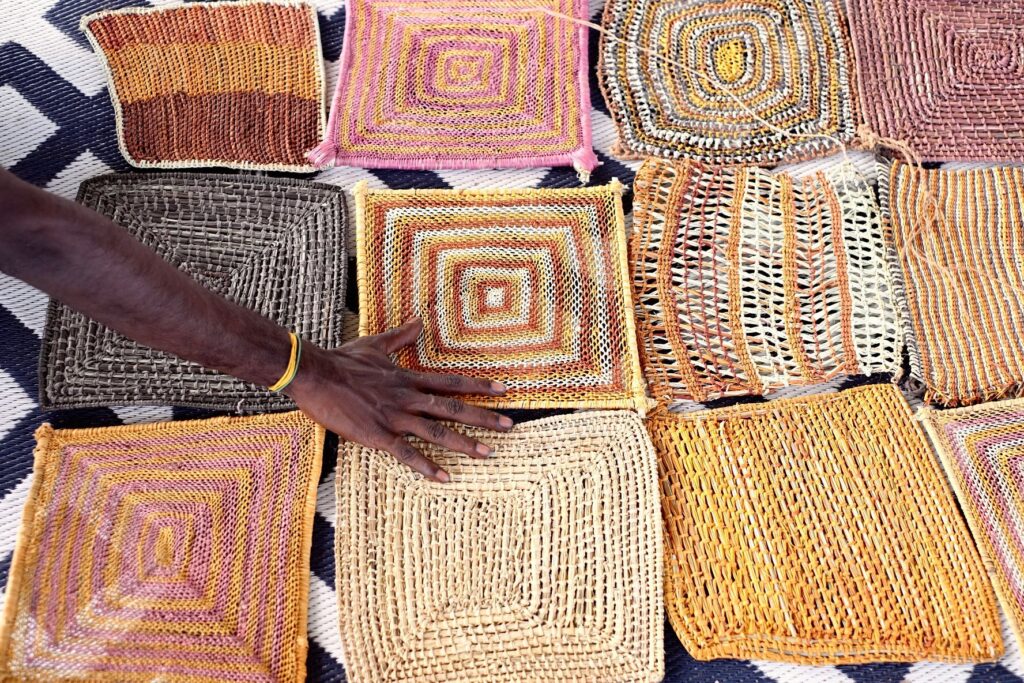
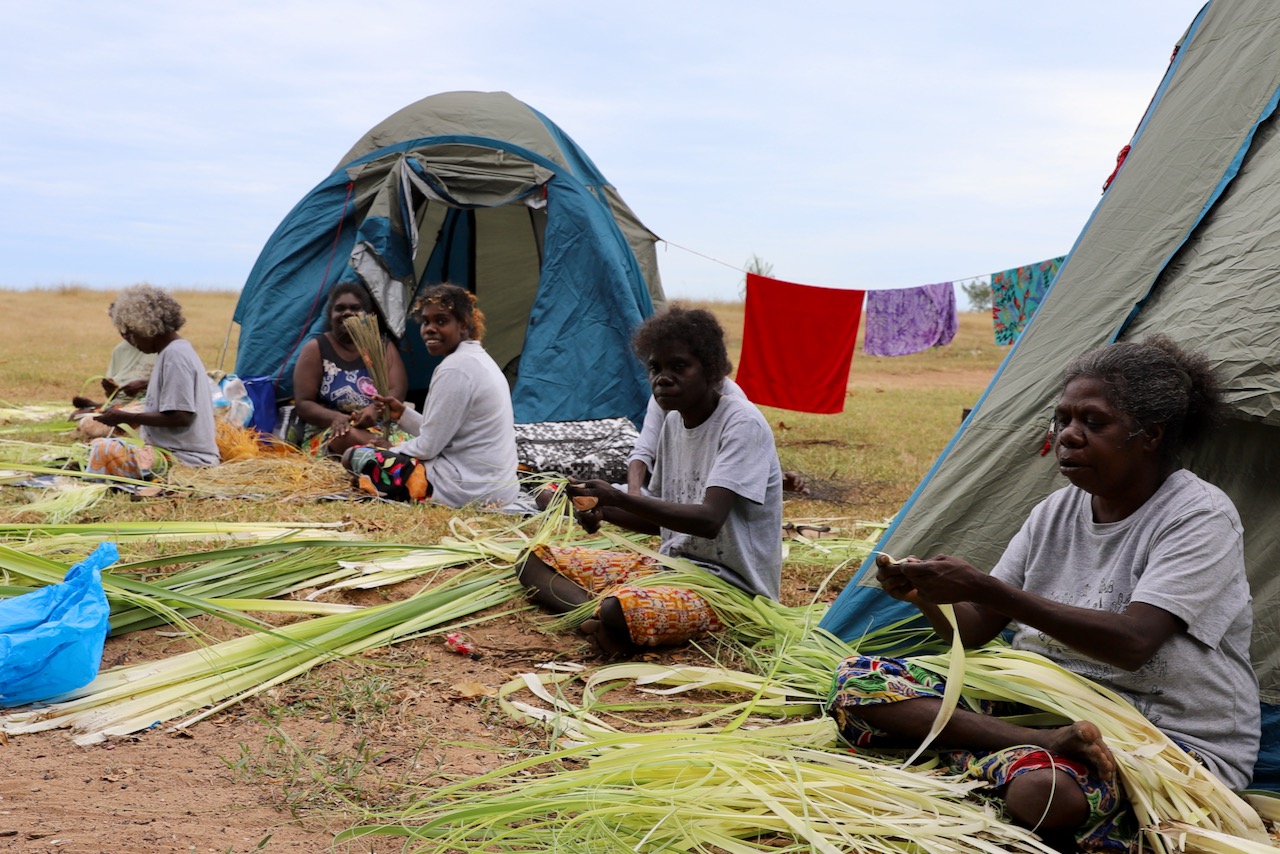
Milingimbi has a strong history of collection and has been widely recognised for its cultural and artistic significance since the 1950’s. Artistic practices – inseparable from Yolŋu cultural, social and ecological knowledge and law – remain strong today and continue this legacy. Using only materials collected from Country, bark painting, carving and weaving practices are embedded in everyday life.
Fostering cultural continuity through studio programs, institutional partnerships, and its Djalkiri Keeping Place, MACAC ensures Yolŋu cultural identity remains strong, vibrant and connected – locally and globally.
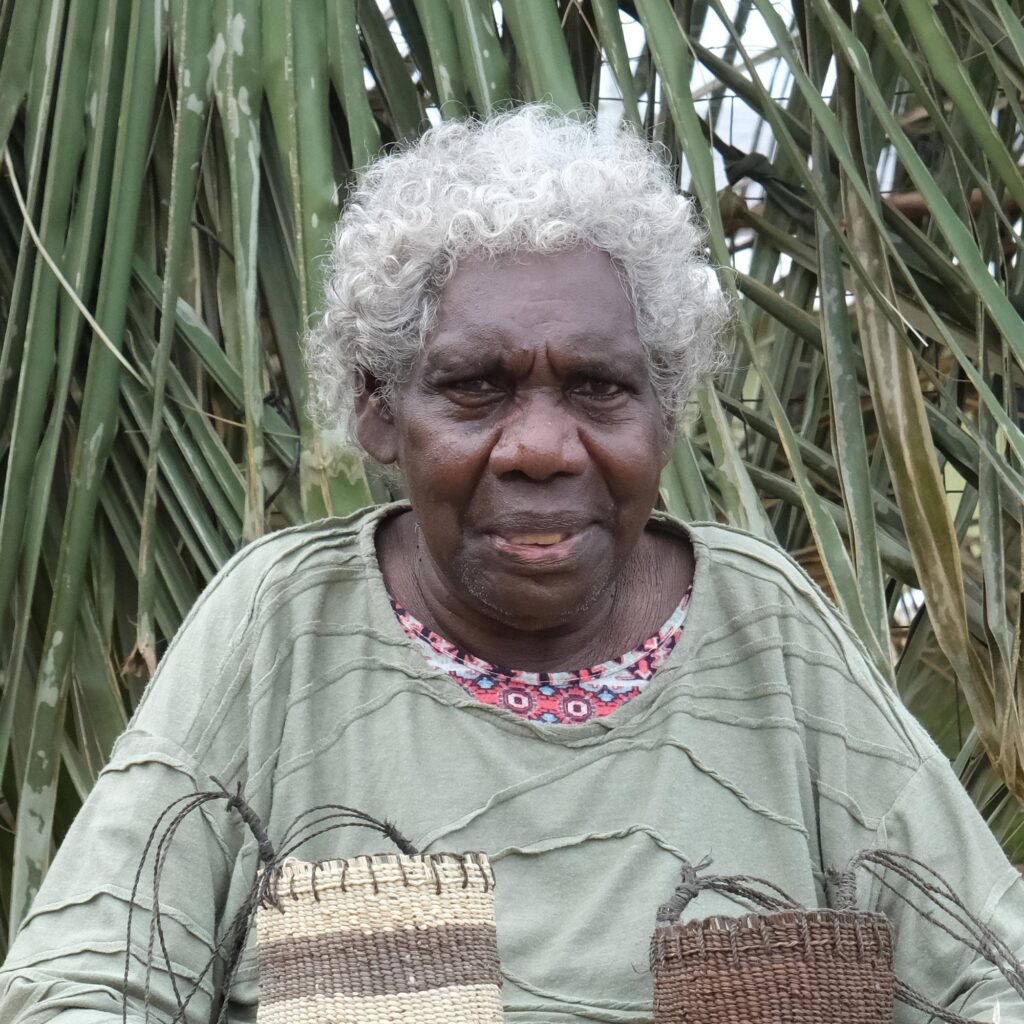
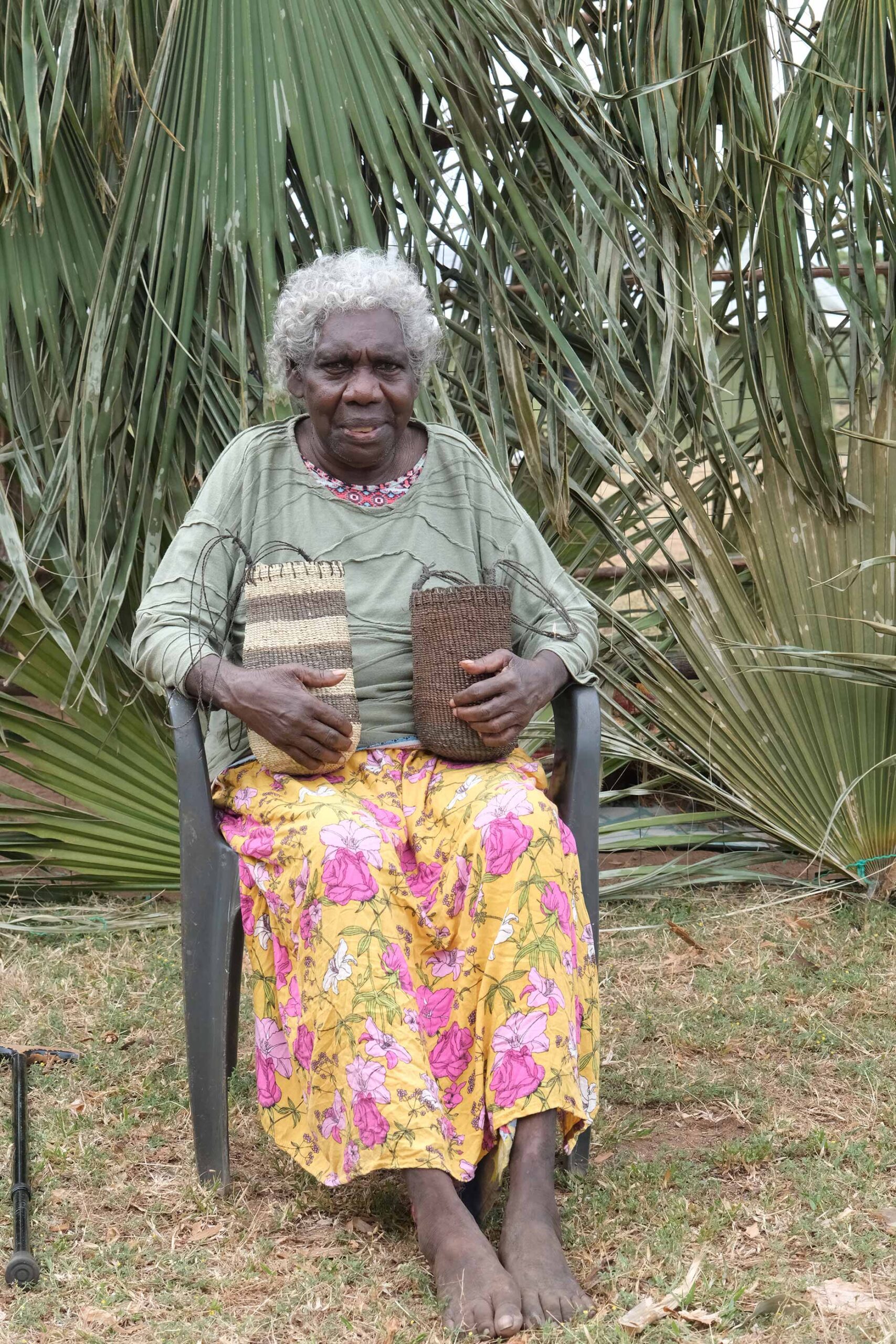
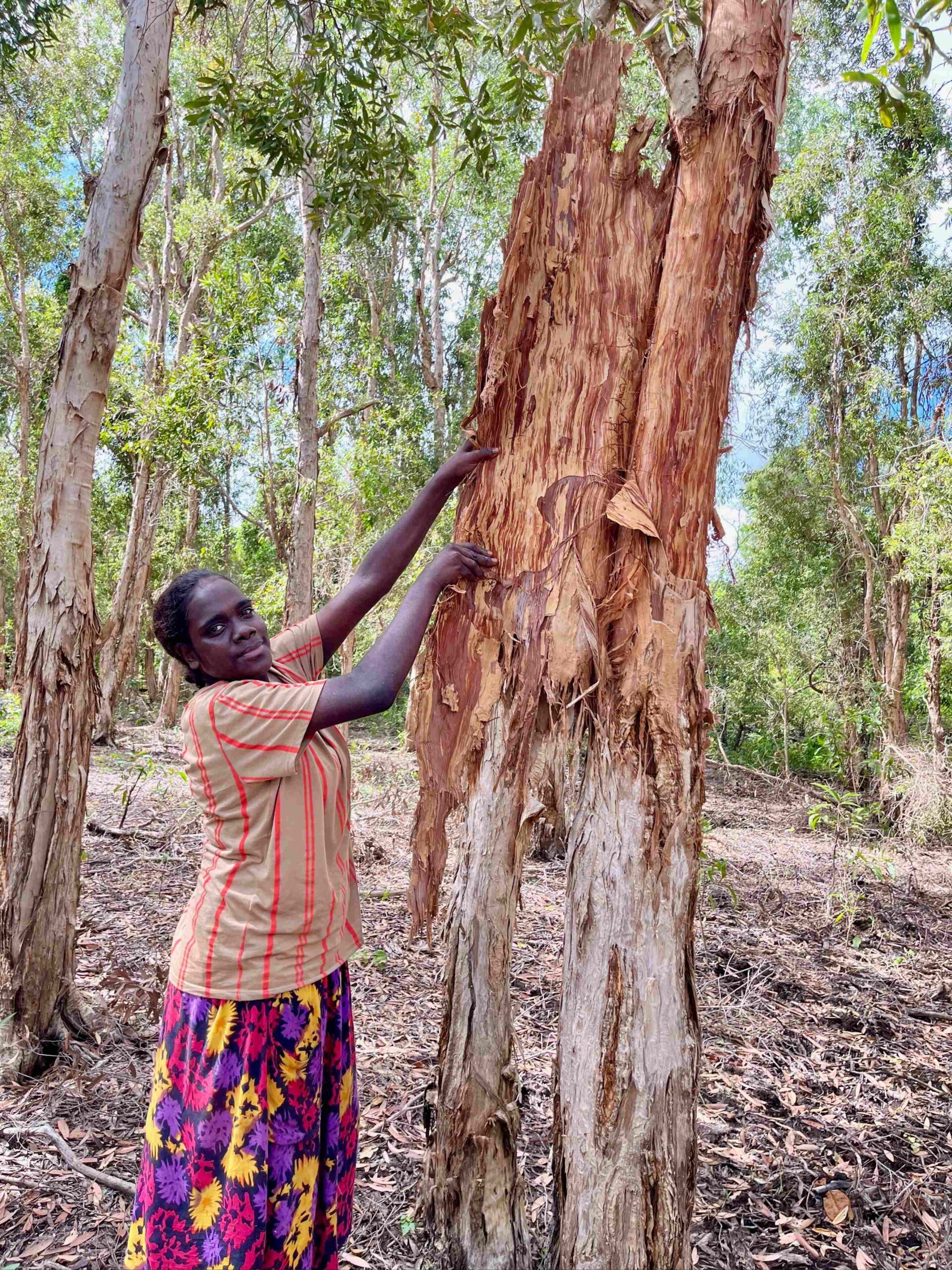
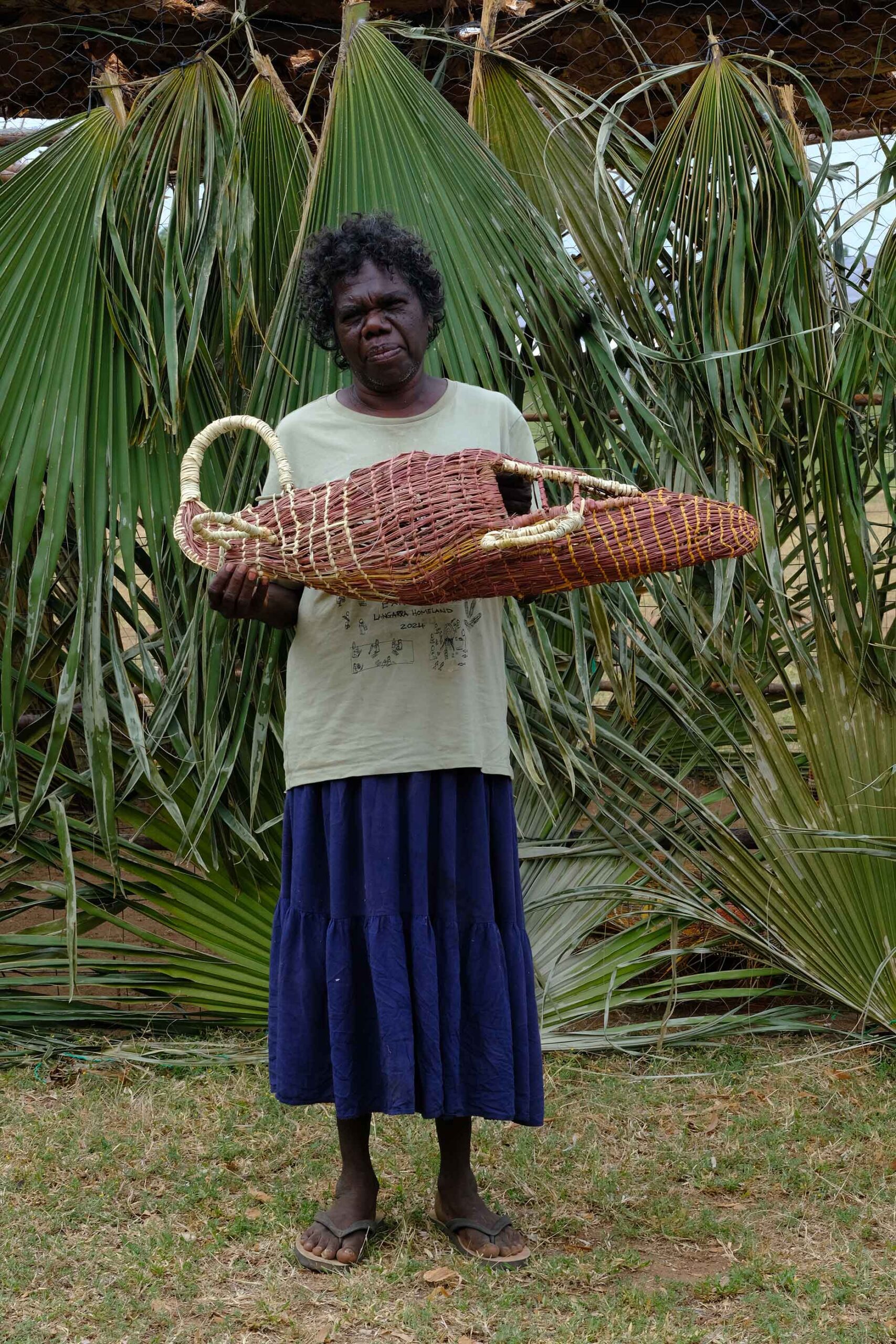
Ruth Ŋalmakarra
Milingimbi Art and Culture
Language: Dhuwal/ Djambarrpuyŋu
Clan: Ḻiya-gawumirr Garrawurra
Homeland: Gärriyak
Laŋarra Bush Gallery 2024
Milingimbi artists chose to tell their stories of Yolŋu weaving across time—from pre-European contact, through the mission era, and into the present.
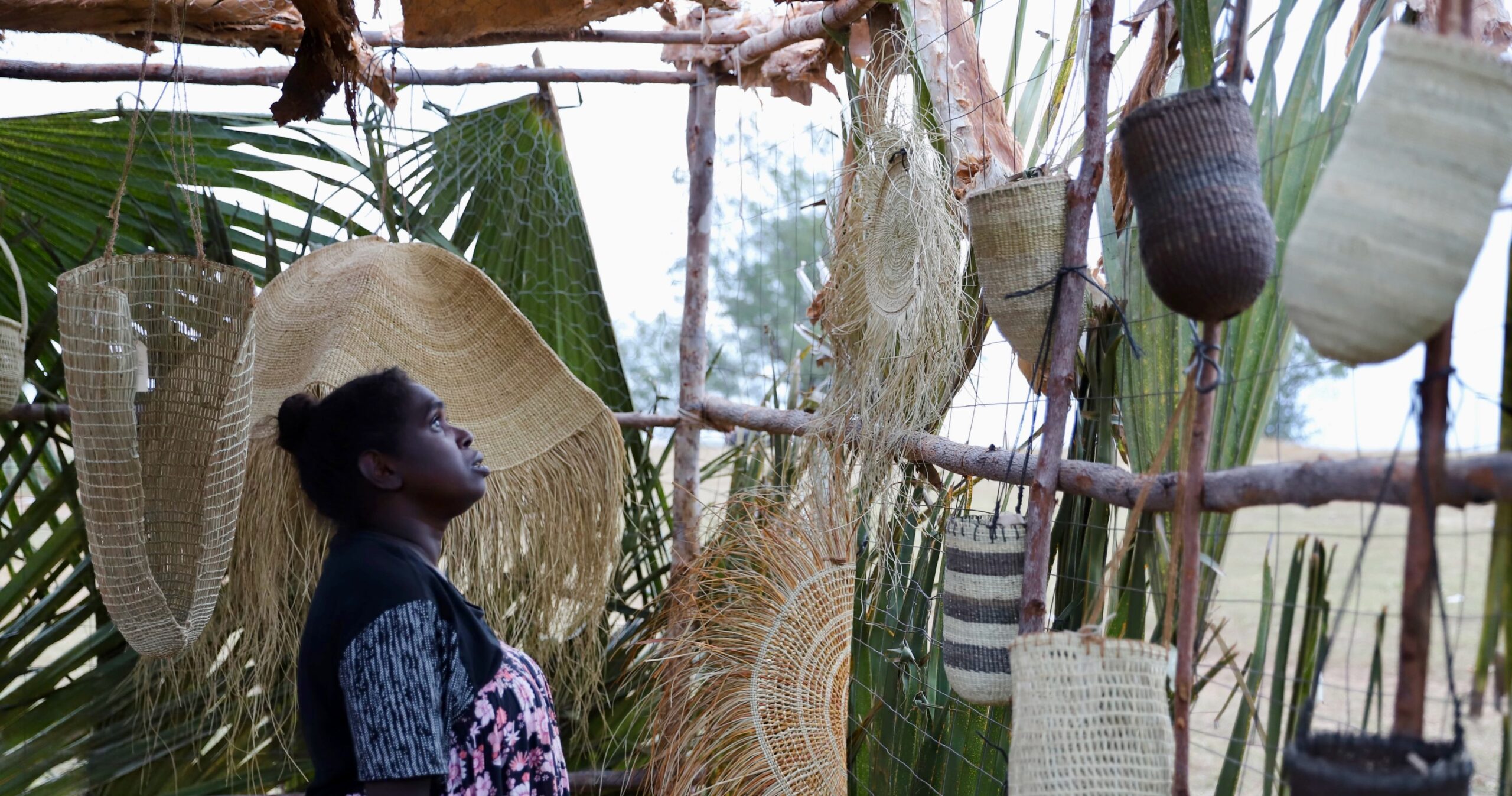
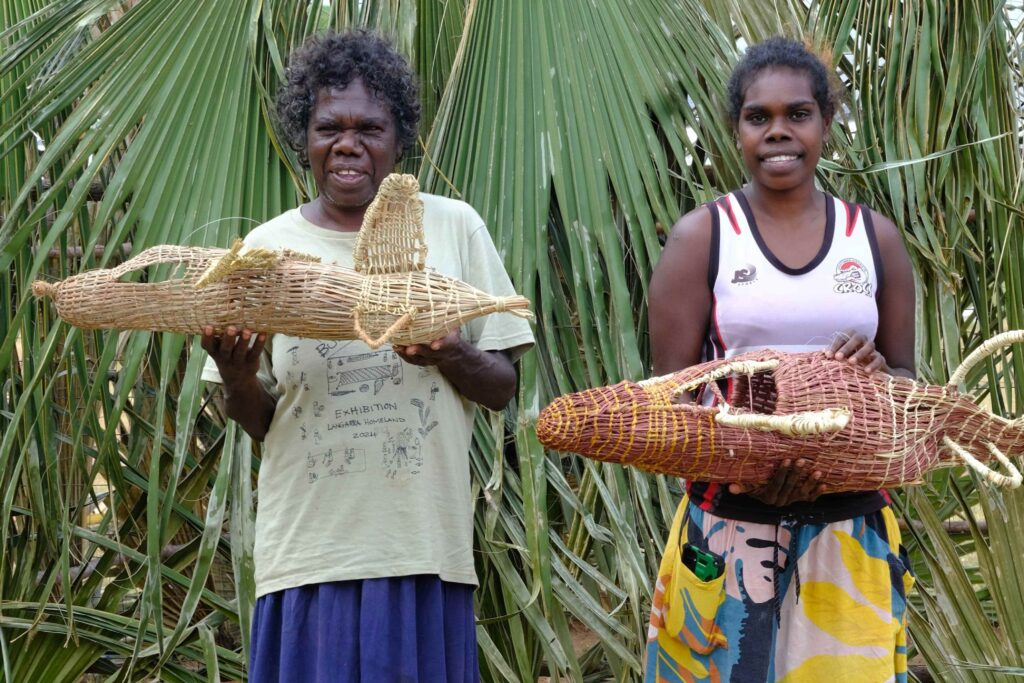
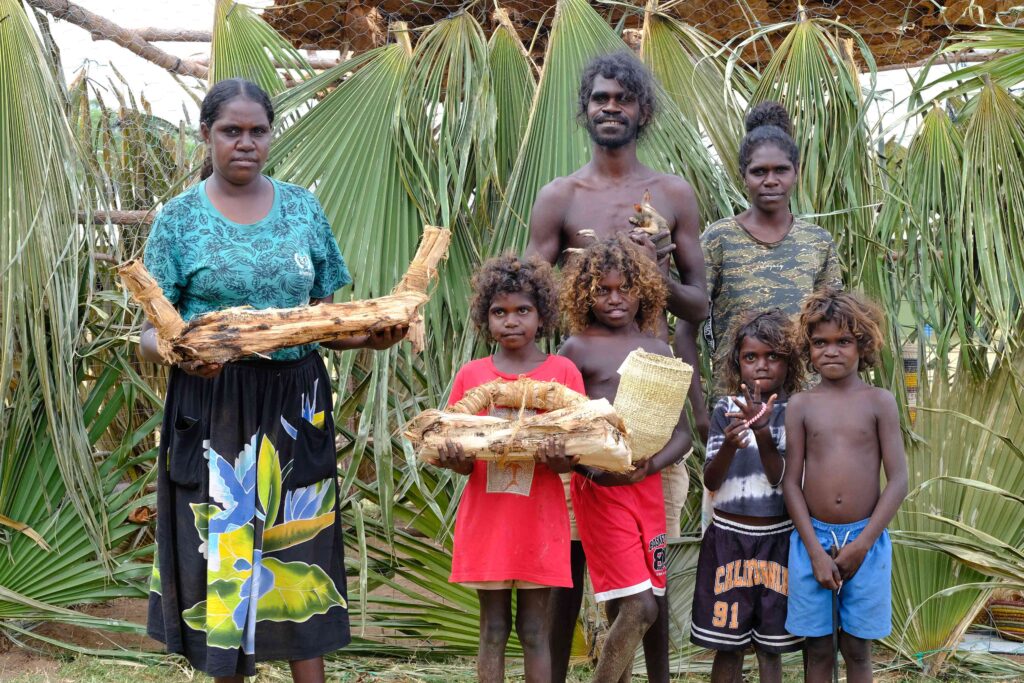
In the Old Days Miṉḏirr (dilly bags) were made for foraging and ceremony, an-gujechiya (fish traps) for hunting, and bamugora (conical mats) for carrying and protection. These practices, made from jungle vine, gunga (pandanus), baḻgurr (kurrajong), and other local fibres, have been passed down through countless generations and remain tied to ancestral law and cultural practice. Milingimibi Art and Culture Chairperson Ruth Ŋalmakarra chose to create dhaniya (paperbark water carriers), reviving a rarely seen practice of vessel-making that once held everyday importance.
More
Artist bio
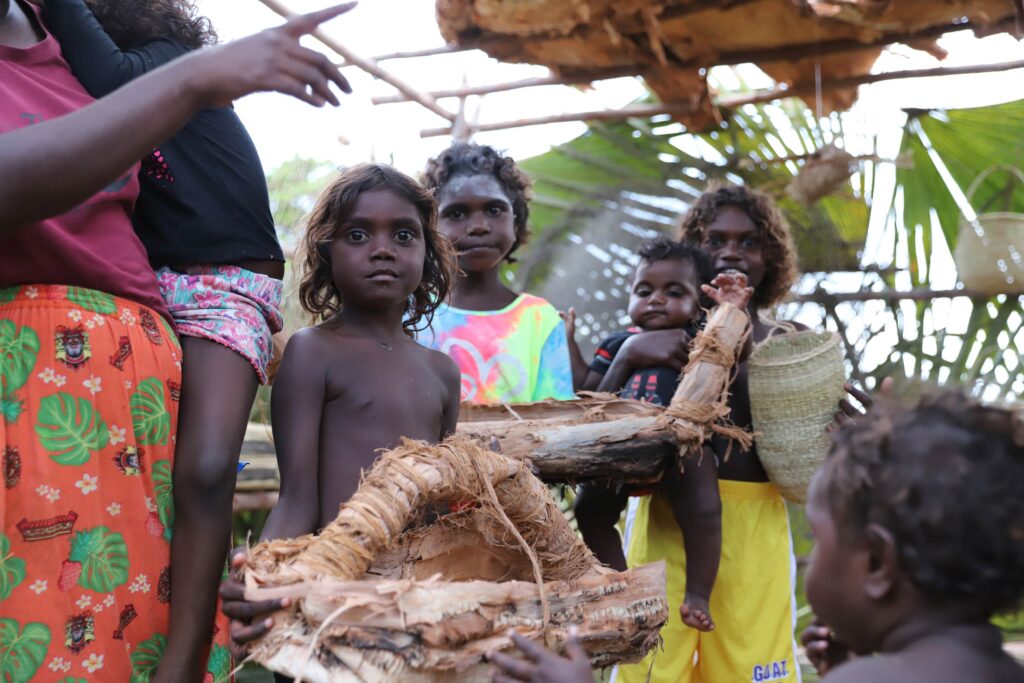
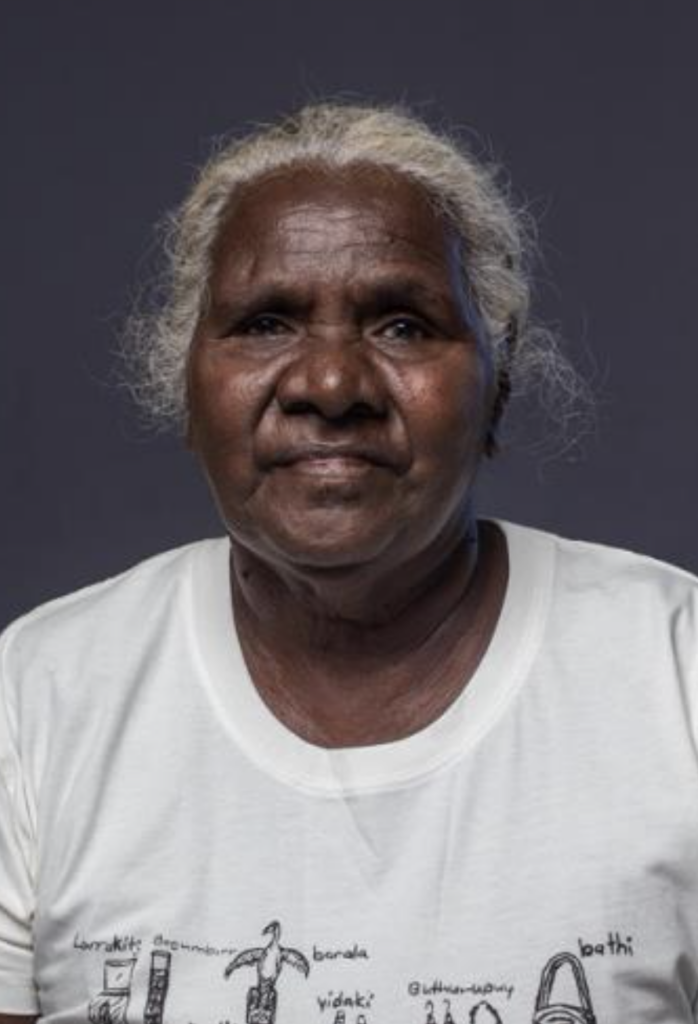
Margaret Gamuti
Milingimbi Art and Culture
Language: Djambarrpuyŋu
Clan: Ŋaymil
Homeland: Gunda’mirri
Laŋarra Bush Gallery 2024
Milingimbi artists chose to tell their stories of Yolŋu weaving across time—from pre-European contact, through the mission era, and into the present.
Some artists reflected on the mission era, beginning in the 1920s and extending through World War II—a time of profound cultural and material change, including Milingimbi’s role as a military airfield.
As a senior weaver, Gamuti contributed to the collaborative artwork created as part of the Laŋarra Bush Gallery.
More
Bio
Tracey Garrawurra
Milingimbi Art and Culture
Language: Dhuwal/ Djambarrpuyŋu
Clan: Ḻiya-gawumirr Garrawurra
Homeland: Gärriyak
Laŋarra Bush Gallery 2024
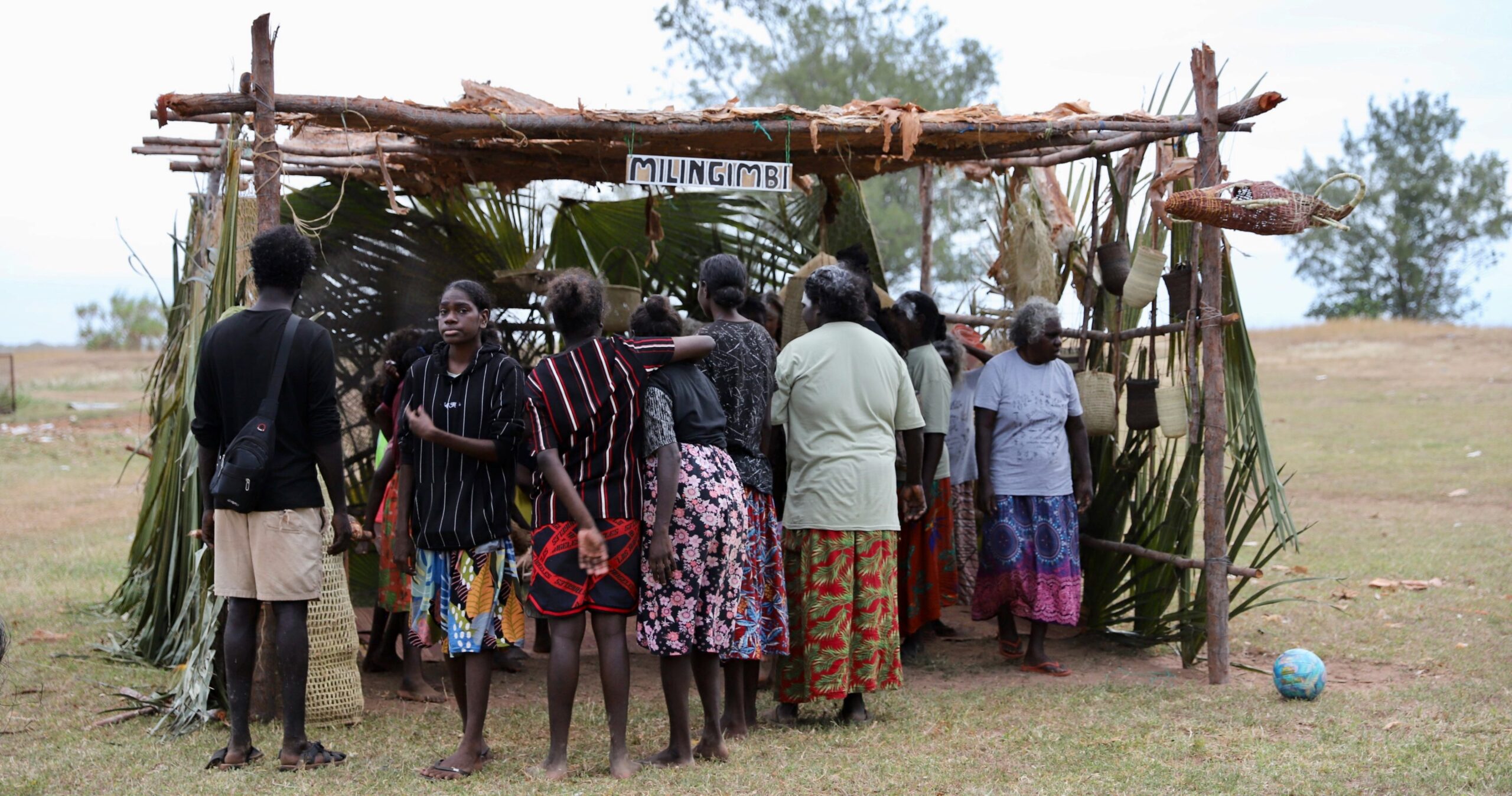
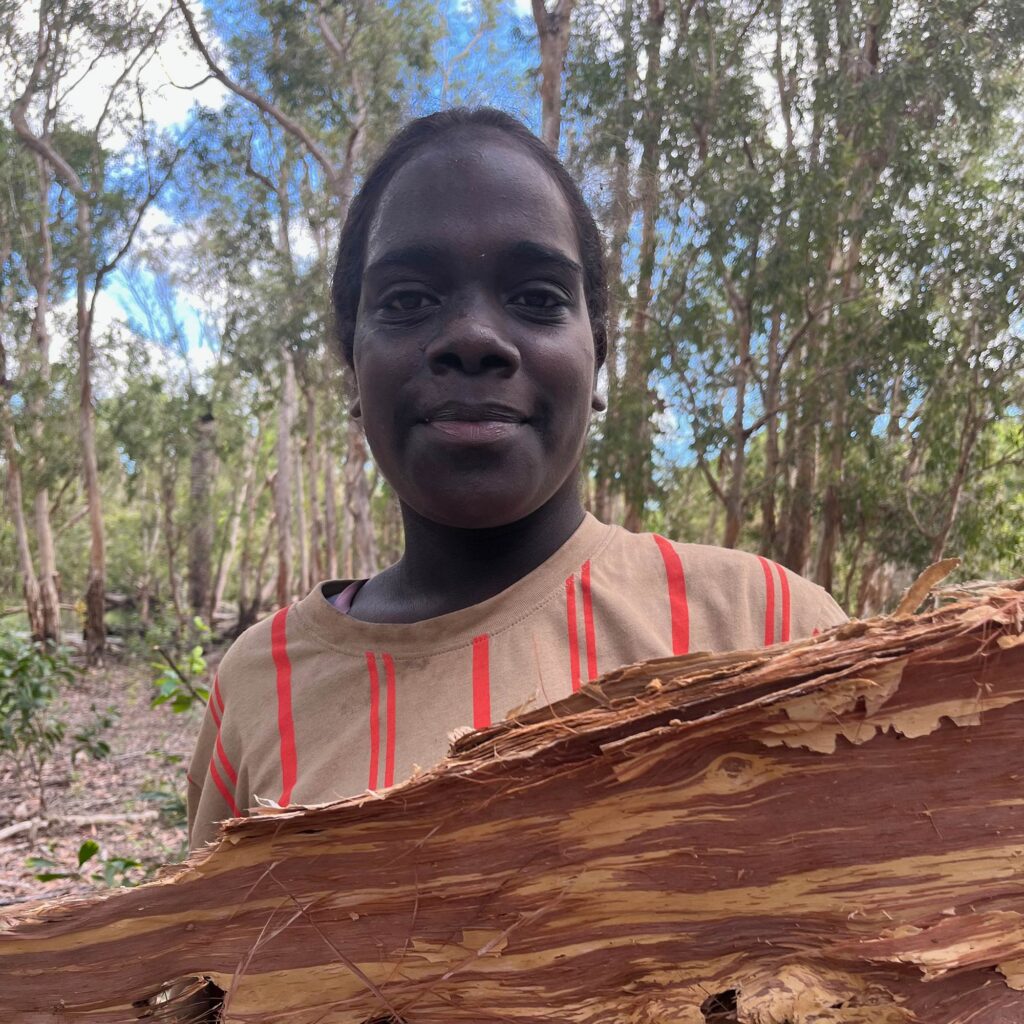
Tracey Garrawarra is a passionate emerging artist. During Laŋarra Bush Gallery 2024 Tracey worked together with her ŋamala, bäpa, wäwa ga märi’s (mother, father, brother and grandmothers) to construct the bush galleries for the five art centres.
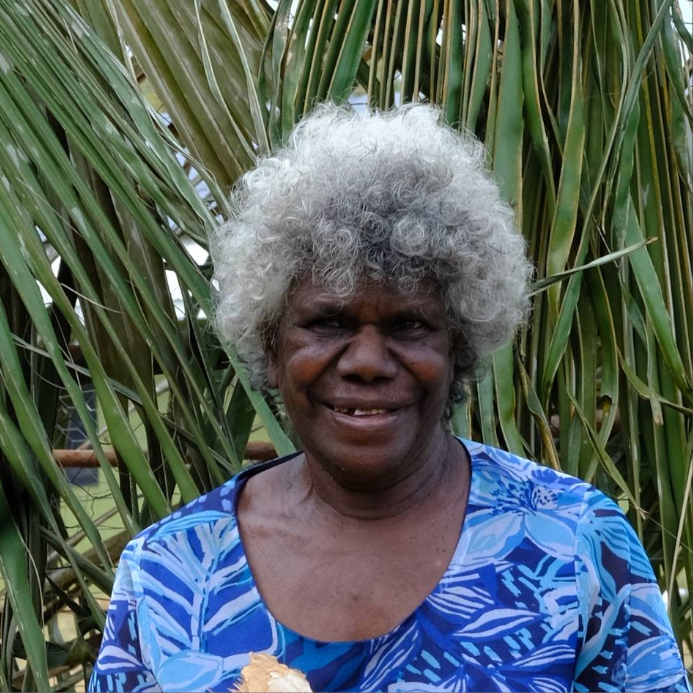
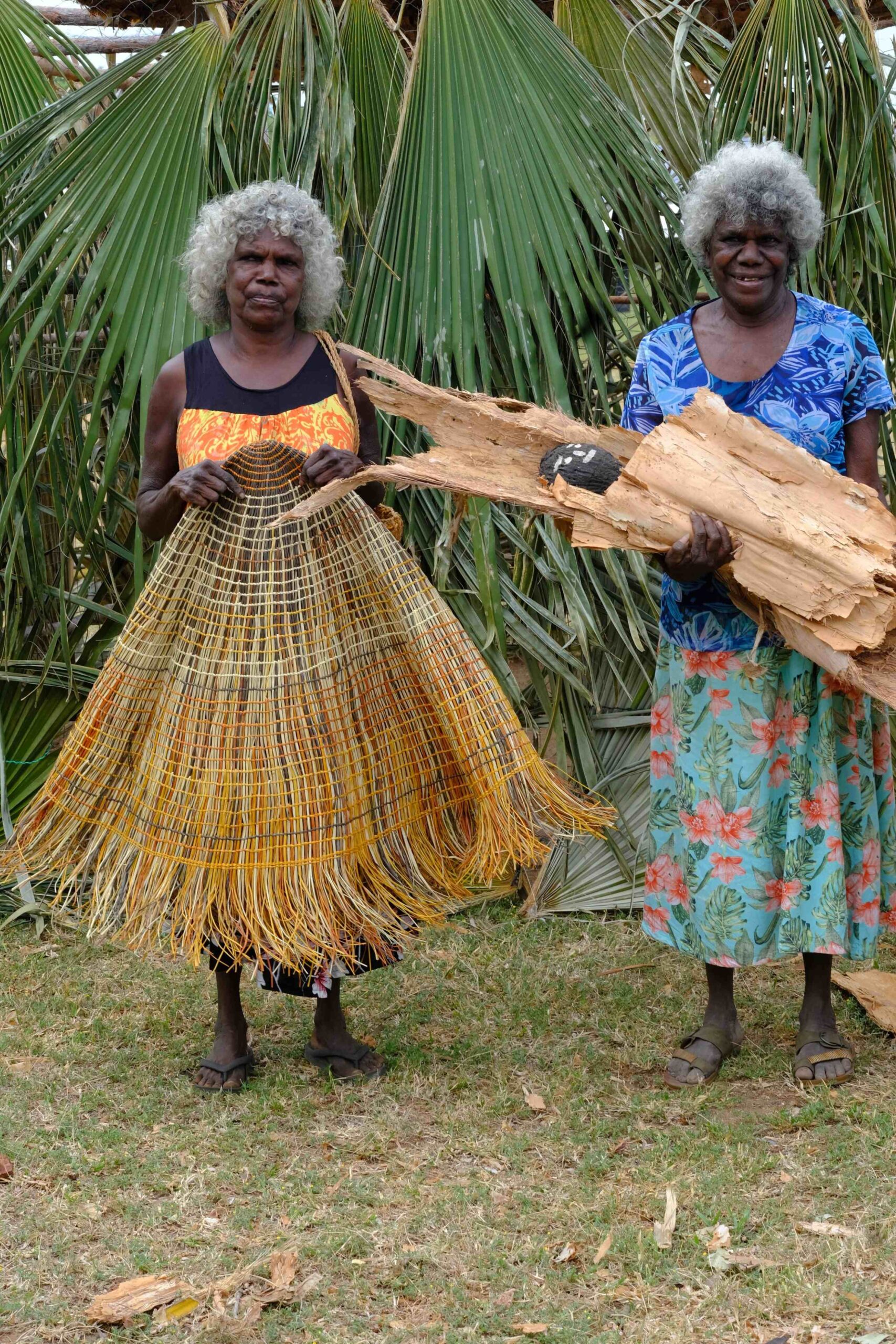
Lily Roy
Milingimbi Art and Culture
Language: Burarra
Clan: Gamal Walamaŋu
Homeland: Yilan
Laŋarra Bush Gallery 2024
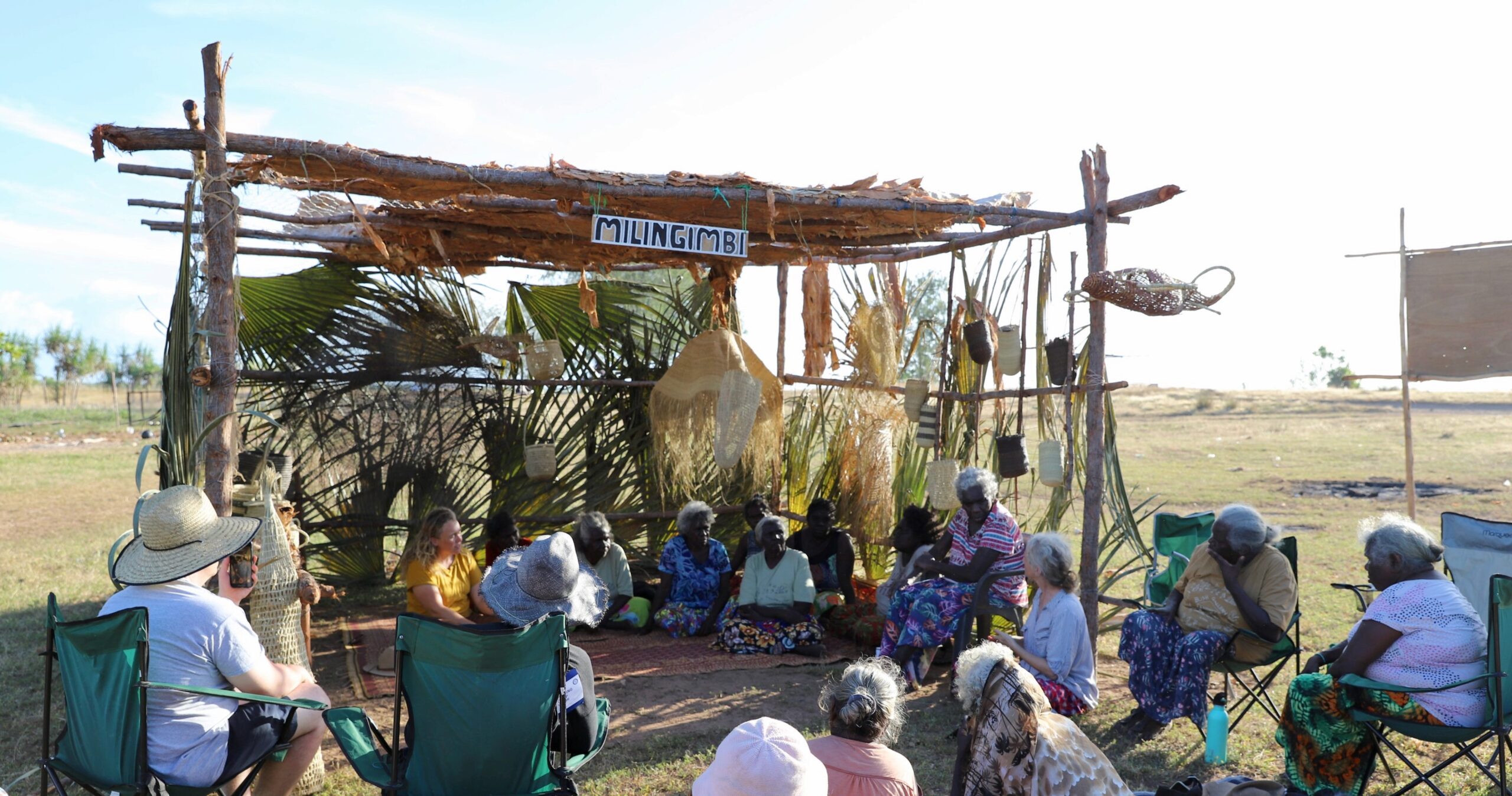
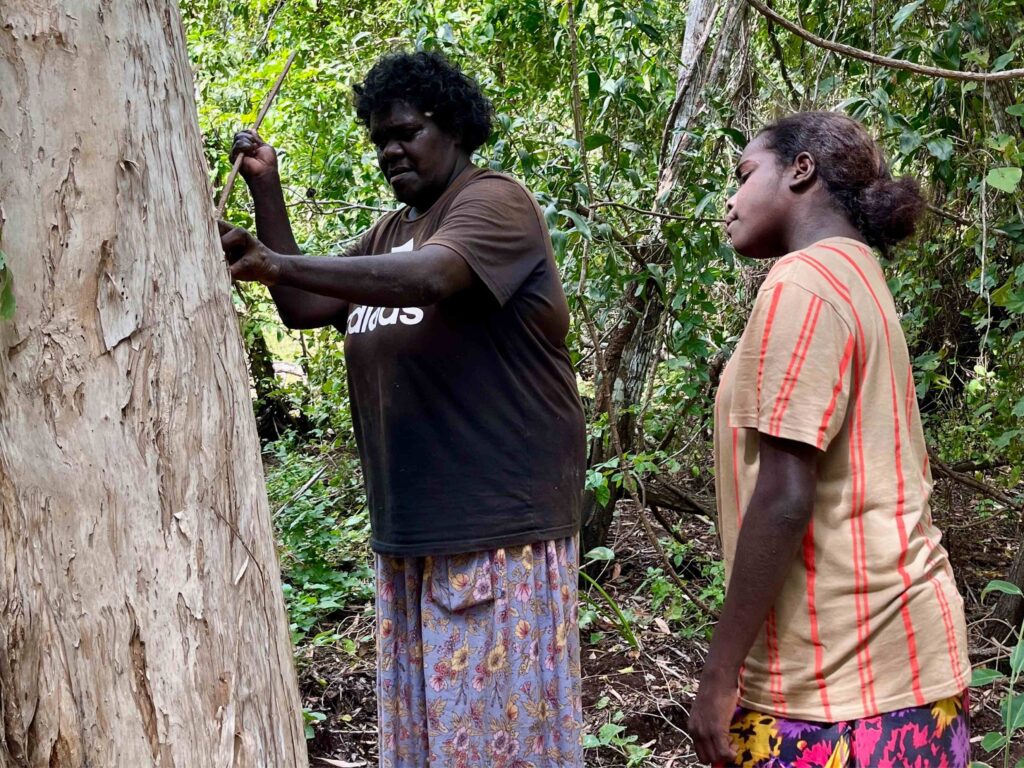
During the inaugural Bush Gallery, Lily Roy’s cultural leadership and extensive knowledge of languages, history, and Yolŋu culture saw her take on an important role supporting less confident artists. She acted as a cultural interpreter, particularly for artists from Maningrida and Milingimbi, helping to strengthen connections and ensure shared understanding.
More
Artist bio
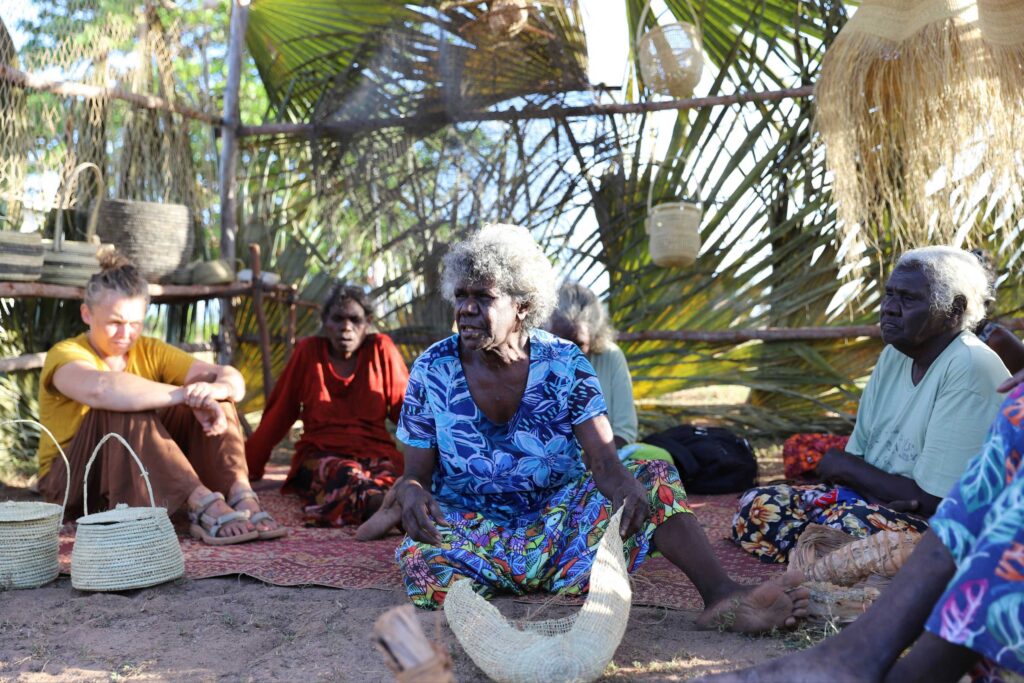
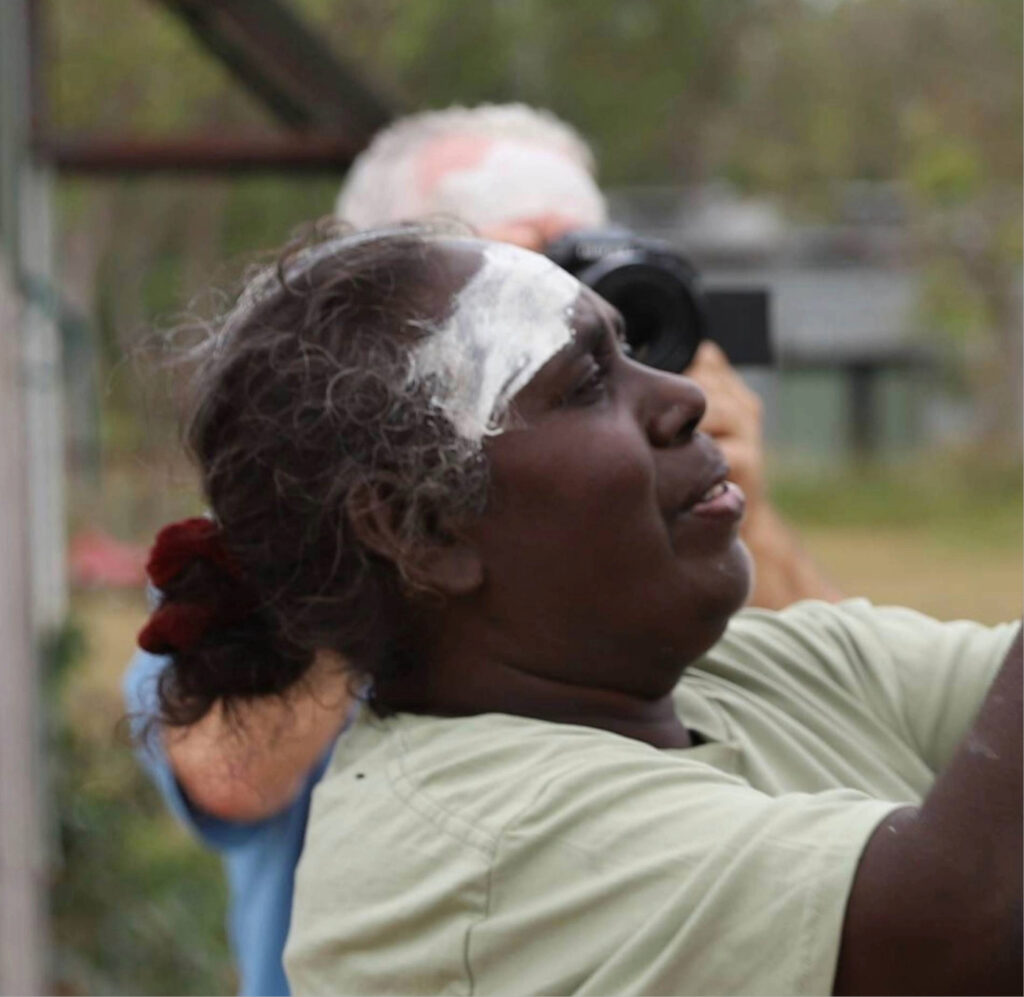
Abigail Mundjala
Milingimbi Art and Culture
Language: Dhuwala/ Gupapuyŋu
Clan: Gupapuyŋu Garawirrtja
Homeland: Lungutja
Laŋarra Bush Gallery 2024
Abigail grew up surrounded by her aunties and observed their weaving and contributed to the daily routines of harvesting and preparing bush fibres. Abigail is passionate about ceremonial life and is known for her graceful ceremonial dancing and bush knowledge. During Laŋarra Bush Gallery Abigail worked alongside Traditional Owners to welcome artists and vistor’s to Laŋarra.
More
Artist bio
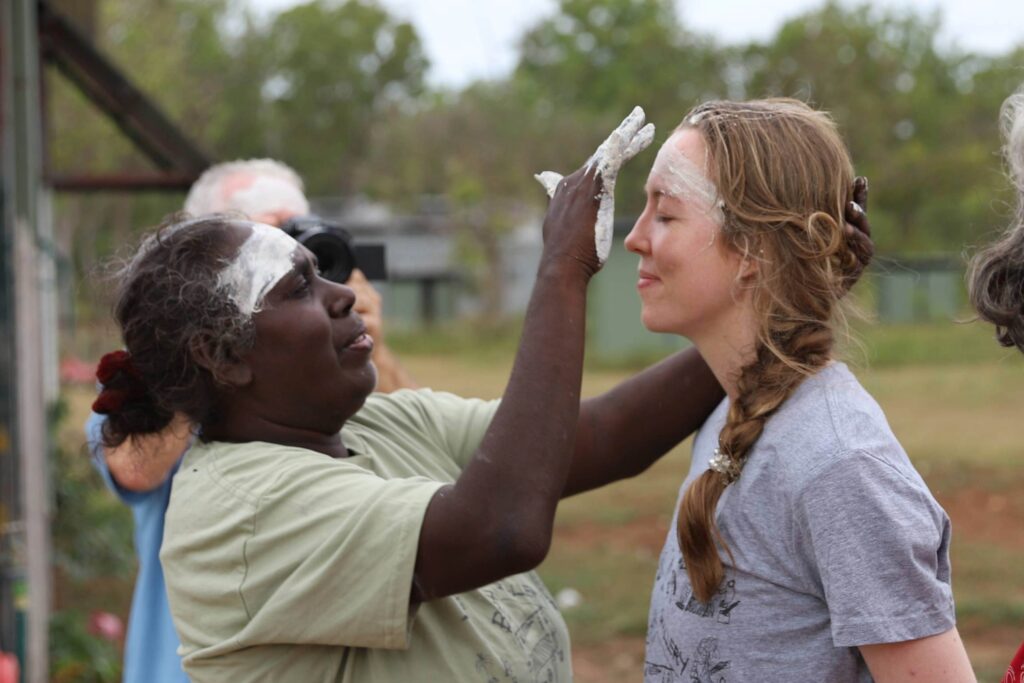
Kerry Malaray
Milingimbi Art and Culture
Language: Dhuwala/ Gupapuyŋu
Clan: Gupapuyŋu Birrkili
Homeland: Garriyak
Laŋarra Bush Gallery 2024
Malaray is one of the daughters of the celebrated master fibre artist Margaret Rarru Garrawurra. She resides at Laŋarra (Howard Island), off the coast of Arnhem Land. In the unhurried environment of Laŋarra homeland, Malaray works with her mother to gather materials and process them into artworks imbued with their ancestral origins.
More
Artist bio
Susan Yirrawurr Gaykamaŋu
Milingimbi Art and Culture
Language: Dhuwala/ Gupapuyŋu
Clan: Gupapuyŋu Gaykamaŋu
Homeland: Djiliwirri
Laŋarra Bush Gallery 2024
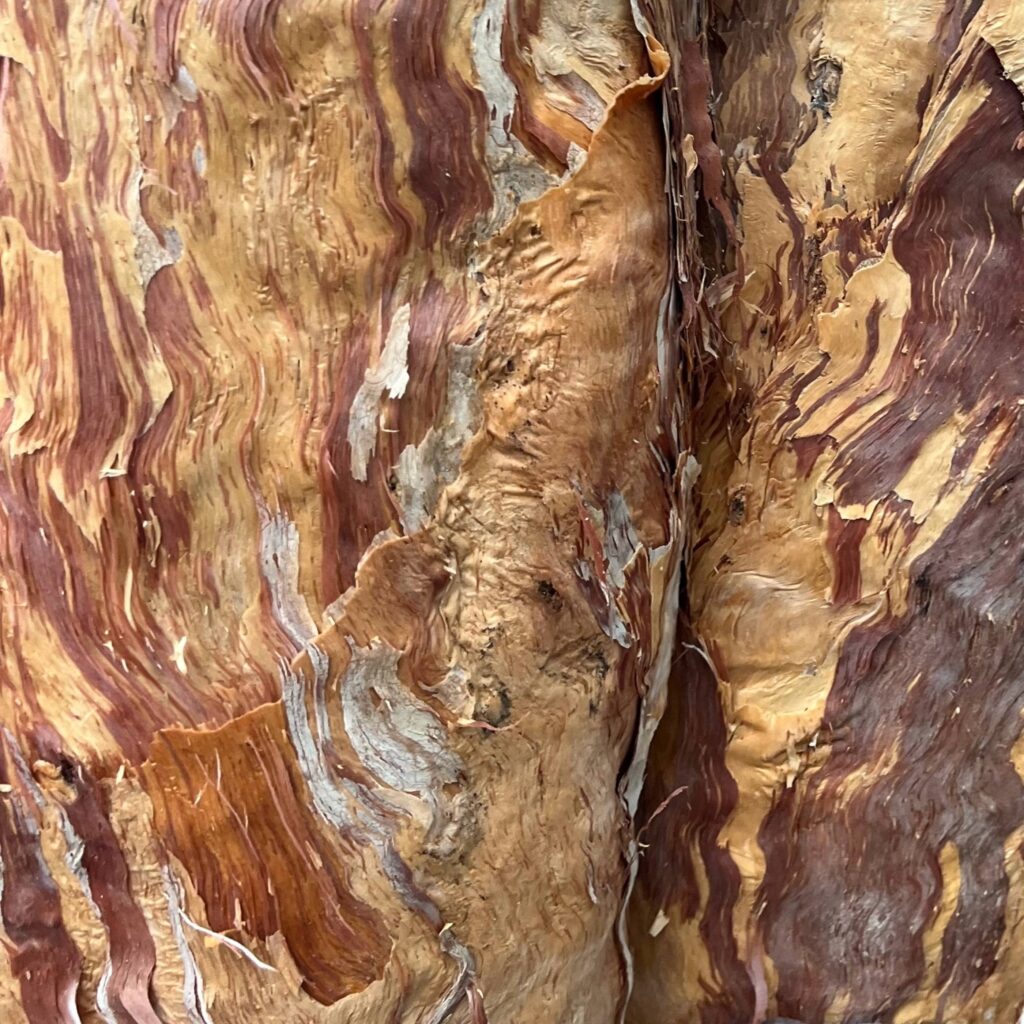
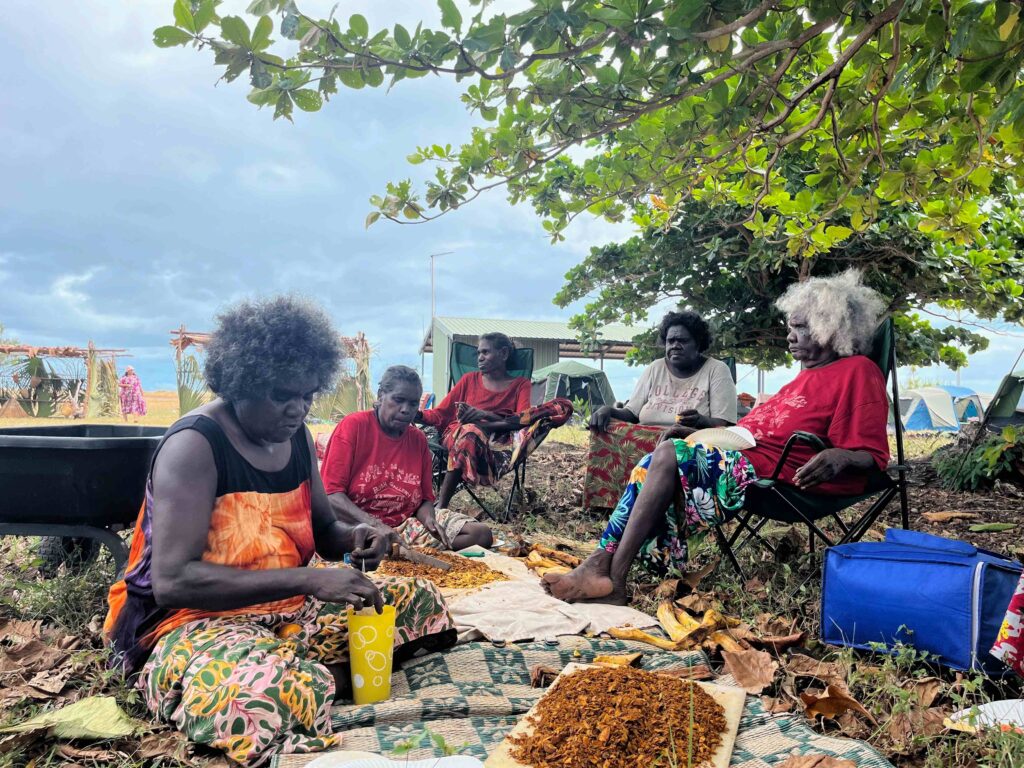
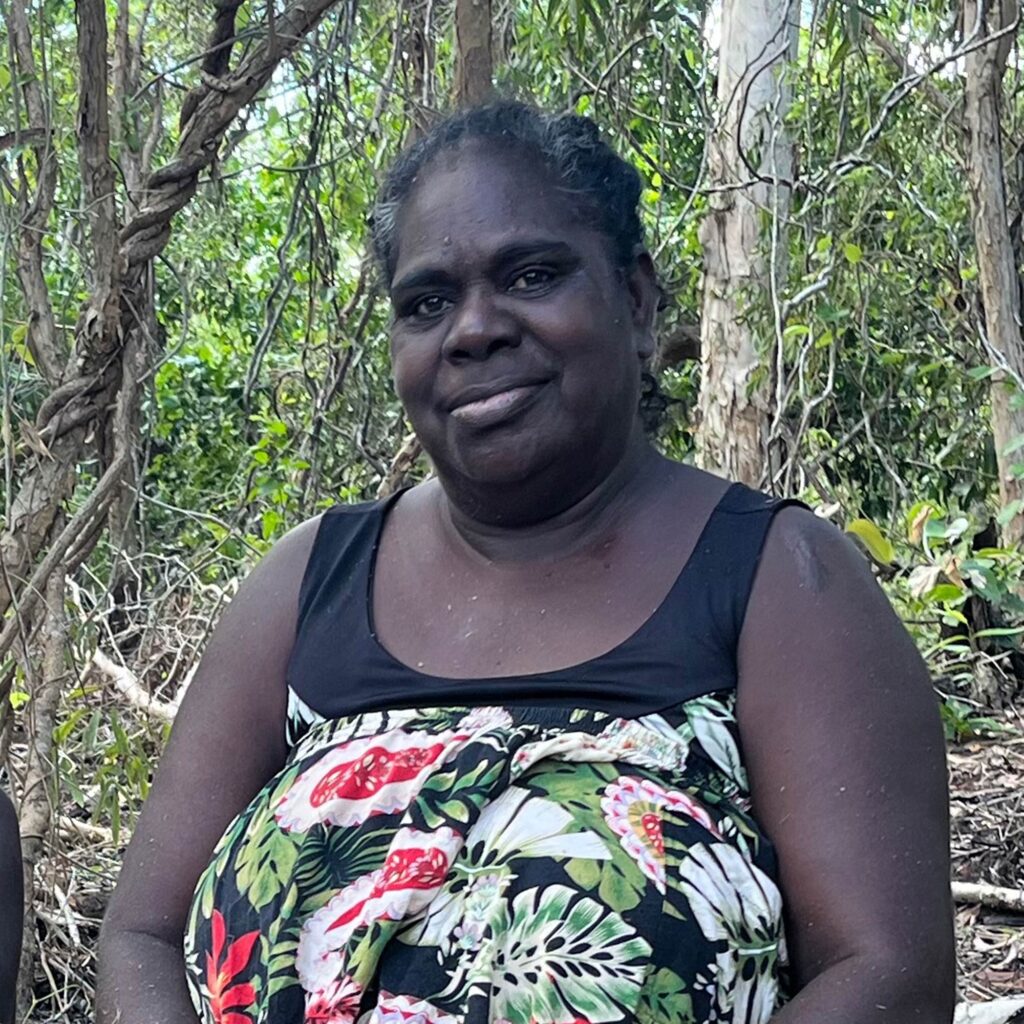
Susan Yirrawurr, daughter of senior artist Helen Ganalmirriwuy, lives and works at Laŋarra homeland. Yirrawurr prepared the site for Laŋarra Bush Gallery 2024, together with her children and grandchild she harvested dharpa ga raŋan (wood and paperbark) for the five bush galleries.
More
Artist bio
Susan Balbunga
Milingimbi Art and Culture
Language: Burarra
Clan: Warrawarra
Country: Gamurra Gu-yurra
Laŋarra Bush Gallery 2024
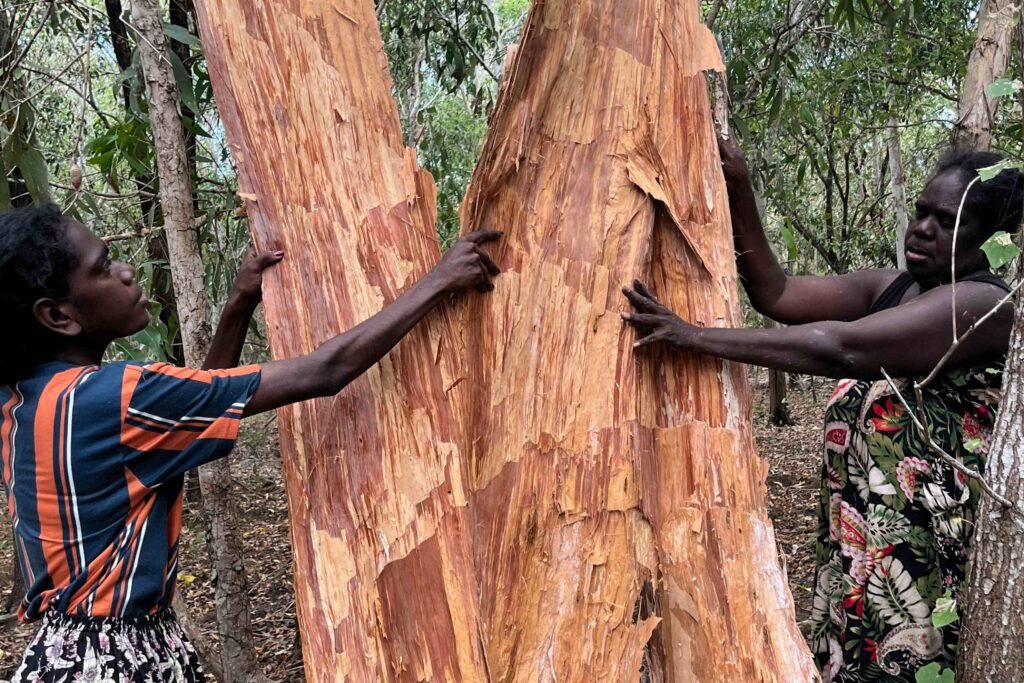
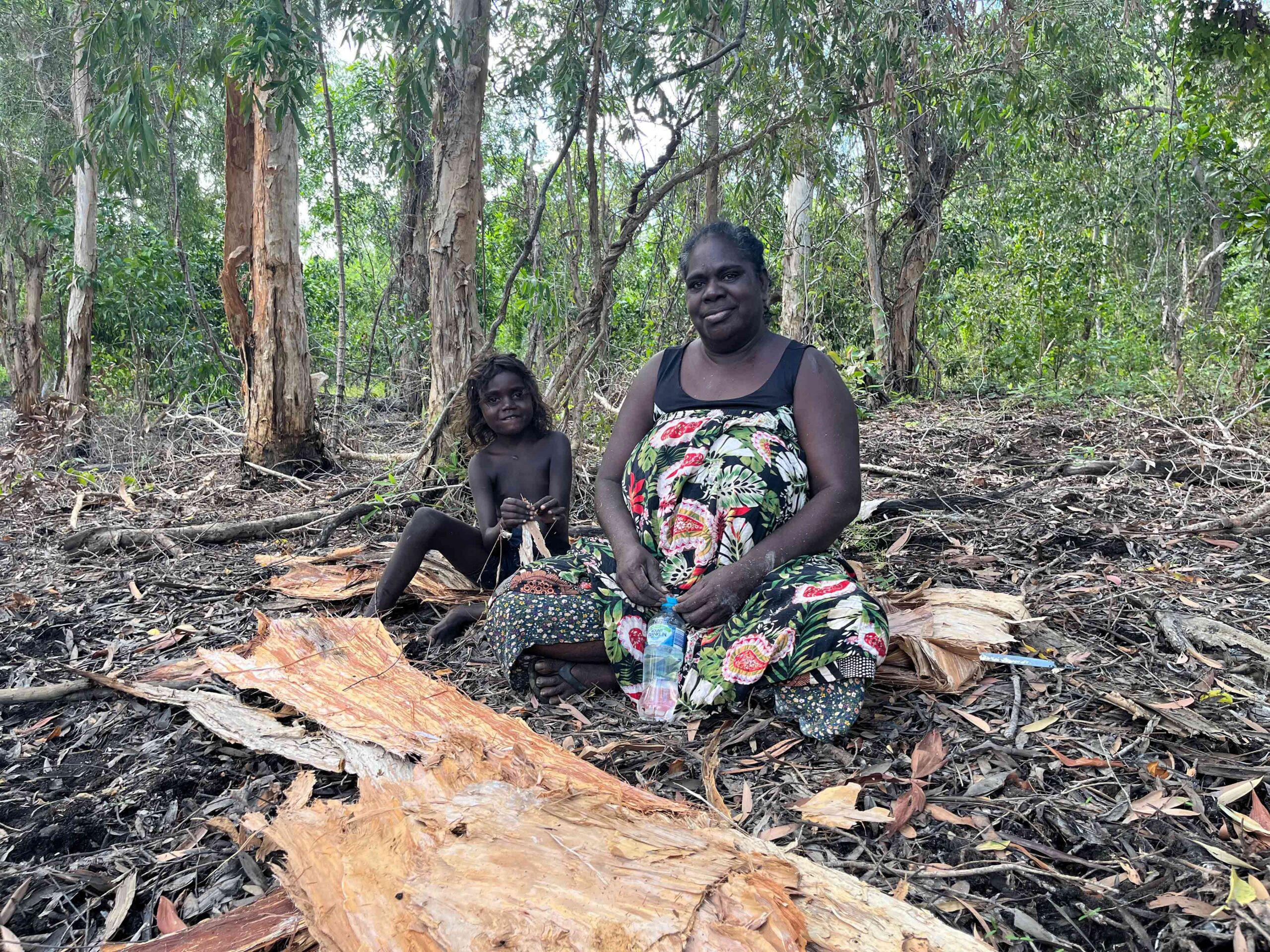
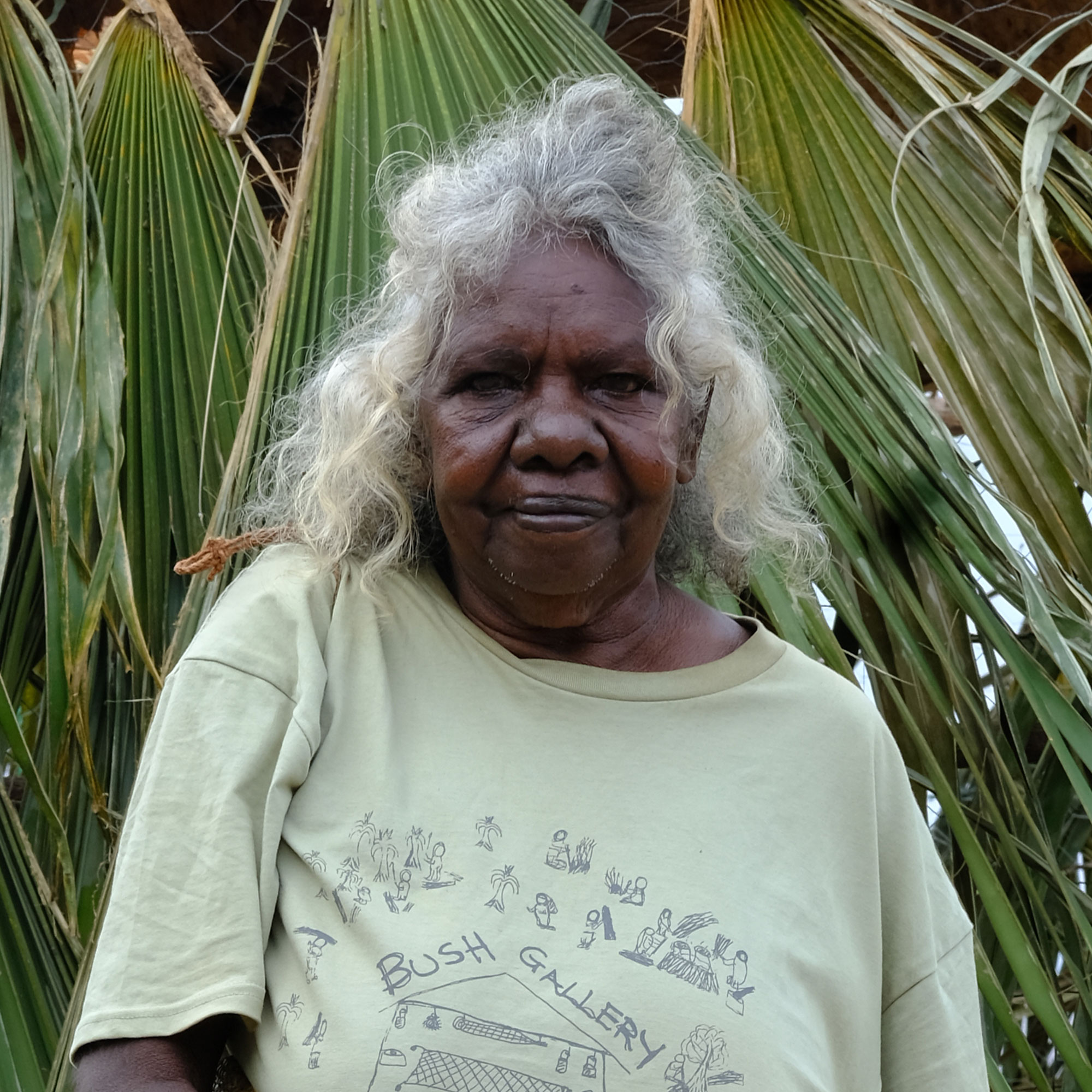
Balbunga’s art practice is informed by her lived experiences growing up in the bush and the knowledge and skills she acquired from her elders, such as learning how to harvest, prepare and paint hollow logs and barks from her father. She continues to make traditional fibre objects, including the revered bamugora (conical mat).
Milingimbi artists chose to tell their stories of Yolŋu weaving across time—from pre-European contact, through the mission era, and into the present.
In the Old Days Miṉḏirr (dilly bags) were made for foraging and ceremony, an-gujechiya (fish traps) for hunting, and bamugora (conical mats) for carrying and protection. These practices, made from jungle vine, gunga (pandanus), baḻgurr (kurrajong), and other local fibres, have been passed down through countless generations and remain tied to ancestral law and cultural practice.
More
Artist bio
Sabrina Rräthi Roy
Milingimbi Art and Culture
Language: Nhaŋu Yan-nhaŋu
Clan: Mäḻarra
Country: Murruŋga
Laŋarra Bush Gallery 2024
Milingimbi artists chose to tell their stories of Yolŋu weaving across time—from pre-European contact, through the mission era, and into the present.
In the Old Days Miṉḏirr (dilly bags) were made for foraging and ceremony, an-gujechiya (fish traps) for hunting, and bamugora (conical mats) for carrying and protection. These practices, made from jungle vine, gunga (pandanus), baḻgurr (kurrajong), and other local fibres, have been passed down through countless generations and remain tied to ancestral law and cultural practice.
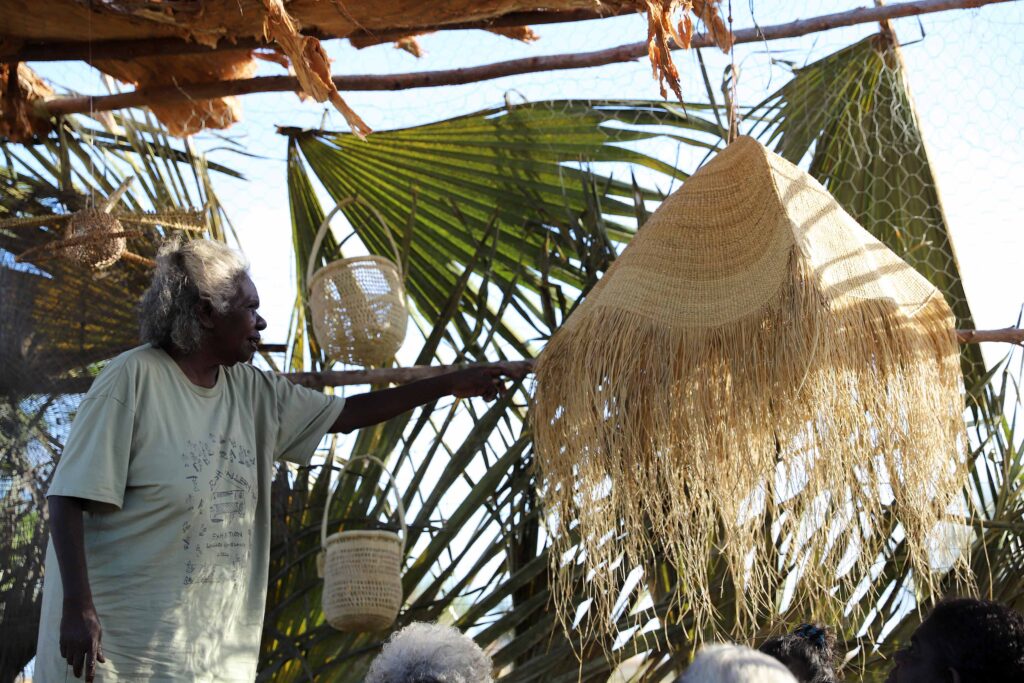
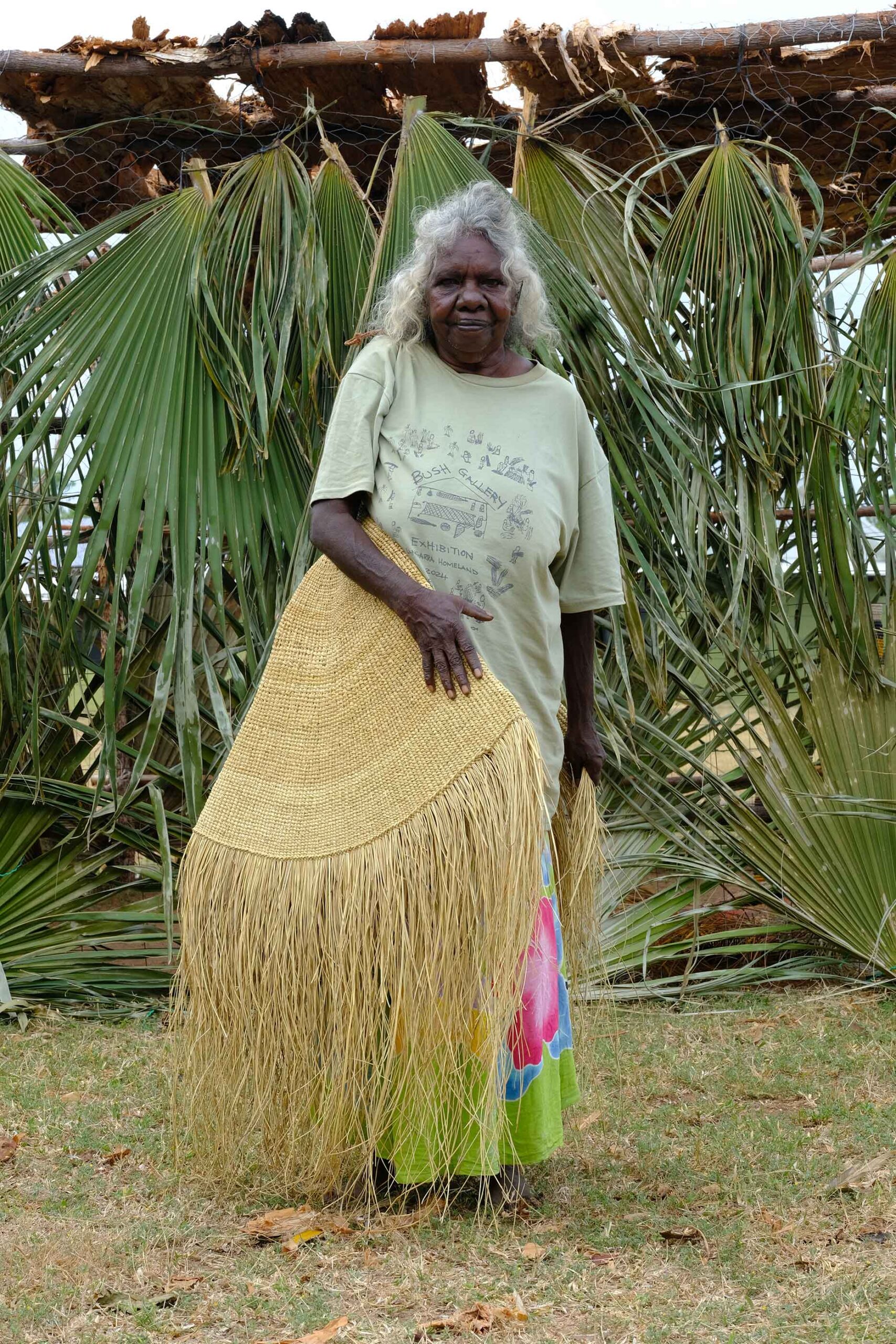
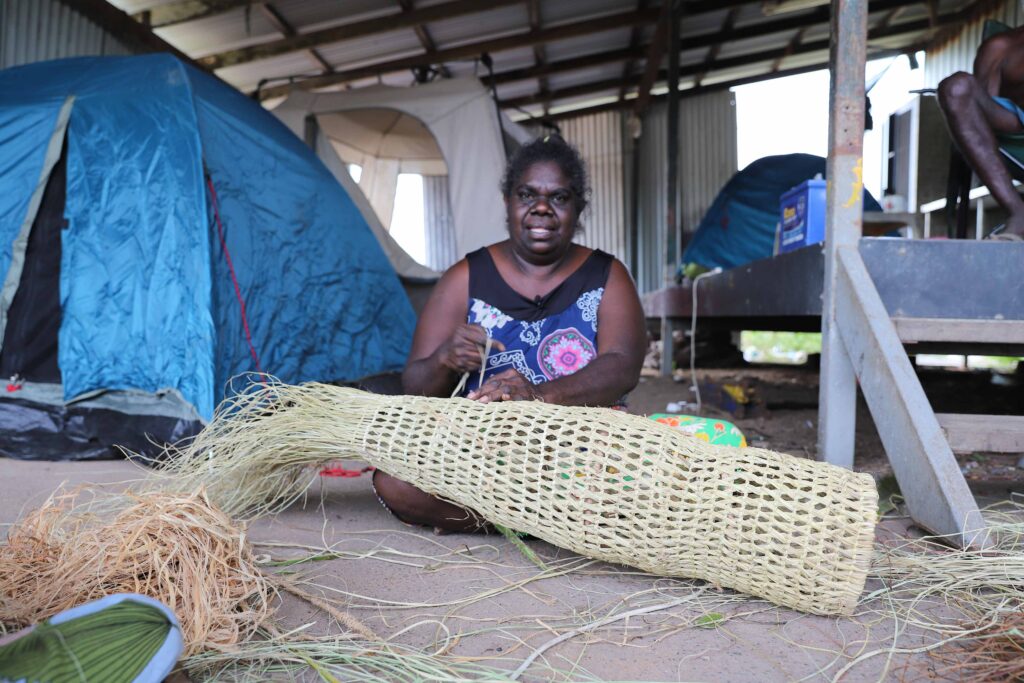
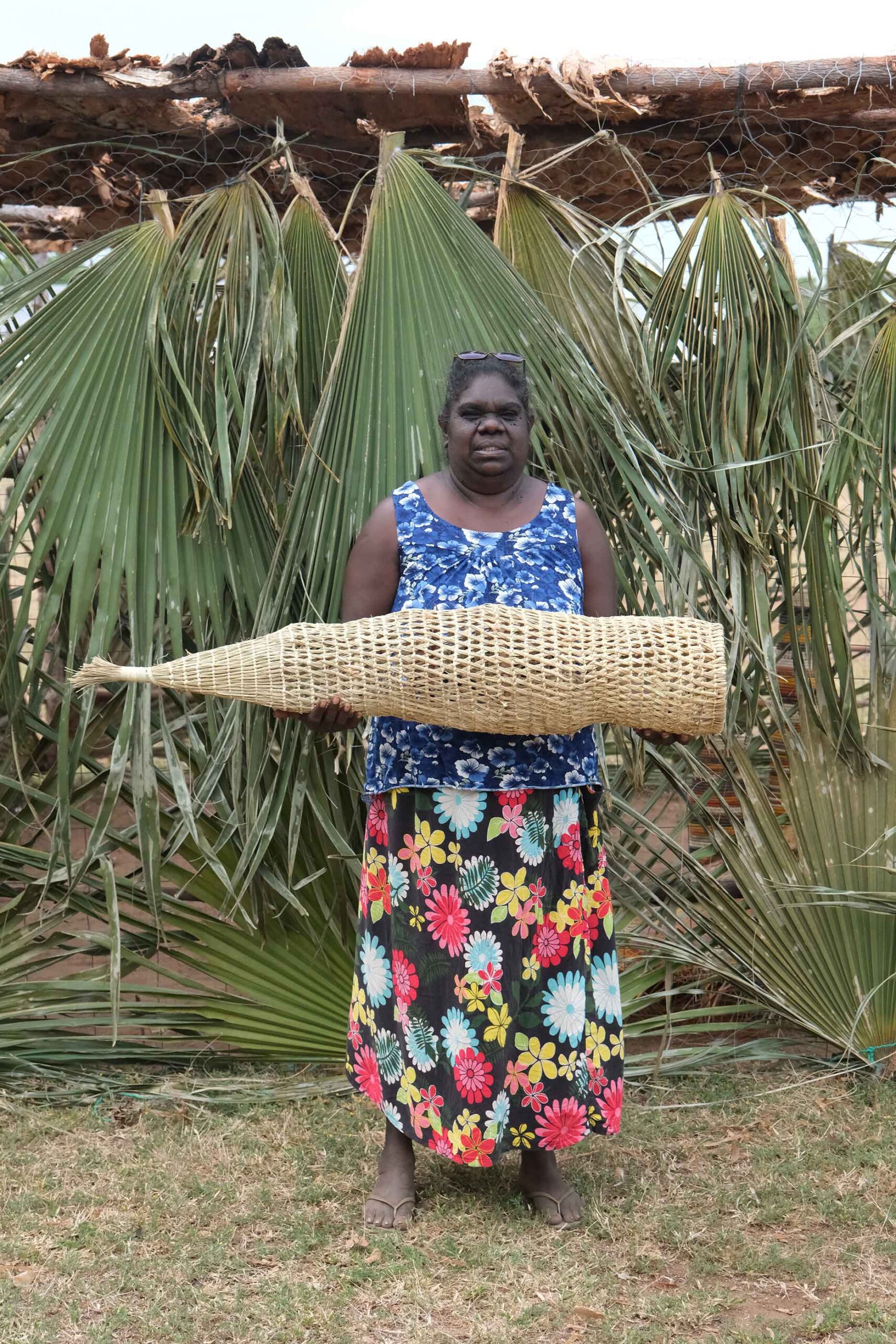
Sabrina Rräthi Roy, although a senior weaver, continues to learn the art of making an-gujechiya (fish traps) from her ŋäṉḏi (mother and mother’s sisters), Lily Roy, Freda Wayartja and Bonnie Burangarra. For Bush Gallery Sabrina made her fist an-gujechiya using a lattice twining technique.
More
Artist bio
Elizabeth Rukarriwuy Garrawarra
Milingimbi Art and Culture
Language: Dhuwal/ Djambarrpuyŋu
Clan: Ḻiya-gawumirr Garrawurra
Homeland: Garriyak
Laŋarra Bush Gallery 2024
Milingimbi artists chose to tell their stories of Yolŋu weaving across time—from pre-European contact, through the mission era, and into the present.
Some artists reflected on the mission era, beginning in the 1920s and extending through World War II—a time of profound cultural and material change, including Milingimbi’s role as a military airfield. Elizabeth Rukarriwuy wove teacups and billy cans that evoke everyday objects from this time.
All artists worked in natural fibre tones or mol—black dyed pandanus, honoring a technique pioneered by senior weaver Margaret Rarru Garrawurra. This unified palette bridged past and present—capturing Bush Gallery’s vision for Yolŋu weaving into the future.
More
Artist bio
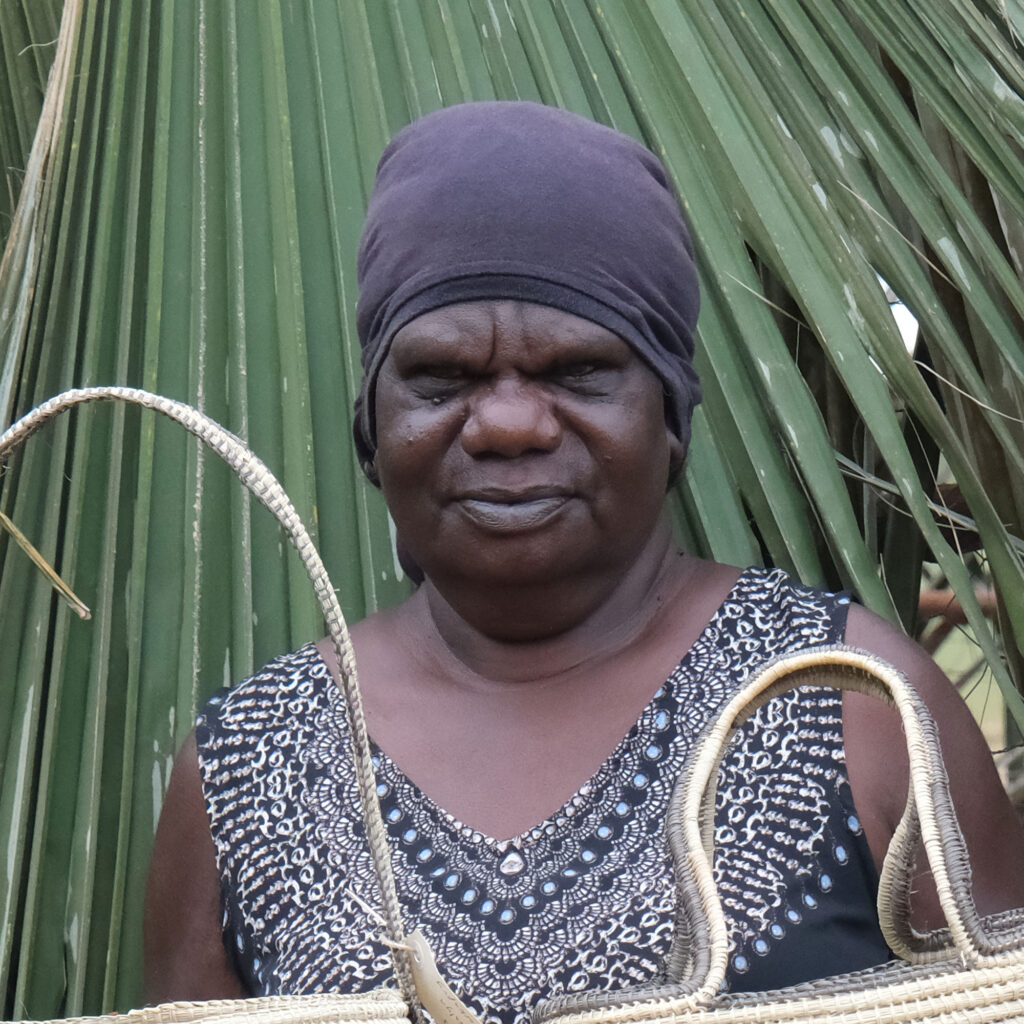
Roslyn Markapuy
Milingimbi Art and Culture
Language: Dhuwala/ Gupapuyŋu
Clan: Gupapuyŋu Birrkili
Homeland: Garriyak
Laŋarra Bush Gallery 2024
Milingimbi artists chose to tell their stories of Yolŋu weaving across time—from pre-European contact, through the mission era, and into the present.
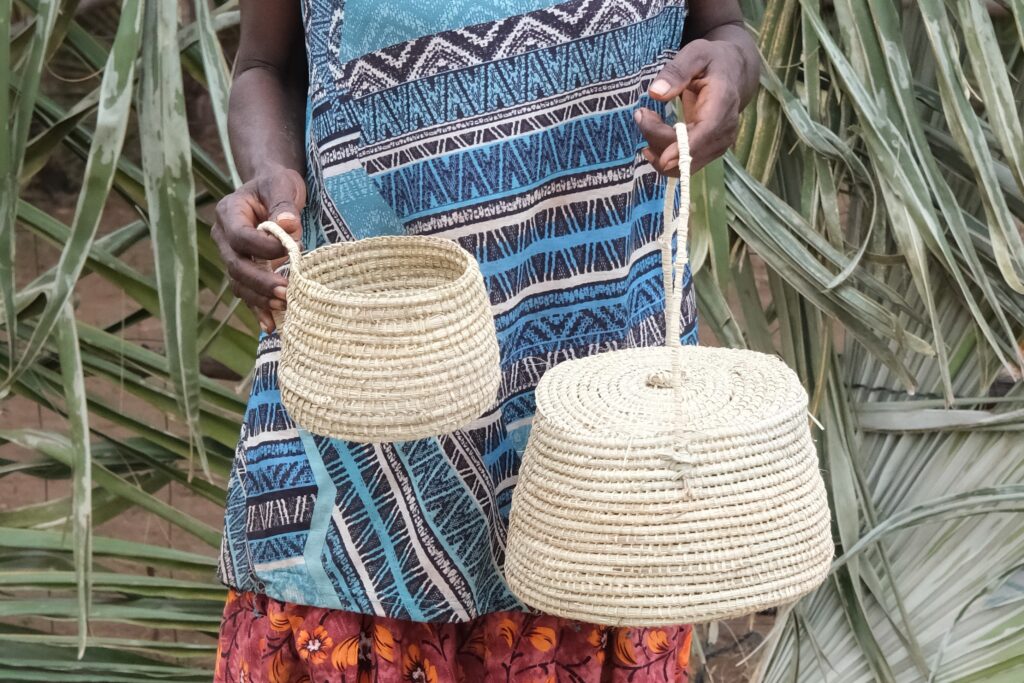
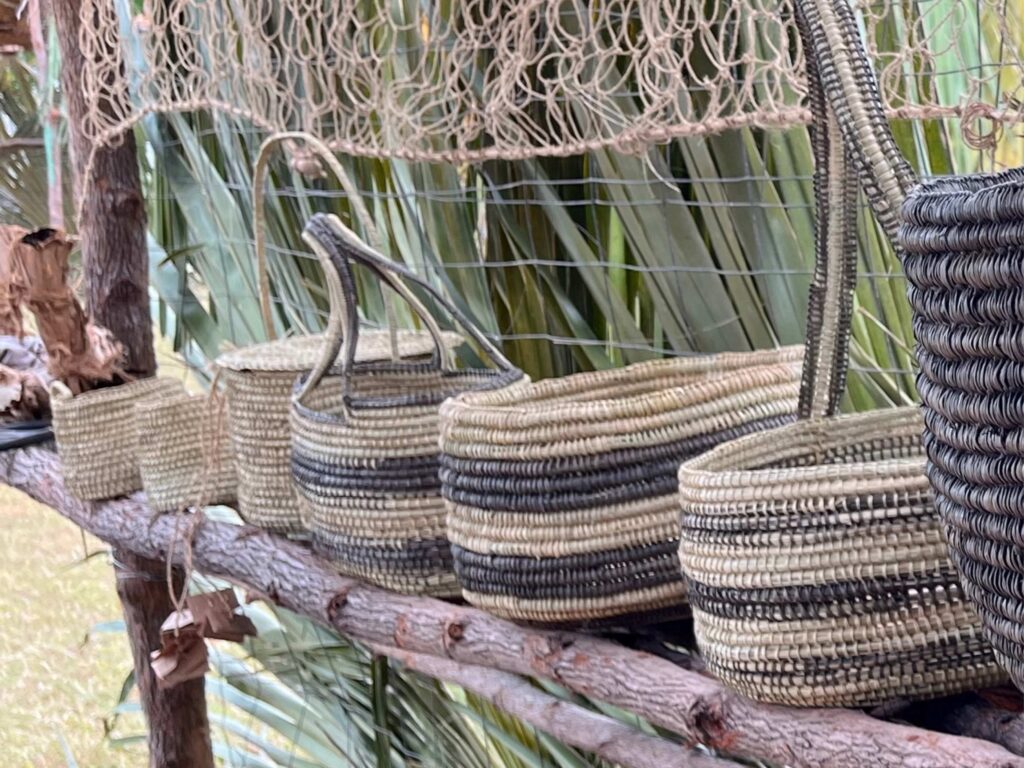
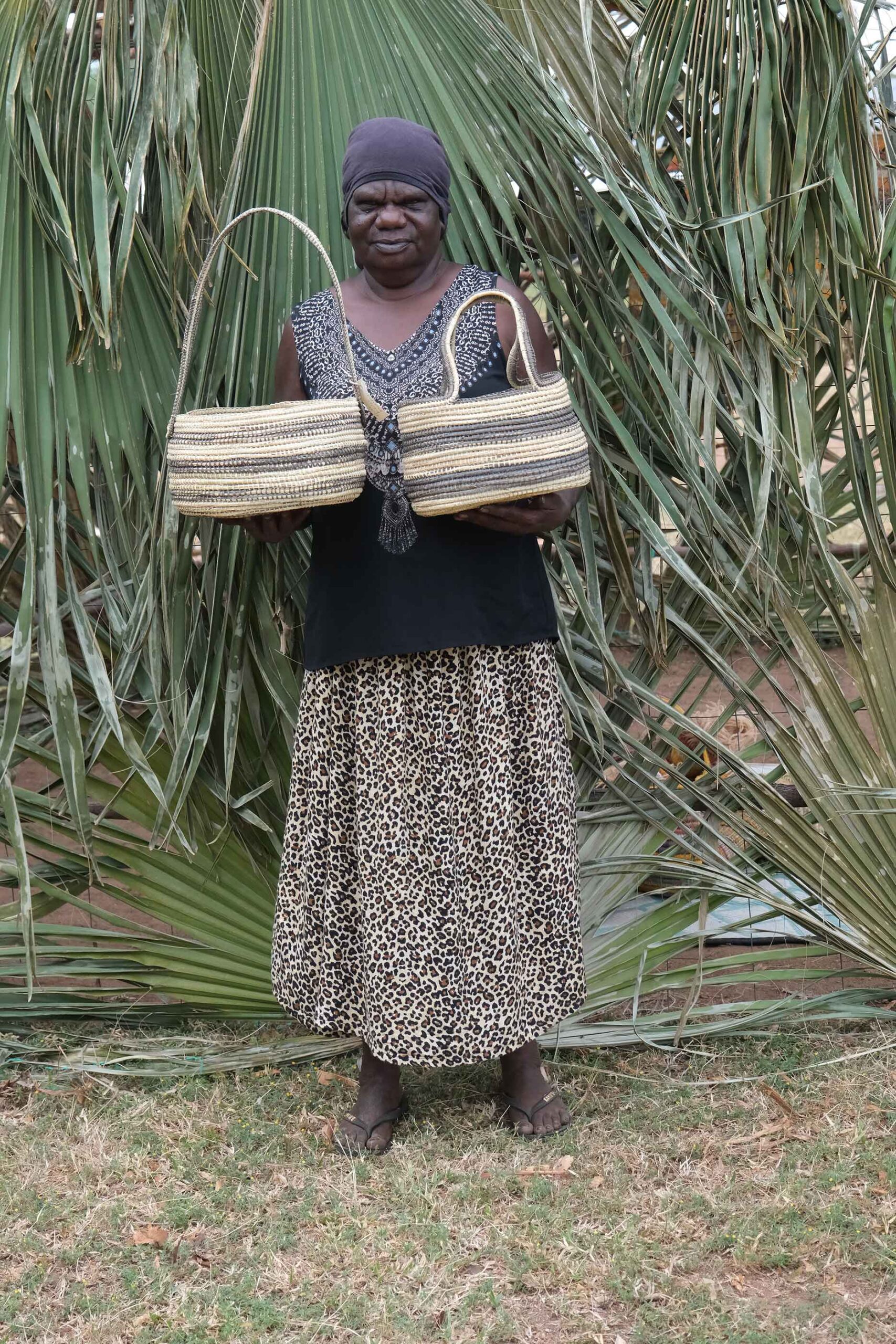
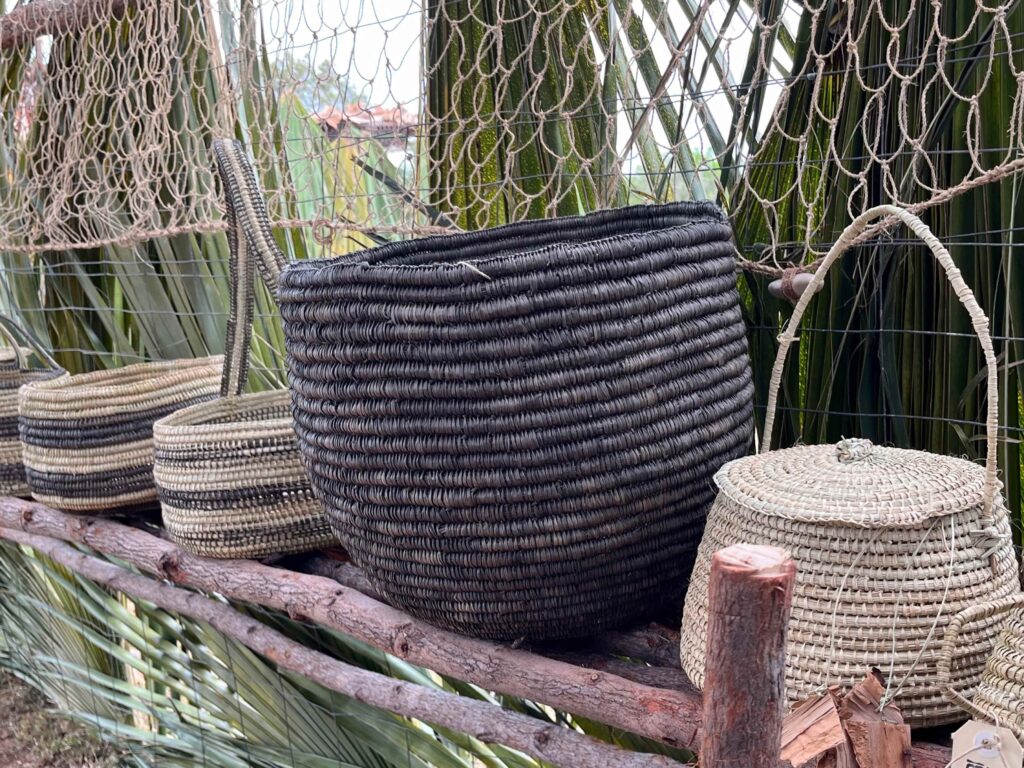
Some artists reflected on the mission era, beginning in the 1920s and extending through World War II—a time of profound cultural and material change, including Milingimbi’s role as a military airfield. Roslyn Markapuy recreated early “Mission Baskets” with handles. Combining natural undyed fibre and mol – black dyed pandanus Markapuy
Markapuy worked with natural fibre and mol—black dyed pandanus, honoring her mother, Margaret Rarru Garrawurra’s legacy as the pioneer of developing rich, deep mol to create astounding contemporary woven artworks.
More
Artist bio
Nellie Roy
Milingimbi Art and Culture
Language: Yan-nhaŋu
Clan: Mäḻarra
Homeleand: Murruŋga
Laŋarra Bush Gallery 2024
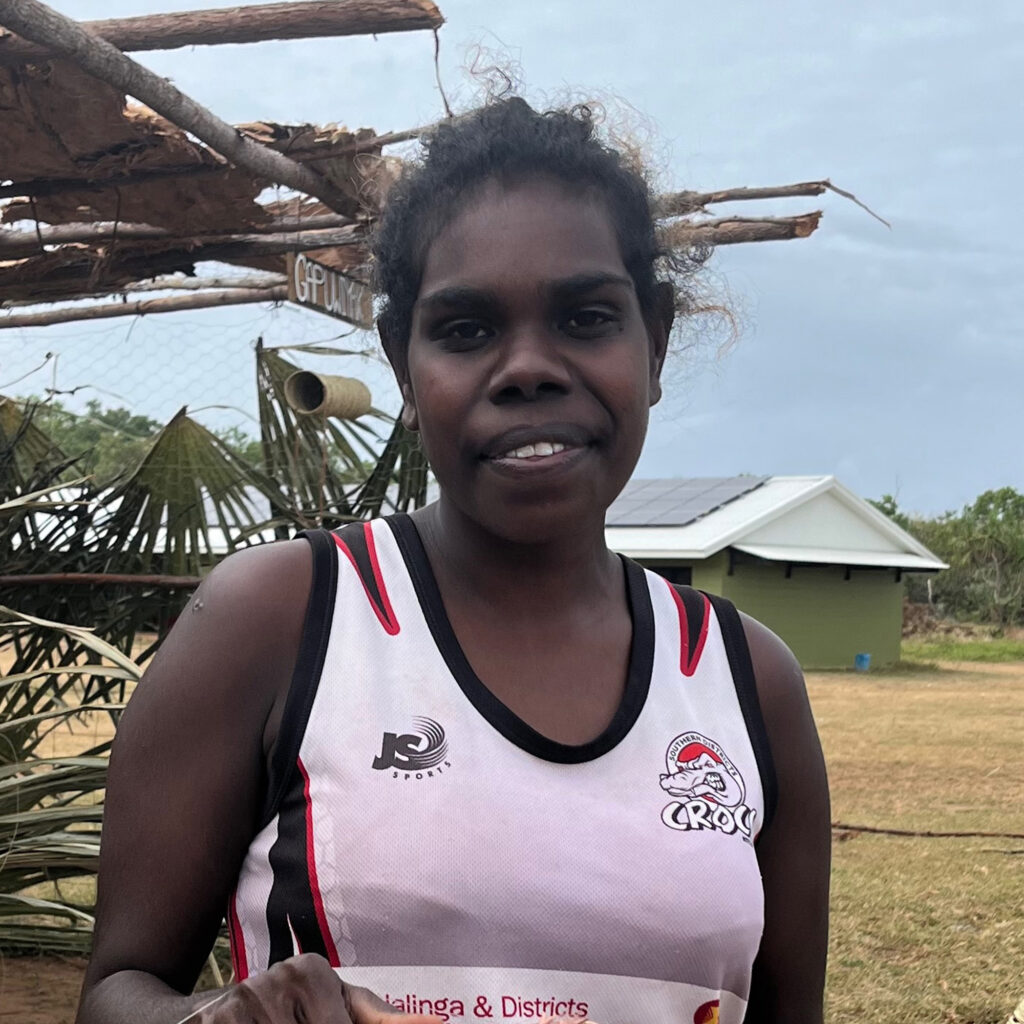
Nellie Roy followed her momu (grandmother) Lily Roy, and aunties Jennifer Dikarr and Sabrina Roy at Bush Gallery.
Part of the Mäḻarra songline travels through Laŋarra and continues to Yilan, Nellie’s grandmothers homeland. Bush Gallery 2024 was Nellie’s first experience of visting Laŋarra.
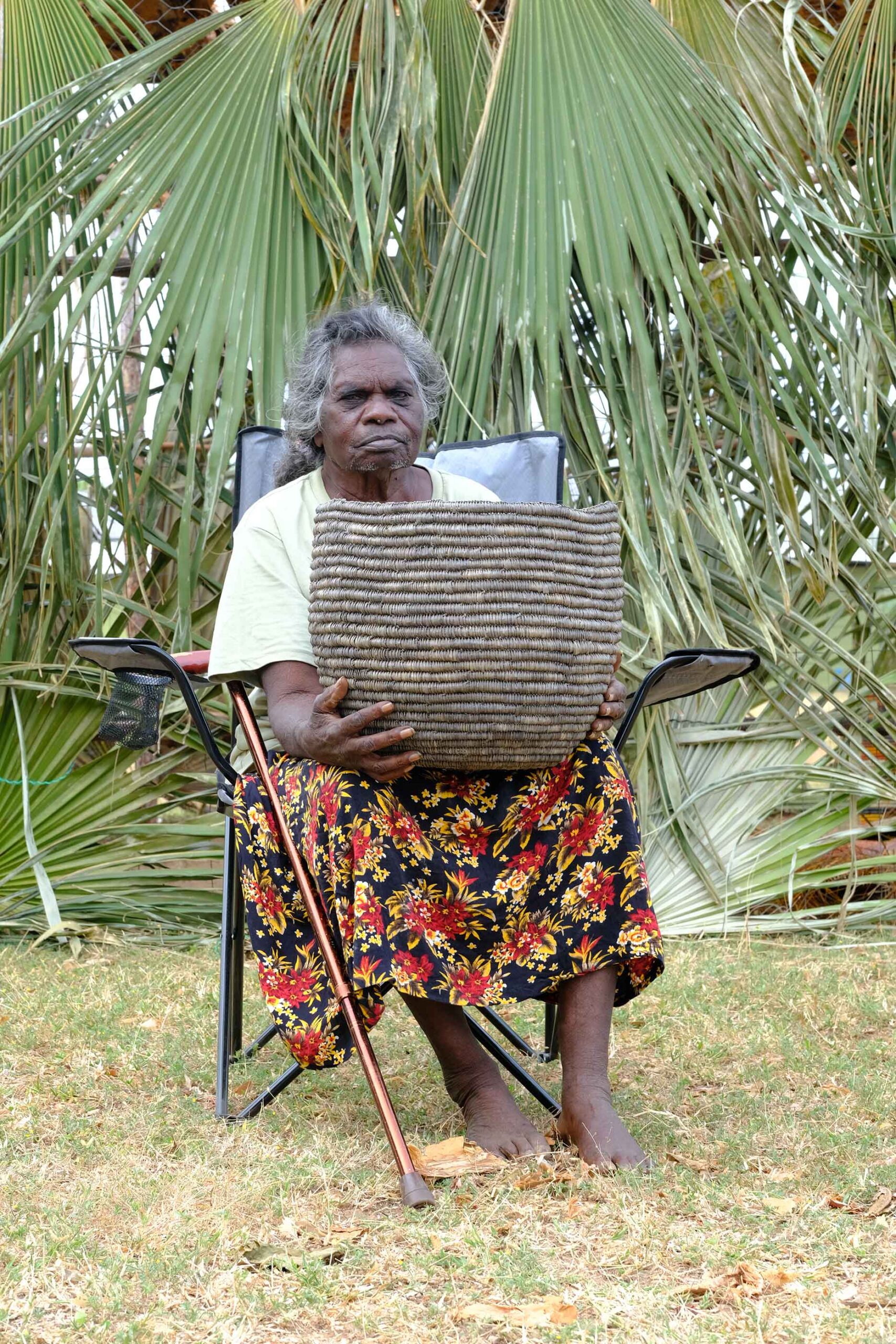
Margaret Rarru Garrawurra
Milingimbi Art and Culture
Language: Dhuwal/ Djambarrpuyŋu
Clan: Ḻiyagawumirr Garrawurra
Homeland: Gärriyak
Laŋarra Bush Gallery 2024
Milingimbi artists chose to tell their stories of Yolŋu weaving across time—from pre-European contact, through the mission era, and into the present.
Some artists reflected on the mission era, beginning in the 1920s and extending through World War II—a time of profound cultural and material change, including Milingimbi’s role as a military airfield.
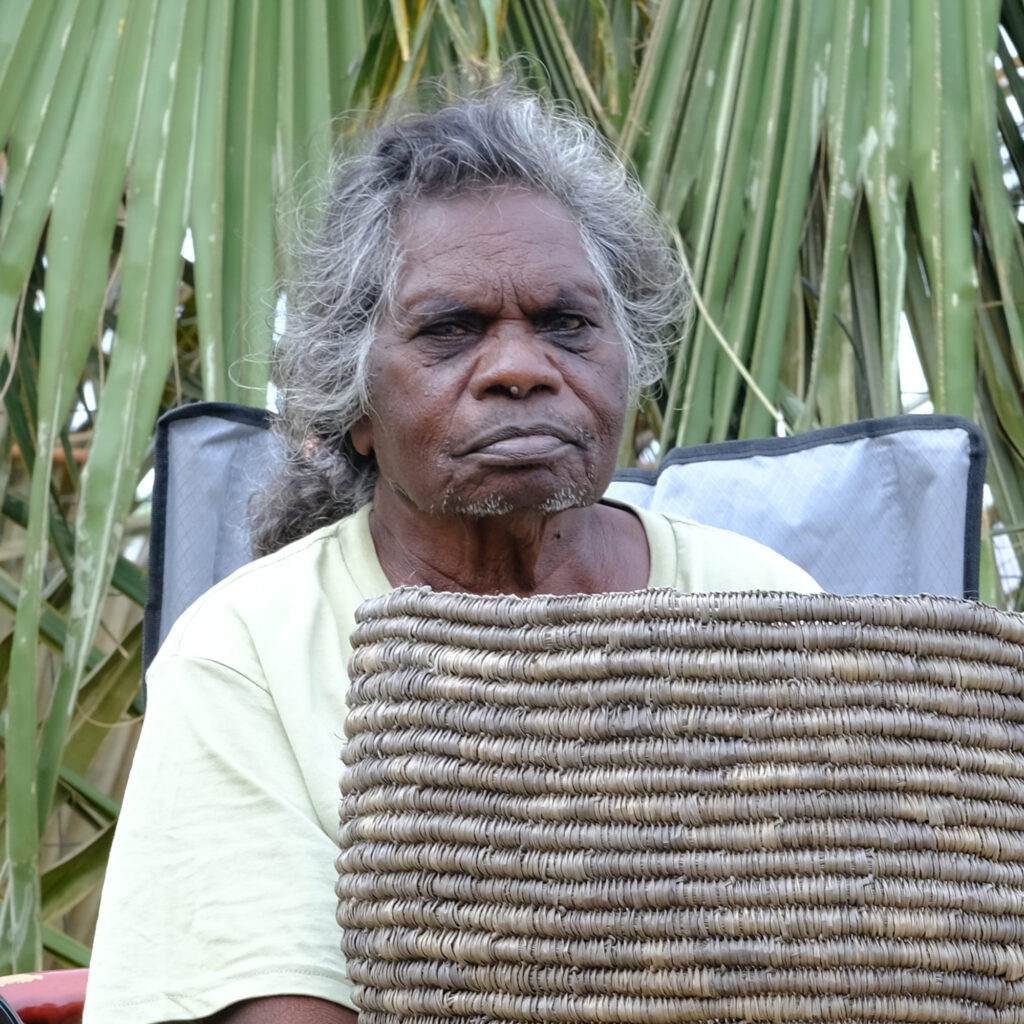
Margaret Rarru made a large basket in her signature mol (black) using the coil technique. This technique is widely practiced by Ngarrindjeri weavers of South Australia and was introduced to Arnhem Land artists by missionaries that traveled between the two places.
All artists worked in natural fibre tones or mol—black dyed pandanus, honoring a technique pioneered by Rarru. This unified palette bridged past and present—capturing Bush Gallery’s vision for Yolŋu weaving into the future.
More
Artist bio
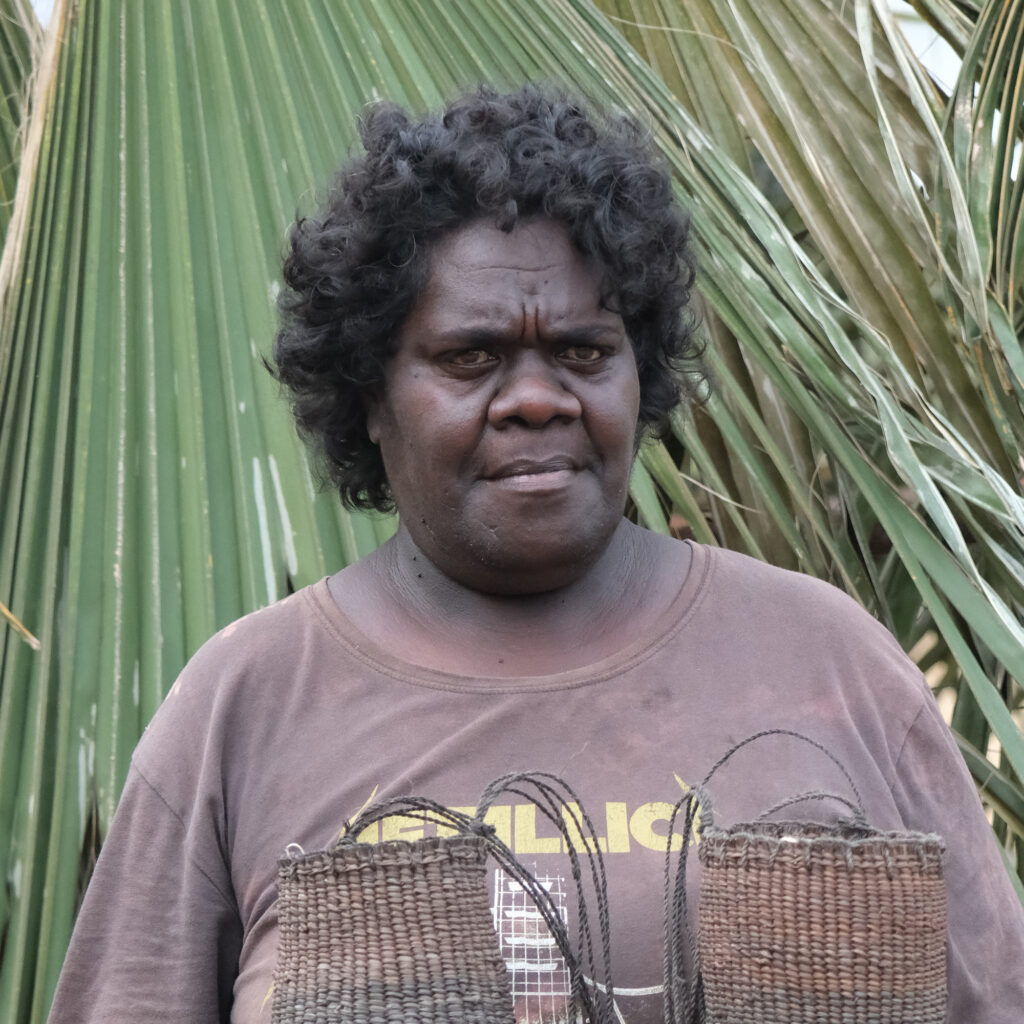
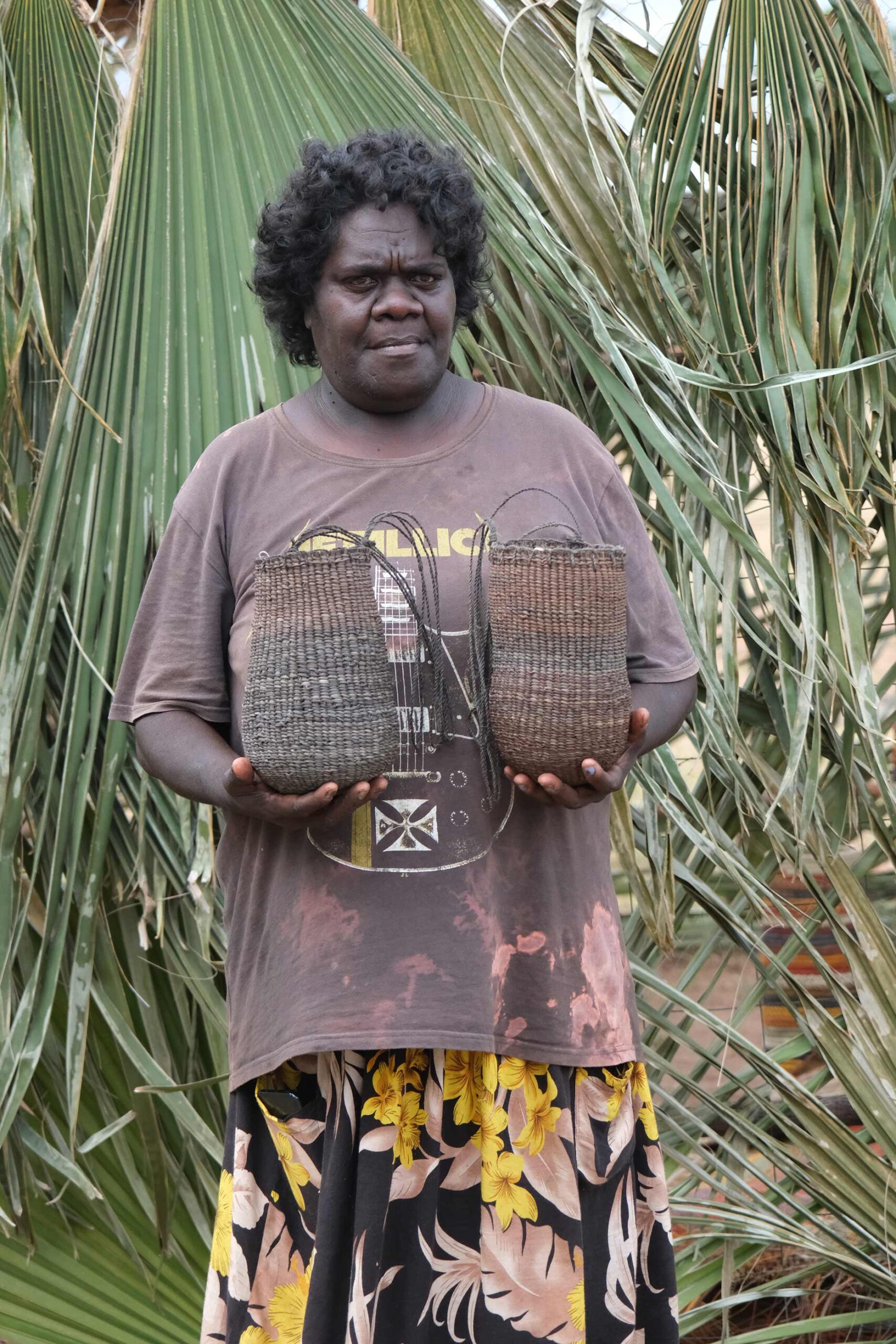
Mandy Batjula Gaykamangu
Milingimbi Art and Culture
Language: Dhuwala/ Gupapuyŋu
Clan: Gupapuyŋu Gaykamaŋu
Homeland: Djiliwirri
Laŋarra Bush Gallery 2024
Milingimbi artists chose to tell their stories of Yolŋu weaving across time—from pre-European contact, through the mission era, and into the present.
In the Old Days Miṉḏirr (dilly bags) were made for foraging and ceremony. Mandy Batjula made mindirr from mol—black dyed pandanus, honoring a technique pioneered by her ŋäṉḏi-mothers sister- senior weaver Margaret Rarru Garrawurra.
More
Artist bio
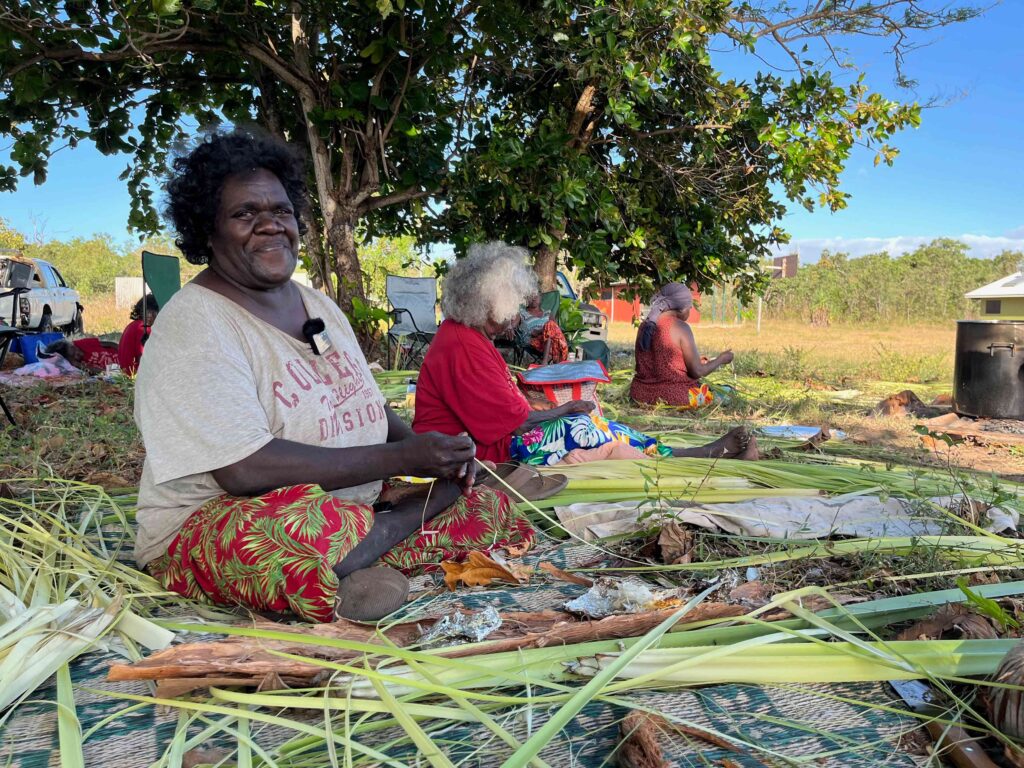
Jocelyn Gumirrmirr
Milingimbi Art and Culture
Language: Dhuwala Ḻiya-gawumirr
Clan: Ḻiya-gawumirr Garrawurra
Country: Garriyak
Laŋarra Bush Gallery 2024
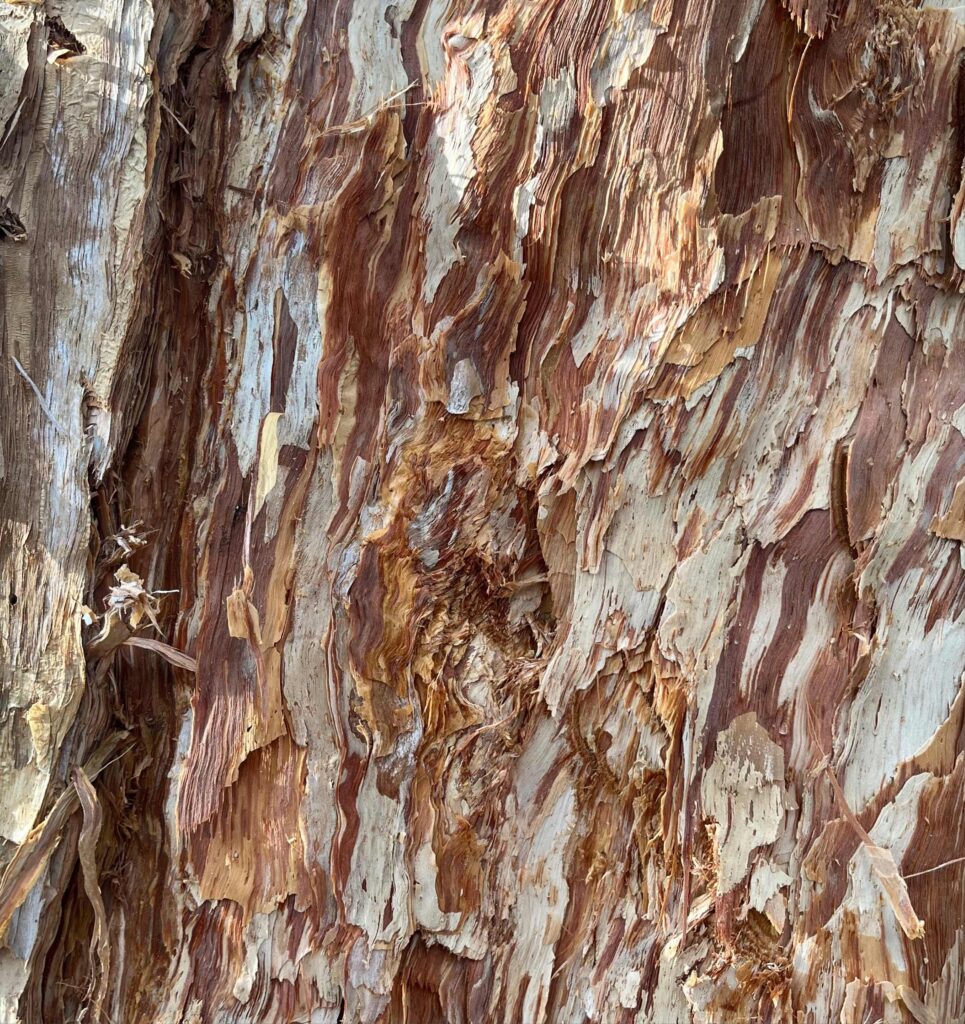
Jocelyn was a celebrated artist who worked with Milingimbi Art and Culture, Elcho Island Arts and Buku Art Centre. She lived with her husband, children and grandchildren at Laŋarra and often travelled to Milingimbi, Galiwinku and Yirrkala to spend time with family.
Jocelyn was enthusiastically engaged with the preparation for Laŋarra Bush Gallery, working closely together with her family to prepare the area at Laŋarra for the arrival of the artists. Sadly, Jocelyn passed away shortly before the event.
Jennifer Roy Dikarr Mäḻarra
Milingimbi Art and Culture
Language: Nhaŋu
Clan: Mäḻarra
Homeland: Murruŋga
Laŋarra Bush Gallery 2024
Milingimbi artists chose to tell their stories of Yolŋu weaving across time—from pre-European contact, through the mission era, and into the present.
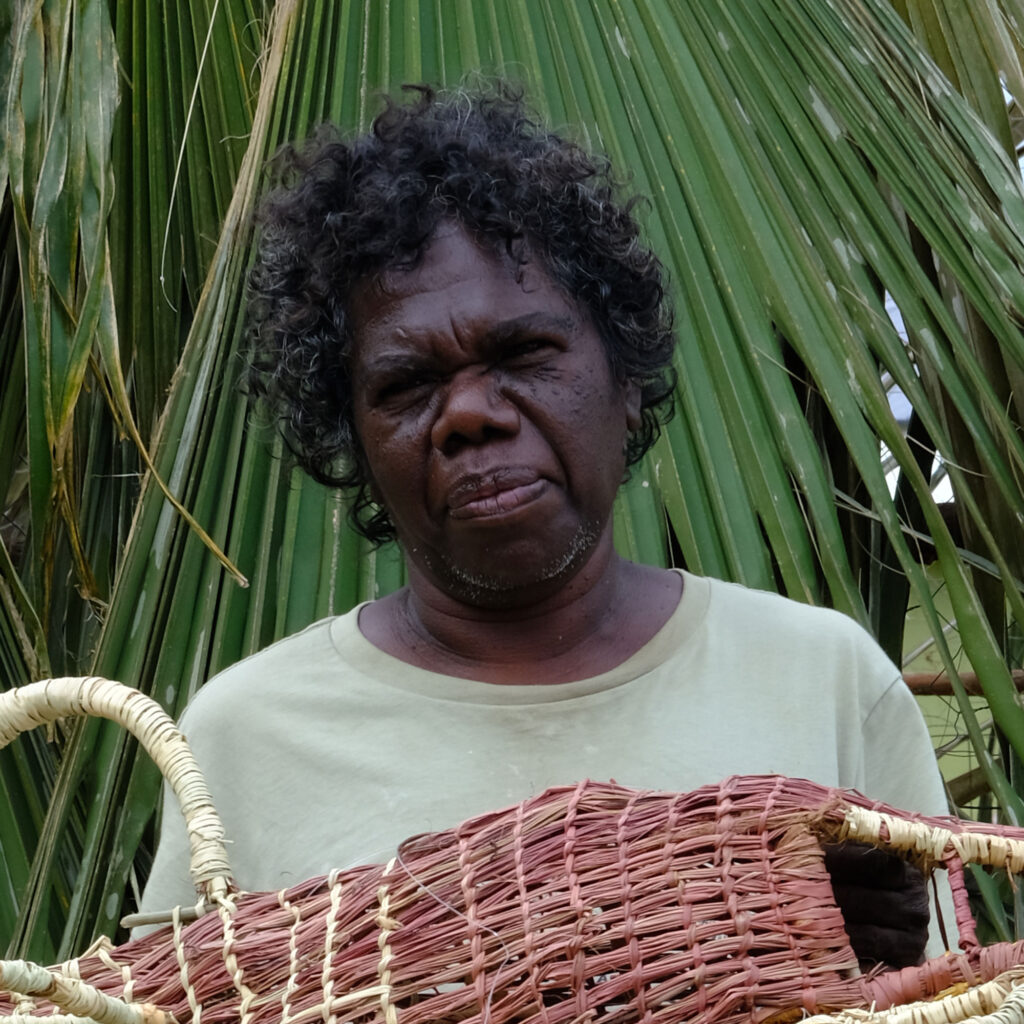
Some artists reflected on the mission era, beginning in the 1920s and extending through World War II—a time of profound cultural and material change, including Milingimbi’s role as a military airfield. Jennifer Dikarr wove fighter planes—marking the moment global conflict reached the island.
Jennifer Dikarr is a senior artist that enjoys combining her traditional knowledge of materials and skills to produce new forms.
More
Artist bio
Helen Ganalmirriwuy Garrawurra
Milingimbi Art and Culture
Language: Djambarrpuyŋu
Clan: Ḻiya-gawumirr Garrawurra
Homeland: Gärriyak
Laŋarra Bush Gallery 2024
The Milingimbi artists exhibition concept was inspired by Old time practices.
Some artists reflected on the mission era, beginning in the 1920s and extending through World War II—a time of profound cultural and material change, including Milingimbi’s role as a military airfield.
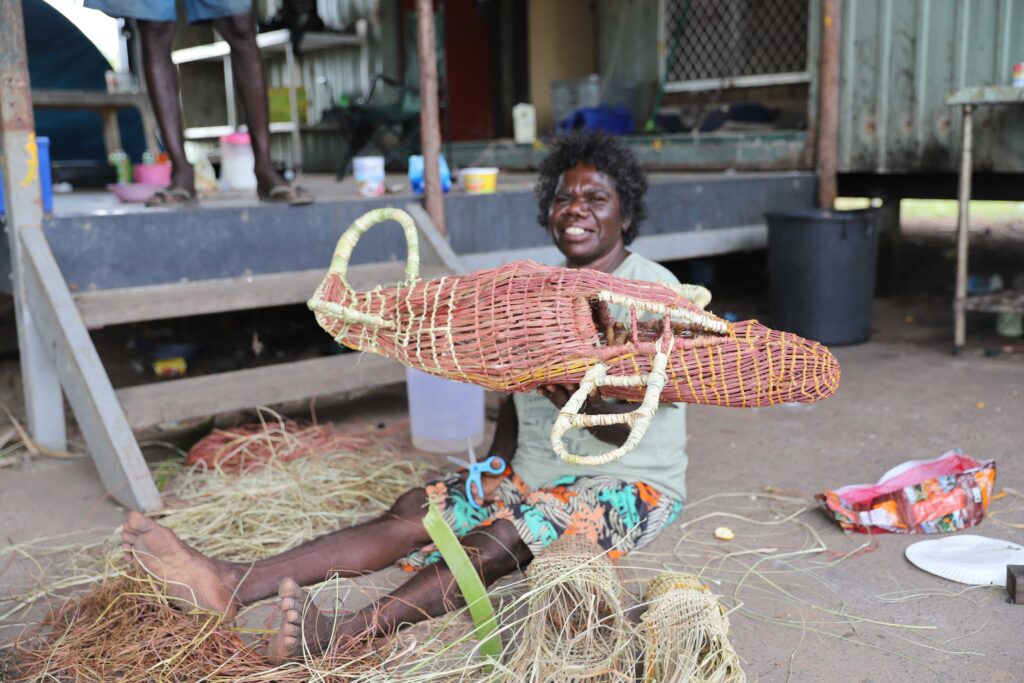
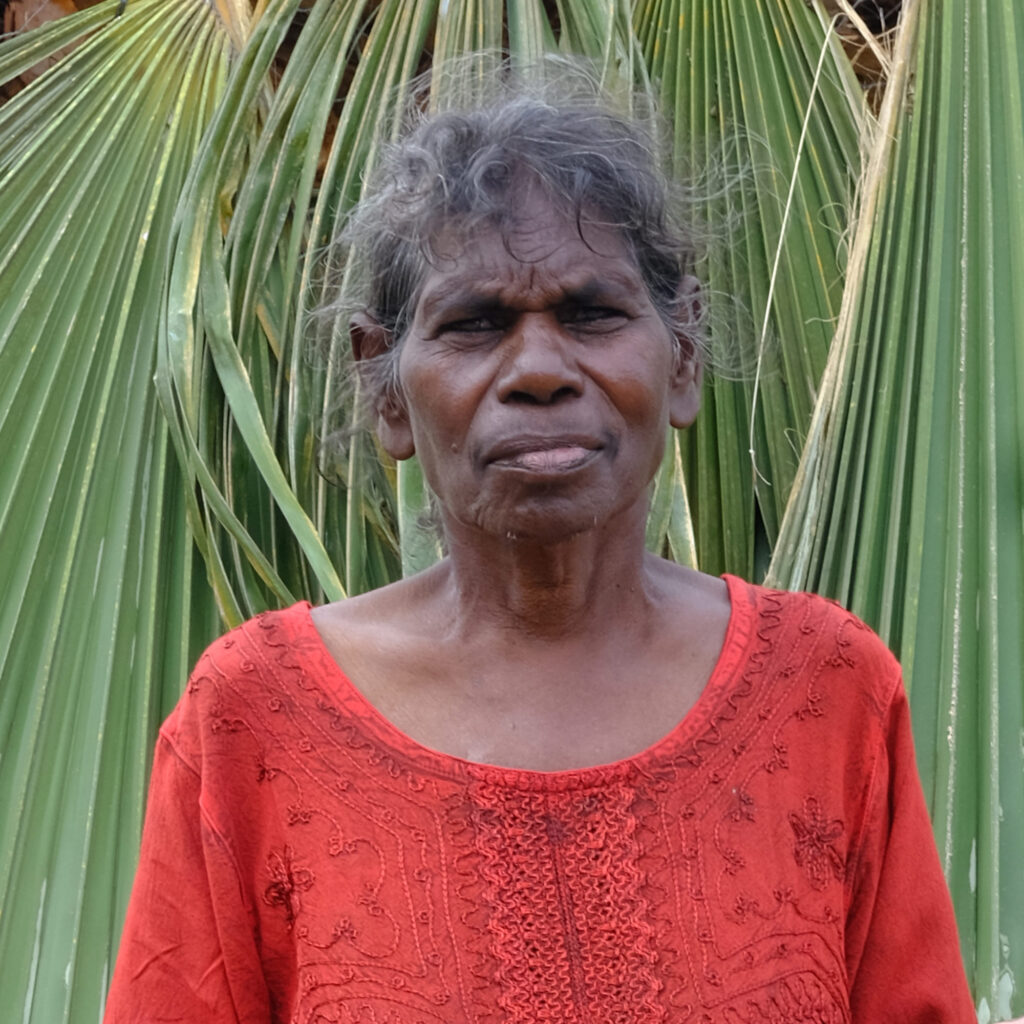
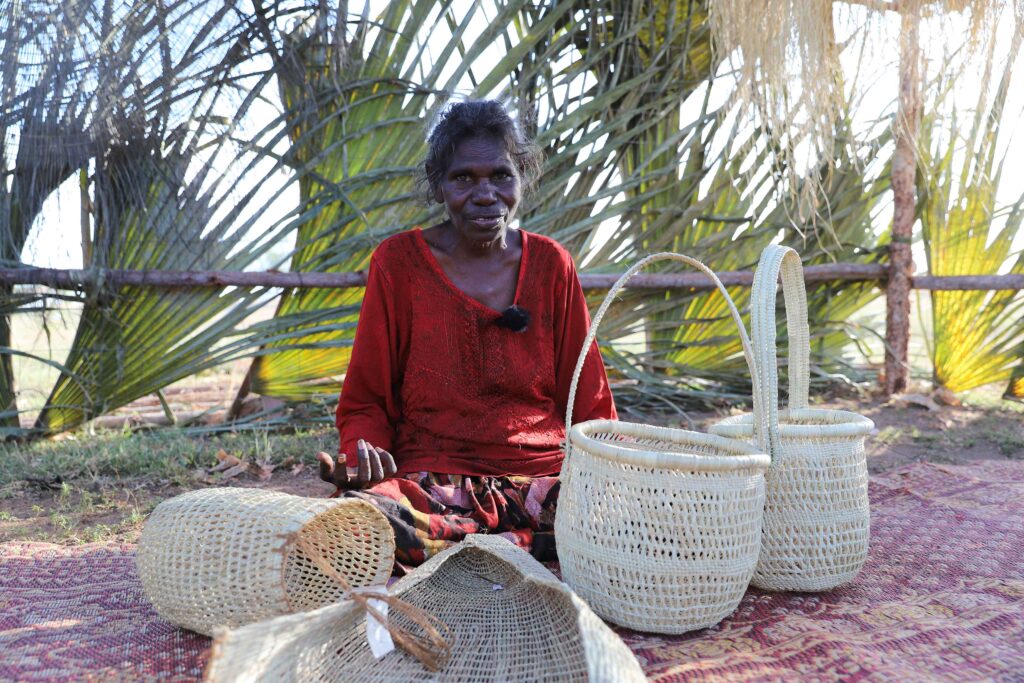
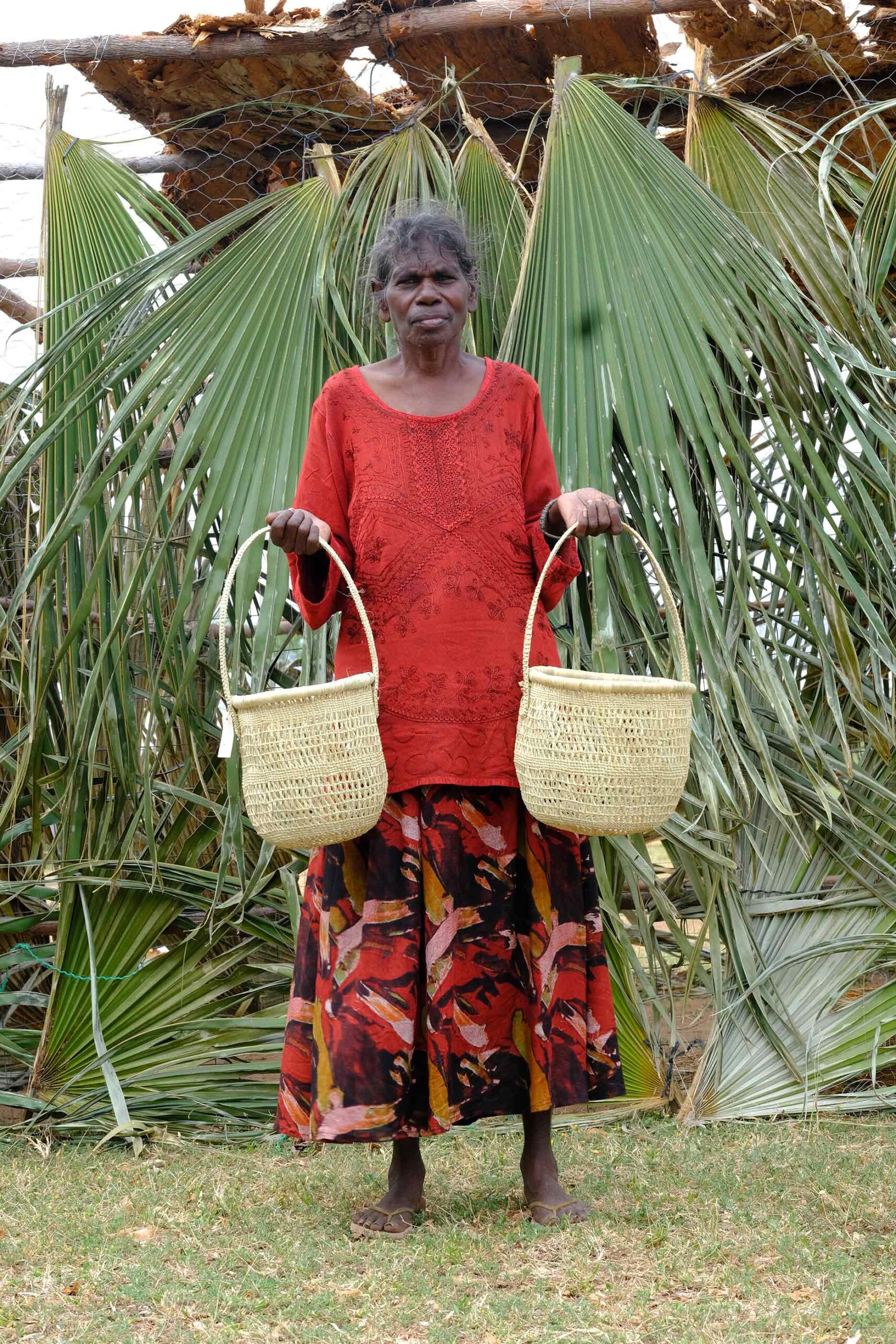
Helen Ganalmirriwuy created a series of woven objects using natural, undyed gunga (pandanus). These included mindirr (dilly bags) and baskets made using a twined lattice weave, as well as djinbakara (conical bags with a slit) and ganybu (fishing nets). She recalls watching her parents make fishing nets, baskets, and dilly bags in this style while growing up.
More
Artist bio
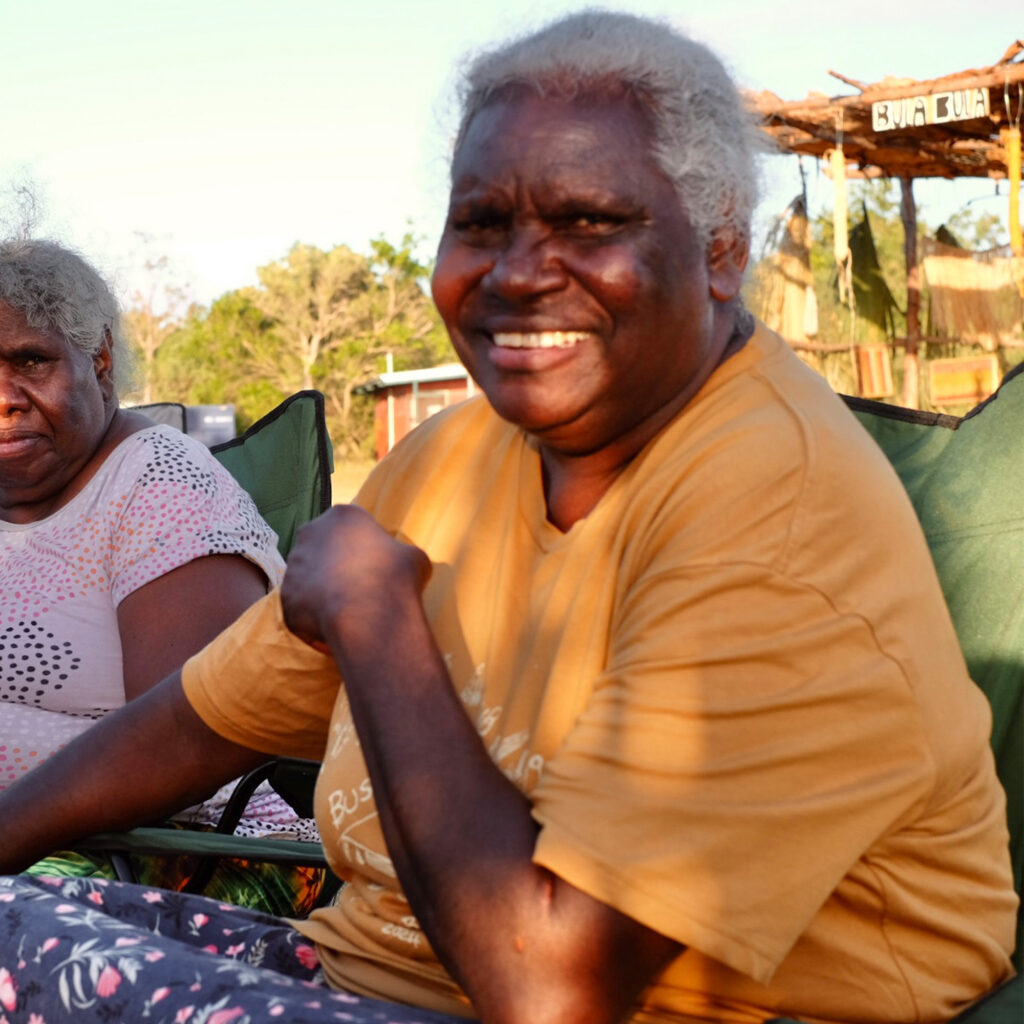
Gwen Warmbirrirr
Milingimbi Art and Culture
Language: Dhaŋu
Clan: Ŋaymil
Homeland: Gundalmirri and Rurruŋur
Laŋarra Bush Gallery 2024
Together with fellow Milingimbi Art and Culture artists Gwen Warmbirrirr helped to conceptualise the collaborative artwork created as part of the Laŋarra Bush Gallery.
It was about working together – one head, one heart, one hands. Just about making something that’s working together – one idea, you know. So that women here in Milingimbi or in Ramingining or Gapuiyak or Maningrida could work together sharing ideas.
When I used to be a young teenager I was taught how to do crochet using wool. We made little squares and stitched them together. I was taught at school by a Fijian teacher, and we also put together coconut leaves to make a fan.
To me it was really interesting [to see the work being made]. I enjoyed working with the other ladies [at Laŋarra]. They were making baskets and mats using different colours, and how they stitched it together using pandanus and balgurr [was different]. There are different styles from different women. Maningrida mob, they were using pandanus but making it like they make string bags. Maybe some of them were using straight grass.
Looking at the mat I was thinking of using an idea like this one, three mats stitched together using small bamboo shoots to make it straight. This one is not so straight, but it’s just an idea. [The bamboo,] it grows along the billabong, in the area towards the west. We could cut them and heat them on the fire to make them straight and start using pandanus in between so it can easily fold.
— Gwen Warmbirrirr. Milingimbi Art and Culture artist and Djalkiri Keeping Place historian
More
Bio