
Bula'bula Arts

0/0
Proudly Yolngu; Bula’Bula Arts, is situated in Ramingining within Gurrwiliny (Arafura wetlands) and is part of Northeast Arnhem Land. Our mission is to foster Yolngu culture. Bula’bula represents strong, professional artists producing high quality artworks telling stories of cultural lore learned through song and dance. These are reinterpreted into paintings and objects, which have traditional ritual and ceremonial significance.
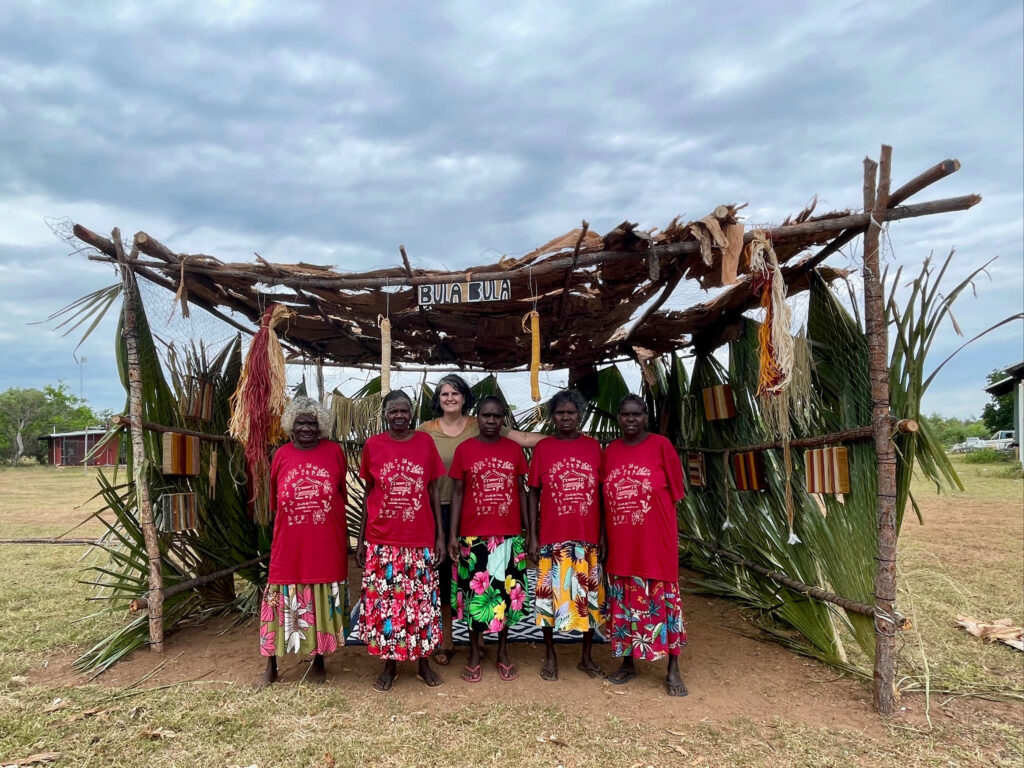
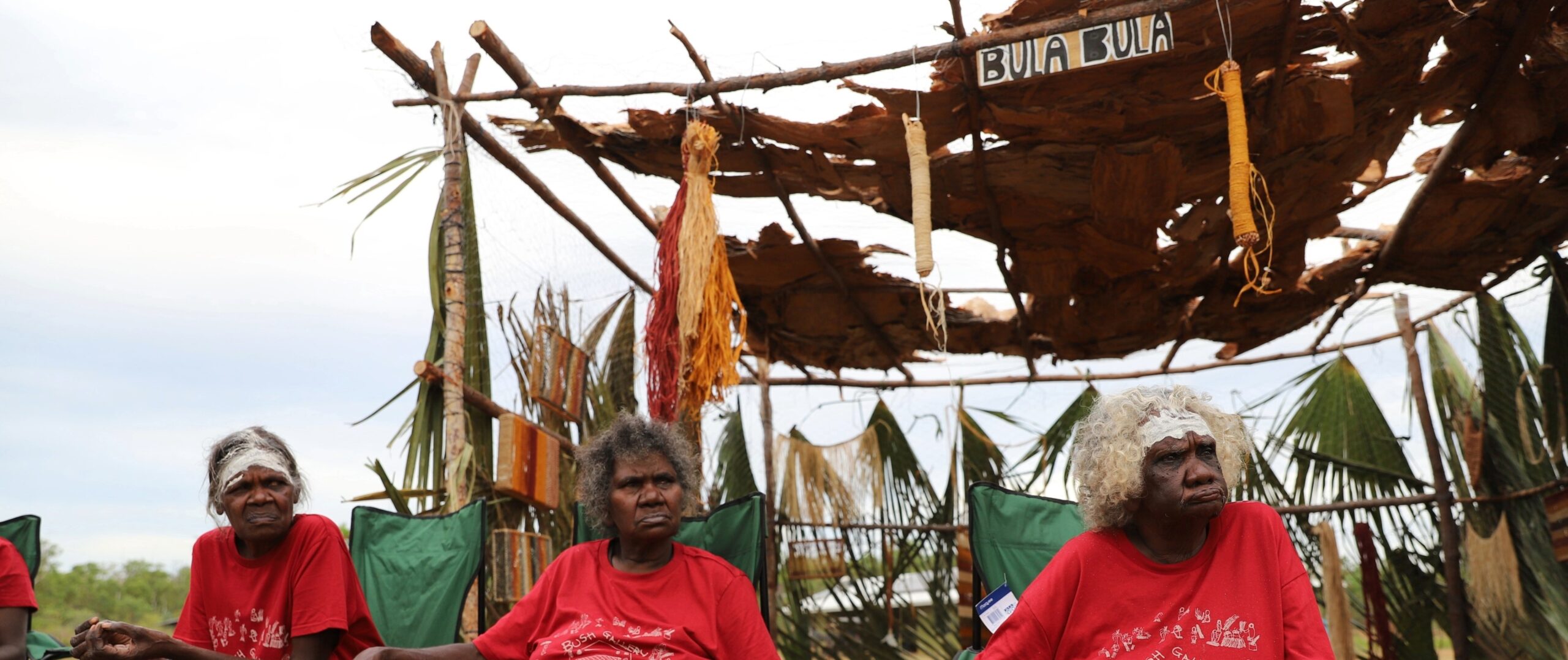
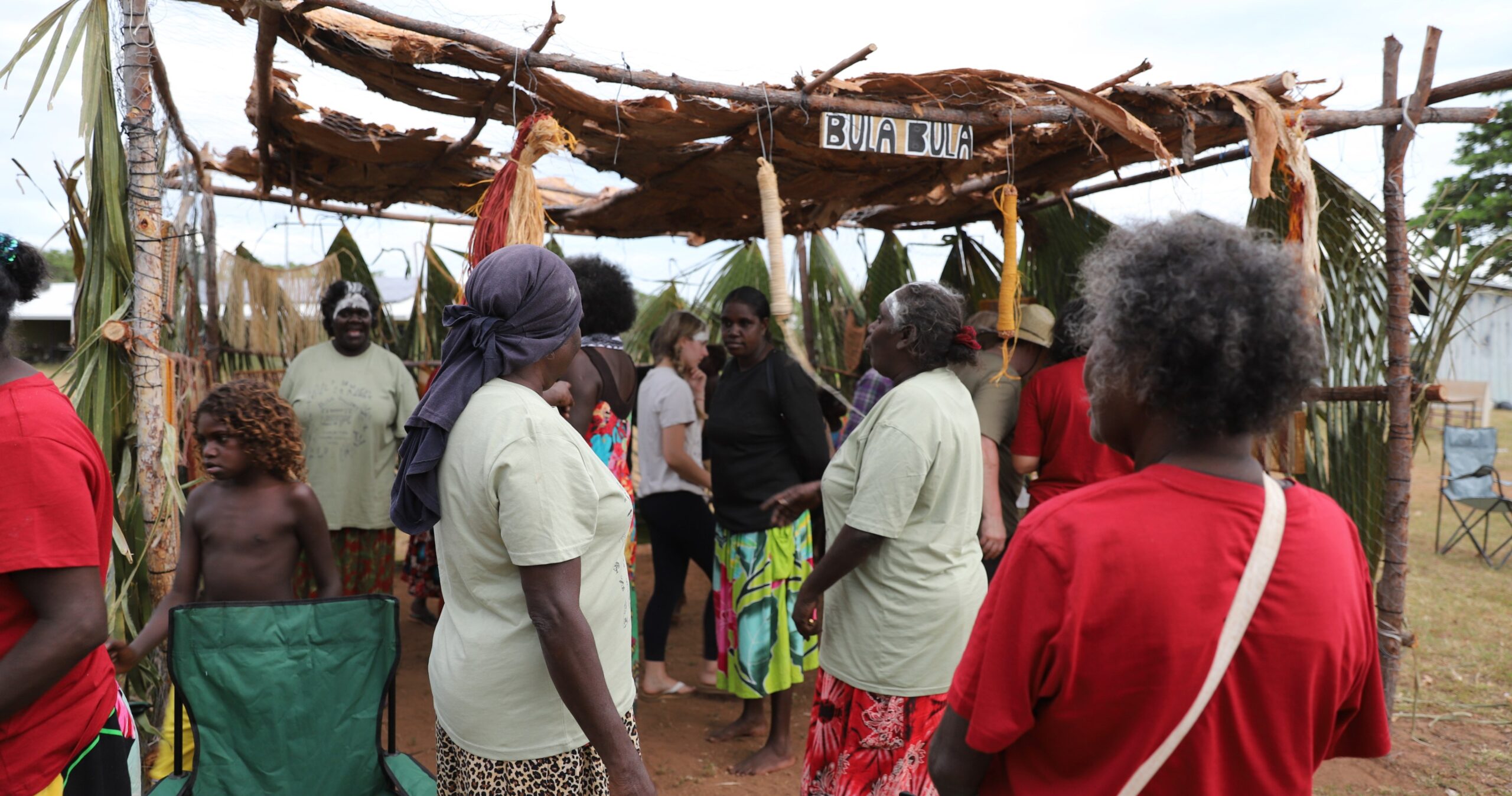
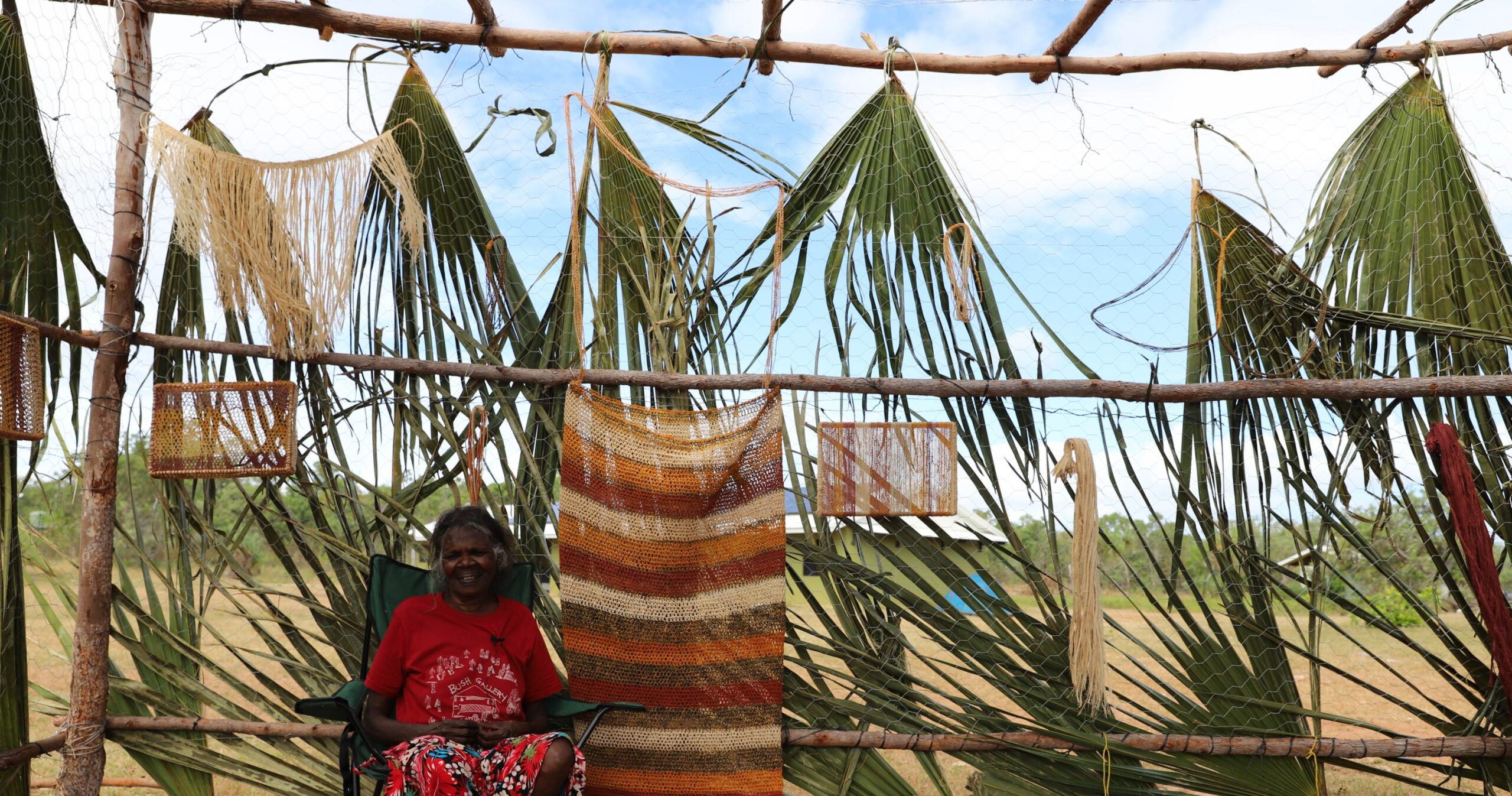
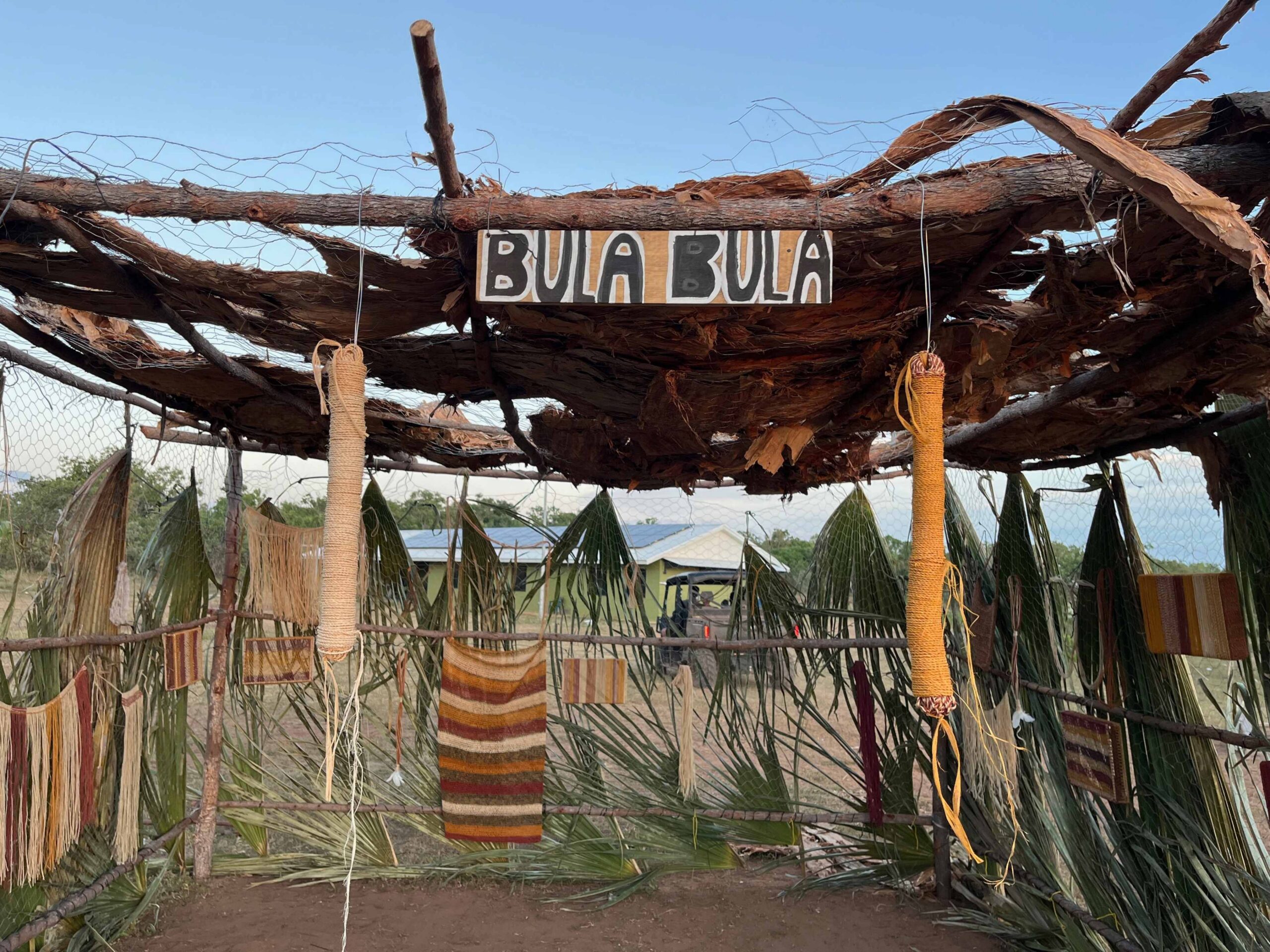
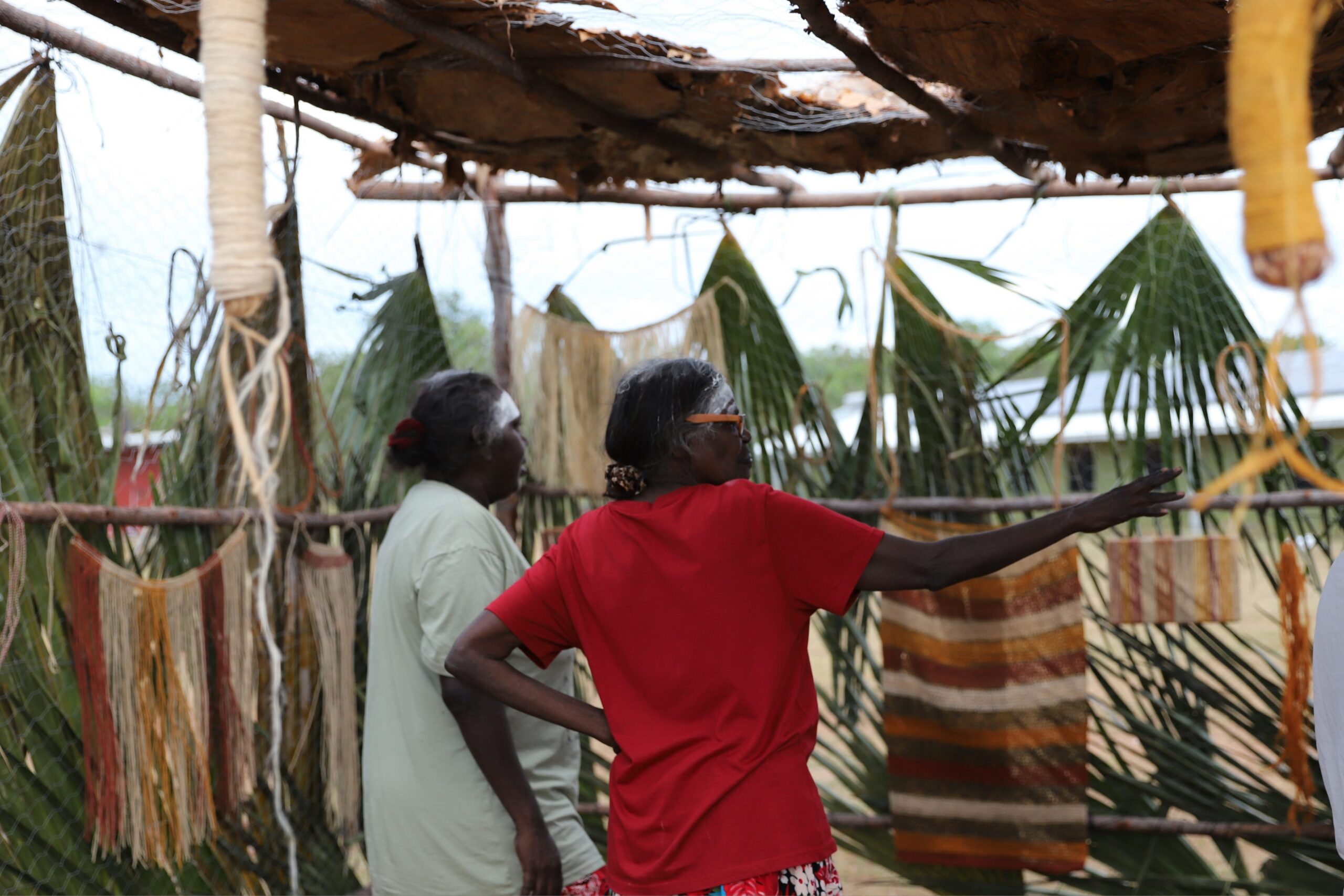
The Bush Gallery was conceived as a space for exploration, connection, and artistic growth. Rooted in Yolŋu knowledge and grounded in fibre practice, the project invited Bula’bula weavers to expand the boundaries of their work—whether through revisiting traditional forms with renewed focus or experimenting with new formats with fibre-based art.
Daphne Banyawarra
Bula’bula Arts
Language: Ganalbingu
Clan: Gurrumba Gurrumba
Laŋarra Bush Gallery 2024
Bula’bula Arts saw the Langarra Bush Gallery as a space where weavers were encouraged to push their boundaries, experiment with new techniques and showcase unique skills in a supportive, on-Country environment. For the exhibition, Bula’bula Arts artists deeply focussed on making work they felt proud of, while also fostering discussion, connection, growth and confidence in their practice.
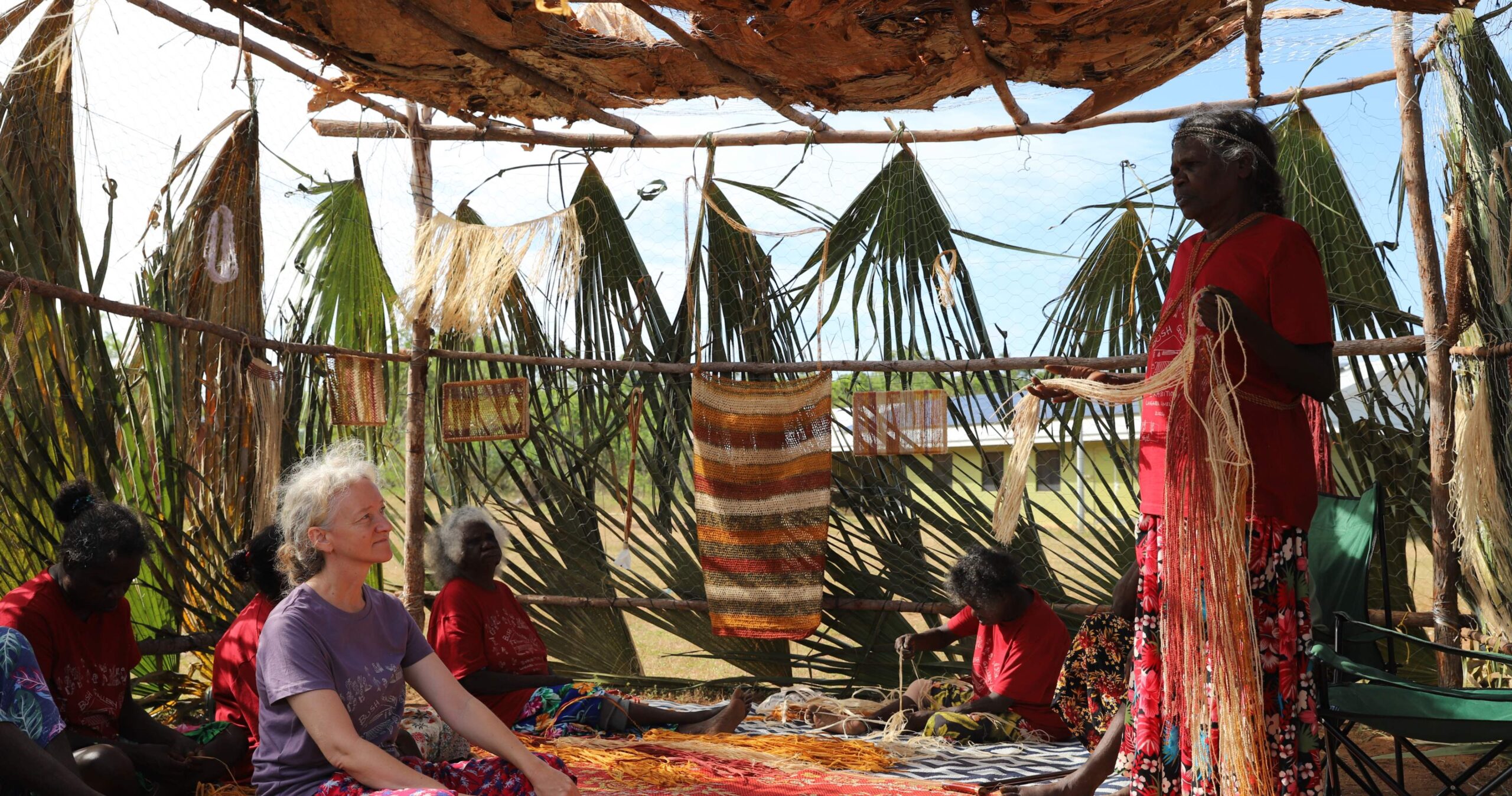
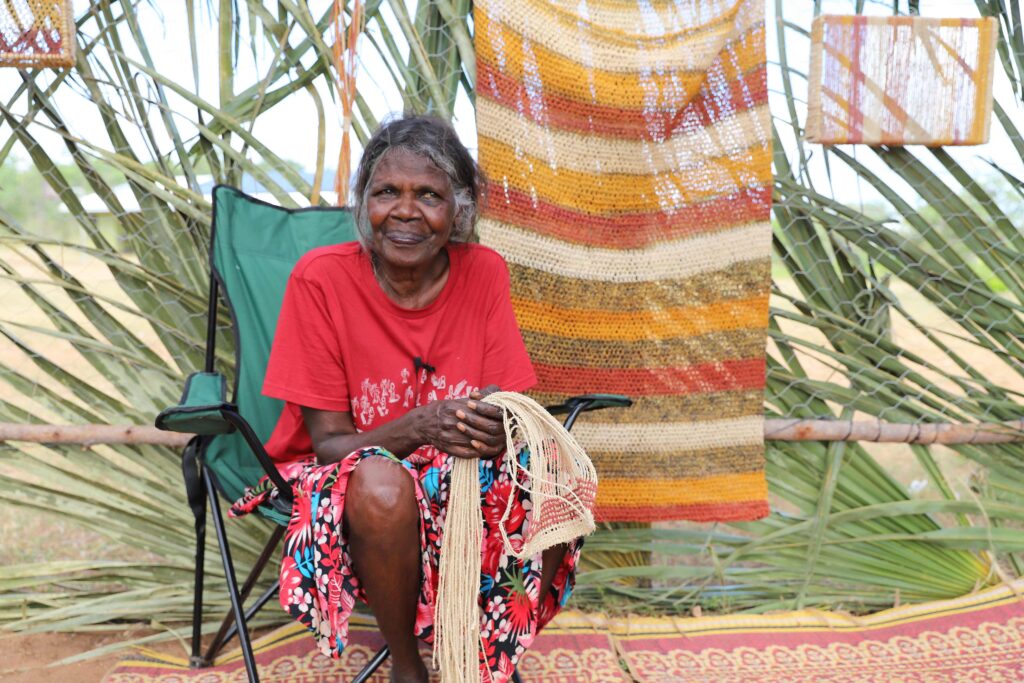
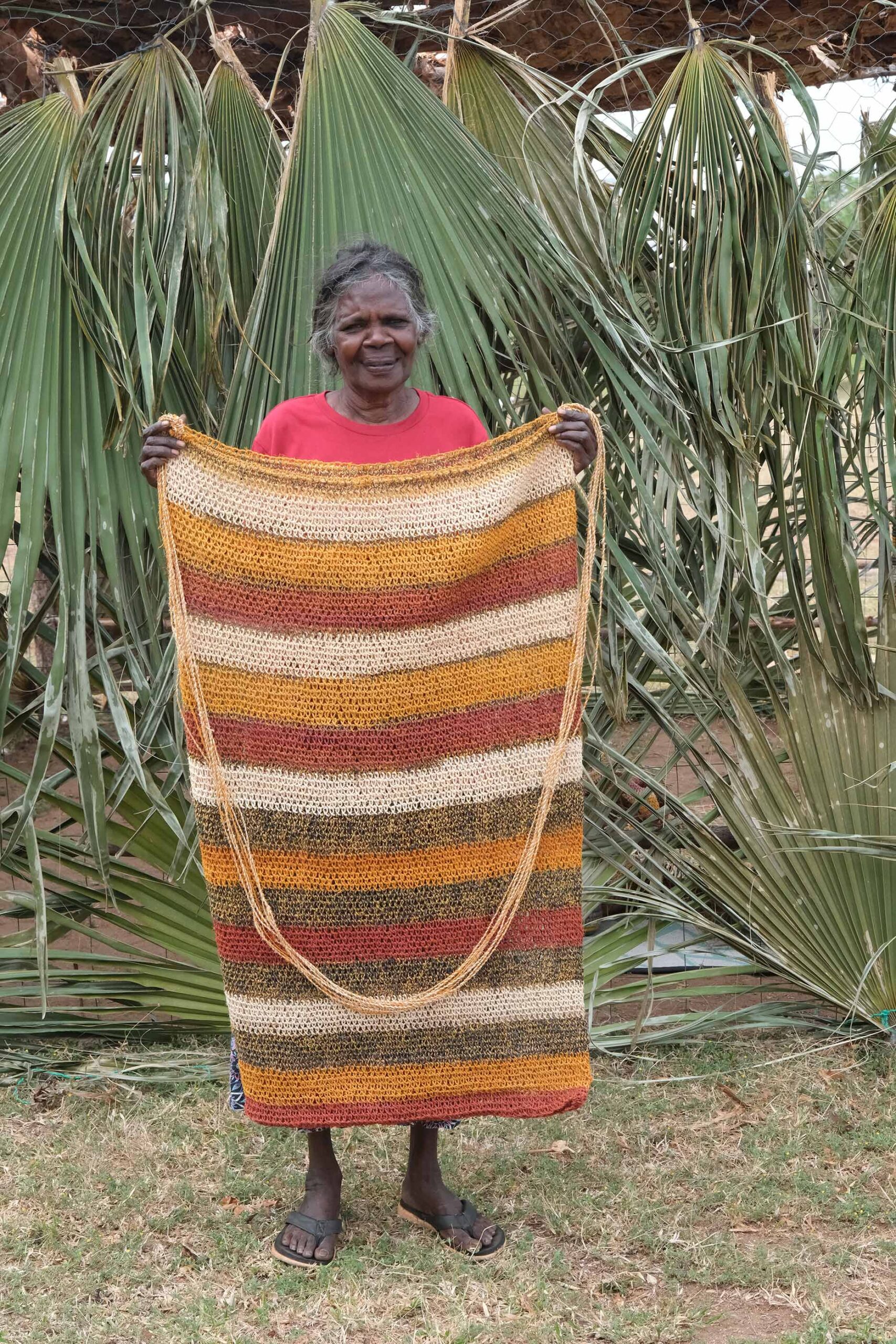
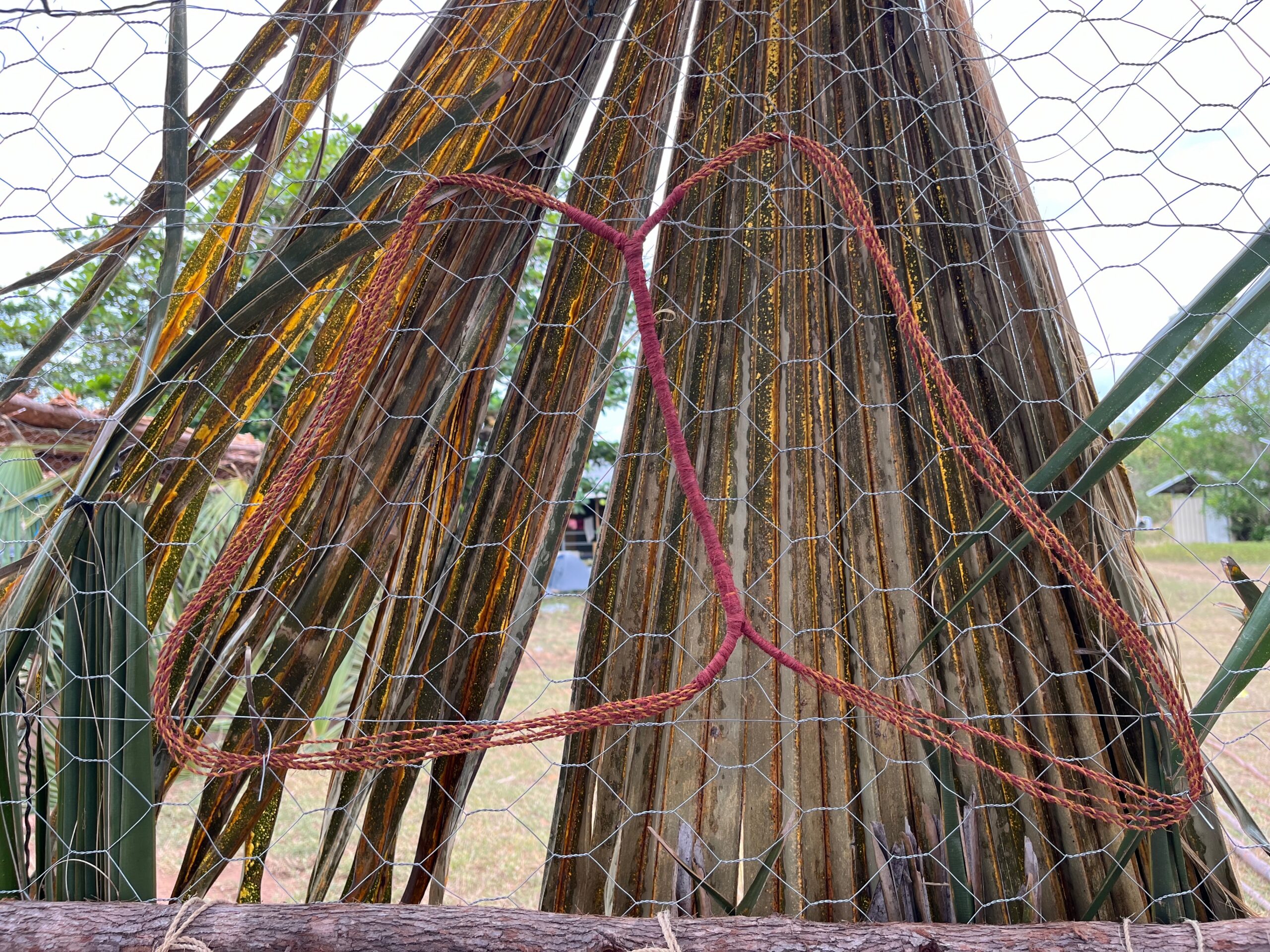
Through this process, Bula’bula Arts weavers worked with balgurr (kurrajong bark), hand-processing the bark into bush string and transforming it into both traditional and innovative Yolŋu items, including bags, hunting and fishing objects, and wearable ceremonial pieces. Weavers also explored new approaches to raki (string) by creating canvas-shaped formats, inviting viewers to slow down and engage with the fine detail, colour and craftsmanship, and to appreciate the inherent beauty and complexity of the raki (string) itself.
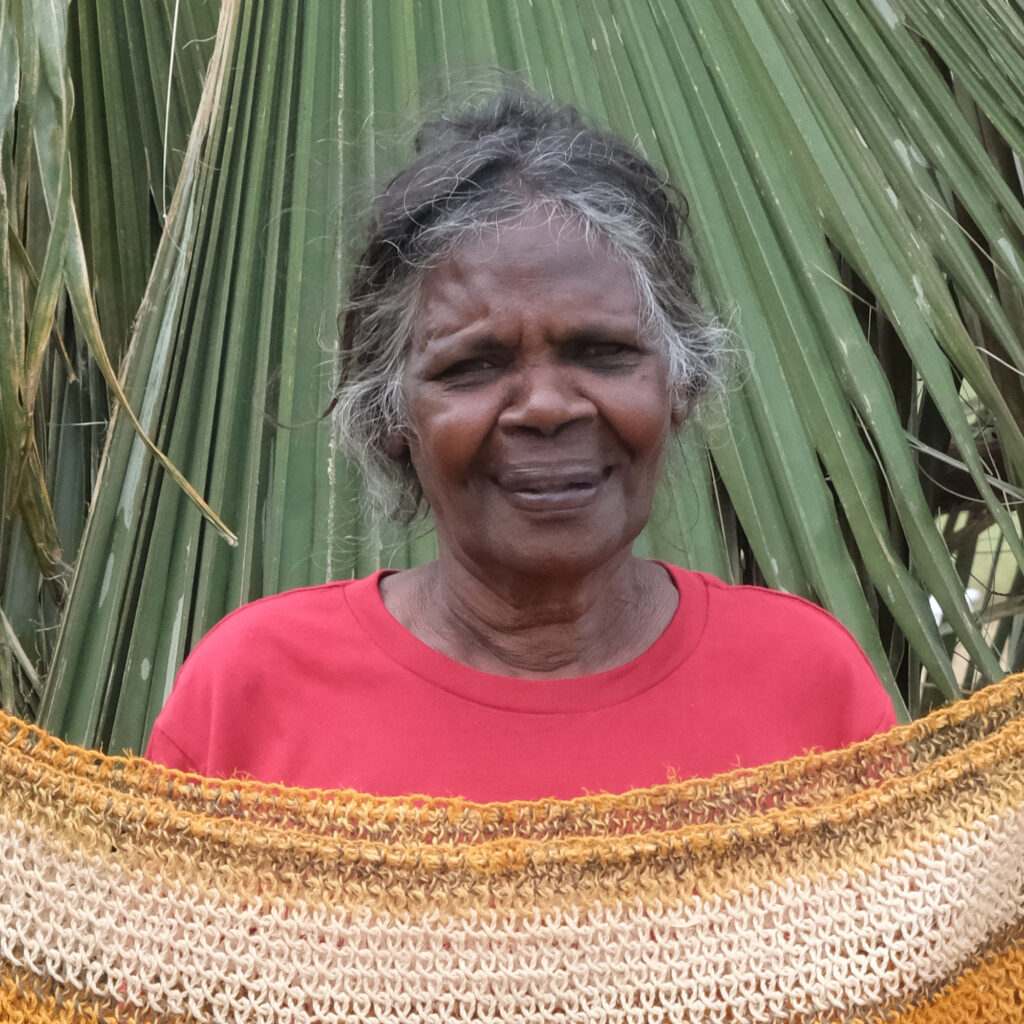
Daphne created large-scale string bag for the Langarra exhibition. It is a very important part of the Moon Creation story.
“This story has been told by old people when they heard this story. I heard from my grandma too. It’s a dream time story. Long time ago there live Moon he live near river bank with his family, two sons and wives. One day his two wives went out hunting looking for foods like yams, bush potatoes fruits and plums collecting cycad nuts to make damper for them. The two boys also decided to go out they ask their father to look for fish, ducks and goose for them to eat. They went to swamp area where there was lot of ducks and goose they started spearing, when it was enough, they went back to their camp and told their father they got plenty of ducks. When they were cooking and same time they were eating wings of the duck and said to their father, “Dad can you wait for body part of the duck meat so that you will have that instead of wings.” “Okay he said I’ll wait.” When all the ducks were cooked they did not give their father; the two sons said to him, “Dad can we go out to spear more ducks for us.” “Sure father reply I will wait for next lot.”
The two sons react three times, which they did not share because they were hungry or being greedy. But then their father was making fishing net sort of bag for catching fish. He ask them,” boys come here I’ll try you two to go into this fishing net to see how big will I catch fish for us.” The boys went into the net and their father said, “I will pull you two to the river bank, he told them,” he tied rope tightly and said ,”I will throw you two to the river to be drown, because you did not shared ducks for me to eat so now I will kill you two”. “Boys said no dad, don’t kill us.” Their father could not listen to them he was kept on pulling. Boys cried and cried to release them from net.
Father Moon just threw them into the river then they were sinking down into deep water and they were dead. After he threw them, on the way back to their camp he broke the branch of the tree and started pulling along the track that he was pulling them, just to get rid of track so that their mothers won’t see what had happen to them. Mothers of two sons came back from hunting they brought plenty of bush foods, when they were sitting they ask the father Moon.”Where did boys go. ” Father told them “they are still out spearing goose or ducks”.
They ask him again, “but it’s getting dark soon, where are they really,” “maybe they are resting because they speared lots of goose and ducks.” The two mothers talked among themselves. Hey sister we don’t need to give this food we have to look for them first and find where they are”. So other sister said, “Okay let’s search for them.” Mothers started looking for them, they look everywhere but could not find them, they said. “Maybe he killed them and we want to kill and burn him too,” same time they were crying for their children. So one of the mother said, “sister lets organise something ready to kill him tonight when he goes to sleep.” “That’s good let’s do it.”
They were collecting firewoods, grass, paper bark, twigs branches and so on. They hid near where their camp was. When the father Moon went to sleep, they were start putting around making circle where he was sleeping in the middle. “Let us now burn him while he is sleeping,” so they did, the fire was now burning getting close to him then he felt hot and said, “What are you doing to me.” “And the mothers said to him, we are burning because you killed our sons and it’s your turn to die.” He was now burning and same time changing his colour it turn white, after that he climb up the tree and said, “when people die they won’t come back to live like me, you can see me again I am the moon.”
Julie Djulibing Malibirr
Bula’bula Arts
Language: Ganalbingu
Clan: Gurrumba Gurrumba
Laŋarra Bush Gallery 2024
Bula’bula Arts saw the Langarra Bush Gallery as a space where weavers were encouraged to push their boundaries, experiment with new techniques and showcase unique skills in a supportive, on-Country environment. For the exhibition, Bula’bula Arts artists deeply focussed on making work they felt proud of, while also fostering discussion, connection, growth and confidence in their practice.
Through this process, Bula’bula Arts weavers worked with balgurr (kurrajong bark), hand-processing the bark into bush string and transforming it into both traditional and innovative Yolŋu items, including bags, hunting and fishing objects, and wearable ceremonial pieces. Weavers also explored new approaches to raki (string) by creating canvas-shaped formats, inviting viewers to slow down and engage with the fine detail, colour and craftsmanship, and to appreciate the inherent beauty and complexity of the raki (string) itself.
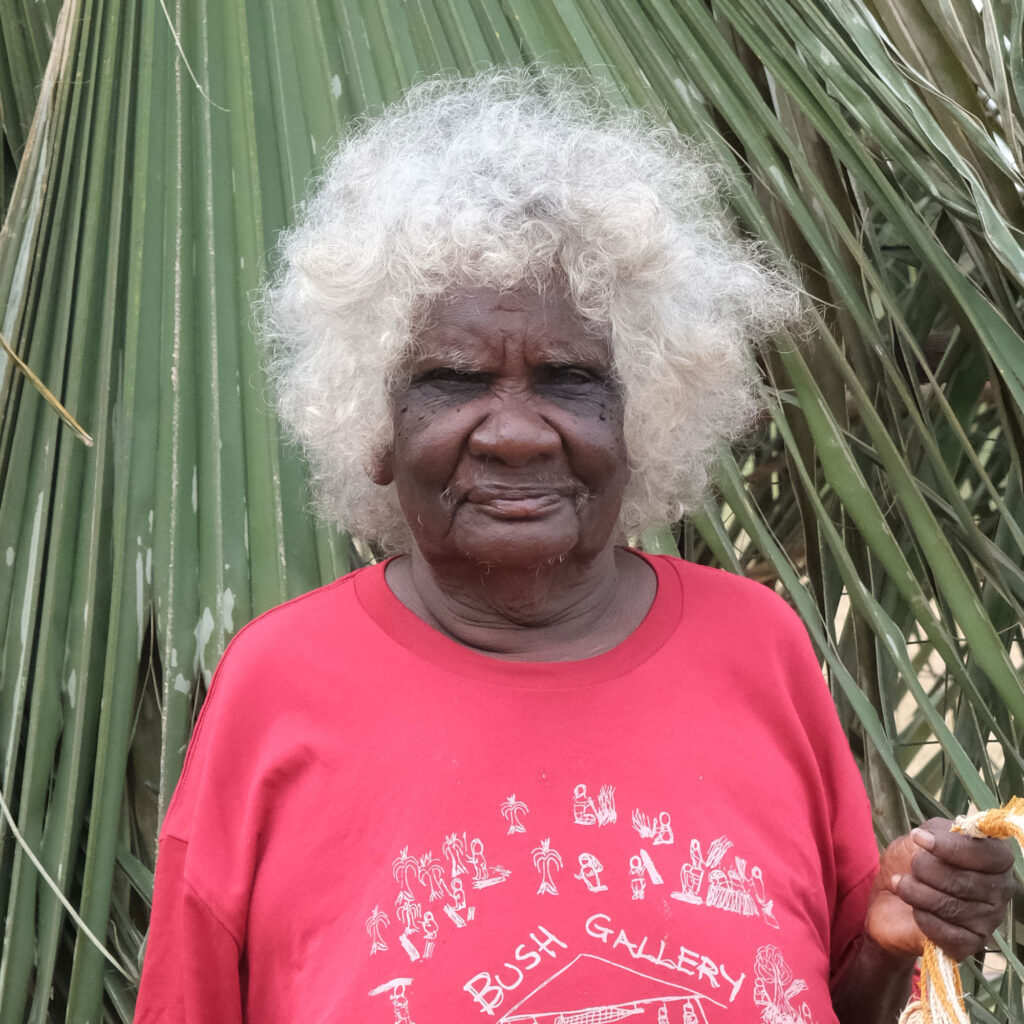
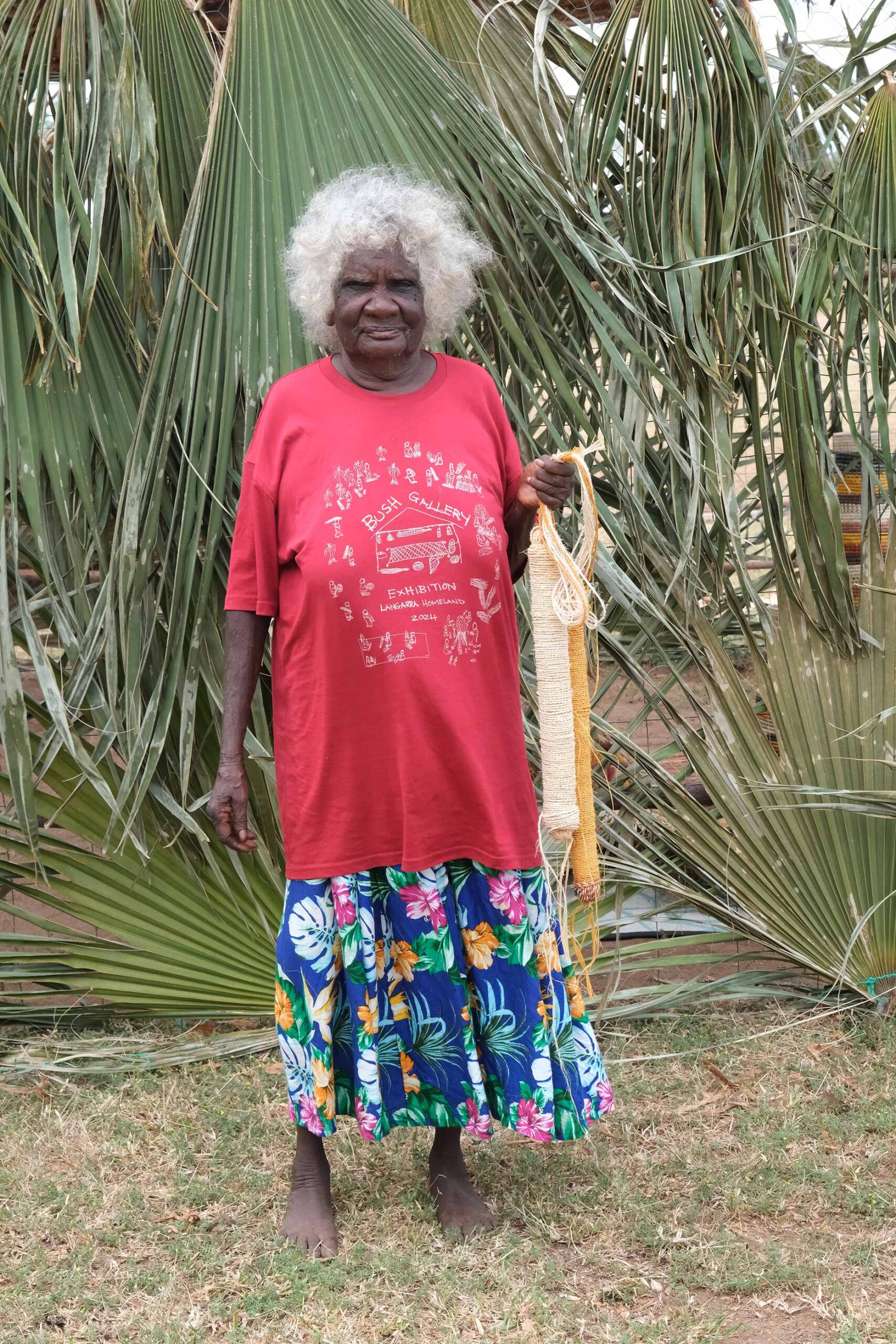
Senior weaver Julie shared that she made string pieces for the exhibition that had not been created for a long time. The Bush Gallery offered her the opportunity to revisit these older, deeply cultural pieces and re-make them specifically for this body of work, drawing on knowledge and techniques that sit deep within her practice. Creating these pieces was significant for Julie, allowing her to bring rarely seen items back into view and to honour older ways of making through work created on Country for the exhibition.
Margaret Djarrbalabal Malibirr
Bula’bula Arts
Language: Ganalbingu
Clan: Gurrumba Gurrumba
Laŋarra Bush Gallery 2024
Bula’bula Arts saw the Langarra Bush Gallery as a space where weavers were encouraged to push their boundaries, experiment with new techniques and showcase unique skills in a supportive, on-Country environment. For the exhibition, Bula’bula Arts artists deeply focussed on making work they felt proud of, while also fostering discussion, connection, growth and confidence in their practice.
Through this process, Bula’bula Arts weavers worked with balgurr (kurrajong bark), hand-processing the bark into bush string and transforming it into both traditional and innovative Yolŋu items, including bags, hunting and fishing objects, and wearable ceremonial pieces. Weavers also explored new approaches to raki (string) by creating canvas-shaped formats, inviting viewers to slow down and engage with the fine detail, colour and craftsmanship, and to appreciate the inherent beauty and complexity of the raki (string) itself.
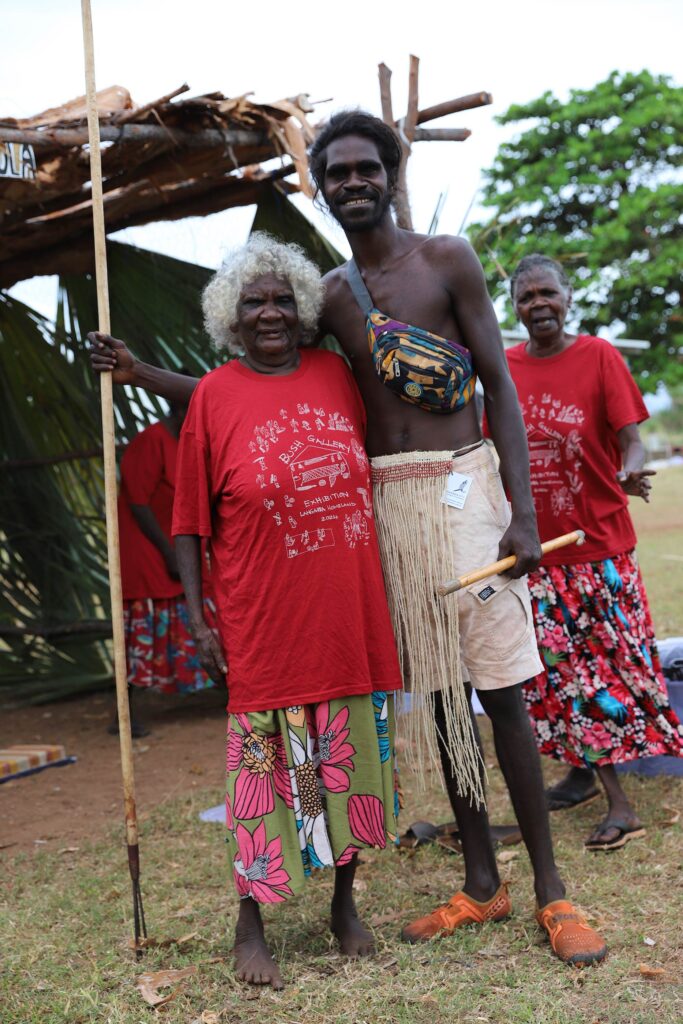
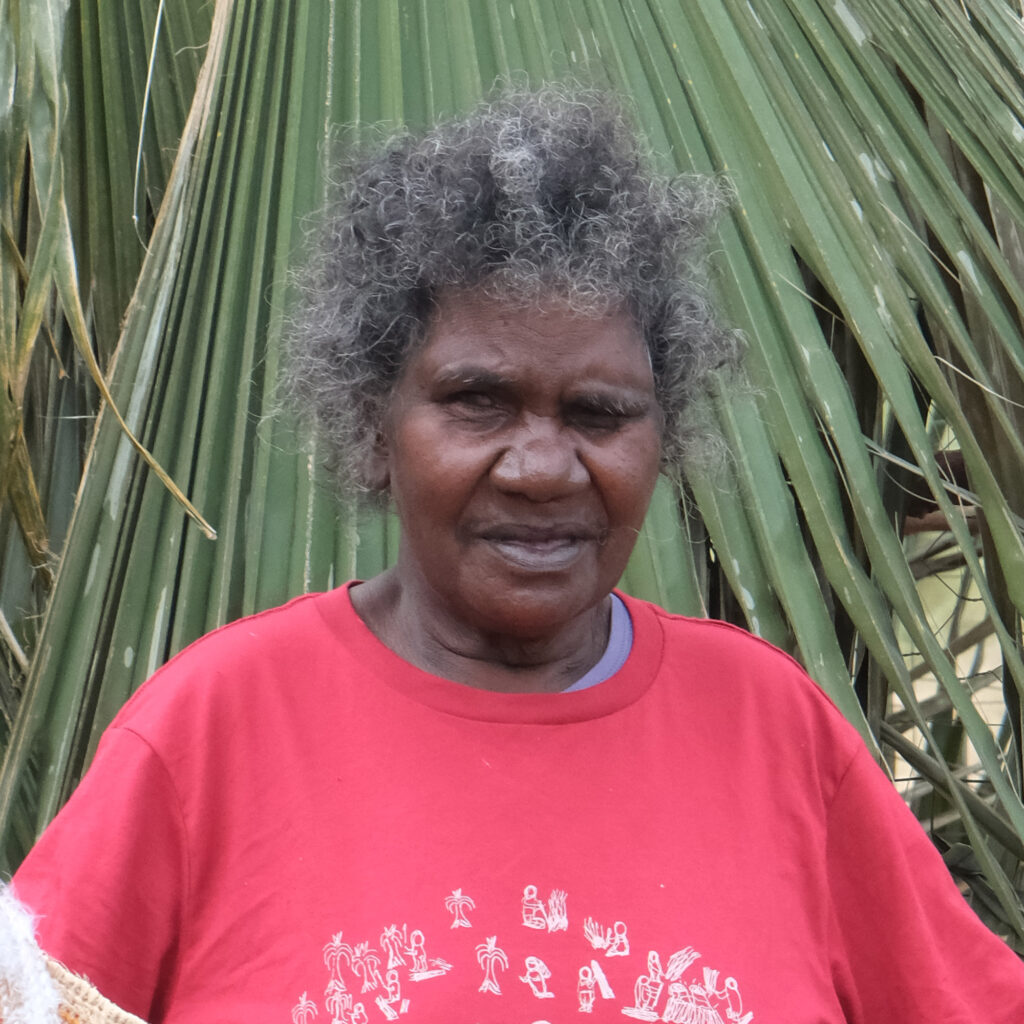
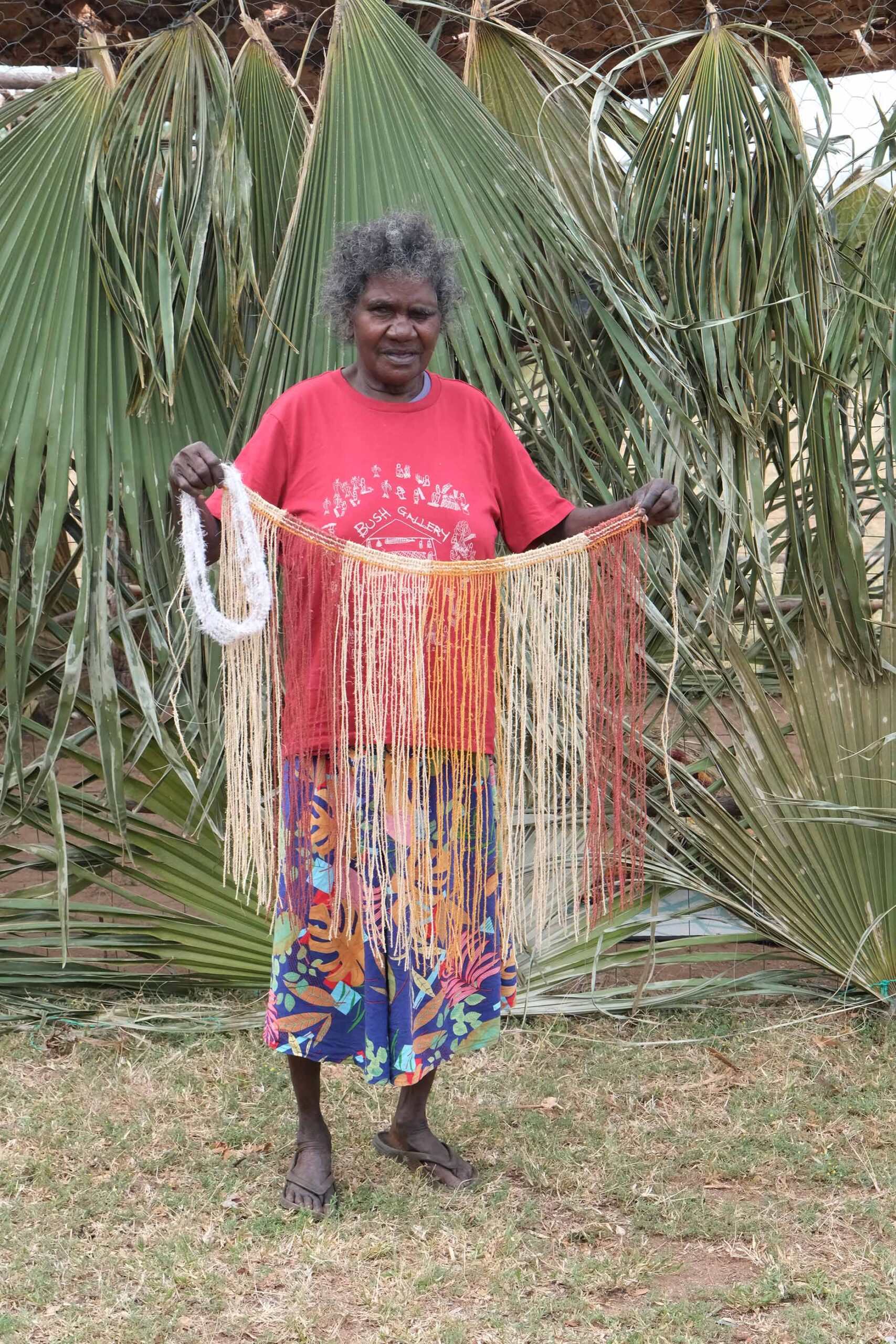
Margaret Djarbalarbal Malibirr’s presence at the weaving camp was grounding and powerful, carrying both authority and generosity. Known among weavers as a master of string-based ceremonial objects, Margaret brings an extraordinary depth of knowledge to every space she works in. At the camp she shared time, technique and quiet guidance, supporting others through her steady practice and deep connection to materials. Her way of working, often incorporating feathers into finely made string forms, reflects a lifetime of cultural knowledge and artistic discipline.
A senior Yolŋu fibre artist from the Ganalbingu clan, Margaret is one of the most respected and established weavers at Bula’bula Arts. She is best known for her ceremonial works made from balgurr (kurrajong bark), gunga (pandanus spiralis) and natural bush string, all carefully harvested, prepared and dyed using methods passed down through generations. Her mastery lies not only in technique, but in her ability to select the right materials and bring them together with balance, strength and beauty.


Margaret Wulngurrwulngurr
Bula’bula Arts
Language: Djinba
Clan: Dalparri
Laŋarra Bush Gallery 2024
Bula’bula Arts saw the Langarra Bush Gallery as a space where weavers were encouraged to push their boundaries, experiment with new techniques and showcase unique skills in a supportive, on-Country environment. For the exhibition, Bula’bula Arts artists deeply focussed on making work they felt proud of, while also fostering discussion, connection, growth and confidence in their practice.
Through this process, Bula’bula Arts weavers worked with balgurr (kurrajong bark), hand-processing the bark into bush string and transforming it into both traditional and innovative Yolŋu items, including bags, hunting and fishing objects, and wearable ceremonial pieces. Weavers also explored new approaches to raki (string) by creating canvas-shaped formats, inviting viewers to slow down and engage with the fine detail, colour and craftsmanship, and to appreciate the inherent beauty and complexity of the raki (string) itself.
Margaret Wulngurrwulngurr was invited to attend the weaving camp following discussions with senior weavers, who carefully selected her to take part. Her participation reflects the trust placed in her skills, commitment and willingness to work alongside others on Country. Being chosen in this way is an acknowledgement of her role within the weaving community and the importance of bringing together the right people to share knowledge, support one another and strengthen weaving practice across generations.

Selina Rawurruway
Bula’bula Arts
Language: Liya -gawumIrr/ buyu-yukululmirr
Clan: Garrawurra
Laŋarra Bush Gallery 2024
Bula’bula Arts saw the Langarra Bush Gallery as a space where weavers were encouraged to push their boundaries, experiment with new techniques and showcase unique skills in a supportive, on-Country environment. For the exhibition, Bula’bula Arts artists deeply focussed on making work they felt proud of, while also fostering discussion, connection, growth and confidence in their practice.
Through this process, Bula’bula Arts weavers worked with balgurr (kurrajong bark), hand-processing the bark into bush string and transforming it into both traditional and innovative Yolŋu items, including bags, hunting and fishing objects, and wearable ceremonial pieces. Weavers also explored new approaches to raki (string) by creating canvas-shaped formats, inviting viewers to slow down and engage with the fine detail, colour and craftsmanship, and to appreciate the inherent beauty and complexity of the raki (string) itself.
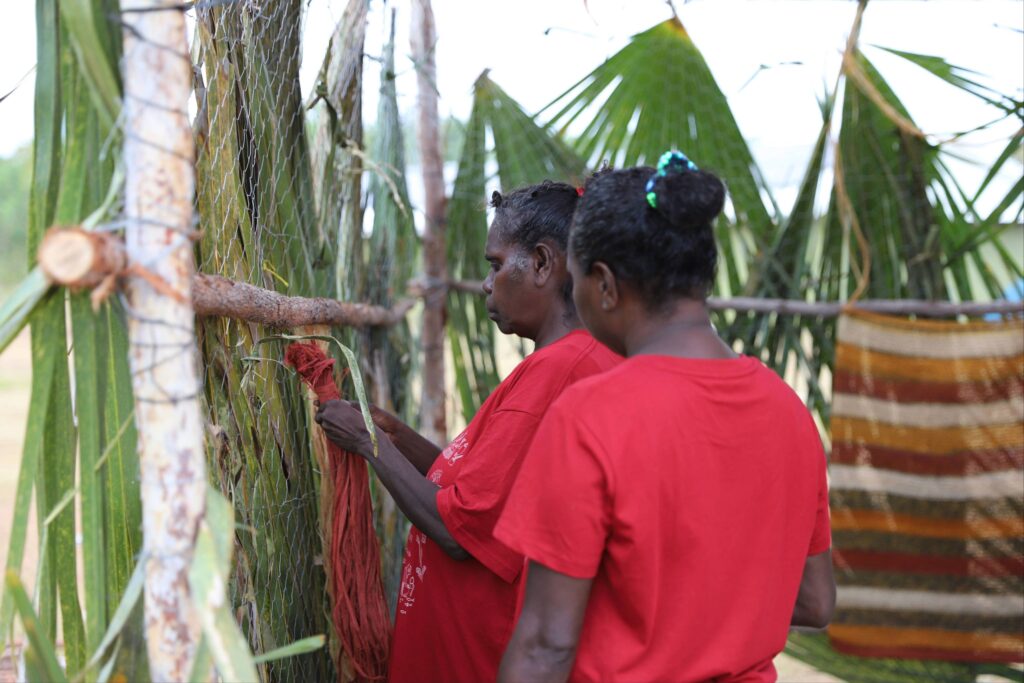
Selina came to the weaving camp to support her mother Julie and her aunt Daphne, offering another pair of hands while learning alongside them. Being present on Country and working closely with her family allowed Selina to begin building her own weaving skills through observation, practice and shared time. Her participation was important to senior weavers Margaret Malibirr, Daphne Banyawarra and Julie Djulibing, who value the passing on of knowledge through generations. For them, Selina’s involvement represents continuity, care and the future of weaving traditions, where learning happens by doing, listening and being present with family and elders.